

Opinion editor’s note: Strib Voices publishes a mix of guest commentaries online and in print each day. To contribute, click here.
•••
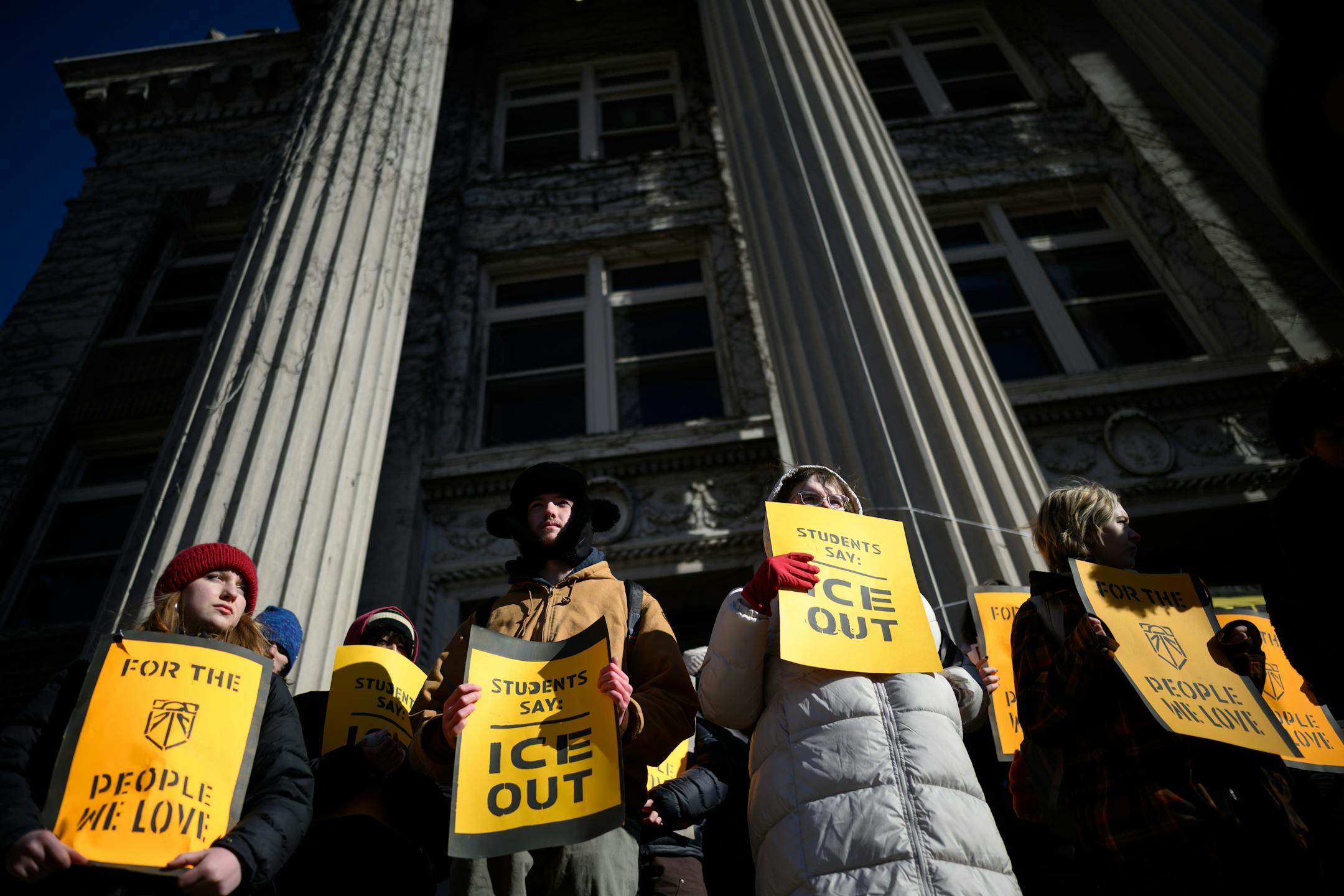
Alex Pretti was killed by the government while expressing his First Amendment rights. He was also a graduate of the University of Minnesota, where I teach. In an explosive historical moment such as ours, in a city that has been through a traumatizing federal occupation by ICE agents, how should our university officially mourn the death of one of its own?
For more than a century, U presidents decided whether or not, and how, to address political issues. But since Oct. 7, 2023, amid campus debates and protests on Israel-Palestine, more than 140 colleges and universities were pressured by organizations like the Heterodox Academy to develop official policies on neutrality. The policies vary in wording and scope.
In March 2025, university regents — in a rare divided vote of 9-3 — passed a resolution stipulating that the president alone spoke for the institution, and that all its academic departments, centers and institutes had to refrain from issuing statements on matters of public concern. The resolution was broadly condemned by our University Senate, whose own draft policy on the matter was swept aside. Its implementation by our president, Rebecca Cunningham, epitomized a style of leadership one of my censored faculty colleagues has called “authoritarian.”
Defenders of neutrality policies argue that they protect free debate by allowing the community to disagree on controversial matters. But in practice, these policies are easily weaponized to achieve the opposite — censorship. Last April, Cunningham’s administration used the resolution to justify the censorship of six web posts written by faculty about Israel-Palestine. In a transparent effort to thwart accusations of discrimination, two days later, her administration censored a set of statements on Russia-Ukraine.
Dozens of statements on controversial matters from academic freedom to the murder of George Floyd remain on our university websites. This version of campus “neutrality” resulted in a two-tiered system for free speech. Free inquiry and academic freedom for most topics; censorship and chilled speech when donors and politicians complained. The reason for this two-tiered result is both obvious and unavoidable: There is no objective standard for what qualifies as “political” or “controversial.”
The killings of Renee Good and Alex Pretti have highlighted the repressive side of neutrality once again. Recently, our university held what it described as a “Community Gathering” to memorialize Pretti. But the event could hardly be described as a community gathering with diverse perspectives and recollections on his death. It was instead a choreographed video presentation staged to erase any political valence from a death that was, by definition, political: Pretti was killed by the state while participating in a popular protest movement.


