
Opinion | After the Minneapolis shootings, a reminder of what the First Amendment protects

A Q&A about what you can and cannot do.

February 1, 2026 at 10:59AM
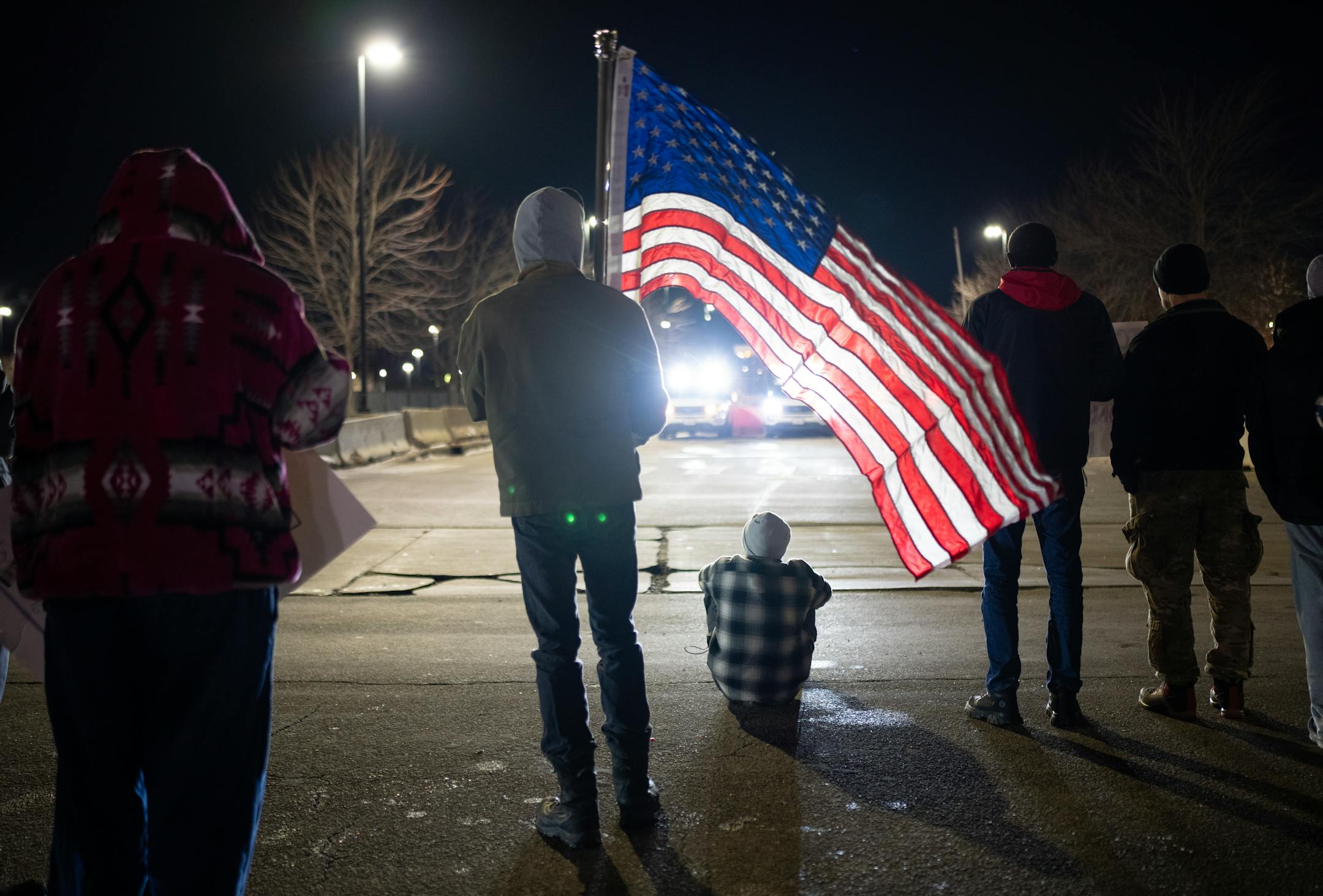
Protesters gather across the street from the Bishop Henry Whipple Federal Building at Fort Snelling on Jan. 11. (Jeff Wheeler/The Minnesota Star Tribune)

Opinion editor’s note: Strib Voices publishes a mix of guest commentaries online and in print each day. To contribute, click here.

•••

After the fatal shootings of Renee Good and Alex Pretti by federal immigration officers, federal officials have sown confusion about the First Amendment’s protections. President Donald Trump and others in his administration — each of whom swore an oath to uphold the Constitution — have either repeatedly misstated the law or blurred the line between constitutionally protected activity and criminal conduct. Some protesters have also crossed the line from peaceful, protected protest into lawbreaking.

This is a dangerous moment. Clarity is necessary.

To preserve our rights and our safety, it’s important for us all to know exactly what the First Amendment protects.

Where is protest allowed?

The right to protest is strongest in places Americans have long assembled to speak their minds: public parks, streets and sidewalks. If Immigration and Customs Enforcement (ICE) is conducting operations on a public street, you may stand nearby to protest as long as you’re not physically interfering. Importantly, officials may never shut down a protest simply because they dislike its message. Anywhere you can say “I love ICE!” is also a place you can say “I hate ICE!”

The government can impose limited restrictions in public spaces. A permit may be required for large demonstrations that require street closures, for example. But even then, the government can never condition approval on the viewpoints to be expressed.

And you don’t have a First Amendment right to protest on private property without the owner’s permission. That means you can’t occupy a church, as anti-ICE demonstrators recently did, and expect constitutional protection.

Can I record law enforcement activity?

Yes. Every federal appeals court to address the issue has recognized a First Amendment right to film or photograph law enforcement officers in public spaces.

The First Amendment protects speaking, newsgathering and receiving information, and recording officers in the line of duty plays a powerful role in public oversight. Video recordings can expose misconduct or, equally important, exonerate officers accused of wrongdoing.

That safeguard matters. Senior Trump administration officials rushed to portray Alex Pretti as a would-be “assassin” and “domestic terrorist,” even as bystander footage raised serious questions about whether he posed any threat at all. Without the right to observe and record law enforcement activity, the public would have to rely solely on the government’s account of events.

But remember: This doesn’t give you the right to obstruct or interfere. Keep recording, but also keep a safe distance.

Can I share names, images and locations of ICE agents, or is that “doxxing”?

“Doxxing” isn’t a legal term with a fixed meaning. The Trump administration has increasingly used it as a catchall label for a wide range of activity protected by the First Amendment, including sharing the names and locations of federal agents. As a general rule, the First Amendment protects the right to share lawfully obtained information, especially about government activity. That means you can share what law enforcement is doing and where they’re doing it, whether it’s an ICE agent making an arrest or snatching your phone while you lawfully record them.

Of course, if anyone uses shared information to physically harm agents, threaten them or genuinely interfere with their operations, that person can and should face criminal charges. But speech doesn’t lose constitutional protection just because someone who receives it might later break the law. If someone uses Google Maps to vandalize an ICE facility, Google Maps doesn’t suddenly become illegal simply because vandalism is.

Can I follow ICE agents?

Yes, as long as it does not interfere with them discharging their duties.

Videos have circulated of agents ordering people to stop following them, sometimes claiming it amounts to obstruction or impeding, but the mere act of following government agents to observe and document their official activities does not qualify. Under stalking and harassment laws, however, persistently following an individual in a way designed to intimidate or seriously intrude on their private life can be illegal.

Again: You may observe and record, but you may not obstruct or threaten.

Do I have a right to criticize ICE agents?

Yes. An ICE agent recently told a protester, “If you raise your voice, I’ll erase your voice.” That’s un-American. In our free country, we have a right to speak freely (or to remain silent) when interacting with law enforcement officers.

That includes the right to criticize, question or even insult them. As the Supreme Court put it, “The freedom of individuals verbally to oppose or challenge police action without thereby risking arrest is one of the principal characteristics by which we distinguish a free nation from a police state.”

Can I blow whistles around ICE agents?

Yes. While cities may reasonably regulate noise levels through the neutral enforcement of local ordinances, the First Amendment protects both figurative and literal whistle-blowing.

Protests often involve making noise to amplify the message — chanting, shouting or using horns — and whistles are no different. They may also be used to alert others to the presence of law enforcement or to draw attention to government activity as it unfolds. Despite complaints from government officials, that kind of generalized message or protest does not amount to “aiding and abetting,” a legal term of art which means intentionally working with a specific individual to carry out a specific unlawful act.

As with other expressive rights in these contexts, the limits have to do with genuine obstruction and interference. The fact that an officer finds a whistle annoying is not, by itself, a lawful basis to silence it.

Can I bring a gun to a protest?

Trump administration officials have suggested otherwise, but if you are licensed to carry a firearm in public like Pretti was, you can bring it to a protest. The exercise of two constitutional rights doesn’t make a wrong. In states that permit open carry, the visible display of a firearm may itself be part of an expressive message. But neither the First nor Second Amendment protects unlawfully brandishing your weapon in public, which video evidence shows Pretti did not do.

•••

The situation in the Twin Cities is tense. Lives have been lost, and civil liberties are at risk. Understanding your First Amendment rights serves as a critical check on government power and helps keep you safe. Without free speech, law enforcement can silence and punish its critics without accountability.

That’s a price no free society can afford.

Aaron Terr is the director of public advocacy at the Foundation for Individual Rights and Expression (FIRE).

about the writer

about the writer

Aaron Terr

More from Commentaries

See More
card image
card image