
Opinion | If court orders don’t matter, nothing does

A government that asks the public to respect the law must model respect for the law.

January 31, 2026 at 7:29PM
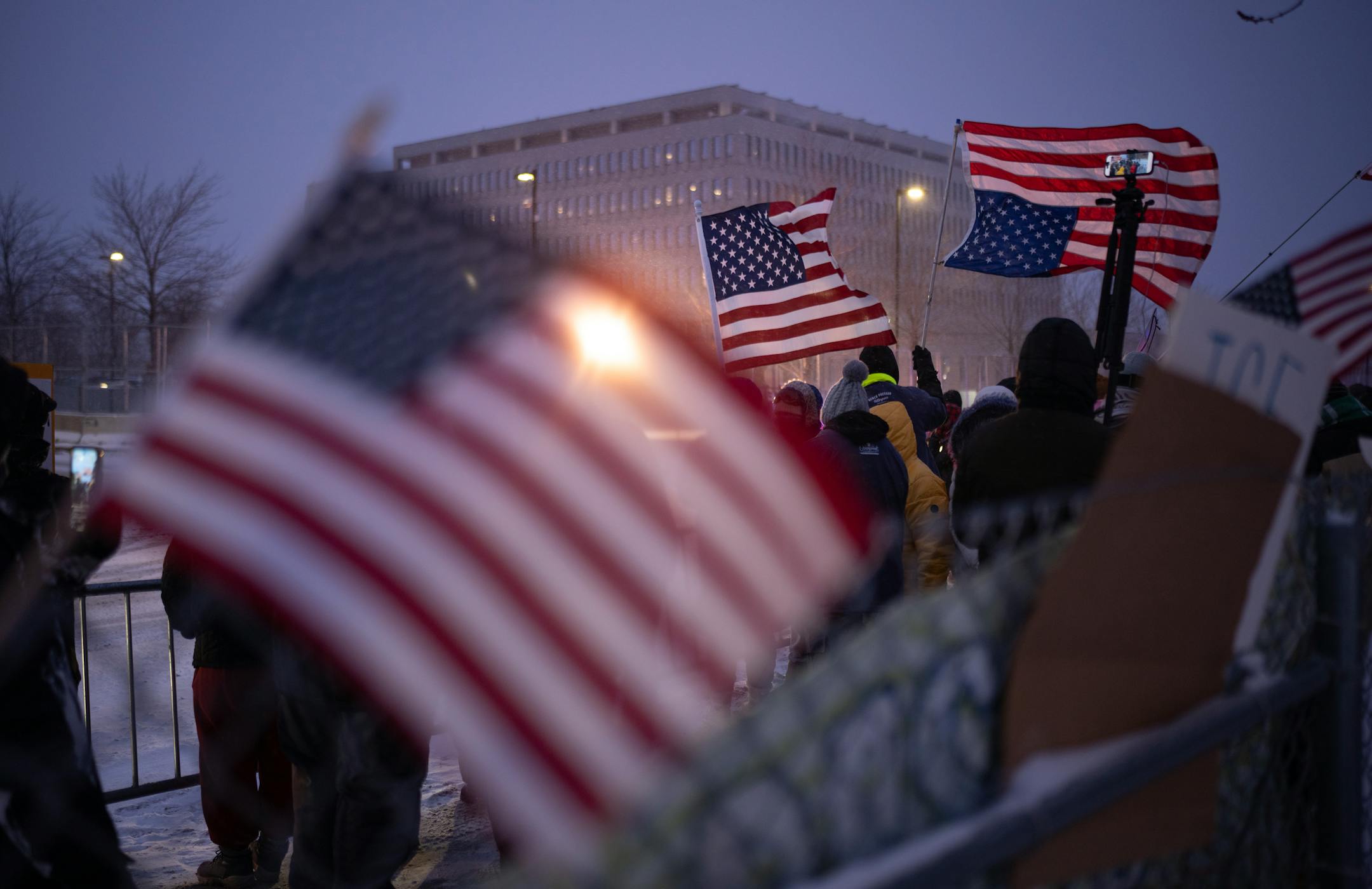
"Federal agencies cannot break the law to enforce the law. Legitimacy comes from restraint, consistency and fidelity to the institutions that hold power to account," Sharon McMahon writes. Above, demonstrators gather across the street from the Whipple Federal Building at Fort Snelling on Jan. 18. (Jeff Wheeler/The Minnesota Star Tribune)

Opinion editor’s note: Strib Voices publishes a mix of guest commentaries online and in print each day. To contribute, click here.

•••

Ninety-six federal court orders. One month. One state.

That’s what Chief Judge Patrick J. Schiltz of the U.S. District Court in Minnesota — a Republican appointee — placed on the public record: an appendix identifying 96 court orders violated by Immigration and Customs Enforcement across 74 cases since Jan. 1, with a warning that the tally likely understates the magnitude of the problem.

In an order excoriating the Trump administration for failing to comply with the court’s requirement to hold either a bond hearing for a petitioner or release them, Judge Schiltz wrote that the list of 96 ignored orders “should give pause to anyone — no matter his or her political beliefs — who cares about the rule of law.” He added that “ICE has likely violated more court orders than some federal agencies have violated in their entire existence.”

A country can argue immigration policy all day long, but a country cannot remain a constitutional republic when an executive agency treats court orders as optional. That is the civic emergency being laid bare in Minnesota, and it is a warning the rest of the country must heed.

Americans are being offered a false choice: safety or rights, as if constitutional limits belong in calm waters while stormy weather earns the government a free pass. As though “law and order” means obedience from citizens and exceptions for the government.

Real law and order binds everyone. Including those in power.

Court orders are one of the ways democracies prove that power has limits. Judges cannot enforce their own rulings, agencies do. When an agency treats an order as optional, it is breaking the mechanism that keeps authority legitimate.

Ignoring court orders damages far more than the people whose names appear on the dockets. The damage spreads into every future demand the government makes of its citizens, hollowing out the very authority law enforcement depends on: the public’s willingness to comply, because the system has agreed-upon limits.

A government that asks the public to respect the law must model respect for the law.

This is not a partisan complaint. These structures have held the world’s oldest democracy — however imperfectly — in place through administrations from right to left.

The rule of law is not contrived via a shared mood. It is held together by the daily decision to treat certain words as binding: Released. Enjoined. Produce. Appear. When those words stop meaning what they say, they teach citizens a terrible lesson: The rules are not real, and whoever can produce the largest show of force will carry the day.

If law and order is to be regained, the Department of Homeland Security and ICE should issue a compliance protocol that functions as an operational checklist. “Protocol” has to mean more than a memo; it must include a chain of responsibility for every court order: who receives it, who confirms it, who executes it and what supervisor certifies completion in writing.

The public deserves weekly reporting: orders received, time to compliance, and explanations attached to any delays. Judge Schiltz has already given the nation a ledger of judicial orders. It’s time for DHS to respond with a ledger of executive compliance. If the agency is doing its job, transparency will strengthen it. If it is not, transparency will force a correction.

Second, the DOJ should conduct an independent review of the January violations documented by the court and publish a public summary with findings and corrective actions. Independence matters because credibility matters. It also serves to protect the many public servants who do follow the rules and do not want their work — or their safety — undermined by a culture of impunity. A review that produces a public account builds confidence that the government itself remains governable.

Third, Congress should use its oversight authority to ensure court order compliance. Lawmakers can debate immigration policies, staffing levels and budgets. But none of those debates can substitute for the baseline requirement that the executive branch obey the judiciary. Agencies can litigate and appeal, but agencies must follow orders while litigation proceeds. That is quite literally the rule of law in action.

Federal agencies cannot break the law to enforce the law. Legitimacy comes from restraint, consistency and fidelity to the institutions that hold power to account.

When “law and order” becomes a slogan detached from law, order decays. The vacuum gets filled with cynicism, vigilantism, conspiracy and violence. People stop cooperating. Communities harden. The public square becomes more dangerous, not less.

When courts lose their power to command compliance, democracy loses one of its quiet miracles: the ability to restrain power using words on a page. Law and order stands or falls on obeying the courts.

Minnesota has put that truth in stark relief. The rest of the country should pay attention — because once court orders become optional, nothing else is secure.

Sharon McMahon is the bestselling author of “The Small and the Mighty,” the founder and editor-in-chief of “The Preamble,” and the author of the forthcoming children’s book, “We Are Mighty.”

about the writer

about the writer

Sharon McMahon

More from Commentaries

See More
card image
Yuki Iwamura/The Associated Press

Why Minnesota is winning the hearts and minds of the nation.

card image
card image