
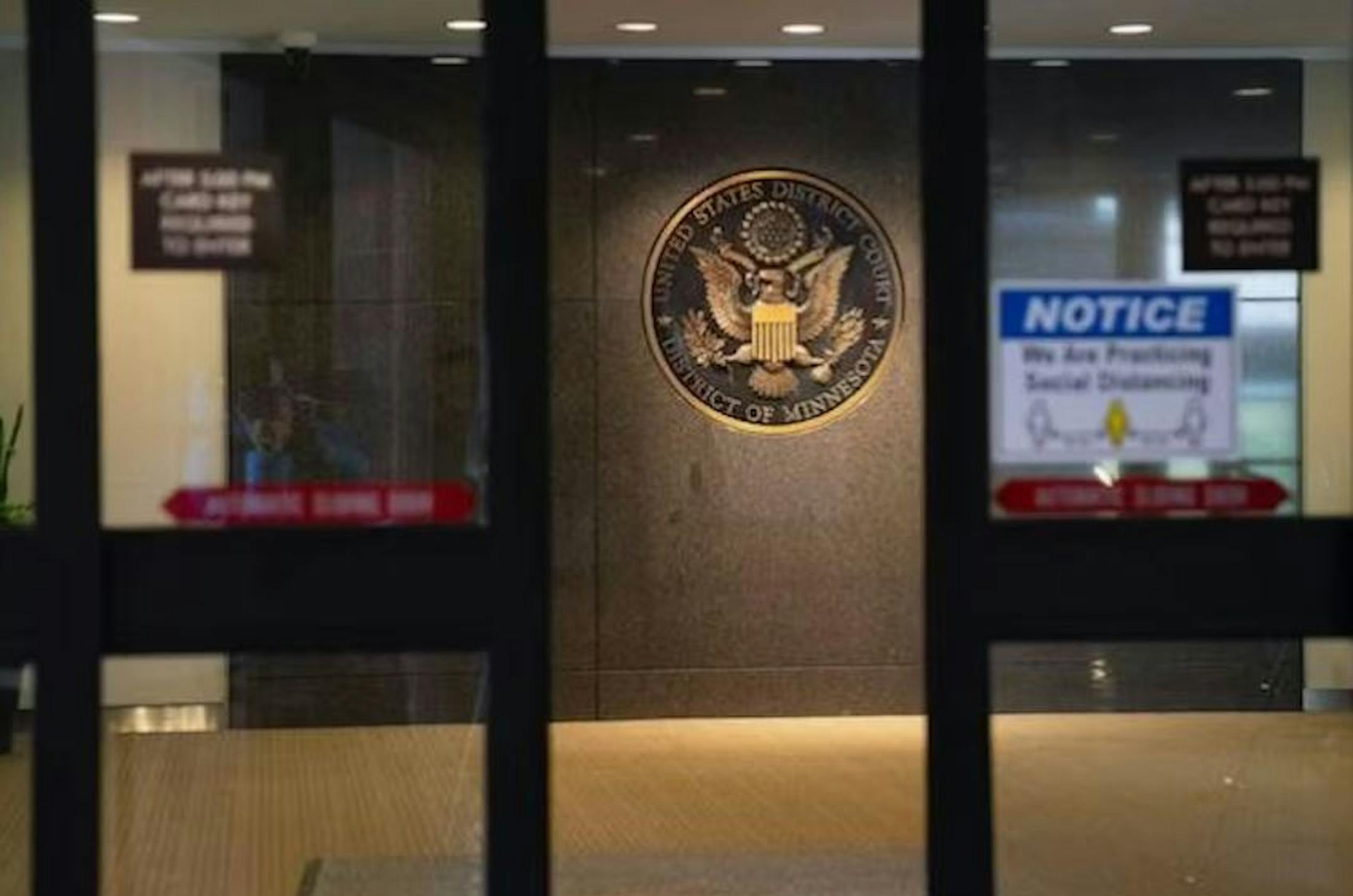
Case dismissals, hastened plea deals follow U.S. Attorney staffing exodus in Minnesota

Normally a rarity, dismissals in Minnesota’s federal court have emerged amid mass resignations within the U.S. Attorney’s Office.

The Minnesota Star Tribune
February 12, 2026 at 12:00PM
“This, I think, is a pretty good indication of an office in crisis,” said Bradford Colbert, a state public defender and professor at Mitchell Hamline School of Law. (Star Tribune file)

One defendant was due in court for what was supposed to be a routine hearing about his federal drug charges. But when proceedings began in the St. Paul courtroom, no one appeared for the prosecution.

The U.S. Attorney’s Office in Minnesota hadn’t assigned a new prosecutor to the case after the previous lawyer for the U.S. government suddenly resigned mid-January. The federal prosecutor’s office asked to delay future hearings to find a new lawyer amid a wave of more staff departures, according to court records.

One week later, the U.S. Attorney’s Office asked to dismiss the case without prejudice “rather than assign a new prosecutor to handle it,” according to court records. U.S. District Judge Jeffrey Bryan agreed to throw out the case and ordered the man’s immediate release from custody.

The dismissal, a legal step that’s typically rare, was one of several recently filed in Minnesota’s federal court system. The Minnesota Star Tribune has identified six federal criminal cases tossed at the request of prosecutors as the U.S. Attorney’s Office grapples with over a dozen resignations and a soaring immigration caseload.

The dismissals, granted over the span of about 10 days, almost exclusively involve defendants charged with drug crimes. Each case was dismissed without prejudice, meaning prosecutors reserve the right to refile them.

The Minnesota Star Tribune is withholding the names of defendants whose cases have been dismissed.

“This, I think, is a pretty good indication of an office in crisis,” said Bradford Colbert, a state public defender and professor at Mitchell Hamline School of Law.

The office, currently led by U.S. Attorney Daniel Rosen, an appointee of President Donald Trump, did not respond to the Star Tribune’s questions about the dismissals.

Among the cases are that of a man described by law enforcement as having ties to a known drug trafficking organization. Investigators in a criminal complaint said they identified him as a suspect after intercepting a package addressed to his apartment that contained 9.1 pounds of cocaine in September 2025.

An assistant U.S. Attorney asked to toss the case in a brief motion filed Jan. 23, saying in a one-sentence memo that a dismissal is “in the interests of justice,” pursuant to federal law.

The U.S. Attorney’s Office also asked to dismiss the case against another man whom federal agents accused of having a kilogram of meth and more than 200 grams of fentanyl in his Minneapolis apartment. The U.S. Attorney’s Office cited the same reasoning in its request.

Another dismissal came Jan. 20, when lawyers for the U.S. government asked to scrap charges against a man accused of impeding law enforcement because they didn’t have enough witnesses to support the case going forward.

Decimated staffing

The U.S. Attorney’s Office in Minnesota has seen mass resignations since mid-January, with 14 people — including key members of its leadership team — having left or intending to leave soon over disagreements with directives from the Justice Department and frustration over the Trump administration’s immigration surge interfering with ongoing prosecutions.

The latest round of departures include senior leaders from the office’s narcotics unit, including assistant U.S. Attorneys Allen Slaughter Jr., Lauren Roso and Tom Hollenhorst.

Their departures follow resignations of six veteran prosecutors and most of the office’s senior leadership, including the office’s second-in-command, Joe Thompson, and criminal division chief, Harry Jacobs. It remains to be seen how the departures will affect prosecutions stemming from Minnesota’s ongoing fraud crisis involving programs like Feeding Our Future and Medicaid.

The criminal dismissals also come as the office is buckling under the weight of petitions filed by immigrants seeking release from detention as part of the Operation Metro Surge federal agent deployment. The crush of wrongful detention cases led a volunteer lawyer for the Minnesota U.S. Attorney’s office to break down before a judge who called a hearing to question why the U.S. government had violated multiple court orders. Julie Le, who has since been removed from her post in Minnesota, described working around the clock on the cases.

Colbert said it’s ironic that the Trump administration says it’s going after the so-called worst of the worst in its immigration enforcement “when they’re dismissing the cases against what actually would be the worst of the worst.”

The shift in tactics counter what was once an aggressive effort by the office to prosecute street crimes in Minneapolis. Under former U.S. Attorney Andrew Luger, the office levied dozens of racketeering conspiracy charges to go after Minneapolis gangs linked to allegations of murder, robbery, drug conspiracy and gun crimes. The statute was first rolled out in the 1970s to bring down organized crime families.

Aliza Hochman Bloom, an assistant professor of law at Northeastern University and former federal public defender in Florida, echoed that dismissals, even without prejudice, are rare.

“It’s normal to adjudicate and the next docket entry would be to enter a plea agreement. That is not what’s happening here,” she said.

On Jan. 27, federal prosecutors asked to dismiss a felony drug case against Lavester Tramaine Breham, a man also convicted of first-degree murder in Hennepin County District Court. An assistant U.S. Attorney wrote the case against Breham “has no further federal interest” after learning he was sentenced to life in prison without the possibility of parole in the fatal shooting. They asked the court dismiss without prejudice to keep the possibility of refiling the charge if the state conviction is overturned through an appeal.

Federal drug convictions carry stiffer sentences than state charges, offering an incentive for prosecutors to refer a case to federal District Court in Minnesota. Colbert said sometimes the variance between state court and federal court means a sentencing difference of 20 years in drug cases.

But as one state criminal case against a man has moved ahead, the fallout at the U.S. Attorney’s Office has stalled the federal side.

Firomsa Ahmed Umar is scheduled to appear in Hennepin County court on Feb. 12 for a hearing on his arson charges tied to the firebomb attack at Minneapolis ice cream shop Fletcher’s last year. As the state prepares for the appearance, the U.S. Attorney’s Office has asked for a continuance in his federal trial.

The prosecutor assigned to the case has left the office, the lawyer explained, and the office needs to assign a new one.

Susan Du, Jeff Hargarten and Paul Walsh of the Minnesota Star Tribune contributed to this story.

about the writers

about the writers

Sarah Nelson

Reporter

Sarah Nelson is a reporter for the Minnesota Star Tribune.

See Moreicon

Jeffrey Meitrodt

Reporter

Jeffrey Meitrodt is an investigative reporter for the Star Tribune who specializes in stories involving the collision of business and government regulation. 

See Moreicon

More from News & Politics

See More
card image
Leila Navidi/The Minnesota Star Tribune

Tom Homan said Thursday that the drawdown will happen over the next week.