Roper: My bus stop is going away — and that’s OK

Metro Transit is consolidating stops across the region to help improve bus reliability.

Columnist Icon
The Minnesota Star Tribune
August 12, 2025 at 11:00AM
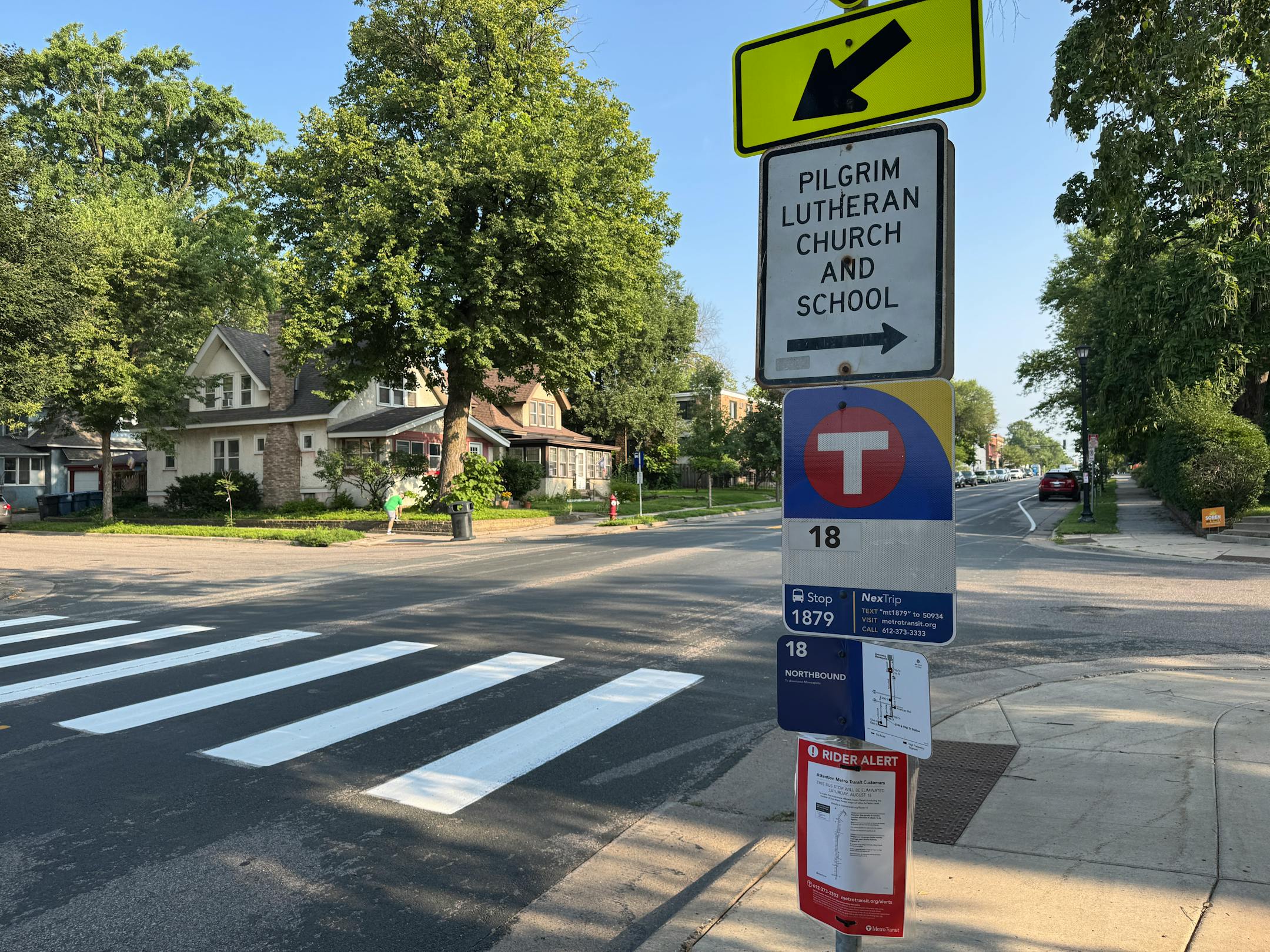
Eric Roper's soon-to-be-former bus stop on Nicollet Avenue. (Eric Roper)

Sign up here to follow this column by email.

My bus stop is on the chopping block. They’re scrubbing it from the system.

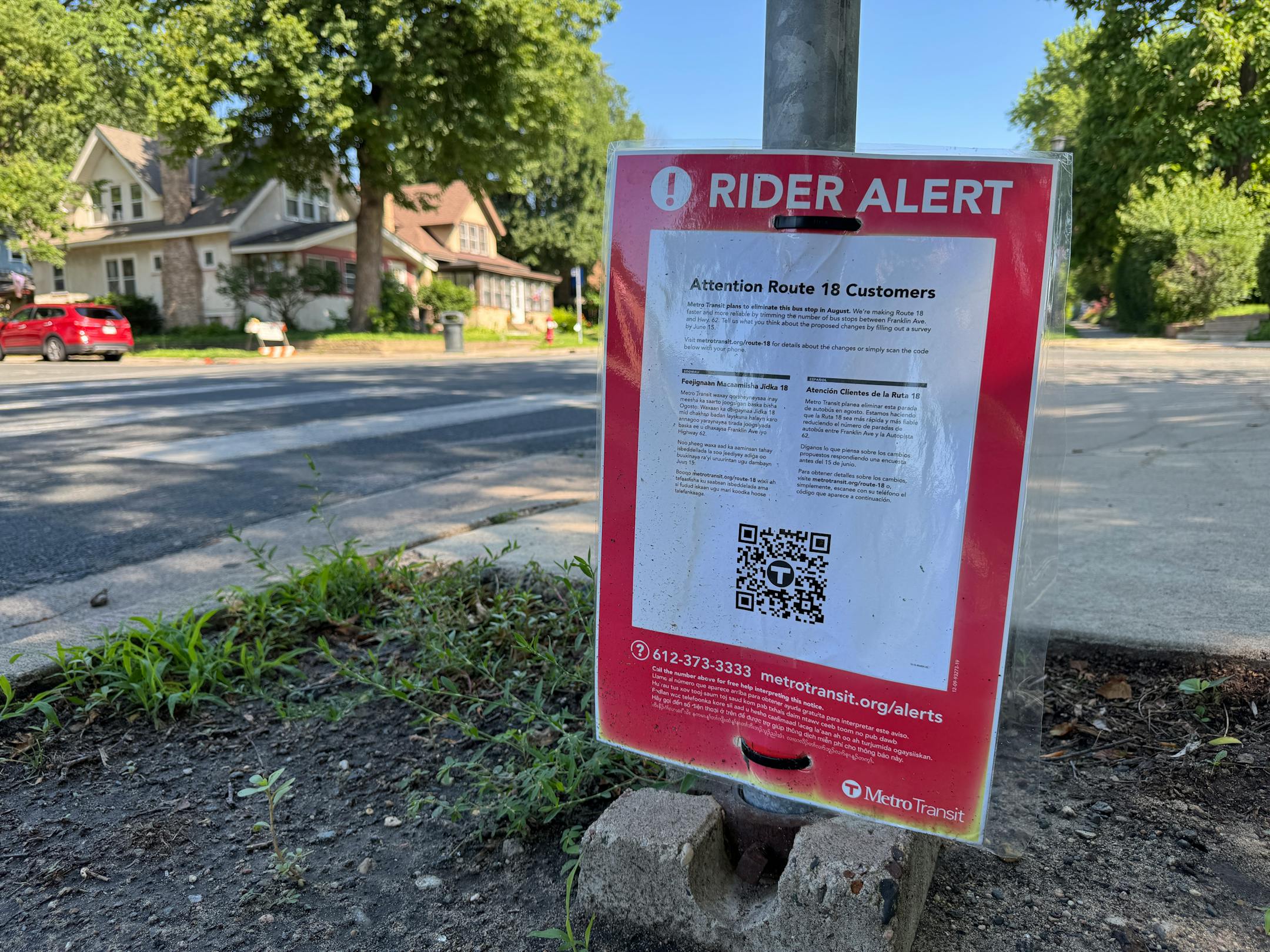
I’ve spent a decade there squinting down Nicollet Avenue, waiting for bright orange lights — 18 DOWNTOWN — to peek above the horizon. So it was jarring to discover a tag noting the stop’s demise to make the Route 18 “faster and more reliable.” I’ll have to walk an extra block as a result.

Light up the phones! Flood the inboxes! They won’t get away with this!

It’s actually fine. I am being asked to make a small sacrifice to benefit a greater good, and I’m on board for it. Transit planners are disappearing bus stops across the metro area, so I’ve got a full-blown trend on my hands to justify a column about a pole in the ground near my house.

The Route 18 is the latest of more than a dozen routes where stops have been consolidated. Metro Transit is moving toward having a stop roughly every other block or quarter-mile on urban routes, so nearly a third of the stops on the south Minneapolis portion of my route are being cut.

Digging into this with Jonathan Ahn, a planner with Metro Transit, I learned that wiping my stop and others (mostly on odd-numbered streets) helps ensure buses travel the route at routine intervals. The agency is simultaneously boosting that frequency to every 10 minutes on weekend afternoons, part of widespread improvements to the transit system aided by a new sales tax.

Here’s the bus consolidation logic: About 13 people wait at my stop each day for a bus downtown. So no one is there most of the time, and the buses skip it. This is hard to account for in bus scheduling, since some buses get delayed at these less predictable, in-between stops. On high-frequency routes like mine, this results in bus “bunching.”
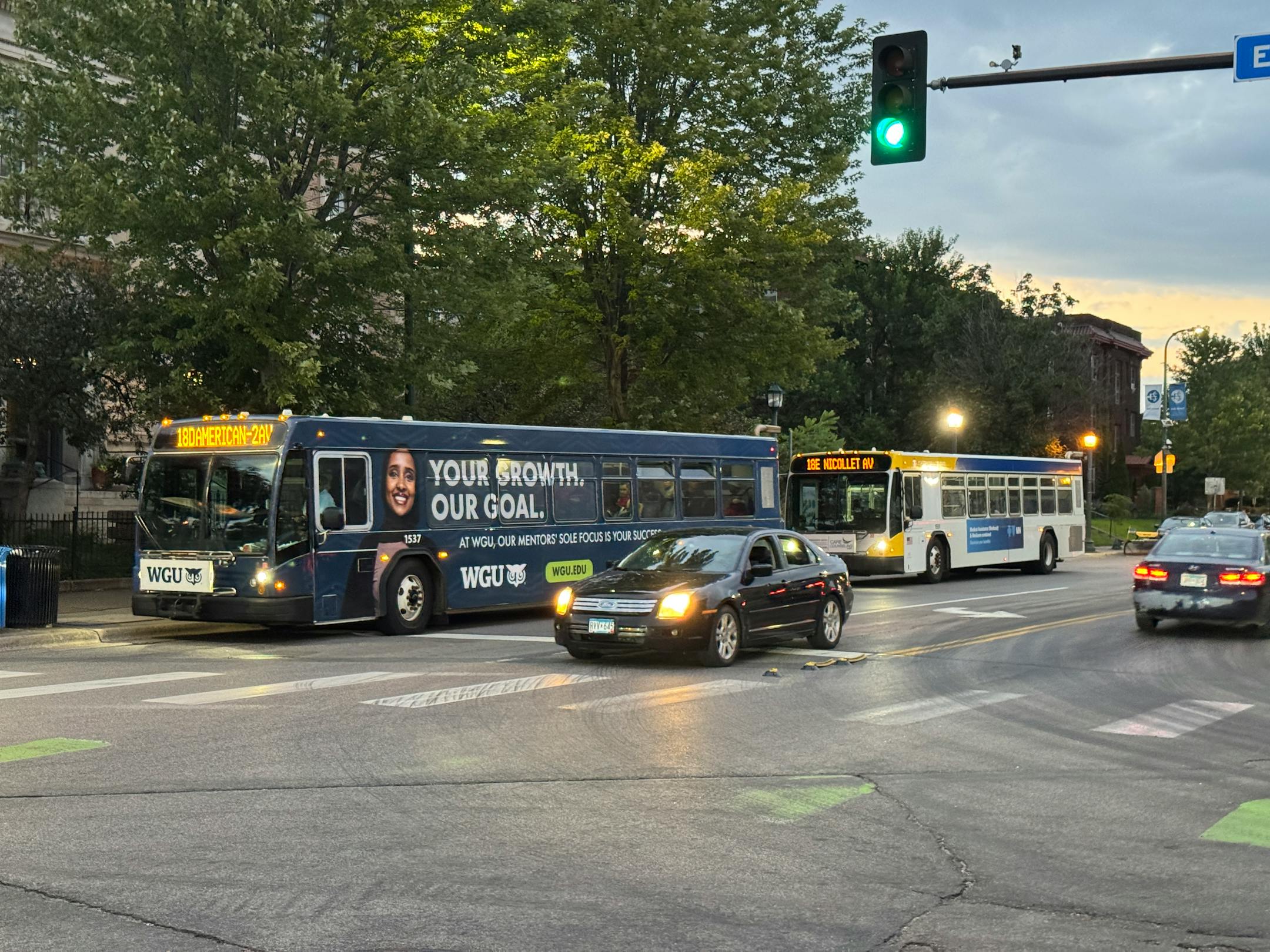
An example of bus bunching at Nicollet Avenue and 24th Street. Two Route 18 buses arrived back to back. (Eric Roper)

Bunching is when two buses arrive soon after each other. About a quarter of the buses on my route are five to 15 minutes behind schedule, meaning some back up to the bus running behind them. It also means I could be waiting longer than the bus’s posted frequency.

No more! (Hopefully.)

After my stop and others are yanked on Saturday, I’ll start walking a block north to a major intersection where more than 120 people board a downtown-bound bus each day. Ahn said focusing on these core stops allows the agency to install more amenities, like shelters with real-time arrival information. (Route 18 might also one day become an amenity-rich rapid bus line.)

I don’t have mobility issues, so I don’t mind walking the extra block. Metro Transit does factor mobility needs into its stop-elimination decisions, however, including looking at wheelchair ramp deployment data. It surveyed riders on the Route 18, 87% of whom in the affected area will see no change. Many of the 190 riders who responded to Metro Transit’s survey said they had a disability or impairment, though more than three-quarters of respondents said they could use the next-closest stop.

But there were some specific comments that led to stops being restored. Patients at a dialysis clinic on 43rd Street and Nicollet, for example, said it would be difficult to lose the stop. So it was spared.

A tag affixed to Eric Roper's bus stop saying that it will be removed in August. (Eric Roper)

“I have mobility limitations that make it more difficult for me to use my next closest stop,” one person wrote in the survey. “This is especially true in the winter. Please retain the stops in both directions at 56th street.”

And it was so.

Stops have already been removed on routes 2, 3, 4, 7, 17, 22, 61 and 63, as well as some routes that became rapid bus lines.

So I called MJ Carpio with Move Minnesota (which advocates for transit, biking and walking) to get a sense of the broader feedback. Carpio said they hear differing opinions about stop consolidation, but Move Minnesota’s staff is generally supportive of it — especially since in this case it’s accompanied by better frequencies.

A 2006 study of bus stop consolidations in the Portland area found that it did not dampen ridership. Hopefully the result is similar in the Twin Cities, because Metro Transit has been struggling to restore local bus ridership to pre-pandemic levels.

Have you lost a bus stop? Did it change your commuting experience? Send me a note at eric.roper@startribune.com.

about the writer

about the writer

Eric Roper

Columnist

Eric Roper is a columnist for the Star Tribune focused on urban affairs in the Twin Cities. He previously oversaw Curious Minnesota, the Minnesota Star Tribune's reader-driven reporting project.

See Moreicon