
Advertisement

ICE detained a Minnesota teen, labeled him an ‘unaccompanied minor,’ and lost him

The Trump administration is apprehending and designating immigrant kids as “unaccompanied,” even as their parents in the U.S. search for them.

The Minnesota Star Tribune
February 22, 2026 at 11:00AM
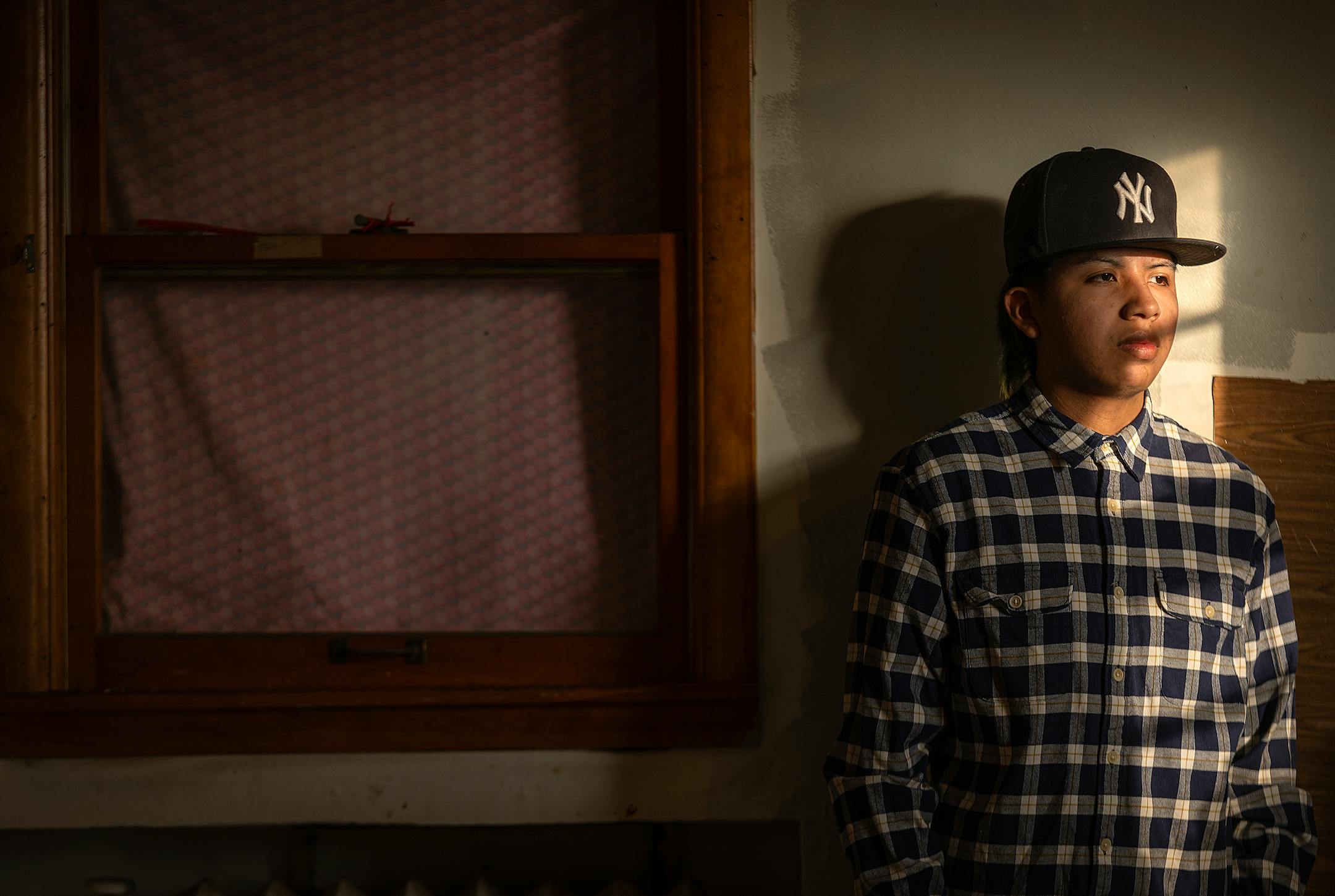
Teenager Sebastian talks about his experience under the custody of federal agents from a home with his attorney Claire Glenn and his father Manuel in Minneapolis on Friday, Jan. 30. (Elizabeth Flores/The Minnesota Star Tribune)
Advertisement

Sixteen-year-old Sebastian, an asylum-seeker from Ecuador, was driving alone in north Minneapolis when immigration agents apprehended him in early January. Moments before his phone was confiscated, the teenager called his father and told him what was happening.

He is one of many children who have been swept up under Operation Metro Surge. But instead of taking Sebastian to the Whipple Federal Building and sending him to another detention center, the feds sent him to a Christian youth shelter in Michigan.

The government then lost track of his whereabouts for the better part of a week, during which his family searched frantically for their son.

Sebastian’s journey is one of the strangest wrongful-detainment petitions to emerge from the Trump administration’s immigration crackdown in Minnesota. It’s also illustrative of the administration’s new approach to the “unaccompanied minor” system.

Long a designation for youth apprehended while crossing the border alone, the unaccompanied minor system now applies to immigrants detained in interior operations like Metro Surge. The children are sometimes kept from their parents and placed in a vast, increasingly impenetrable network of shelters holding immigrant kids in government custody.

Agents first took Sebastian to Bloomington, where they moved him from one holding area to another before taking him to a local hotel for the night, he told the Minnesota Star Tribune. Four Spanish-speaking agents guarded him but wouldn’t answer his questions.

“I just was thinking, I don’t want them to take me,” he said through a translator. “I asked an agent if they were going to deport me. He said they can’t deport me, but they were going to transport me to a different location.”

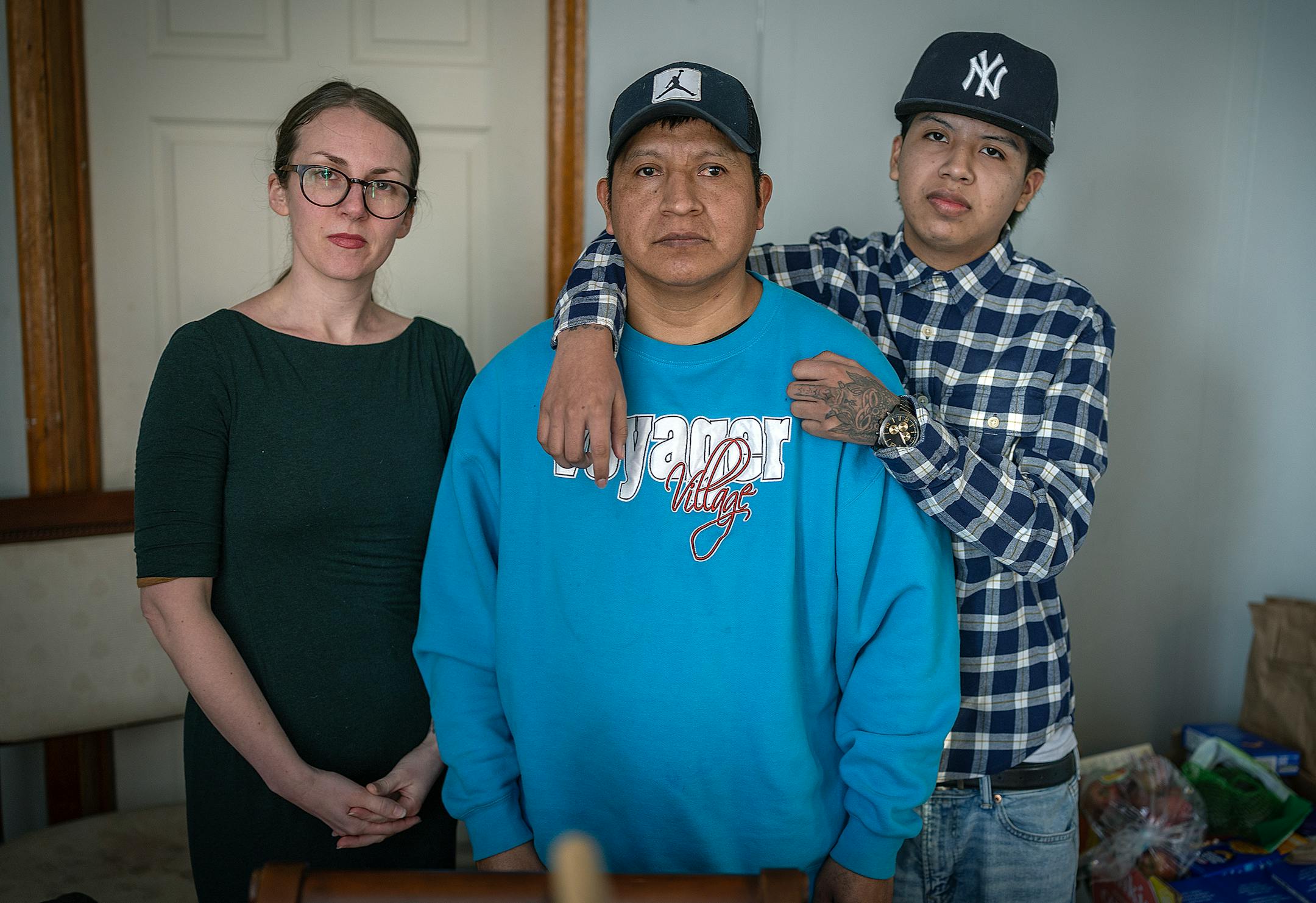
In court filings, the teen is known only as “M.S.V.I.” The Minnesota Star Tribune met with him and his father, Manuel, and verified their backgrounds. We’re using their middle names because the family is fearful there could be political retribution for speaking about Sebastian’s detention.
Advertisement

The next day, Sebastian was flown to Michigan, where he was checked into Bridgeway, a short-term residency program owned by Bethany Christian Services. He was given five vaccines in each arm, he said.

For more than a week, Sebastian was unable to leave. He spent most of his time watching television and listening to music in the federally contracted agency. He was permitted to call his father under staff supervision, but he wasn’t allowed to disclose where he was, he said.

Finding him took detective work.

His family contacted Claire Glenn, who, like other Minneapolis lawyers during Operation Metro Surge, pivoted to filing emergency wrongful-detainment petitions.

After a federal judge ordered the government to respond to Sebastian’s case last month, ICE attorney Julie Le wrote in an email, “I have done some research, and it does not appear that this Petitioner is in ICE custody.”

Glenn couldn’t believe it. “Are you saying that you do not have a record of him ever being in ICE custody, or that you have record he was released?” she asked.

Advertisement

With the help of an investigator at the Legal Rights Center, Glenn traced Sebastian’s phone calls to his father to Bridgeway. On Jan. 26, Glenn arrived in person to claim him.

The Department of Homeland Security didn’t respond to questions about Sebastian’s case, but throughout its action in Minnesota, DHS has denied that ICE targets children or teenagers. But if ICE “encounters” a minor without their parent, agents “ensure their safety” by working with other arms of the federal government tasked with their custody, DHS said in a statement.

After the feds apprehended Sebastian, they labeled him an “unaccompanied minor” and gave him a new “alien number.” As an asylum-seeker, Sebastian already had an A number, so the second one made him virtually untraceable after DHS transferred him into the custody of the Office of Refugee Resettlement, which oversees the network of federally contracted shelters housing unaccompanied immigrant children.

Once Glenn figured out where Sebastian was, she made a deal with Le to dismiss the wrongful-detainment case in exchange for his release.

“It’s hard to overstate just how scary and intense it was,” Glenn said, recalling the weeklong hunt for her client.

An industry benefits from family separation

Minnesota doesn’t have any unaccompanied minor shelters. But in other states, they’ve traditionally housed immigrant kids apprehended at the border alone.

Advertisement

But now, immigrant youth sent to Michigan’s federally contracted shelters are almost exclusively detained in enforcement actions such as Operation Metro Surge, said Ana Devereaux, senior managing attorney of the Michigan Immigrant Rights Center.

She’s familiar with Bethany Christian Services, where Sebastian ended up, because her organization provides know-your-rights training to the immigrant kids in its custody.

“The experience of children in immigration detention is, even in the most favorable of settings, still detention,” Devereaux said. “Freedom is still highly limited. Their contact with family is going to be limited.”

Bethany Christian Services, founded in 1944 and based in Michigan, bills itself as the “largest Christian child and family organization in the U.S., with dozens of facilities across the country. It provides foster care, adoption and immigrant services.

Bridgeway, its 36-bed Grand Rapids program for unaccompanied minors, has a history of violations.

In 2023 one of its counselors was charged with sexually abusing multiple immigrant youth. The staffer was fired and ultimately pled down to an assault conviction, but in subsequent licensing inspections by the state of Michigan, Bridgeway continued to be out of compliance with background checks.

Advertisement

For at least two months last year, Bridgeway did not have any youth admitted to its program due to a lack of referrals. Instead, the agency provided staff activities to keep morale high, according to inspection notes.

“They reported it’s been a breath of fresh air to have some time to think without the chaos and use the time to decompress,” the notes said.

About three weeks before Sebastian arrived, a special investigation found evidence of staff hazing youth.

Despite those problems, a spokesperson for Bethany defended its role as a federal housing provider for immigrant children but declined to confirm or deny any individual residents.

“When children are in our care, our focus is on their safety, well-being, and access to trauma-informed support while we follow all federal requirements related to family contact and reunification,” the spokesperson wrote in an email.

Bethany Christian Services receives millions of dollars in grants from the federal government, according to a lawsuit the agency filed against the state of Michigan in 2024 to defend its practice of only hiring staffers “who ascribe to Bethany’s foundational Christian beliefs.”

The DHS declined to answer how many children from Minnesota have been placed in youth shelters since the start of Operation Metro Surge.

Sebastian, age 16, talks about his experience under the custody of federal agents from a home with his attorney Claire Glenn and his father, Manuel, in Minneapolis on Friday, Jan. 30. (Elizabeth Flores/The Minnesota Star Tribune)

Litigation aims to stop new rules

When the government takes children into custody as unaccompanied minors, it’s become increasingly difficult for parents to get them back under new rules set by the Trump administration.

Several families are suing the federal government, describing stringent requirements for forms of identification typically available only to U.S. citizens. As a result, unaccompanied minors are languishing in shelters meant for short-term stays, and there have been instances of parents detained while trying to retrieve their children. In some cases, children cannot be reunited with their families until they turn 18.

In a case filed in Connecticut, police arrested a 15-year-old boy who was later confined in a shelter for eight months while his mother battled a series of administrative hurdles.

Another case in D.C. alleged that despite a marked decline in unaccompanied minors arriving at the border, the length of detention for children stuck in government custody had grown indefinitely because parents lacked the requisite paperwork to claim them.

“All of these changes have resulted in it being nearly impossible for someone who’s not a citizen or doesn’t have legal status in the U.S. to sponsor anyone,” said Mishan Wroe of the National Center for Youth Law, who represents the young people in the D.C. case.

In a statement, the DHS blamed the need for more demanding background checks on the Biden administration, during which hundreds of thousands of unaccompanied minors crossed the border. Some of those children were released to “unvetted sponsors who were actually smugglers and sex traffickers,” the DHS said, including a list of 16 incidents from across the country in which ICE arrested sponsors accused of various crimes.

The Star Tribune could not verify the list because no names were provided, but three out-of-state incidents referenced suspicions of child sexual abuse.

Critics have countered that the rhetoric around sex trafficking of unaccompanied minors by their adult guardians is exaggerated, and that immigrant kids have been abused at large federally contracted shelters, including Southwest Key and Abraxas Academy.

Wroe said the biggest pushback to the Trump administration’s current practice of using the unaccompanied minor system to separate children from their parents is taking place in the courts rather than in Congress. She said U.S. policy still recognizes that the safest place for most kids is with their parents.

“So the law is still on our side, and what we’re trying to do is enforce those laws.”

A family’s nightmare

Sebastian has returned to Minnesota, but his ordeal continues to haunt and bewilder him and his family.

Manuel, his father, told the Star Tribune that he couldn’t grasp what the people at Bridgeway wanted in return for his son. At one point shelter staff told Manuel that Sebatian might have to remain in the shelter until he turned 18, or he could be adopted out, which sent them both into a panic.

“What was it all for?” Manuel said through a translator. “He’s a minor. He’s here to study, to go to school. He doesn’t have a criminal record.”

Sara Koziol Chavez, who helped search for Sebastian, said what unnerves her about the case is that even with multiple lawyers searching for the teen around the clock, various arms of the government concealed his location.

“They erased his family by calling him an unaccompanied minor, and they did this even while they were being watched,” Koziol Chavez said.

Sebastian befriended two other boys at the Michigan shelter, he said. Like him, they had been detained by ICE. One was from Minnesota. He has no idea what’s happened to them.

about the writer

about the writer

Susan Du

Reporter

Susan Du covers the city of Minneapolis for the Star Tribune.

See Moreicon

More from News & Politics

See More
A timeline chart showing observed federal immigration activity during Operation Metro Surge.
card image
Advertisement