
Heart device sales, lower tariff impacts boost Boston Scientific earnings despite restructuring charge

The discontinuation of a device treating a condition causing heart failure fueled millions in restructuring costs. It didn’t stop the big-in-Minnesota company from increasing guidance again.

The Minnesota Star Tribune
July 23, 2025 at 6:26PM
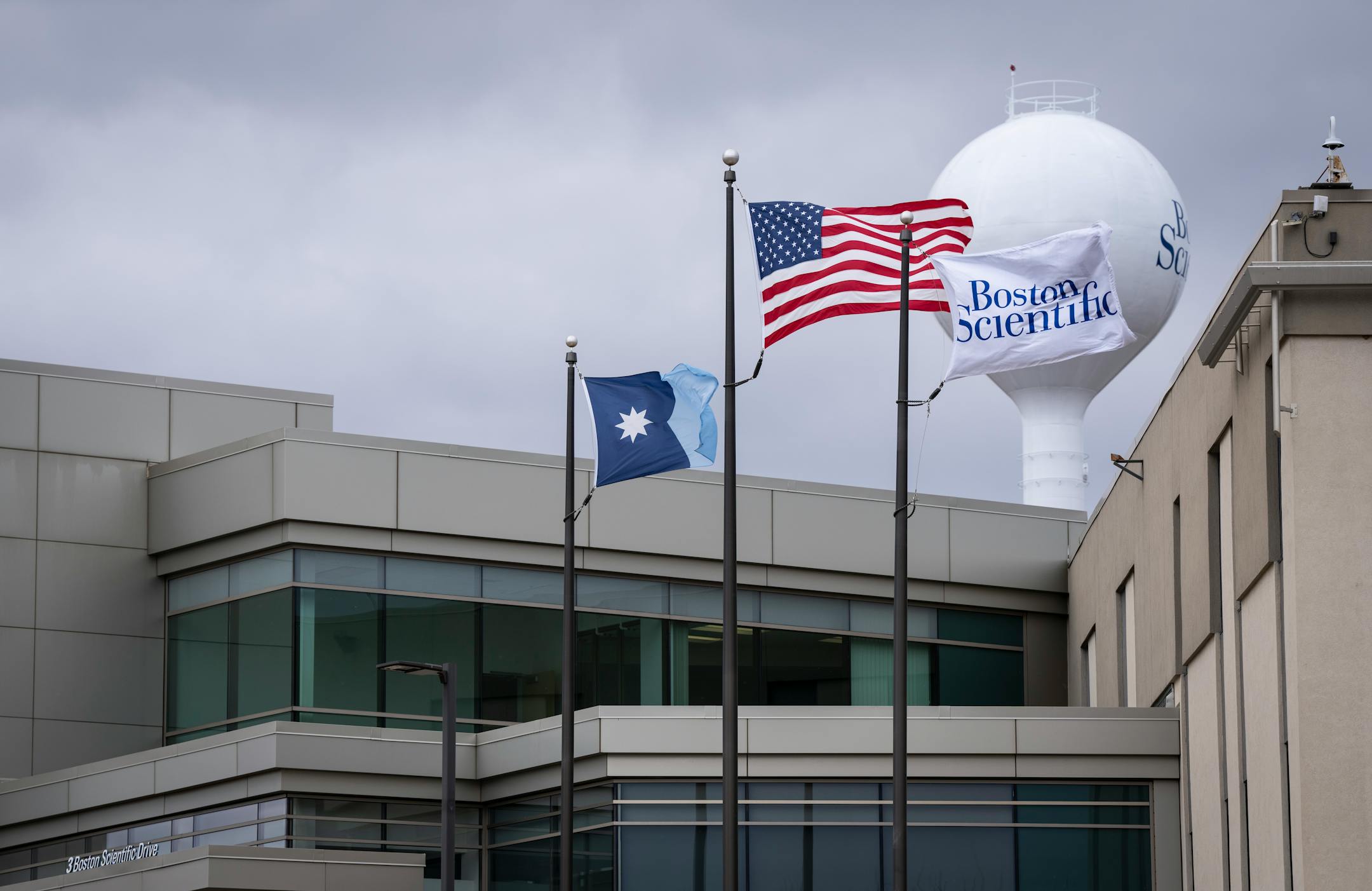
Boston Scientific now expects tariffs to cost $100 million, down from $200 million. (Renée Jones Schneider/The Minnesota Star Tribune)

For a moment, it appeared Boston Scientific was having a rare bumpy quarter.

Executives in April had estimated tariffs would cost the medical device maker with large operations in Minnesota $200 million this year. About a month later, the company discontinued global sales of a device treating a heart failure-causing condition called aortic stenosis, resulting in job cuts.

But on Wednesday, strong sales and profits combined with lower-than-expected tariff impacts to buoy Boston Scientific’s quarterly financial results. The results beat Wall Street’s expectations and sent the stock up as executives increased their full-year financial projections for the second consecutive quarter.

“I‘m very proud of the commercial execution of our high-performing global team and both ... the near and long-term growth catalysts across our businesses,” CEO Mike Mahoney said on a call with analysts. The company’s stock price closed up more than 4% Wednesday.

For the second quarter, which ended June 30, Boston Scientific reported about $1.13 billion in adjusted profit on $5.06 billion in sales. Sales grew on an organic basis by 17.4% over the same quarter a year prior.

The company pulled down its estimate for the impact of tariffs this year to $100 million based on the current schedule of expected tariffs, said new Chief Financial Officer Jon Monson.BTIG analyst Marie Thibault said in an interview that the main driver of the softer impact is the lowering of China tariffs since the last quarterly report.

Boston Scientific previously raised its organic sales growth guidance for the year to 12% to 14%, up from a range of 10% to 12%. Now, it is once again increasing it to a range of 14% to 15%. It also kicked up its profit per share range by roughly a nickel at the top end of the range.

Thibault said the magnitude of the raise in guidance and “the bullish commentary about being able to sustain a lot of the sources of that growth are what pushed the stock higher today.”

In late May, the company said it will eliminate jobs after halting global sales of Acurate aortic valve replacement systems, treating the heart failure-causing condition aortic stenosis, because of regulatory hurdles. Boston Scientific paid more than $400 million to acquire the maker of the valves in 2017.

The company reported a restructuring charge of $83 million for the quarter, fueled by the discontinuation. Restructuring charges include severance, asset write-offs, contract cancellations, facility shut-down costs and more. Mahoney had previously said the Acurate stoppage could be a “slight downside” for the company while tariffs could prove to be an upside, after negotiations between the White House and international trade officials gained traction.

Driving the company’s quarterly growth was the Farapulse pulsed field ablation system treating atrial fibrillation via a minimally invasive procedure, and the Watchman implant for fighting strokes. Sales for the company’s cardiology division, which is its biggest business, increased by 28% on an organic basis to more than $2.6 billion.

The Watchman franchise grew by 28% for the quarter, “reflecting continued concomitant uptake in the U.S. and the strong safety profile of our latest generation Watchman Flx Pro,” which recently received an important approval for use in Europe, Mahoney said. During the implant procedure, patients receive the device and undergo pulsed field ablation at the same time.

Robbie Marcus, a J.P. Morgan analyst, commented during the call, “the Watchman number was just phenomenal.” Thibault said it’s “especially noteworthy” that the executives said they’d be able to maintain its 20% or higher growth going forward even as the Watchman’s revenue base increases.

One year after Farapulse was launched, the company’s electrophysiology sales grew 94%.

“Global momentum continued through the quarter, driven by the safety, predictability, and versatility of the Farapulse device,” Mahoney said, adding that the U.S. Food and Drug Administration recently expanded its indication for use in the United States.

In an interview last month, Chief Medical Officer Dr. Ken Stein joked, “we’re not only ‘Farapulse Scientific.’” He said the company is very happy with what it has accomplished with its blockbuster Watchman and Farapulse franchises but is looking to the future.

“The question for us is: What comes after that? How do we sustain the rate of growth that we’ve enjoyed over the past couple of years?” Stein said.

It requires the company to broaden into other therapeutic areas, he said. Company moves — such as the acquisition of Bolt Medical, which created technology treating coronary and peripheral disease; purchase of SoniVie, whose tech treats hypertension disorders; and an internally developed Vitalyst System, providing mechanical circulatory support — help solve unmet medical needs, he said. Thibault said she’s watching these projects, as they have potential to drive growth.

“I think it has one of the best innovation pipelines in medtech,” Thibault said. ”They’ve done a very smart job of investing in companies early stage through their venture arm and then buying anywhere from three to five companies a year.”

about the writer

about the writer

Victor Stefanescu

Reporter

Victor Stefanescu covers medical technology startups and large companies such as Medtronic for the business section. He reports on new inventions, patients’ experiences with medical devices and the businesses behind med-tech in Minnesota.

See Moreicon

More from Business

See More
card image
Hormel headquarters in Austin, MN. ] GLEN STUBBE * gstubbe@startribune.com Friday September 11, 2015 Despite woes throughout the food industry, partly due to consumers turning away some from processed foods, Hormel has managed to continue prospering -- even though a good part of its business -- Spam, chili -- is about as processed as you can get. But the company's turkey and pork offerings are riding a hot protein trend. And over the past two years, it's made some of the biggest acquisitions in