Mining created these Lake Superior black sand beaches. One’s a tourist destination, the other a Superfund site.

Operations left behind uniquely colored beaches in Minnesota’s Silver Bay and Michigan’s Gay. But the materials are different.

The Minnesota Star Tribune
August 15, 2025 at 11:00AM
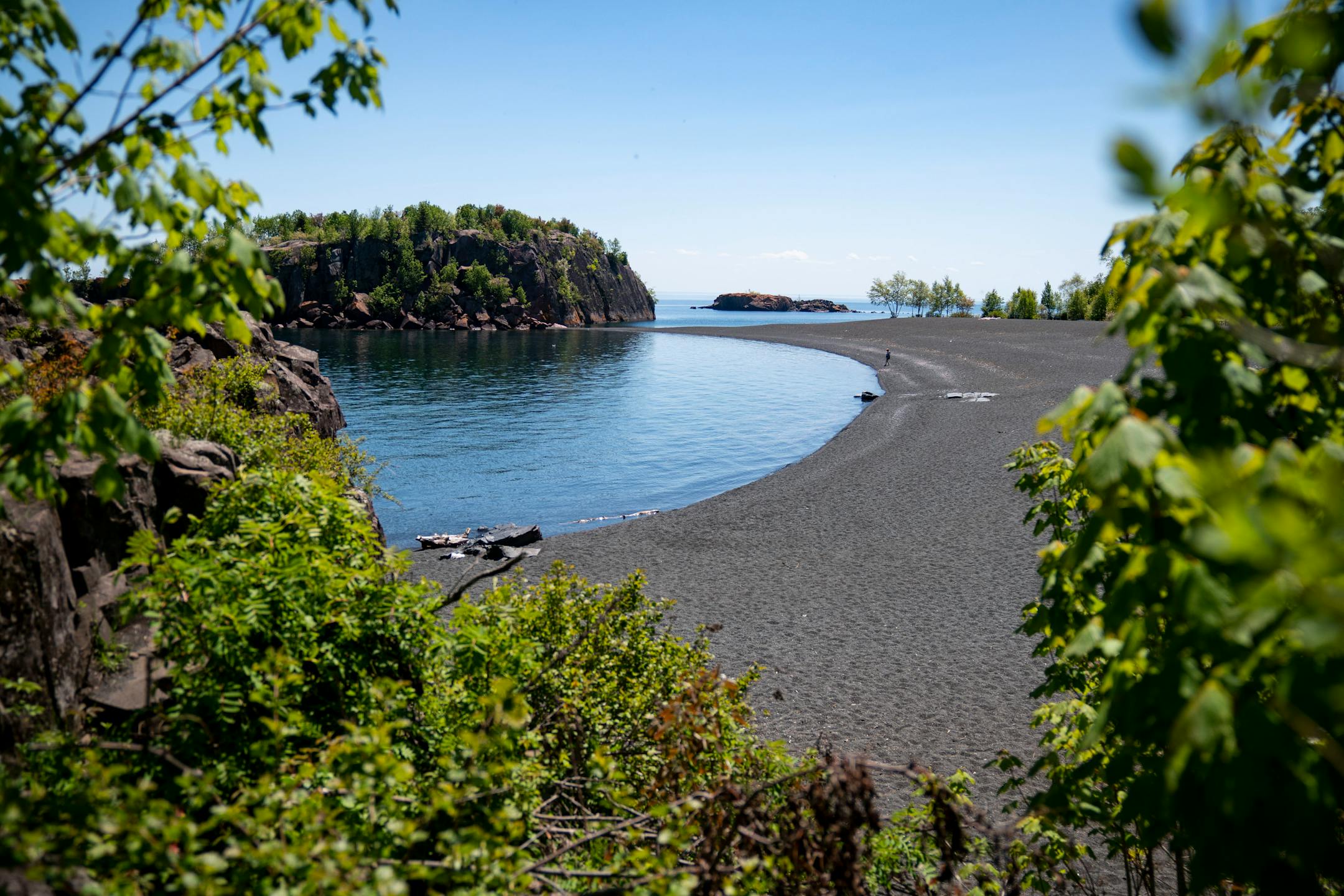
Black Beach is a secluded beach with black sand and picturesque cliffs on Lake Superior just outside of Silver Bay, Minn. (Alex Kormann/The Minnesota Star Tribune)

Listen and subscribe to our podcast: Apple Podcasts | Spotify

Black Beach in Silver Bay, Minn. has become a draw for tourists, who flock to its dark sands for weekend trips and family outings. Across Lake Superior, about a hundred miles away in Michigan, the town of Gay also has an unusually colored beach, filled with dark gray sand.

Corbin Connell of Northfield was searching for properties for sale in Gay when he read about health hazards linked to its dark gray “stamp sands.”

The term “stamp sand” refers to tailings left over from the processing of copper in a stamp mill.

A Minnesotan, Connell instantly thought of Silver Bay and its black sand beach. He wrote to Curious Minnesota, the Strib’s reader-powered reporting project, to ask: “Does stamp sand pollution exist in Minnesota?”

The short answer is no. The two states’ dark sand beaches both involve tailings left over from mining operations. But they are made up of different materials.

Abiella Gwaltney, 7, from Mankato, Minn. waded out of Lake Superior and towards the shore of Black Beach on Wednesday, June 2, 2021.    ]
A young swimmer wades out of Lake Superior and towards the shore of Black Beach in 2021. (Alex Kormann/The Minnesota Star Tribune)

The stamp sands on Michigan’s Upper Peninsula are copper tailings, while the sands on Silver Bay are taconite tailings, a particular form of iron tailings.

And while Minnesota’s Black Beach is a popular spot open to the public, the Environmental Protection Agency has identified the stamp sand beach in Michigan as a Superfund site.

Stamp sands

Copper Country, an area encompassing part of Michigan’s Upper Peninsula, is one of only a few places in the country where native copper resources formed close enough to the surface for mining.

Starting in the late 19th century, miners in Michigan extracted copper by crushing large chunks of ore under a giant stamp mill, then using gravity to separate the copper from the other minerals present.

Over 6 billion pounds of leftover tailings — containing unsafe levels of heavy metals like copper and arsenic — were deposited into Lake Superior and into lakes across the Upper Peninsula. Near Gay, these stamp sand deposits stretch along the coastline for about five miles.

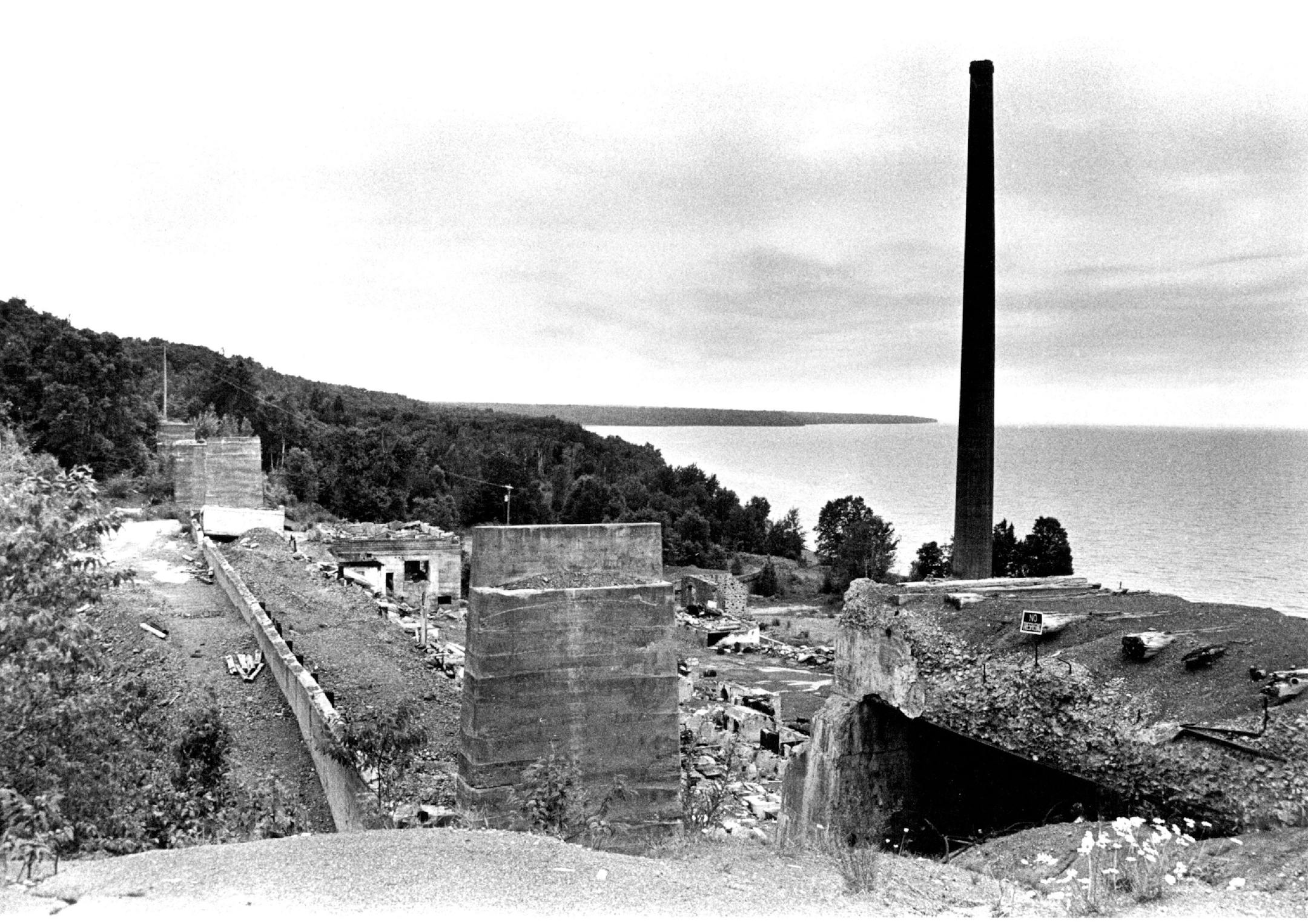
The ruins of an old copper mill along Lake Superior near Gay, Mich., in 1980. (Mike Zerby/The Minnesota Star Tribune)

Mining activities started to cease around the 1960s as environmental concerns arose. Federal and state agencies have poured millions of dollars into cleaning up stamp sands since then, including dredging Buffalo Reef, an important trout spawning area, and building jetties to stop the tailings from migrating farther.

But damage from century-long waste mismanagement persists. Stamp sands may cover 60% of Buffalo Reef in a decade, according to the National Park Service.

Taconite tailings

Iron mining in Minnesota’s Iron Range began in the late 19th century. Workers started off by mining hematite, which contained up to 60% iron, said Matt Mlinar, a researcher at the University of Minnesota’s Natural Resources Research Institute.

But as high grade ore reserves diminished in the mid 20th century, companies started mining taconite, a lower grade ore that required a higher degree of processing.

To extract iron from taconite ore, the rock is ground down to a fine powder. Companies primarily use magnets to attract magnetic iron, which is then processed and turned into steel. Taconite tailings consist of the leftover non-magnetic materials.

In 1979, tailings from the Reserve Mining plant were spilling into Lake Superior. Decades earlier, the U's E.W. Davis figured out how to take iron ore out of taconite rock, saving Minnesota's mining industry.
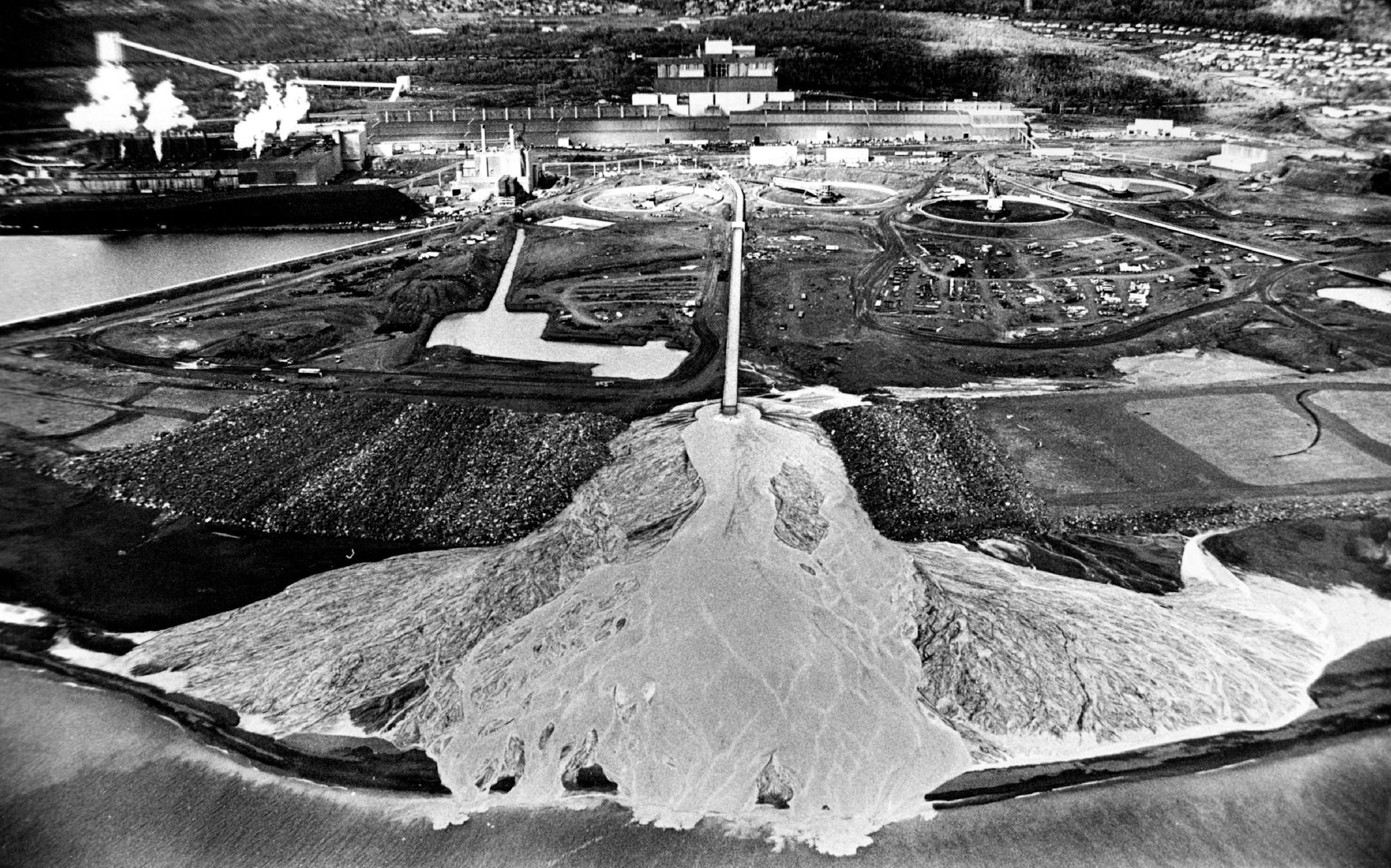
In 1979, tailings from the Reserve Mining plant were spilling into Lake Superior. (Mike Zerby/The Minnesota Star Tribune)

Currently, the seven operating taconite plants in Minnesota transport their waste to basins, specialized areas for storing mine waste.

But before 1980, Reserve Mining Company, the first taconite processing facility in North America, discarded 67,000 tons of taconite tailings a day into directly into Lake Superior — the equivalent of a railroad car every two minutes, the Star Tribune reported in 2020. Nearly 25 years of this practice gave Silver Bay’s beach its distinct dark hue.

In 1973, the public learned that fibers resembling asbestos — a known carcinogen — had been discovered in water supplies along Lake Superior and may have come from Reserve Mining’s tailings.

The federal government sued Reserve, and a judge found the company violated federal law by dumping its waste into Lake Superior.

Decades later, scientists say it’s safe for tourists and residents to spend time on Silver Bay’s black sand beach, which first opened to the public in 2015.

The beach, initially touted as an undiscovered North Shore spot, has become a such a draw that when the Grandstay Hospitality chain of hotels took over the AmericInn in Silver Bay in 2023, they gave it a new name.

It’s now the Black Beach Inn.

If you’d like to submit a Curious Minnesota question, fill out the form below:

Read more Curious Minnesota stories:

about the writer

about the writer

Kinnia Cheuk

Outdoors Intern

Kinnia Cheuk is an Outdoors intern for the Minnesota Star Tribune.

See Moreicon

More from Curious Minnesota

See More
"Santa" waved to people as he made his way to the Christmas photo booth at Southdale Mall, Friday, December 4, 2015 in Edina, MN.
Elizabeth Flores/The Minnesota Star Tribune

Southdale’s architect had a vision to thwart the cold and create an indoor town square in Edina where it was always 75 degrees.

card image
card image