New women-led clinic network in Twin Cities hopes to improve disparities in women’s health care

Almara Women’s Health, which formed this summer, brings together seven practices, with 10 locations and more than 65 women’s health specialists.

The Minnesota Star Tribune
August 21, 2025 at 3:31PM
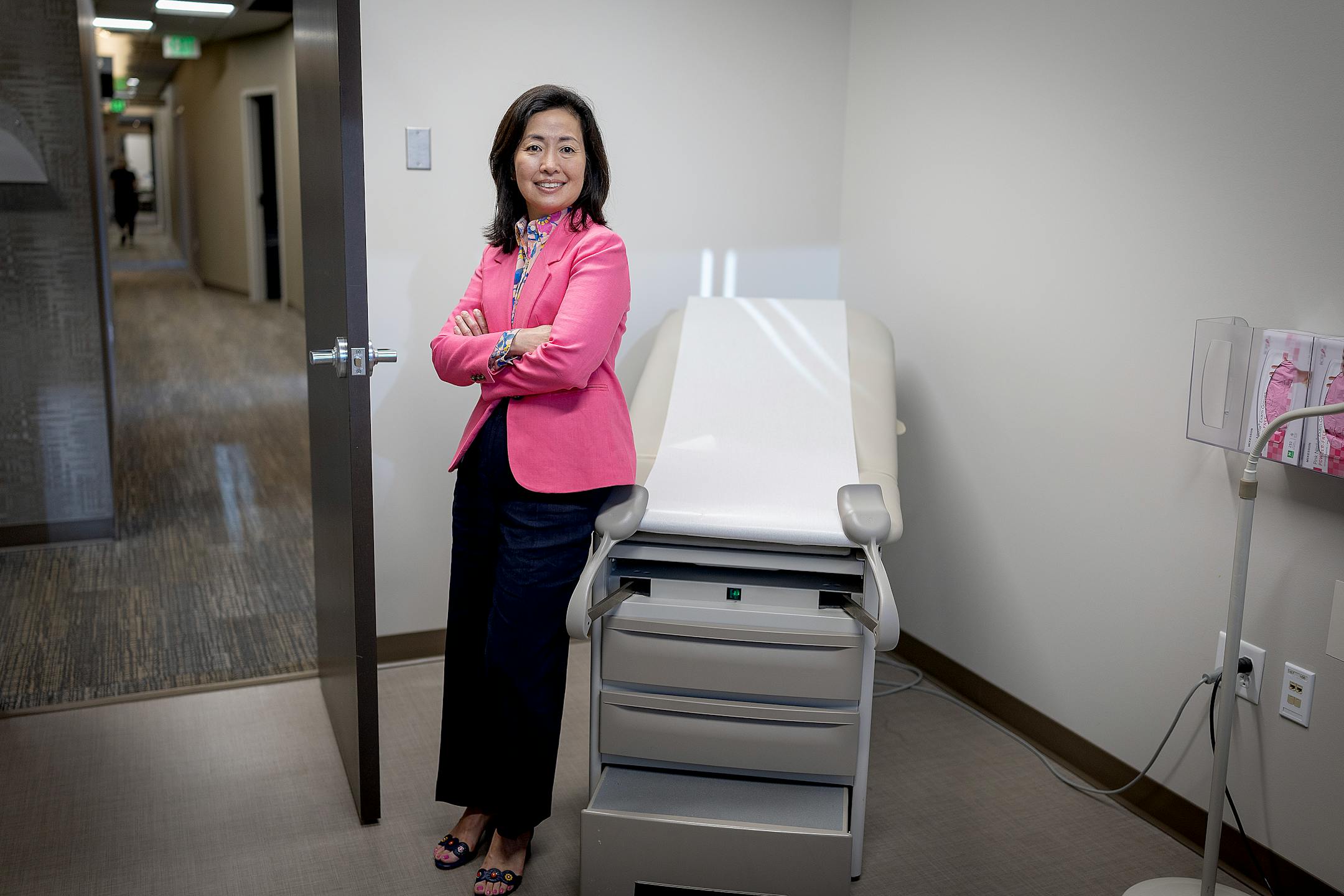
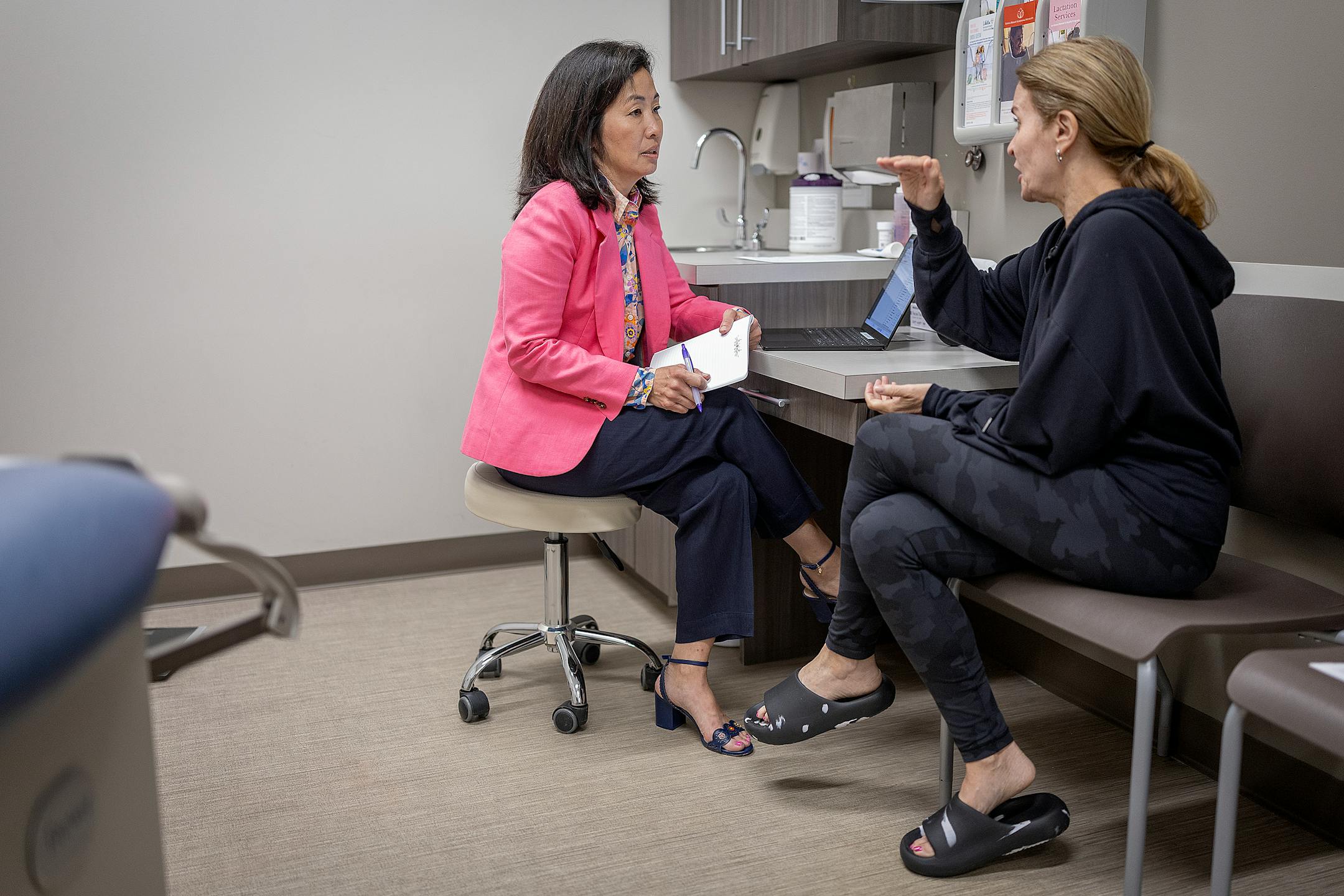
Dr. Suzin Cho, president of Almara Women's Health, meets with a patient Aug. 13 at her clinic in Edina. Seven women-led practices joined together to form Almara. (Elizabeth Flores/The Minnesota Star Tribune)

Beth Berg still laughs when she remembers the hours after her surgery, when Dr. Suzin Cho walked into the waiting room with her arms outstretched like a human diagram of a uterus.

“And here’s your fallopian tubes,” Cho said, bending one arm backward to show Berg’s husband how a twisted tube had been flipped out of place.

Even though Berg, 56, felt as if she “got hit by a truck” after surgery, it was the first time she felt a doctor had truly seen her.

“My male doctor before took great care of me,” Berg said. “But I think going forward, our conversations would have been very different as I approached menopause.”

Now, both of her twenty-something daughters also go to Cho’s clinic, OBGYN Specialists.

Cho’s clinic and six other Twin Cities women’s health practices joined forces this summer under one name: Almara Women’s Health.

Their mission? To address issues in women’s health care.

For years, women have been more likely than men to have their medical concerns dismissed or misdiagnosed. Research shows women wait longer for pain relief in the emergency room and face longer delays in getting an accurate diagnosis.

Gender bias, even in emerging technologies like artificial intelligence, continues to shape women’s care, according to a study by the London School of Economics and Political Science.

Across its network of 10 locations and more than 65 specialists, Almara offers primary care, reproductive health and family planning, infertility counseling, high-risk pregnancy and maternal-fetal medicine, pelvic health and menopause care, among other services.

Many of the specialists have shared resources for more than a decade, but Almara makes the collaboration an official part of the business, said Cho, Almara’s president.

‘A place where the doctor will listen’

Women are nearly twice as likely as men to be diagnosed with an anxiety disorder, especially generalized anxiety, according to statistics from the National Institute of Mental Health.

This can complicate their medical care if symptoms are misattributed to anxiety. And many Minnesotans relate to feeling unheard at the doctor’s office.

More than 80 people responded in just two hours to a Minnesota Star Tribune social media post about women’s health care, with many describing the same frustration: having serious symptoms dismissed.

One responder recalled, “I was having a heart attack. They tried to tell me it was anxiety.” Another said she was told her complaints were either acid reflux or anxiety when she had a pulmonary embolism.

“I had an ovarian cyst rupture; guess what the first diagnosis was? Anxiety,” Jessie Hennen, a 35-year-old creative writing professor at Southwest Minnesota State University, wrote.

Hennen’s mother, Mary Ann Hennen, 66, faced a similar experience. For nearly a year, her symptoms were brushed off as signs of aging, she said. When she pleaded for a CT scan in July 2024, doctors discovered she had stage four pancreatic cancer.

Stories like that don’t surprise Berg, a recently retired chemotherapy nurse. She has seen friends and patients alike who “don’t feel heard” by their doctors.

“You need to keep going back until you have an answer,” Berg said.

Dr. Joy Hasseler, Almara’s vice president and an OB-GYN, and Cho said the new network is designed to address that frustration.

“We want people to find a better place to get care, a place where people can listen — and a place where the doctor will listen —they have an advocate and someone who’s watching out for them, who’s their guide," Hasseler said.

Dr. Suzin Cho at an Almara Women's Clinic in Edina. (Elizabeth Flores/The Minnesota Star Tribune)

‘We’re the ones in the exam room’

Because Almara is owned and operated by physicians, Hasseler said, “we get to decide how many patients we see a day and how much time we get to spend with every patient.”

Cho said bringing the practices together allows them to share resources and create services that patients want.

For example, they ask all women over 25 about breast cancer risk and start conversations about menopause with patients around age 40, providing resources like books and podcasts.

“We’re the ones in the exam room,” Cho said, “We’re the ones in the delivery room, in the operating room.”

The model also benefits clinicians, they said. Almara hopes to reduce burnout by creating a way to share new information and build a support network, Hasseler said.

Mary Ann Hennen, the patient with pancreatic cancer, said she thinks overworked providers struggle to give patients the time and attention they deserve.

“My primary, she always looked exhausted,” she said.

Cho said Almara is accepting patients across its 10 locations, and she hopes to add more clinics and services soon, especially outside the metro area.

“We’ve taken care of so many families,” Hasseler said. “We frequently take care of three-generation families. ... It’s a privilege for us to be able to do this work.”

about the writer

about the writer

Emmy Martin

Business Intern

Emmy Martin is the business reporting intern at the Minnesota Star Tribune.

See Moreicon

More from Health Care

See More
Nancy Ingham gives newborn Sophia Rash a hepatitis B shot several hours after she was born, Jan. 17, 2006.
Renée Jones Schneider/The Minnesota Star Tribune

A federal vaccine advisory committee voted on Friday to end the longstanding recommendation that all U.S. babies get the hepatitis B vaccine on the day they're born.

card image
Nancy Ingham gives newborn Sophia Rash a hepatitis B shot several hours after she was born, Jan. 17, 2006.