
Walz administration faces more scrutiny as FBI investigates fraud in another state program

The issue could be a vulnerability for the DFL governor if he runs for re-election.

The Minnesota Star Tribune
July 24, 2025 at 11:15AM
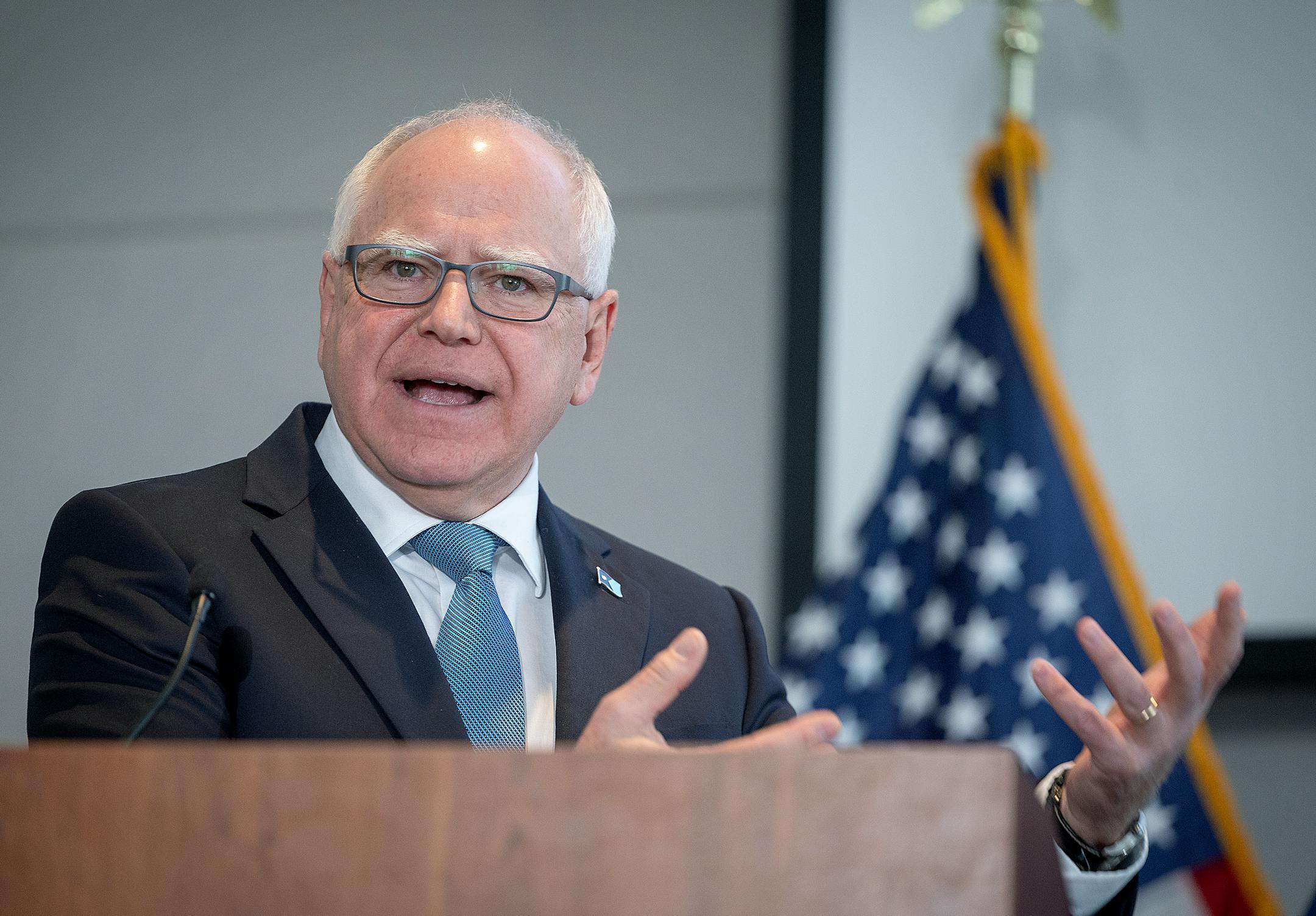
Gov. Tim Walz is facing criticism over revelations of fraud in a state program. (Elizabeth Flores/The Minnesota Star Tribune)

Minnesota Gov. Tim Walz is facing a growing political headache as new allegations of fraud in a state program revive questions about his administration’s oversight of taxpayer funds.

Federal investigators last week searched five housing service provider sites as they investigated what they called a “massive scheme” to defraud Minnesota’s Housing Stabilization Services program, which uses Medicaid money to help find and maintain housing for older adults and people with disabilities.

The raids came just seven months after the FBI searched state autism treatment centers in a separate investigation into Medicaid fraud, and more than three years after federal investigators raided the offices of Feeding Our Future, the St. Anthony nonprofit that was at the center of one of the country’s largest pandemic-era fraud schemes.

The high-profile cases have become ammunition for Republicans who say Walz and his administration haven’t done enough to prevent theft of public funds.

Republicans have already signaled they plan to make it a 2026 campaign issue, forming a political action committee this week called “Fight the Fraud.” They’ve pointed to repeated cases of financial mismanagement at state agencies during Walz’s tenure, saying the governor has shown little willingness to hold his agencies accountable for shoddy oversight.

“The culture of fraud is, unfortunately, endemic, and we believe it is necessary to seek federal intervention,” read a letter signed Wednesday by state GOP House Speaker Lisa Demuth and Reps. Kristin Robbins, Jeff Backer and Joe Schomacker. They wrote to the U.S. Department of Health and Human Services asking it to audit the state Department of Human Services (DHS), which oversees the housing services and autism treatment programs.

In an interview, Robbins gave the DHS credit for becoming more responsive to fraud complaints since federal authorities started investigating state programs. But the Maple Grove Republican questioned why the state agency didn’t catch some of the cases sooner.

Robbins, who chairs the House Fraud Prevention and State Agency Oversight Committee, noted that the federal investigation into housing service providers found an unusual concentration of them operating out of a single St. Paul building. That should have immediately raised a red flag, she said.

Temporary DHS Commissioner Shireen Gandhi said in a statement Wednesday that the DHS “shared data on Housing Stabilization Services providers that ultimately enabled the federal action taken last week against fraudsters.”

“As fraud schemes have evolved and become more sophisticated, we partnered with legislators to add new tools and tighten up program requirements,” Gandhi added.

She said she welcomes any federal audits to help improve program integrity.

‘Mixed messages’

Robbins, who’s considering running for governor, said she thinks the fraud cases will be a liability for Walz if he runs for a third term.

She blasted Walz on the issue, saying his administration has “failed the taxpayers” and opposed legislation this year that would have created an Office of Inspector General to investigate fraud.

The proposed office would have operated independently in the executive branch, investigating state agencies, programs and recipients to root out fraud. It would have had the power to refer criminal and civil cases to law enforcement, seek court orders to freeze public funds and recommend legislative changes to programs.

The governor’s office said Walz has “repeatedly indicated” he’s open to creating an Office of Inspector General. But even some Democrats say his administration was ambivalent about the proposal.

Sen. Heather Gustafson, a White Bear Lake Democrat who spearheaded the OIG proposal, said she encountered pushback from the administration.

“We saw people resist the idea of a statewide OIG in, I will just say top leadership, and that would include heads of agencies and the governor’s office,” Gustafson said. “And then we would get mixed messages from them.”

Walz said he’d sign the bill into law at one point, Gustafson noted, and later said he had reservations. The bill ultimately passed the state Senate but not the House.

“The problem is, everybody says they want to do something about fraud, but what they really want to do is make incremental and smaller changes within the agencies. And while I think all ideas that fight fraud are good, we need something more substantial than just keeping all of these investigations internal with the agencies,” Gustafson said.

Walz to propose more anti-fraud measures

A Walz spokesperson said in a statement that “the governor has pushed state government to stay one step ahead of the criminals who attempt to take advantage of state services.”

“That’s exactly what we’re seeing play out in this case,” the spokesperson said, referring to the federal investigation of housing service providers. “If you commit fraud in Minnesota, you will be caught and you will go to prison.”

After the December raid of autism treatment centers, Walz condemned public program fraud as “unacceptable” and a crime against the vulnerable. He created a state fraud investigation unit through executive order and proposed several measures to prevent theft of public funds, some of which passed in the Legislature this year.

In the latest investigation of housing service providers, Gandhi said the federal search warrants were the result of “critical partnerships” with the state DHS, Bureau of Criminal Apprehension and the Attorney General’s Office.

Walz intends to propose more fraud-prevention measures next year, according to the governor’s office, including a proposal to use artificial intelligence to detect fraud markers.

But after years of scrutiny, it’s unclear whether Walz and his administration can shake the criticism that they’re soft on the issue.

Acting U.S. Attorney for Minnesota Joe Thompson said last week the state “needs to confront the scale of its fraud problem — because ignoring it is no longer an option.”

Prosecutors have said about $300 million was stolen in the Feeding Our Future case. It isn’t yet clear to what extent fraud has crept into the housing stabilization or autism treatment programs, but both have experienced alarming growth in recent years.

The state estimated the housing program would cost about $2.6 million annually when it was launched in 2020. By 2024, it paid out more than $104 million in claims, according to the federal search warrant affidavit. Payments to autism providers also spiked from $6 million in 2018 to $234 million in 2024.

David Sturrock, a political science professor at Southwest Minnesota State University, said he isn’t convinced Walz will pay a political price for the fraud cases during his tenure. It’s a complicated issue for many voters to understand, he said, and connecting it to Walz is difficult.

“One thing in Walz’s favor is timing. The longer an awkward, ugly, embarrassing story is out there, the older it gets,” Sturrock said. “People forget, and an officeholder or an administration can mitigate the political damage because of that.”

Timeline of recent fraud cases

January 2022: Feeding Our Future investigation goes public as FBI and other law enforcement personnel search more than a dozen locations.

September 2022: U.S. Attorney’s Office announces criminal charges against 48 people affiliated with Feeding Our Future, alleging they stole $250 million in taxpayer funds meant to feed needy children.

December: FBI raids two Minnesota autism centers as part of investigation that revealed “substantial evidence” of millions of dollars in fraudulent Medicaid claims.

July: Federal investigators search locations tied to five Minnesota businesses as part of a probe into what they called a “massive scheme” to defraud Housing Stabilization Services program.

Jessie Van Berkel of the Minnesota Star Tribune contributed to this story.

about the writer

about the writer

Ryan Faircloth

Politics and government reporter

Ryan Faircloth covers Minnesota politics and government for the Star Tribune.

See Moreicon

More from Politics

See More
card image
Mark Schiefelbein/The Associated Press

A Navy admiral commanding the U.S. military strikes on an alleged drug boat in the Caribbean told lawmakers Thursday that there was no ''kill them all'' order from Defense Secretary Pete Hegseth, but a stark video of the attack left grave questions as Congress scrutinizes the campaign that killed two survivors.

card image