
Brown: These days, tensions between Minnesota and Canada spill off the ice

The Minnesota-Canada relationship is defined by friendly competition, but the trade war hurts both sides of the border.

Columnist Icon
The Minnesota Star Tribune
October 27, 2025 at 11:40PM
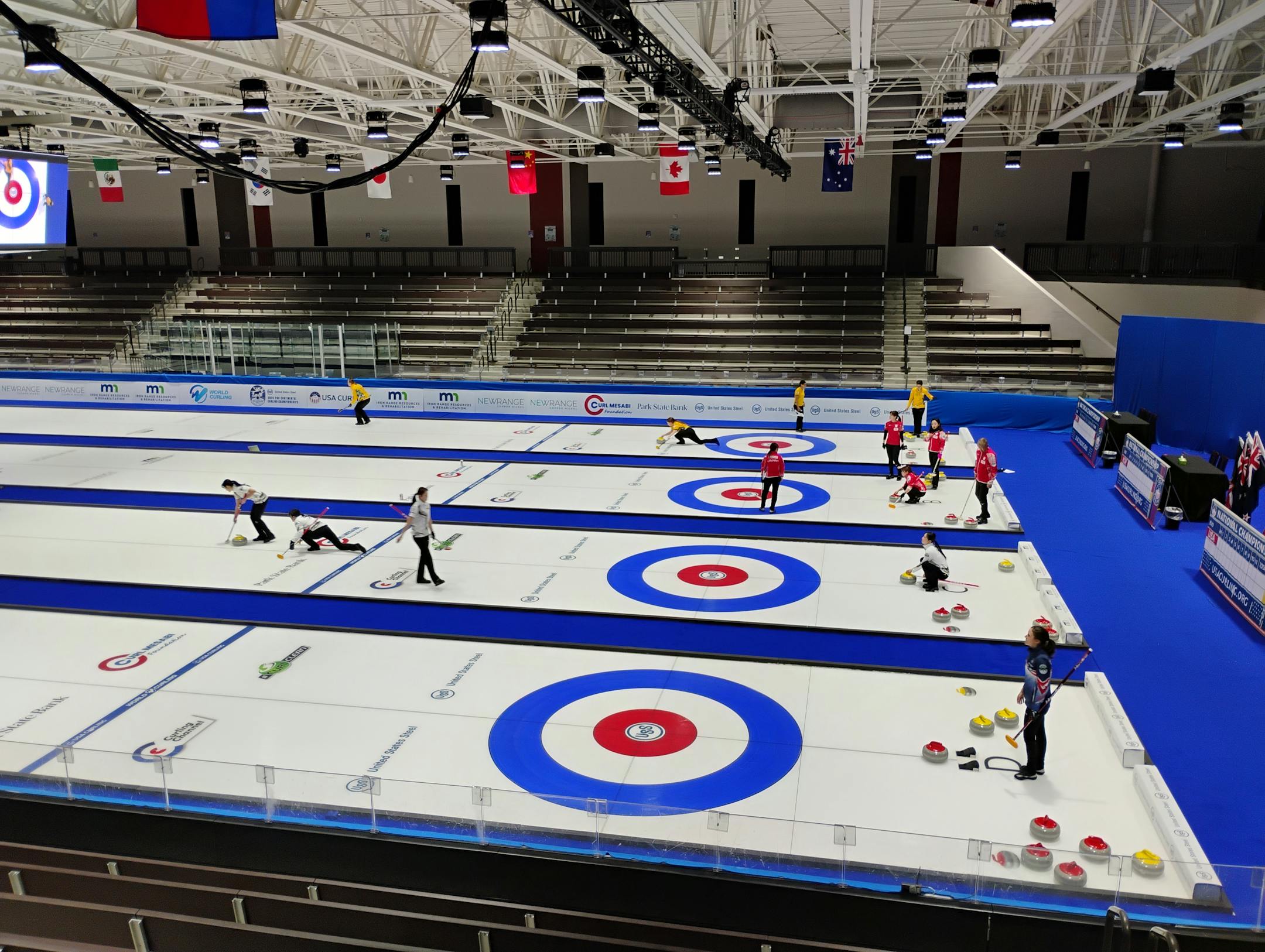
Curlers hone their craft during a women's team practice session on Oct. 20 at the Pan Continental Curling Championships at the Iron Trail Motors Event Center in Virginia, Minn. The tournament ended Sunday with China winning the women's gold medal and Canada winning the men's gold medal.
Curlers hone their craft during a women's team practice session on Oct. 20 at the Pan Continental Curling Championships at the Iron Trail Motors Event Center in Virginia, Minn. The tournament ended Sunday with China winning the women's gold medal and Canada winning the men's gold medal. (Aaron Brown/The Minnesota Star Tribune)

Opinion editor’s note: Strib Voices publishes a mix of commentary online and in print each day. To contribute, click here.

•••

The Pan Continental Curling Championships wrapped up last weekend on Minnesota’s Iron Range. Curlers from across the world converged in Eveleth and Virginia, Minn., marking the first time this world-qualifying event was held in the United States.

Fittingly, a Minnesota-led U.S. team and Canada faced off in the men’s Gold Medal game Sunday. That’s typical. Minnesota and Canada share a deep history with not only curling, but also ice hockey and snowmobiling.

This relationship runs much deeper than sports and recreation, however. Minnesota exports about $7.5 billion in goods and services to Canada, including agricultural products, iron ore and manufactured goods. Conversely, Minnesota imports about $14.7 billion from Canada, about two-thirds of which is oil, gas and hydroelectric power.

Unfortunately, the greatest tension these days isn’t who wins on the ice, but rather what new tariffs might be levied on Canadian goods by President Donald Trump.

The issue is boiling over again. On Oct. 23, Trump suspended trade negotiations with Canada. On Oct. 25, he announced an additional 10% tariff on Canadian goods. This comes on top of tariffs of up to 50% on many Canadian products implemented earlier this year.

Trump did this because he got mad at a TV ad released by the province of Ontario that ran during the World Series. The spot shares audio from a 1987 radio address by former U.S. President Ronald Reagan. In the speech, Reagan criticized the use of tariffs, arguing that their long-term effects hurt Americans by reducing jobs and raising costs.

Trump announced that the ad was “FAKE,” but the speech is real. Reagan opposed long-term tariffs. Whatever you think of Reagan, he was correct that tariffs are ultimately paid by American importers and consumers. Tariffs can be useful if they regulate unfair trade, but applying it to all foreign trade raises prices across the board.

Trump is angry because the ad makes a strong argument. Families are struggling to afford groceries and manufactured goods right now because they’re paying for Trump’s tariffs, which economists argue spur corresponding price hikes by American companies.

But a trade war with Canada holds even bigger implications for Minnesotans. Trade with Canada not only provides a market for our goods but also represents a logistical pillar of our economy.

First, whether you prefer black smoke pouring out of a tailpipe or electricity from clean, green renewables, we get a lot of our energy from Canada. When Minnesota’s power plants are shut down for maintenance, we rely on Manitoba Hydro for baseload power.

Minnesota soybean farmers desperately seek markets for this year’s crops as foreign governments look elsewhere in retaliation for Trump’s tariffs. Canada still buys American soybeans. Meantime, most of the oats that end up in General Mills cereals come from Canada, where oats grow better.

Heavy equipment is being held up at the border as trade officials try to determine how much material is Canadian and how much is American, a nearly impossible task because of longstanding cross-border supply chains. Input components from America and Canada often cross the border several times before a finished product is complete. Untangling this system would demand untold billions of investments and create more market uncertainty.

On the Iron Range, where U.S. Steel sponsored the international curling event, mining companies shipped less taconite to Canada in 2025, adding to the overproduction crisis that caused 630 layoffs this year. That’s because Canada is mining more of its own iron ore in response to supply chain disruptions.

Cleveland-Cliffs, the largest integrated steelmaker in the U.S., seeks to secure domestic market share to capitalize on tariffs, but also owns Stelco, one of Canada’s biggest steel companies.

When I was at the Pan Continental Games last week, I met Aaron Annable, a foreign policy consul at the Canadian consulate in Minneapolis. We had fun comparing the nuances of diplomacy with the strategic goals of curling. It led to a conversation with Beth Richardson, the Canadian Consul General in Minneapolis.

“This relationship is fundamentally different than other bilateral relationships,” said Richardson. “It’s not mediated by us, but it rests on the foundations of millions of friendships across the border.”

Spurning trade with a close partner like Canada doesn’t mean that business will stop. It just means that the U.S. will get less of it. Canadian Prime Minister Mark Carney isn’t just talking to Trump, he’s negotiating with leaders throughout Asia to find markets for Canadian goods and new supplies of products once purchased from the United States.

At the curling rink last week, I watched a practice session for the women’s teams. I heard four languages simultaneously, each skip calling out her own words for “Hurry hard!” It was a remarkable display of curling’s international appeal. It also reminded me that the world is a big, big place. An isolated America is less prosperous and strong than it should be, especially when guided by emotional whims rather than long-term strategy.

Fortunately, Richardson said the relationship between Canada and Minnesota remains strong.

“At the people-to-people level, things are good, and we’re maintaining that and holding that precious,” said Richardson. “Small voices of everyday friendship don’t always make it into the paper. Maybe they should. We tend to focus on what’s noisiest instead of focusing on what’s enduring.”

At Sunday’s men’s final, Team Canada took gold. After the match, U.S. skip John Shuster, an Olympic gold medalist from Chisholm, Minn., shook hands with Canadian skip Brad Jacobs. They’ll meet again on some other rink in the future. This simple gesture of sportsmanship is a hallmark of curling, and should be for trade, too.

about the writer

about the writer

Aaron Brown

Editorial Columnist

Aaron Brown is a columnist for the Minnesota Star Tribune Editorial Board. He’s based on the Iron Range but focuses on the affairs of the entire state.

See Moreicon

More from Columnists

See More
card image
Wally Skalij/The Associated Press

Americans are seeing a split screen of conflicting imagery on deportations: The Trump administration offers one narrative, and amateur cellphone clips offer another.

Travis Pennings uses a pair of binoculars to look for deer in the early morning hours, Nov. 3, 2018, during opening weekend of the season in Sandstone, Minn.