
Burcum: Years after losing Main Street landmarks, small towns like Northfield see no easy fix

The iconic Archer House inn burned down in late 2020. But replacing a lost landmark is challenging.

Columnist Icon
The Minnesota Star Tribune
December 10, 2025 at 11:00AM
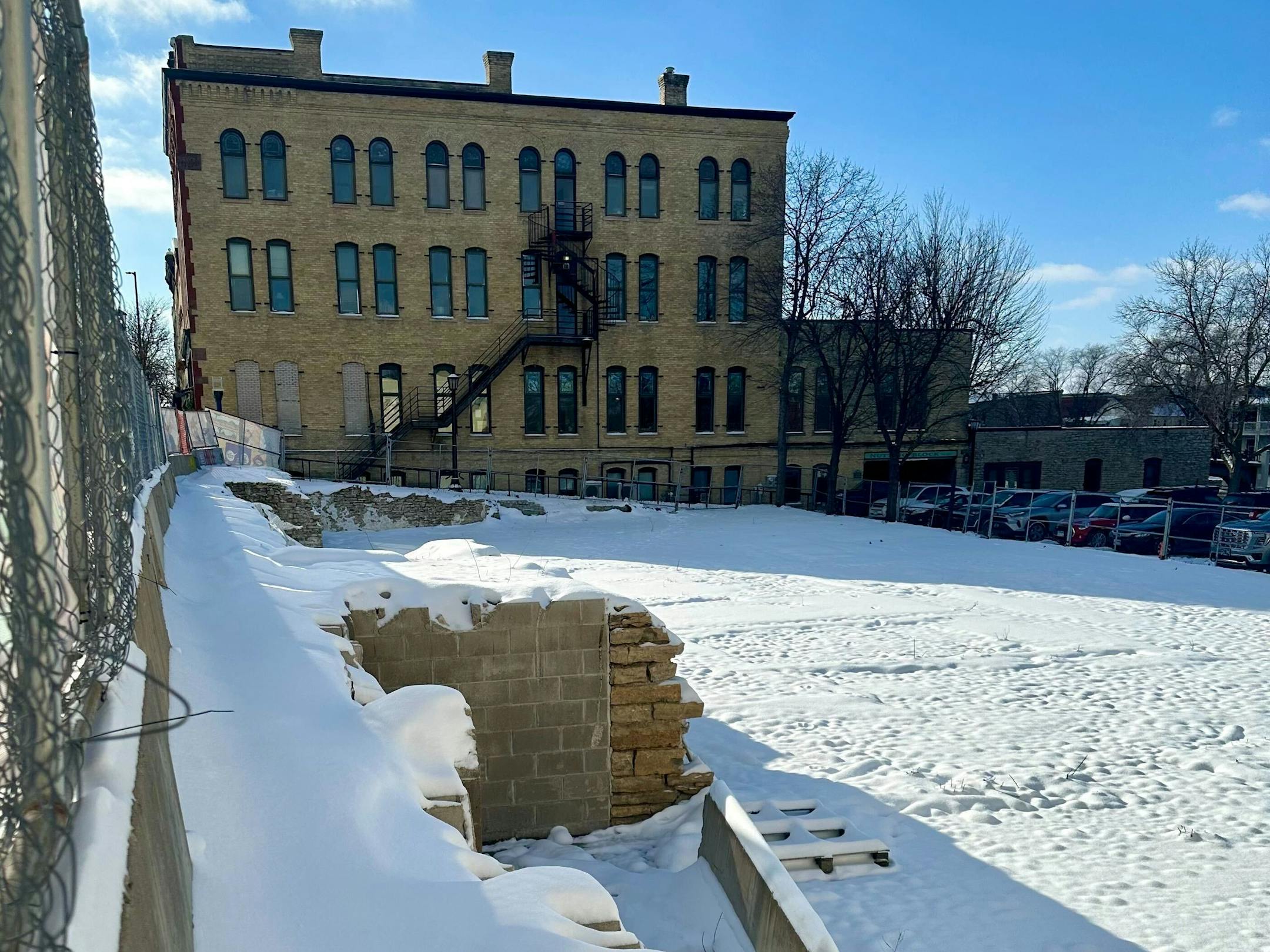
The hole where Archer House in Northfield, Minn., once stood. (Jill Burcum/The Minnesota Star Tribune)

Opinion editor’s note: Strib Voices publishes a mix of commentary online and in print each day. To contribute, click here.

•••

For more than 140 years, the Archer House River Inn’s striking red brick, gingerbread trim and mansard roof welcomed visitors and defined downtown Northfield’s historic look and feel.

I remember driving by after touring St. Olaf and Carleton Colleges as a prospective student and thinking, “Wow, what a cool old building.” Several decades later, I brought my daughter and her friend here for campus tours. It inspired wows from another generation.

Sadly, Archer House’s long run as a Minnesota Main Street icon came to a fiery end in November 2020. A blaze that started in a restaurant kitchen quickly spread through the 143-year-old hotel complex.

Five years after the fire, a replacement surprisingly has yet to rise from the ashes. Construction hasn’t begun. There’s just a gaping hole between KYMN Radio and Summer’s Haven Boutique downtown, even though a late 2024 Northfield city news release touted a tentative reopening date of spring 2026 for the Archer’s replacement.

You’d think that with all the college visitors and the rest of Northfield’s charming downtown intact that a new structure would have gone up by now. Especially with an experienced local team of developers determined to rebuild a modern Archer House.

Despite ambitious plans that call for a mixed-use structure housing a new Archer House River Inn specializing in extended stays, apartments, a restaurant, retail, a riverfront plaza and covered parking, it remains unclear when work will start. The price tag was estimated at $20.7 million in 2023 Northfield economic development documents.

The reasons for the delay illustrate why a number of Minnesota communities have longstanding gaps in their downtowns after disaster strikes. Turns out it’s not easy to replace historic storefronts and other business structures. This reality not only makes their loss more tragic but should snag the attention of state policymakers in position to ease redevelopment or amp up existing loan or grant options.

Kasson, a Dodge County community of 7,000, is still struggling to fill a downtown gap left after a 1991 fire. Spring Grove, in far southeast Minnesota, continues to have an empty space after a December 2022 fire claimed a local business.

It’s fitting that I reached Archer House developer Brett Reese as he was driving back from work on another downtown recovery project, one in Hibbing after fire struck the Iron Range city.

Reese is a longtime booster for Northfield and Rebound Partners, the investment and management business he co-founded. The firm has had an instrumental role in several Northfield landmarks, including the Fairfield Inn and Suites; Fifth Street Lofts, an upscale apartment residence complex near downtown; and Reunion restaurant, a regional dining destination.

Reese brings serious bona fides to the Archer House redevelopment. He also was part of the historic inn’s ownership when the fire happened, which brings an extra measure of energy to his work in resurrecting it.

That even an experienced businessman like Reese finds it challenging to rebuild underscores the challenges that communities face after disaster strikes.

In an interview, Reese noted that it took almost a year to get through the insurance process after the fire. Additional time passed to get the city’s approval and work through local economic assistance options, such as tax-increment financing, which the City Council approved in November 2024.

During this time, costs for construction rose steeply and interest rates made financing more expensive. “It’s been very difficult to get a business model that works,” Reese said. “Now interest rates have come down in the 6% range, but it’s still almost double what it was.

“Based on the cost of it and the rents you receive it’s not a profitable venture,” Reese said, even with tax-increment financing and loans from the colleges, which he appreciates very much. “It’s hard to find investors when you don’t have a business model that works.”

Other types of projects might be able to pivot to something that would work in lieu of the original vision. The problem, Reese said, is that the Archer’s replacement, or a rebuild in another city, needs to “fit your downtown.”

Size and scale are critical, and “it has to look a certain way,” he said. ”You want to try to get something that’s really going to be a significant downtown asset."

That’s why a less expensive alternative, such as a one-story office building, just doesn’t cut it in a spot like this.

Construction costs, interest rates and a replacement that looks like it belongs are among the challenges that Kasson and Spring Grove have also faced after fire struck their downtowns.

Kasson Mayor Dan Eggler noted that traditional small-town downtowns like his can face another hurdle in attracting investors: limited street parking along storefronts on the main thoroughfare vs. expansive lots that so often accompany modern development.

“That’s our biggest issue,” Eggler told me, adding that there’s additional parking on side streets near downtown, but customers walking a block or more isn’t ideal.

In Spring Grove, Mayor Bryan Wilhelmson said soaring construction costs have made a replacement’s price tag daunting. Local investor options are also more limited in this small Houston County community with a population of 1,220.

The town received state aid for demolition and cleanup, but that still leaves it struggling to fill a hole with another building.

Back in Northfield, Reese said options include waiting until the economic climate improves, pivoting from the current plans to something else or finding another developer or owner.

Assistance from state legislators and the Minnesota Department of Employment and Economic Development is another option in getting this project launched.

A city-led effort in Hibbing to provide 35% of the project’s costs from local, regional and state funding is ultimately what made that downtown project a go, said Reese, who estimated similar city, state and county aid for the Northfield project is currently about 15%.

Spring Grove’s Wilhelmson said he hopes state policymakers are paying attention. Outstate communities already face many challenges, he said. A downtown with a hole in it for years shouldn’t be one of them.

As Wilhelmson put it: “Main Street is the heart of a town like this.”

about the writer

about the writer

Jill Burcum

Editorial Columnist

See Moreicon