UnitedHealth Group shares fall nearly 20% as company forecasts lower sales this year

Rival insurers also saw share price declines as Eden Prairie-based insurer said it might have to cut benefits for seniors in 2027.

The Minnesota Star Tribune
January 27, 2026 at 9:58PM
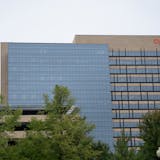
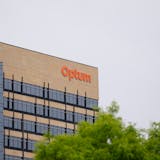
UnitedHealth Group's headquarters is located on the campus of the company's health care services subsidiary Optum in Eden Prairie. (Renée Jones Schneider/The Minnesota Star Tribune)

UnitedHealth Group shares fell nearly 20% on Tuesday, Jan. 27, after the federal government proposed relatively flat payment rates next year for Medicare Advantage health plans.

Three of the Eden Prairie-based company’s largest competitors in the market for privatized Medicare health plans — Kentucky-based Humana, Rhode Island-based CVS Health and Indiana-based Elevance Health — also were seeing stock price declines in excess of 10% in a sector snap.

The government proposal released late Monday includes further hits, analysts say, to risk adjustment payments that have been a large source of revenue for UnitedHealth Group but also have generated intense scrutiny. Medicare Advantage insurers get paid extra to manage more complex patients, but the federal government has tamped down those risk-adjustment outlays.

UnitedHealthcare, the health insurance business within UnitedHealth Group, is the nation’s largest seller of Medicare Advantage plans, with about 8.4 million enrollees at the end of last year.

If rates proposed by the federal Centers for Medicare and Medicaid Services (CMS) ultimately are adopted, the insurer will have to cut benefits for seniors and exit more markets going into 2027, said Tim Noel, the UnitedHealthcare chief executive.

“The CMS Advance Notice published yesterday simply doesn’t reflect the reality of medical utilization and cost trends,” Noel said during a call with investors Tuesday morning.

Woes in the Medicare Advantage business, plus spillover effects at clinics operated by the company’s Optum Health division, were largely responsible for an unprecedented sell-off in UnitedHealth Group shares during the first half of 2025.

The stock still hasn’t recovered. On Tuesday, investors weren’t optimistic given the proposed rates along with fourth quarter earnings that met expectations for profit but missed revenue forecasts.

The weakness in sales extended to the company’s full-year financial outlook released Tuesday, which includes a projected 2% year-over-year decline in revenue due to “planned right-sizing across the enterprise,” UnitedHealth Group said in a statement.

Analysts had been expecting modest revenue gains for the year. It’s the first time in at least a decade, the company says, that UnitedHealth Group has forecast a decline in annual revenue.

The company’s shares closed at $282.70, down 19.6% for the day.

“Investors hoping for a quick turnaround may have to wait longer than hoped,” Julie Utterback, an analyst with Morningstar, said via email.

With Medicare Advantage plans, seniors opt to receive their taxpayer-funded Medicare benefits via private health plans rather than the original government program.

The proposed payment rates continue a recent trend of not keeping pace with the rising cost of health care, Noel told investors. UnitedHealthcare already exited markets and cut benefits going into this year, he said, in response to diminished government funding.

The company expects enrollment in its Advantage plans this year could shrink by as much as 1.2 million people.

Company officials say they will lobby for increases before the 2027 rates are finalized in the coming months.

“Seniors across the sector are going to experience the implications of reduced choice, reduced access and affordability challenges,” Noel said.

The Biden administration effectively cut rates to Medicare Advantage plans a few years ago by introducing reforms to the program’s system for risk adjustment payments. Critics say health insurers have gamed the system to maximize revenue.

The changes, which the Trump administration has maintained, were phased in between 2024 and this year. The rate proposal for 2027 includes further changes that will trim risk adjustment funding, wrote George Hill, an analyst with Deutsche Bank, in a note to investors.

“We suspect the largest publicly traded [insurers] are likely more exposed to these coding changes and risk capture tools and will likely see a greater impact,” Hill wrote.

Medicare Advantage insurers hoping for better payments were heartened by the Trump administration’s rate announcement a year ago, which boosted payments by about 5% for 2026. They were expecting about the same for 2027, Utterback of Morningstar wrote in a note to investors.

“Most of that differential is related to new risk assessment-related changes,” she wrote.

The initial rate notice is typically not finalized until April, which means the flat 2027 rate may rise, Utterback wrote. The federal government “already foreshadowed a potential 2.5% increase from this initial draft, due to expected billing trends not yet included.”

The news on proposed Medicare Advantage rates came as UnitedHealth Group released fourth quarter earnings that were in line with expectations, although revenue was weaker than forecast by analysts.

The results included a $1.6 billion charge for a number of one-time items, including a large restructuring expense in the company’s Optum Health division, which runs clinics and outpatient medical centers.

In November, the company began closing some clinics and laying off workers, part of a $746 million charge disclosed Tuesday for “real estate rationalization” and workforce reductions during the fourth quarter.

The clinic business is central to UnitedHealth’s focus on “value-based care” contracts, where insurers pay health care providers based on the cost and quality of care for groups of patients rather than a fee for every service provided.

Excluding the one-time items, UnitedHealth Group posted $2.11 in earnings per share during the fourth quarter, which met analysts’ expectations. Revenue for the quarter came in at $113.2 billion, when analysts were expecting $113.7 billion.

The company’s 2026 outlook forecasts more than $24 billion in profit on revenue of more than $439 billion, down from $447.6 billion in revenue last year. The anticipated decline of 2% contrasts with 2025 results, when revenue grew by 12% compared with the previous year.

Executives didn’t dwell on the revenue forecast Tuesday, although UnitedHealth Group chief executive Stephen Hemsley noted the company’s health insurance business faces challenges not just with Medicare Advantage but also funding shortfalls for its Medicaid health plans and rising medical cost trends.

The company’s adjusted medical loss ratio, a widely watched indicator of profitability that tracks spending on members’ health care, was 88.9% last year, up from 85.5% in 2024 and 83.2% in 2023. As the ratio increases, health insurer earnings typically decrease — particularly when jumps are sudden.

At the end of last year, UnitedHealthcare was providing insurance to about 49.7 million people. The company’s forecast for 2026 anticipates the tally will decline by between 2.2 million and 2.8 million people.

“At UnitedHealthcare, we successfully repriced the insurance businesses, intentionally right-sizing them to refocus on membership we can best serve on a sustainable basis,” Hemsley said.

The company in 2026 expects adjusted earnings per share of more than $17.75, excluding one-time factors.

about the writer

about the writer

Christopher Snowbeck

Reporter

Christopher Snowbeck covers health insurers, including Minnetonka-based UnitedHealth Group, and the business of running hospitals and clinics.

See Moreicon

More from Health Care

See More
card image
Fairview Health Services

The school is changing an elective course while still working with the Eden Prairie-based health care giant after students raised concerns.

card image
card image