UCare’s red ink highlights financial woes for health insurers

Insurers across the country are struggling with the same Medicare Advantage and Medicaid trends that confounded UCare’s growth strategy.

The Minnesota Star Tribune
November 18, 2025 at 4:17PM
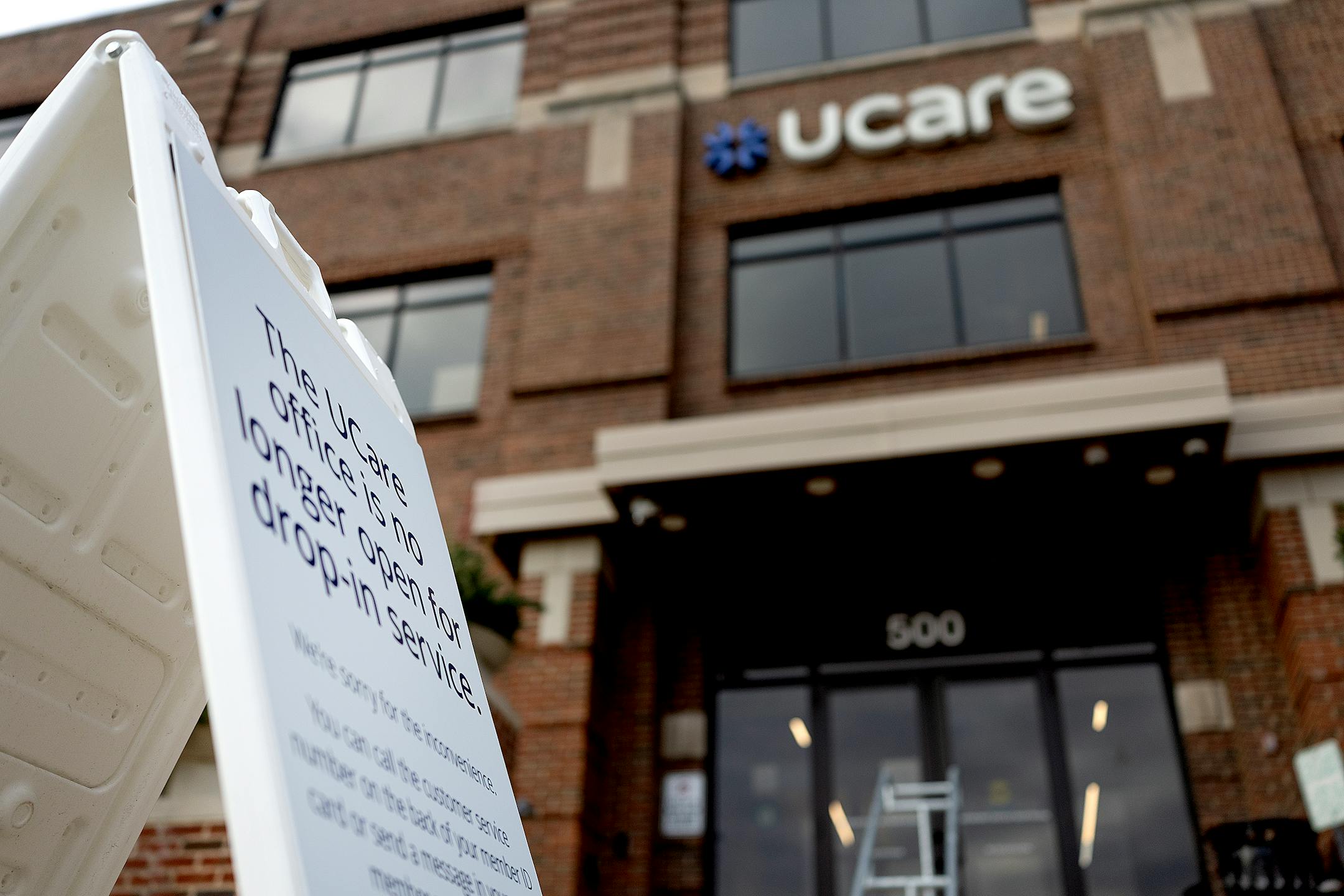
UCare headquarters in Minneapolis on Monday. (Elizabeth Flores/The Minnesota Star Tribune)

Minneapolis-based nonprofit health insurer UCare will wind down operations next year after finding itself unable to weather industrywide challenges facing companies that manage care for seniors, low-income Minnesotans and others.

The result is fewer options for people who rely on government-funded benefits and concerns that taxpayers might eventually have to spend more to finance the coverage.

Private insurers offering Medicare Advantage plans have been trimming enrollment in what was once a market with seemingly unstoppable growth.

Meanwhile, insurers have been struggling to make money while managing patient care in the program for low-income beneficiaries known as Medicaid — a business that’s been especially difficult in Minnesota.

Those two developments proved disastrous for UCare, the Minneapolis-based nonprofit health insurer that on Monday announced the sale of its remaining business to Minnetonka-based Medica. UCare is expected to wind down all operations next year, and some employees will join Medica.

While Medicaid and Medicare Advantage plans had once been “extremely profitable” for insurers, that’s been changing with higher costs and lower government reimbursements, according to insurance industry credit rating agency AM Best.

UCare announced in September it would discontinue all of its 2026 Medicare Advantage plans, where the insurer ran up significant amounts of red ink over the past two years.

UCare had been pursuing an aggressive growth strategy with coverage that gave seniors a broad choice of doctors and hospitals, richer benefits and lower premiums, said Joshua Haberman, owner of Alexander & Haberman, an insurance agency in Bloomington.


The push to grow fast, he said, came as UCare apparently drew enrollees from Kentucky-based Humana, a national Medicare Advantage insurer that has pulled back in Minnesota.

It all happened “just as medical cost trends were picking up more broadly, thereby resulting in explosive catastrophic growth,” Haberman said.

UCare’s Medicare Advantage plans, for example, required seniors to pay less out of pocket at the pharmacy counter for a number of popular medications, said Todd Villeneuve, managing partner with IFC National Marketing, a Coon Rapids-based company that provides services to health insurance agencies across Minnesota. This apparently attracted many seniors with expensive health care needs.

While specific decisions at UCare contributed to problems, they also fit with the broader trend.

Eden Prairie-based giant UnitedHealthcare, for example, said last month it expects its Medicare Advantage enrollment will shrink by 1 million people next year.

A June report from the actuarial firm Milliman found private health insurers in the Medicaid managed care business across the country suffered a “material decline” in financial performance during 2024 compared with the previous four years.

Medicaid is jointly funded by the federal and state government to pay for care for lower-income residents. Like most states, Minnesota hires private insurers to manage care for beneficiaries in the program.

Medicare Advantage is the privatized version of the original federal program for seniors and certain special populations.

Medica, which is acquiring UCare assets, struggled last year with rising medical costs and lagging payment rates for Medicaid and Medicare Advantage coverage, two forces that contributed to a $176 million operating loss.

Medica runs health plans for employer groups and it has more enrollees overall. The extra size, across more markets, can help an insurer weather peak-and-valley business cycles that take a long time to play out, said Lisa Erickson, the Medica chief executive, in an interview.

“Unlike a consumer products company that prices and things change quickly — they don’t change quickly in health plans," Erickson said.

Today, UCare has the largest share of enrollment of any insurer selling coverage to individuals and families on the state’s MNsure health insurance exchange. State officials issued a statement Monday evening assuring consumers that UCare health plans through MNsure will not change in coverage or cost for plan year 2026.

Open enrollment is underway at MNsure, which is how Minnesotans can qualify for the federal tax credits funded by the federal Affordable Care Act to make insurance cheaper.

One state lawmaker voiced concerns Monday about what the Medica-UCare transaction will mean for the broader health insurance market.

“When the number of viable insurance plans decreases, patients lose options, communities lose bargaining power and the entire health care marketplace becomes more fragile,” Sen. Matt Klein, DFL-Mendota Heights, said in a statement.

about the writer

about the writer

Christopher Snowbeck

Reporter

Christopher Snowbeck covers health insurers, including Minnetonka-based UnitedHealth Group, and the business of running hospitals and clinics.

See Moreicon

More from Health Care

See More
card image
Shari L. Gross/The Minnesota Star Tribune

The health care company based in Maplewood started the year with investor unrest but has since posted positive financial results and paid off debt to enter 2026 with positive momentum.

card image
card image