
U doctors remain positive as regents criticize their new deal with Fairview

Though the U regents said the doctors acted ‘unlawfully’ in striking the deal, the interim chief of the doctors’ group says it’s no different from past deals.

The Minnesota Star Tribune
November 13, 2025 at 9:24PM
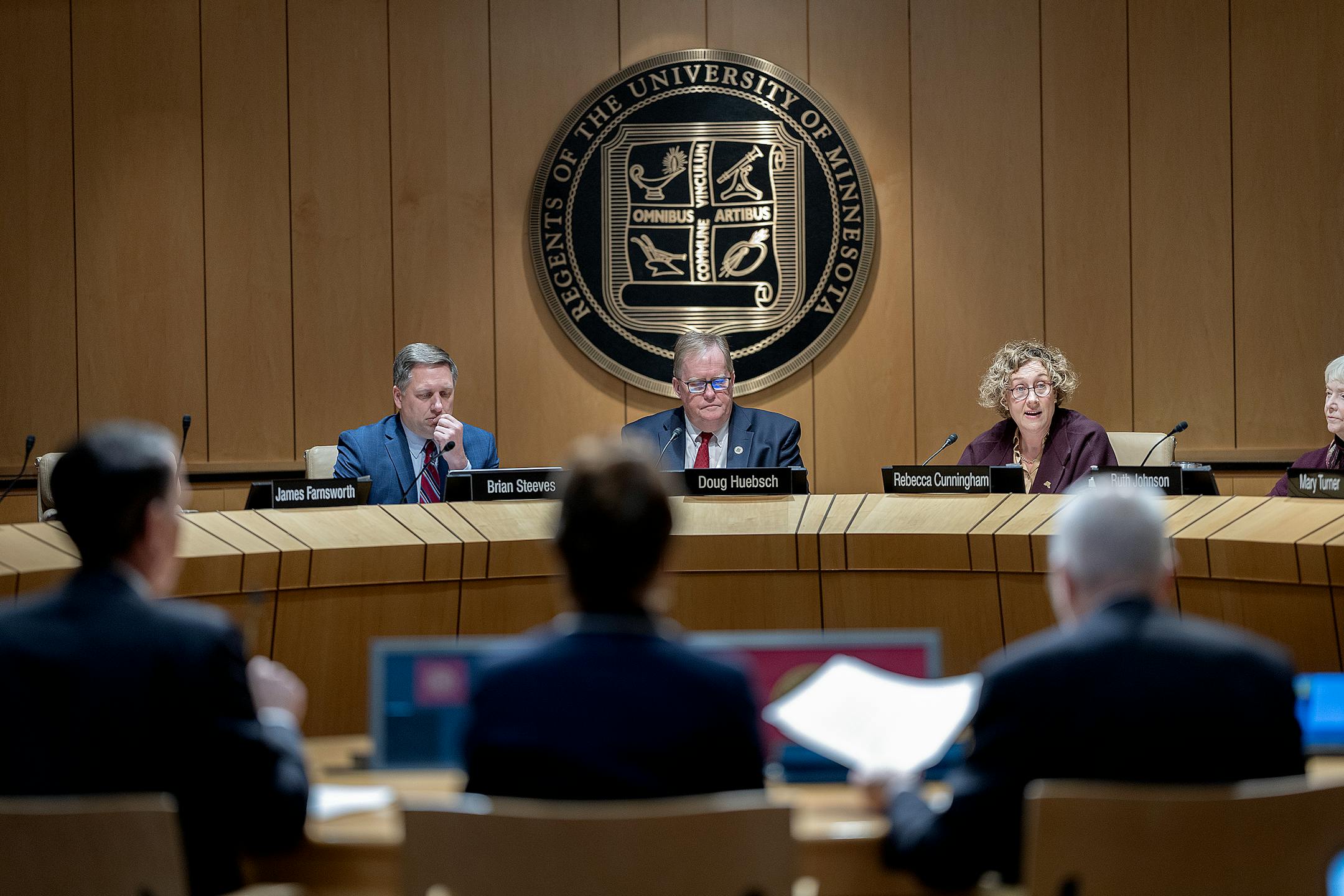
U Board of Regents Brian Steeves, left, Chair Douglas Huebsch, center, and U President Dr. Rebecca Cunningham address the controversy over Fairview Health Service's plan to partner with University of Minnesota Physicians on a new deal to fund the U Medical School and academic health programs. The meeting was held at the University of Minnesota’s McNamara Alumni Center on Thursday. (Elizabeth Flores/The Minnesota Star Tribune)

The University of Minnesota’s Board of Regents unanimously passed a resolution Thursday saying its official doctors’ group “unlawfully” negotiated a $1 billion deal with Fairview Health Services that harms the U’s interests.

The 10-year agreement was negotiated between Minneapolis-based Fairview, the university’s current partner in running M Health Fairview hospitals and clinics, and University of Minnesota Physicians (UMP).

It provides potentially $100 million a year in financing for the U’s academic health programs and $1 billion over 10 years for capital projects.

After the vote, Dr. Greg Beilman, UMP interim chief executive, said he’d confer with attorneys about implications but stressed that the doctors’ group negotiated the contract with Fairview just as it has done with dozens of health systems across the Upper Midwest.

“I remain very positive about the clinical agreement that ... stabilizes a practice for the 1,500 doctors that I serve, for the next 10 years,” he said.
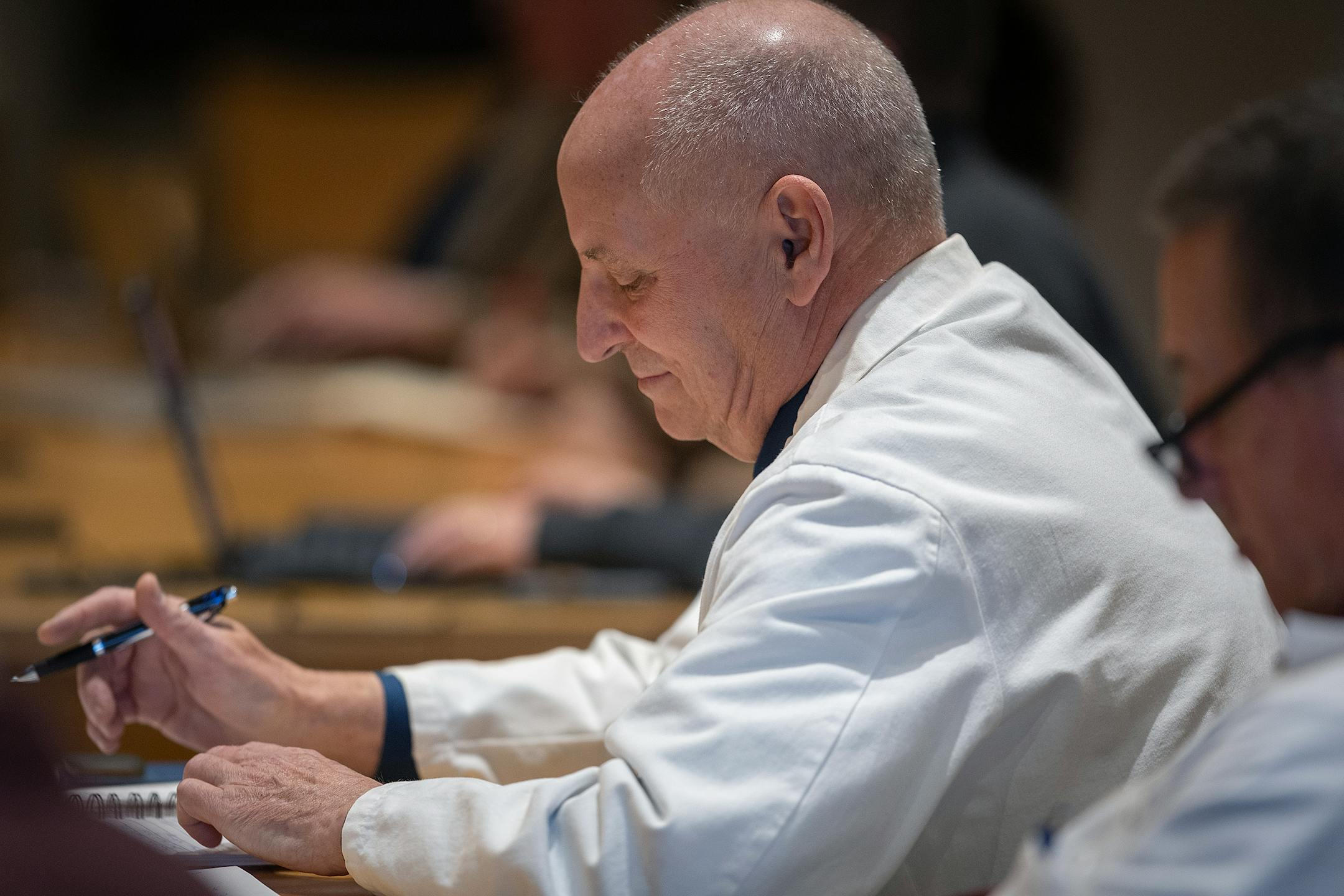
Dr. Greg Beilman, interim chief executive officer at University of Minnesota Physicians, at a meeting of the U Board of Regents on Thursday. (Elizabeth Flores/The Minnesota Star Tribune)

Supporters at UMP and Fairview hailed the deal as a breakthrough after months of failed efforts to negotiate an extension of the existing M Health Fairview partnership.

But university officials say they were excluded while the agreement was hammered out.

Dr. Rebecca Cunningham, the U president, said during Thursday’s board meeting that the deal would radically change governance and management of the physician practice and was developed “without any consultation or input from faculty or staff.” She asserted the agreement would bolster the interests of Fairview and UMP over “what’s best for all of Minnesota.”
“I’m deeply concerned, and I hear from others how concerned they are, that the proposed agreement ... [happened] without any level of transparency, behind closed doors,” Cunningham said.

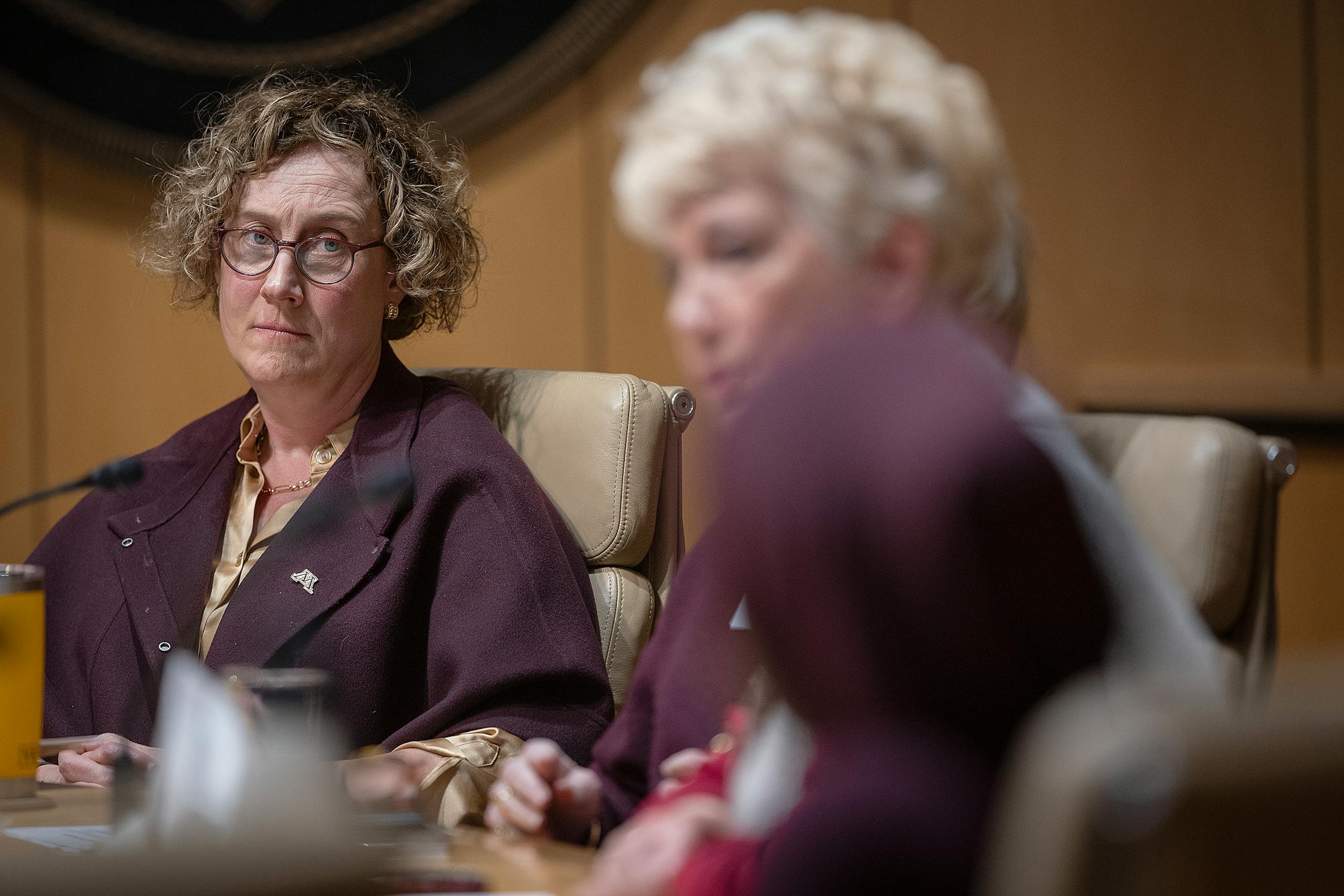
University President Dr. Rebecca Cunningham listens to Mary Turner at a regents meeting Thursday. (Elizabeth Flores/The Minnesota Star Tribune)

In an interview, Beilman replied that the agreement was developed with broad advice, feedback and input from faculty members and staff at the U. He described the deal as advancing the existing partnership, and said he was open to further discussions with the U to address unanswered questions.

The new partnership was publicly announced Wednesday with the support of Attorney General Keith Ellison, who said he feared all three parties, workers and patients would suffer from unwinding the existing agreement by the end of next year.

The three-page resolution passed Thursday says Cunningham and the regents may now consider whether to change how the UMP doctors’ organization is structured. That includes deciding whether to renew its status as the Medical School’s official doctors’ group, set to expire on Dec. 31, 2026.

Other steps the U may take against its doctors include: exploring how to respond to a reduction in funding it foresees from Fairview as a result of the deal; re-evaluating whether to let its distinctive M logo be used by M Health Fairview; and evaluating “the implications and remedies arising from the conflicting loyalties and fiduciary duties created by the actions” of UMP.

The East Campus of the University of Minnesota Medical Center is currently part of the M Health Fairview medical system. (Provided/M Health Fairview)

The U first signaled public opposition this week to the UMP-Fairview deal by distributing a critical letter signed by the Board of Regents chair and two board members who are physicians and key advisers on health care issues.

The public could not have confidence in “agreements reached in secret,” says the letter board chair Doug Huebsch and regents Dr. Ruth Johnson and Dr. Penny Wheeler, asserted.

Attorney General Ellison says he told Cunningham in a Sept. 12 letter that he was instructing the physicians’ group and Fairview to meet.

“After the University of Minnesota informed me it no longer wished to negotiate with Fairview and instead wanted to explore options other than a relationship with Fairview, it was clear that we were at great risk of a highly damaging unwind of the 30-year relationships between the parties,” Ellison said in a statement released Wednesday evening.

U President Cunningham, however, insisted Thursday the U did not walk away from negotiations at any point. Ellison’s strategic facilitator, Lois Quam, declared an impasse Sept. 8, the U says, and sent all parties home.

Quam later reached out to the U for one-on-one discussions, but the university had no idea she was simultaneously “in negotiations, facilitating between Fairview and UMP,” Gregg Goldman, the university’s executive vice president for finance in operations, said in an interview.

“It was done in a covert way,” Goldman said. “I would call that secret.”

The attorney general has indicated the U was aware of the negotiations between Fairview and UMP for two months. He now wants U officials to join negotiations to complete unfinished aspects of the agreement.

“I urge all the parties to stay calm,” Ellison said in a statement Wednesday evening.

The affiliation between Fairview and the U, which is set to expire at the end of next year, dates back to the Minneapolis-based health system’s 1997 purchase of University of Minnesota Medical Center in a financial bailout.

The agreement is the basis for the prominent M Health Fairview brand used by the U and Fairview to jointly market clinic and hospital services. It also specifies how about $100 million in financing from Fairview flows each year for the U Medical School and the university’s academic health programs.

The new deal changes the funding formula for how money would flow from the health system to the U, with all dollars passing through the physicians group. The new agreement also makes more of this funding dependent on the joint health care operations hitting financial and efficiency targets.

But without revisions, “it will inevitably reduce protected time for faculty to teach and mentor ... and [move] focus away from training future medical professionals and from advancing medical discoveries,” said Wheeler, a regent who supported the board resolution.

UMP said Thursday it disagreed with Wheeler’s concerns, arguing that without a clinical contract with Fairview, doctors “would be forced to rely solely on professional fee revenue from seeing patients, which would be insufficient to support academic time.”

Beilman, the UMP interim president, said in an interview earlier this week that Med School faculty members understand the importance of protecting all three parts of the U’s health care mission — research, teaching and patient care.

The board resolution says regents’ policies “govern” the practice of medicine by Medical School faculty. Yet UMP entered what was billed as a binding deal with Fairview, violating its obligations to the U and jeopardizing the U’s ability to pursue relationships with other health systems besides Fairview.

The regents said the way the deal unfolded was detrimental to the school and UMP’s ability to serve the state on behalf of the U, and was done despite “the expressed objection of Board leadership,” according to the resolution.

The resolution says the physician group is “endangering the future of all University health sciences schools.”

about the writer

about the writer

Christopher Snowbeck

Reporter

Christopher Snowbeck covers health insurers, including Minnetonka-based UnitedHealth Group, and the business of running hospitals and clinics.

See Moreicon

More from Health Care

See More
card image
Jerry Holt/The Minnesota Star Tribune

Providers are facing shortages in both funding and staffing, leaving some with waiting lists for group homes.

card image