

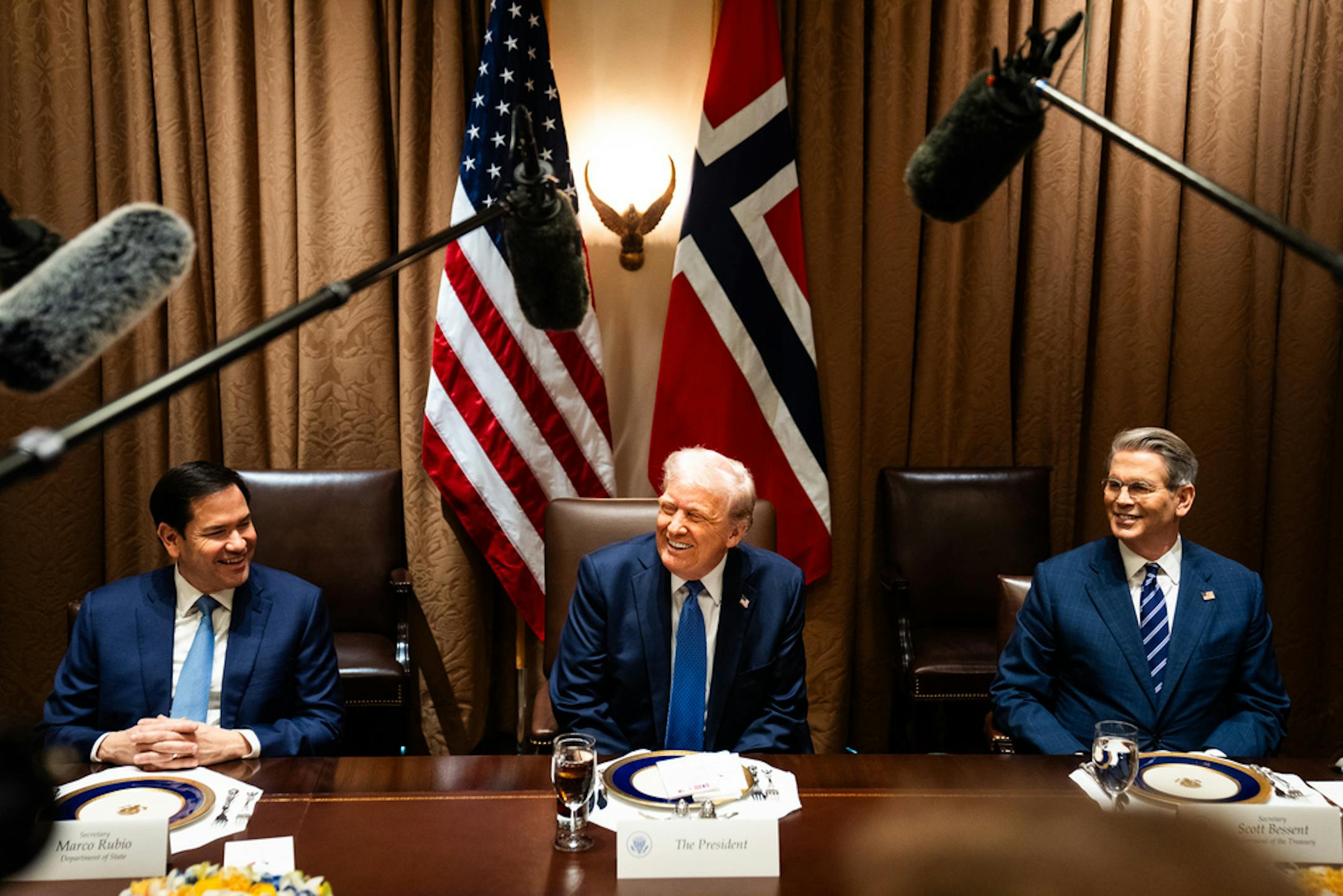
President Donald Trump’s freewheeling use of tariffs as a tool of American power may have been more extensive than was publicly known, encompassing an array of national security goals as well as the interests of individual companies, according to internal government documents obtained by the Washington Post.
This month, State Department officials considered demanding that U.S. trading partners vote against an international effort to reduce greenhouse gas emissions by the oceangoing container ships that are the backbone of global trade. In a draft “action memo,” Secretary of State Marco Rubio was told that department officials had sought “to inject this issue into the ongoing bilateral trade negotiations” with maritime nations such as Singapore.
That move came after administration officials this past spring debated broadening trade negotiations with more than a dozen nations, including by requiring Israel to eliminate a Chinese company’s control of a key port and insisting that South Korea publicly support deploying U.S. troops to deter China as well as Seoul’s traditional rival, North Korea, the documents said.
Administration officials saw trade talks as an opportunity to achieve objectives that went far beyond Trump’s oft-stated goal of reducing the chronic U.S. trade deficit. In the first weeks after the president paused his “reciprocal” tariffs April 9 to allow for negotiations, officials drew up plans to press countries near China for a closer defense relationship, including the purchase of U.S. equipment and port visits, the documents said.
“This is the first time I’ve seen that type of request in a trade agreement. When you’re sitting at the negotiating table, you’re not talking about this stuff,” said Wendy Cutler, who spent more than a quarter century in the office of the U.S. trade representative and is now vice president of the Asia Society Policy Institute in Washington.
The latest sign that Trump views tariffs as the Swiss Army knife of diplomacy came this week, when he threatened to impose a 50 percent tariff on Indian goods to compel New Delhi to halt Russian oil purchases that the U.S. says supports Russia’s war in Ukraine.
In an eight-page list of “supplemental negotiating objectives,” U.S. officials acknowledged that potential accords would cover issues, including military basing, “not traditionally found in a trade agreement.” Officials also discussed pressing other nations to provide concessions for individual companies including Chevron, one of the world’s 10 largest oil producers, and Elon Musk’s Starlink.
The negotiating document contained suggestions from other Cabinet departments in response to a request by the office of U.S. Trade Representative Jamieson Greer and bore a handwritten notation indicating that it was a May 1 draft.


