

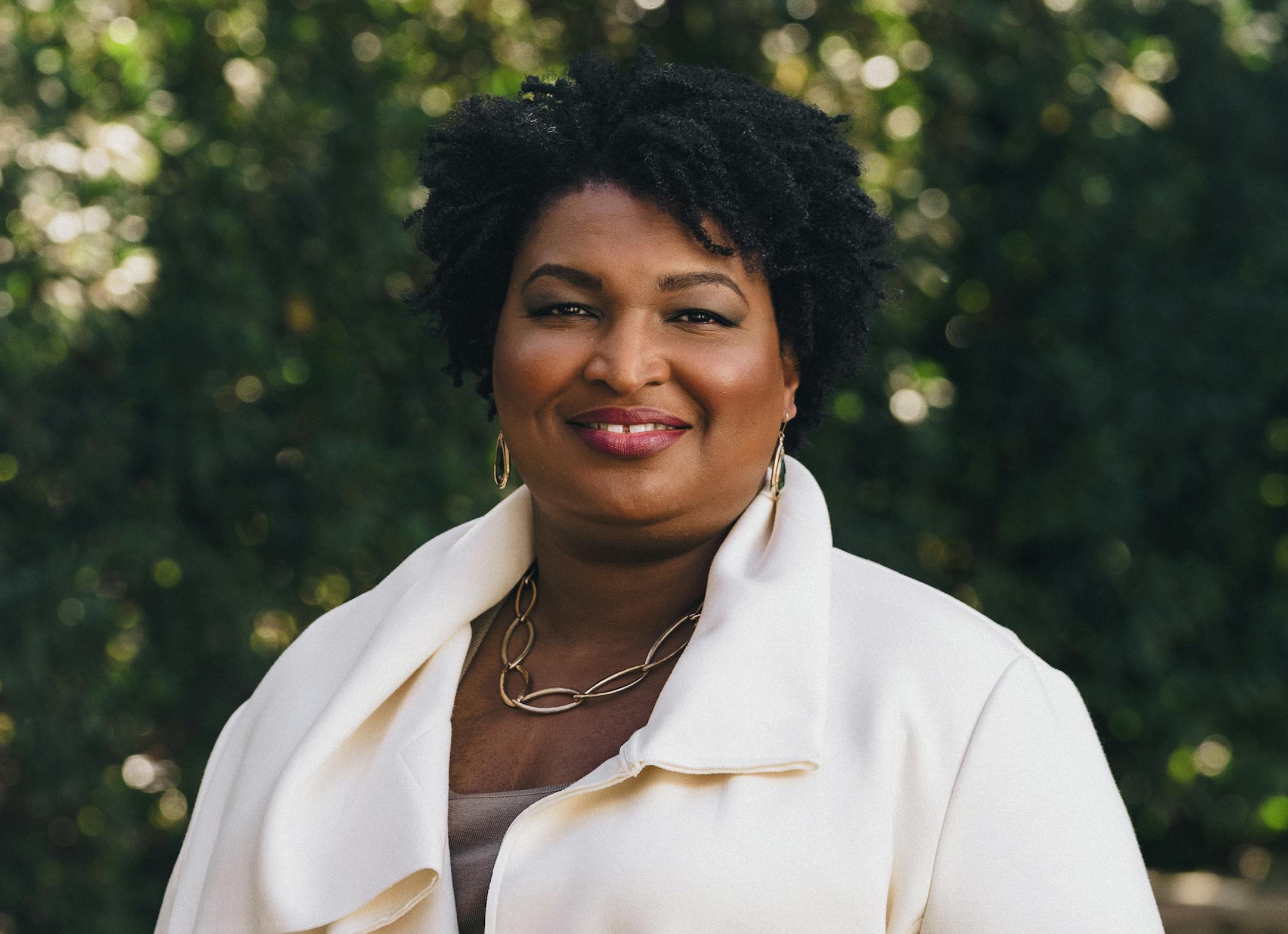
Stacey Abrams is known as a gifted debater, a voting rights advocate credited with helping turn Georgia blue(ish), a nimble politician and a fluid writer. But if you want to hear about her screw-ups, talk to her five siblings.
Abrams, who will kick off the Minnesota Star Tribune and MPR News’ Talking Volumes series Sept. 10 with a discussion of her thriller “Coded Justice,” is the second of six high-achieving siblings. And with a variety of areas of expertise, including biology, religion and anthropology, they all read her books before they’re published.
“They tell me where I am wrong and bad before anyone else does,” said Adams, whose speech is often punctuated by hearty chuckles. “They’re all voracious readers and they read through very different lenses.”
Abrams will discuss siblings, artificial intelligence, inequity in health care, her two runs for the Georgia governor’s office and more with MPR’s Kerri Miller at the Fitzgerald Theater Wednesday. The following was edited for length and clarity:
Q: There is lots going on in “Coded Justice.” What did you start with?
A: I wanted to write about AI and I wanted to find a way in that didn’t demonize it. I really think about this technology, which is ubiquitous but opaque to people. How could I make it accessible and how could I do so with a conversation that is, on its face, a sympathetic conversation but that has all these tentacles and tendrils we don’t think about? And that, for me, means health care and veterans and diversity, equity and inclusion.
Q: You were writing about AI because it’s a big part of all our lives?
A: When I started conceptualizing the book, I didn’t really use AI. I rarely used the tools in my home. Siri, I have to turn on to actually use because it isn’t usually on. I don’t use voice activation features on most of the things I have. My niece, who lives with me and is in high school, was using ChatGPT and I was befuddled: “How is that not cheating?” She explained that her teachers actually make them use it.


