Housing, office, Wolves arena: What’s next for the Star Tribune printing plant?

Developers are already eyeing the 13-acre North Loop property that will be available once the newspaper starts printing in Iowa next year.

The Minnesota Star Tribune
September 18, 2025 at 4:01PM
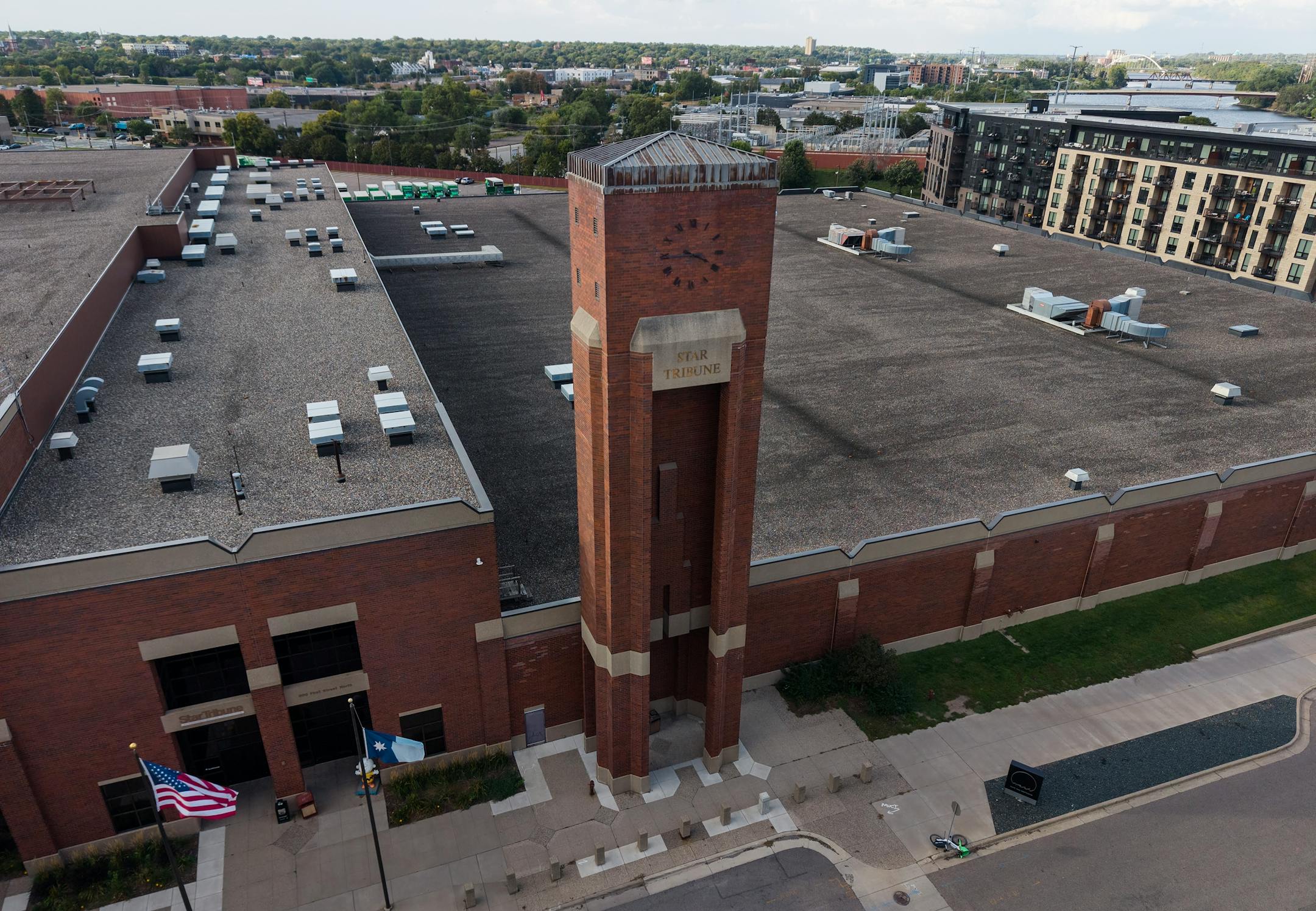
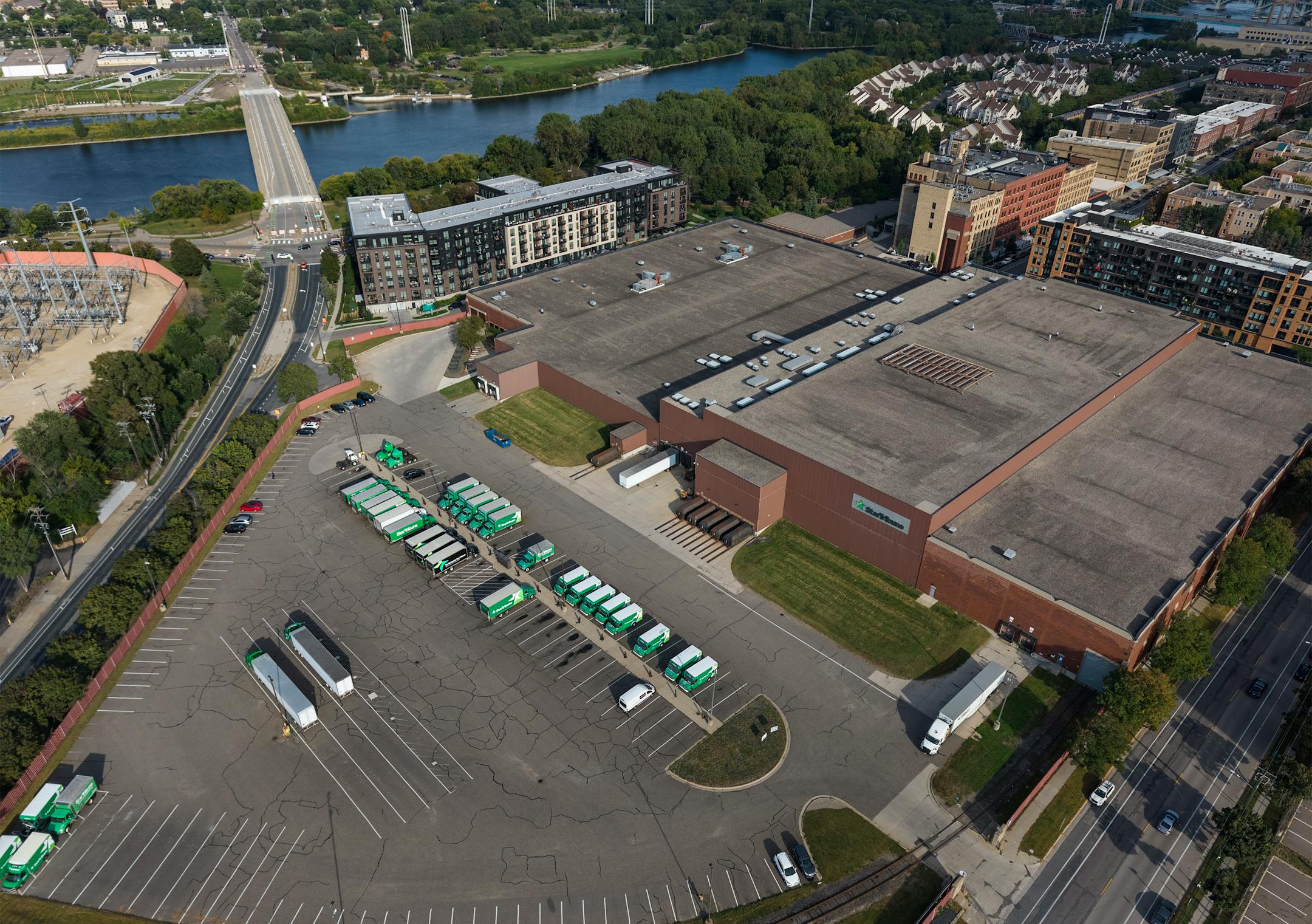
The Star Tribune Heritage Center site, shown Wednesday, is one of the last available sites for industrial development in the North Loop neighborhood of Minneapolis. Heritage has been the Minnesota Star Tribune's printing facility since 1987, but that will end in December. (Richard Tsong-Taatarii/The Minnesota Star Tribune)

One of the final large industrial sites in downtown Minneapolis will soon hit the market as the Minnesota Star Tribune readies to sell the sprawling plant where it has printed its newspaper for four decades.

Developers are salivating for the 13 acres of land — nestled among trendy boutiques and high-end housing on leafy parkways along the Mississippi River — with visions ranging from a data center to a new NBA arena.

“I think everyone is going to be interested,” said Maureen Michalski, a regional senior vice president with Minneapolis-based Ryan Cos., one of several Twin Cities developers planning to bid on the North Loop site. “There are just not that many opportunities to do large urban redevelopment.”

Tempering that enthusiasm, however, is the timing.

Commercial real estate is weathering a turbulent period with office vacancies at record highs. Lenders are timid, too, as high construction and borrowing costs make it more difficult to finance big projects.

The site currently has a couple hundred parking spaces, a massive warehouse big enough for six railcars and loading docks where workers load freshly printed papers into big green delivery trucks.

Those printing operations will cease at the end of the year, and the Star Tribune will outsource those duties to a Gannett facility in Iowa.

It’s also not the Twin Cities’ only major redevelopment site on the market. The pandemic forced several companies to mothball their headquarters and corporate campuses, putting hundreds of acres of prime land up for sale.
The same is true for several manufacturing and industrial sites, including at least two not far from what’s known as the Heritage printing facility.

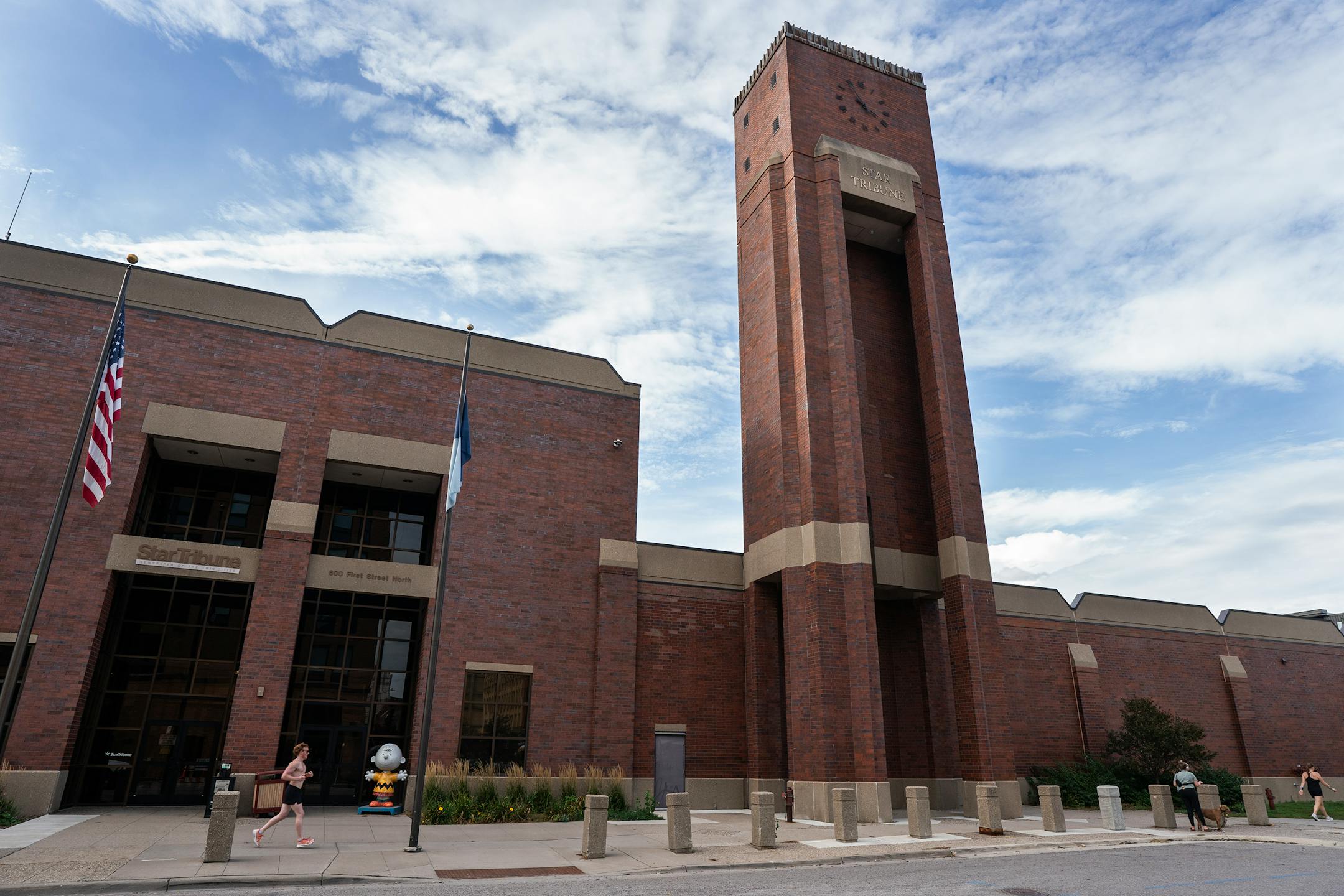
The Star Tribune Heritage Center site is the last available site for industrial development in the North Loop. (Richard Tsong-Taatarii/The Minnesota Star Tribune)

Growth potential

The Star Tribune built what was then a state-of-the-art printing plant in 1986, a time when the North Loop was mostly parking lots and vacant warehouses. Many of those have since become upscale housing and offices with retail and restaurants on the ground level.

The Star Tribune said the plant was operating at a fraction of its capacity as readers increasingly choose digital subscriptions instead of print. Chris Iles, vice president of communications and brand marketing for the media organization, said the company is still deciding how to market the property. But it is already fielding “tons of calls” from brokers and developers.

When evaluating the offer, the company will take into consideration the site’s future use and impact on the neighborhood, he said.

“We’re not just going to sell this thing to anyone,” Iles said. “We’re going to take a look at what the range of offers are and sell it to the party that makes the most sense on a variety of factors.”

The Star Tribune, now headquartered in leased space at Capella Tower, once owned several full city blocks in and around downtown Minneapolis.

Its former headquarters at the corner of 5th Street and Portland Avenue on the east side of downtown met a similar fate a couple of decades ago. Ryan redeveloped it into U.S. Bank Stadium and later built its own headquarters just a couple of blocks from there.

The printing plant, on the west end of downtown, is now the last piece of Star Tribune-owned real estate in the state, Iles said.

“This is almost a bookend opportunity to create another unique neighborhood within a neighborhood,” said Nick Murnane, vice president and general manager of Twin Cities-based Opus.

Opus bought a 3-acre parcel adjacent to the printing plant and built luxury rentals that now overlook the Mississippi River. Murnane said the Heritage site is a perfect opportunity to build on the success of the North Loop, where there’s high demand for office and retail space but dwindling development opportunities.

John McCarthy, a longtime commercial real estate broker in the Twin Cities, said the Heritage site is unique from all others on the market because key infrastructure like streets and rail lines surround it. Also, its proximity to the Mississippi within an established neighborhood makes it a plum offering.

“It’s virtually unheard of,” said McCarthy, who recently brokered Ryan’s $41 million purchase of the 180-acre former Thomson Reuters campus in Eagan. “It’s [going to be] a hot commodity.”

Not far from Heritage, there’s another major redevelopment offering: Graco. The company recently announced plans to sell its 40-acre industrial campus and headquarters, which includes a nearly half-mile stretch of riverfront property in northeast Minneapolis. The company hasn’t yet listed the site or named a broker, a Graco spokeswoman said this week.

“It’s exciting to see parts of Minneapolis being transformed in big blocks, especially along the riverfront,” said Alex Baron, a broker at Transwestern.

The Star Tribune Heritage Center site, shown on Wednesday, is the last available site for industrial development in the North Loop. (Richard Tsong-Taatarii/The Minnesota Star Tribune)

Future uses

Market conditions are only one factor that will determine what develops in the North Loop. The neighborhood and city will likely have input through the zoning and permitting processes.

A city spokeswoman said the site’s “size and location offer strong potential for a future redevelopment or reuse,” a process that could move forward more quickly thanks to recent updates to regulations that support residential conversions.

Though the office market downtown is still struggling, developers have recently had success with new, mixed-use projects that are essentially vertical neighborhoods with housing, offices and commercial space. North Loop Green next to Target Field is one example close to the Heritage parcel.

Current zoning for the site is what’s called “production/mixed-use,” which typically means commercial, warehouse and storage, and high-density development in buildings that could be as tall as 15 stories.

It’s costly to tear down buildings and start fresh, developers noted, possibly making the site better suited to a buyer who could reuse some of the existing infrastructure — such as a tech company, Michalski said.

Basketball fans have speculated online whether the site might be a contender for the new NBA arena that Minnesota Timberwolves/Lynx owners Marc Lore and Alex Rodriguez have said they plan to build. The teams’ new CEO, Matt Caldwell, said in a Monday interview that a new arena remains “a huge priority,” though he expects the process of finding a site and building a facility to take at least five years.

The Heritage real estate is much larger than Target Center’s current footprint, which — at less than 4 acres — is one of the smallest in the NBA. But the printing facility lacks the access to public transit, highways and parking that Target Center has. That’s one of the arguments downtown boosters, like Mayor Jacob Frey, have made in favor of keeping an arena in Minneapolis’ central business district.

Don Kohlenberger, president of Hightower Initiatives, said the site could have partial use as a data center, since it likely already has a large electrical capacity. That also wouldn’t entail massive changes to neighborhood density, demands for city services or tax collections.

“It’s the highest tax basis investment that you can have for a given piece of real estate,” he said.

On top of that, Kohlenberger said the site might accommodate other uses, such as a parking ramp connected to a North Loop transit shuttle as well as a wellness and fitness facility. While more housing isn’t out of the question, he said today’s rental market, financing environment and the availability of other sites could make that difficult.

“I wouldn’t necessarily discount it in whole,” he said. “But there’s enough locations around, in my opinion, for that.”

Emmy Martin of the Minnesota Star Tribune contributed to this story.

about the writers

about the writers

Jim Buchta

Reporter

Jim Buchta has covered real estate for the Star Tribune for several years. He also has covered energy, small business, consumer affairs and travel.

See Moreicon

Katie Galioto

Reporter

Katie Galioto is a business reporter for the Minnesota Star Tribune covering the Twin Cities’ downtowns.

See Moreicon

More from Real Estate

See More
iStock
Isometric small house and green dollar sign on weight scales. Balance, price, real estate and home concept.
iStock

With the dream of home ownership out of reach for many Americans, President Donald Trump has floated the idea of a longer mortgage than the usual 30-year fixed-rate one.

card image
card image