
Will the Wolves and Lynx get a new arena? New CEO Matt Caldwell has an update

While fans await word on whether or not the Wolves will have a new arena, new CEO Matt Caldwell illuminated on some in-arena changes fans can expect in October.

The Minnesota Star Tribune
September 16, 2025 at 6:21PM
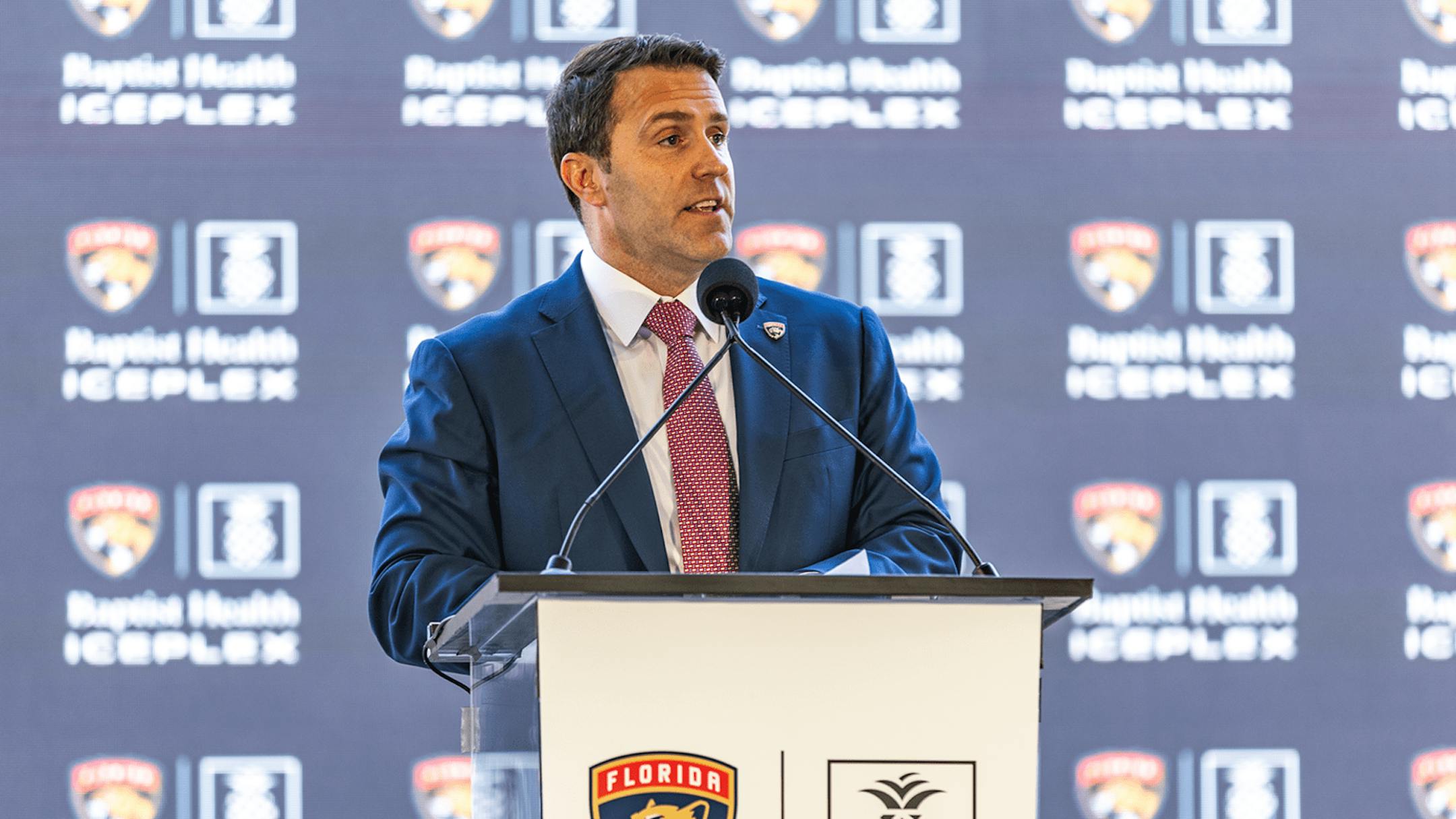
After winning back to back NHL Stanley Cup championships as the Florida Panthers CEO, Matt Caldwell was named the next chief executive of the Timberwolves and Lynx. (Florida Panthers)

When new Timberwolves and Lynx CEO Matt Caldwell had the same position with the Florida Panthers in the NHL, he said it took “the first five or six years” for people to recognize him in public. After officially taking the job with the Wolves and Lynx last month, Caldwell said that phenomenon is happening much sooner, like in a department store on Sunday.

“It’s very humbling and it goes to show you how passionate the fans are,” Caldwell said. “It’s an organic fanbase here, and they’ve been coming to games, but we can always deliver a better experience and we can always treat them better.”

Caldwell spoke with the Star Tribune on Monday to talk about his career in sports business, how he got into the industry after attending West Point and serving in the military, and about the Wolves’ plans for a new arena, among other fan-related issues.

Here are some takeaways from the interview:

On his military background and arriving in sports business

Caldwell said he attended West Point on the advice of his principal at a Catholic high school where he grew up in New York.

He was in his final year at the academy when the terrorist attacks of September 11, 2001 took place and upon graduating in June 2002, he joined the the 1st Infantry Division in the Army and was deployed initially to Kosovo. Then beginning in 2004, he spent a year serving in Iraq.

That time in combat has shaped the perspectives he carries with him in building a workplace culture wherever he has gone.

“Every company, every sports team … they’re going to say teamwork is important,” Caldwell said. “But when you lived and breathed it in the military, and your life depended on your teammates, it doesn’t matter what their background is, how much money they have or not, who they were raised by, where they came from. When you’re in life and death situations, you just want to be able to depend on someone. It really eliminates all the noise and complexities of life and you realize the power of a team is so much bigger than any individual. And the miliary had really rooted out any ego I had.”

ADVERTISEMENT

After leaving the Army, Caldwell went to business school at Northwestern before joining Goldman Sachs. Through his work at Goldman, he met Vincent Viola, a veteran and billionaire who then hired Caldwell to work for him personally in handling the many investments of his portfolio.

One of those companies was the Florida Panthers, and Caldwell became the team’s CEO in 2016.

Viola, with Caldwell’s help, remade the Panthers into the current NHL powerhouse they are today, coming off back-to-back Stanley Cup championships. Caldwell oversaw the remaking of the hockey operations department while trying to get fans back in the building in suburban Fort Lauderdale.

“Took us a number of years to get it going in the right direction, but then coming out of COVID [in 2020], the team just just caught fire,” he said.

How he came to Minnesota

Viola had a relationship with current Wolves and Lynx owners Marc Lore and Alex Rodriguez, and together they were part of a group attempting to purchase the New York Mets in 2020, Caldwell said. That’s where his relationship began with Lore and Rodriguez, so when they called about the Wolves job, he was open to hearing them out based on their previous experience working together.

“When you spend so much time together, you really get tight for that time … There’s established trust,” Caldwell said.

Caldwell said he wasn’t looking for a job, but after nine years with the Panthers and overseeing the team become a title winner, he was ready for a new challenge and signed a 10-year contract with the Wolves and Lynx.

“We finally got the brand turned around … I don’t want to come off the wrong way, but what else more could we do with the Panthers? It was exciting and if this was just like another monstrous turnaround, worst team on and off the court, I don’t know if I’d want to go through all that again, but meeting [President of Basketball Operations Tim Connelly], seeing how great the basketball side is, the ownership, a new arena pursuit is exciting and a great thing to work on.”

About that new arena … and a little about the current one

Caldwell worked on trying to find a new home for the Panthers before the team decided to renovate its current home, Amerant Bank Arena, for over $1 billion.

Since taking over control of the teams in June, Lore and Rodriguez have been outspoken about their desire for a new arena in Minneapolis. It is a venture they said they are prepared to fund privately.

Caldwell outlined what the timeline of finding a new home could be.

To illustrate how long that might take, Caldwell said he would explain by “working backwards,” first in discussing how long it would take an arena to be built once there was “shovel to ground.”

“It typically is about two and a half to three years to build. So at a minimum, even if we were ready to start construction today, you’re talking, let’s call it three years.”

Then backtracking from that, Caldwell said it could take “two to four years” when it comes to getting to that point, depending on things like relationships with local government and scouting different sites.

“Even if you get to a handshake agreement on location and how the economics are going to work, you have to work through getting a whole operating agreement in place. Papering that can take six months to a year.

“There’s permitting that’s involved, zoning, architects, whether or not we’re going to have a development partner. That could all be within a two to four year process. You’re probably looking at least five years to have it open, but it’s a huge priority for us. But I want to set the stage that it’s going to be a massive operation.”

As for the current arena in Target Center, Caldwell said for next season the team is going to have theater-style lighting, similar to what the Knicks have at Madison Square Garden and the Lakers at Crypto.com Arena. The lights over the crowd will be dimmed to amplify and center the lighting on the floor.

On recent layoffs

Right around the time Caldwell accepted the job, the team laid off roughly 35 employees (less than 10% of its workforce). Caldwell said these layoffs were “100% restructuring” and not an indication of any financial issues on the part of the organization.

“Every ownership group has different ways to run a business. This was definitely not ‘the team’s in financial trouble and we’re trying to cut costs’. We’re trying to run a very efficient, profitable business.”

Caldwell said his philosophy is more to pay higher salaries to people who can take on a lot of responsibilities than parsing those out over a few positions.

“I’d rather have one person doing two or three jobs than three mediocre players. It’s all about evaluating people on a day-to-day basis and making sure people are completely bought in, passionate and ready to go.”

How the business and basketball departments will intersect

With the Panthers, ownership and the business side required that the hockey operations department keep in constant contact with them in the desire to achieve organizational alignment.

Caldwell said that dynamic is different with the Wolves because Connelly has been so successful both in Denver and Minnesota and has established relationships with Lore and Rodriguez.

“They’ve already established their rhythm, so I’m just here to support that,” Caldwell said. “I’ve spent a lot of time with Tim this summer. My comfort level and relationship with Tim has been one of the biggest reasons why my family and I decided to move here. … We’re all in this together at the end of the day and, we’ll all be reporting into the ownership and just running in the same direction. I’m happy that’s already established because it took us [time to establish in Florida].”

He hopes that by building an “elite” culture on the business side, it can have a rollover effect to the rest of the organization.

“When people look up to your leadership, you want to make sure that it’s not fake, it’s not forced. I’m working very hard to be visible, to be around and just make sure that the culture of the whole franchise is a culture of excellence.”

about the writer

about the writer

Chris Hine

Sports reporter

Chris Hine is the Timberwolves reporter at the Minnesota Star Tribune.

See Moreicon

More from Wolves

See More
card image
Ella Hall/The Associated Press

The Wolves again made life tough on themselves vs. the worst team in the West, but they left New Orleans with two victories in two games.

card image
card image