
St. Paul schools to collect $37 million in new taxes, but shortfall remains for 2026-27

A successful levy campaign in November won’t erase the need for future budget reductions, officials say. The district projects a $15 million shortfall next year.

The Minnesota Star Tribune
January 3, 2026 at 12:00PM
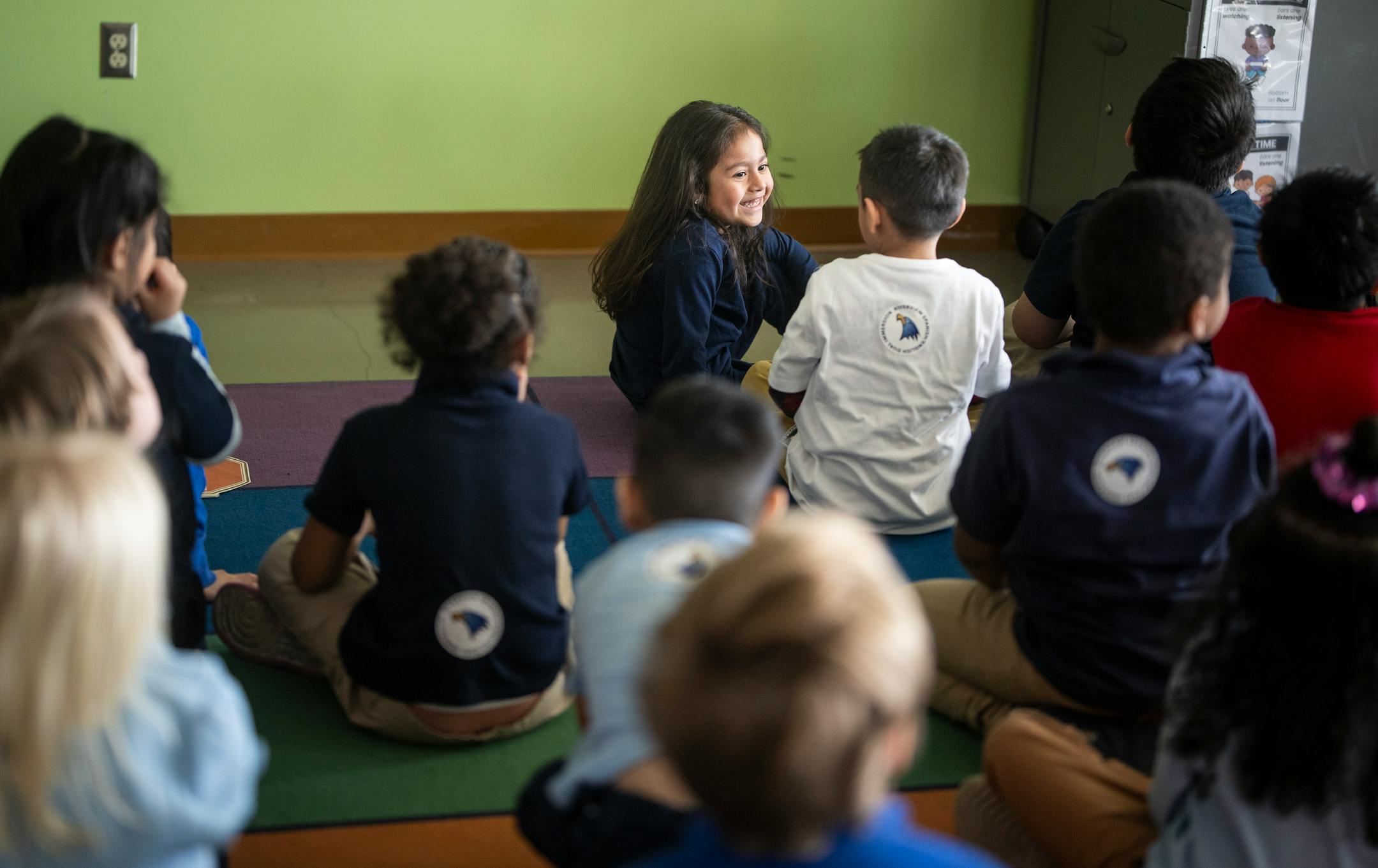
St. Paul Public Schools is having success boosting student numbers at select schools like Riverview elementary on the West Side, but enrollment is down overall, contributing to a budget crunch in the 2025-26 and 2026-27 school years. (Renée Jones Schneider/The Minnesota Star Tribune)

St. Paul voters agreed last fall to kick in an extra $37 million in school taxes beginning in 2026, but the state’s second-largest district still will face a budget shortfall.

Enrollment is down and is projected to keep on falling in the 32,200-student district. Inflation remains a concern.

On Jan. 6, the school board will get its first glimpse at the budget outlook for 2026-27. For now, the district is projecting a $15 million shortfall next year — roughly 2% of its total budget.

Superintendent Stacie Stanley had emphasized the need for financial stability during the runup to the November election when two-thirds of voters backed an additional $37.2 million a year in taxes over 10 years.

As a result, Tom Sager, executive chief of financial services, said Jan. 2 that “major budget reductions” should not be needed, nor is the district expected to have to dip into its rainy-day funds.

But the combination of declining student numbers and cost increases tied to inflation and mandated services — some not fully funded by the state and federal governments — “continue to put pressure on the district’s budget,” Sager added in a written statement.

This school year, St. Paul has 500 fewer students than projected in grades K-12, and it is expected to see another 400-student decline in 2026-27, according to board materials posted ahead of the Jan. 6 meeting.

St. Paul, like Minneapolis Public Schools, has a $1 billion annual budget, and like the state’s third-largest district, St. Paul also has begun asking community members about their funding priorities.

Smaller class sizes and instruction that is “fun, active, culturally responsive and connected to real life” are among the goals some have mentioned in St. Paul.

Neither school district has gotten to the point of floating possible cuts.

The two school systems settled teacher contracts last year that fell within the budget parameters set by their respective school boards. The total cost increase in St. Paul will be $37 million over the 2025-26 and 2026-27 school years; Minneapolis agreed to a $35 million two-year package.

Nearly 100 people participated in a recent budget information session at St. Paul school district headquarters, and they included 18 people who speak the Karen language and 35 Spanish-speakers who tuned in virtually.

In a breakout room for English speakers, Sager asked attendees what would make children feel more welcome or comfortable at school.

“Air conditioning,” a woman replied. “For real.”

Stifling heat in older buildings has been a longstanding concern as the end of the school year approaches. The district called off in-person classes three days early in 2021 due to extreme heat.

Officials say a key driver in the district’s 2025-26 budget was the $119 million set aside for capital projects that include the replacement or renovation of aging infrastructure and outdated school spaces.

HVAC updates were central to renovations at Highland and Hidden River middle schools, and the construction of a new Bruce Vento elementary. Hidden River Middle School reopens on Jan. 5.

The push to ensure schools are inviting is vital for districts like St. Paul and Minneapolis, which must battle for market share in a competitive environment that includes charter schools and nearby school districts.

The state issues aid on a per-pupil basis, and St. Paul’s overall drop comes despite special efforts to lift student numbers at schools like Riverview Spanish-English Dual Immersion on the West Side.

The district recently called on an independent research firm, North Star Policy Action, to assess the cost impact to the school system due to the presence of charter schools. The study has a $20,000 price tag and is expected to be completed by April 30.

about the writer

about the writer

Anthony Lonetree

Reporter

Anthony Lonetree has been covering St. Paul Public Schools and general K-12 issues for the Star Tribune since 2012-13. He began work in the paper's St. Paul bureau in 1987 and was the City Hall reporter for five years before moving to various education, public safety and suburban beats.

See Moreicon

More from St. Paul

See More
card image
card image