Welcome to the ‘school of the future’: How Twin Cities schools are debuting new designs

September 9, 2025
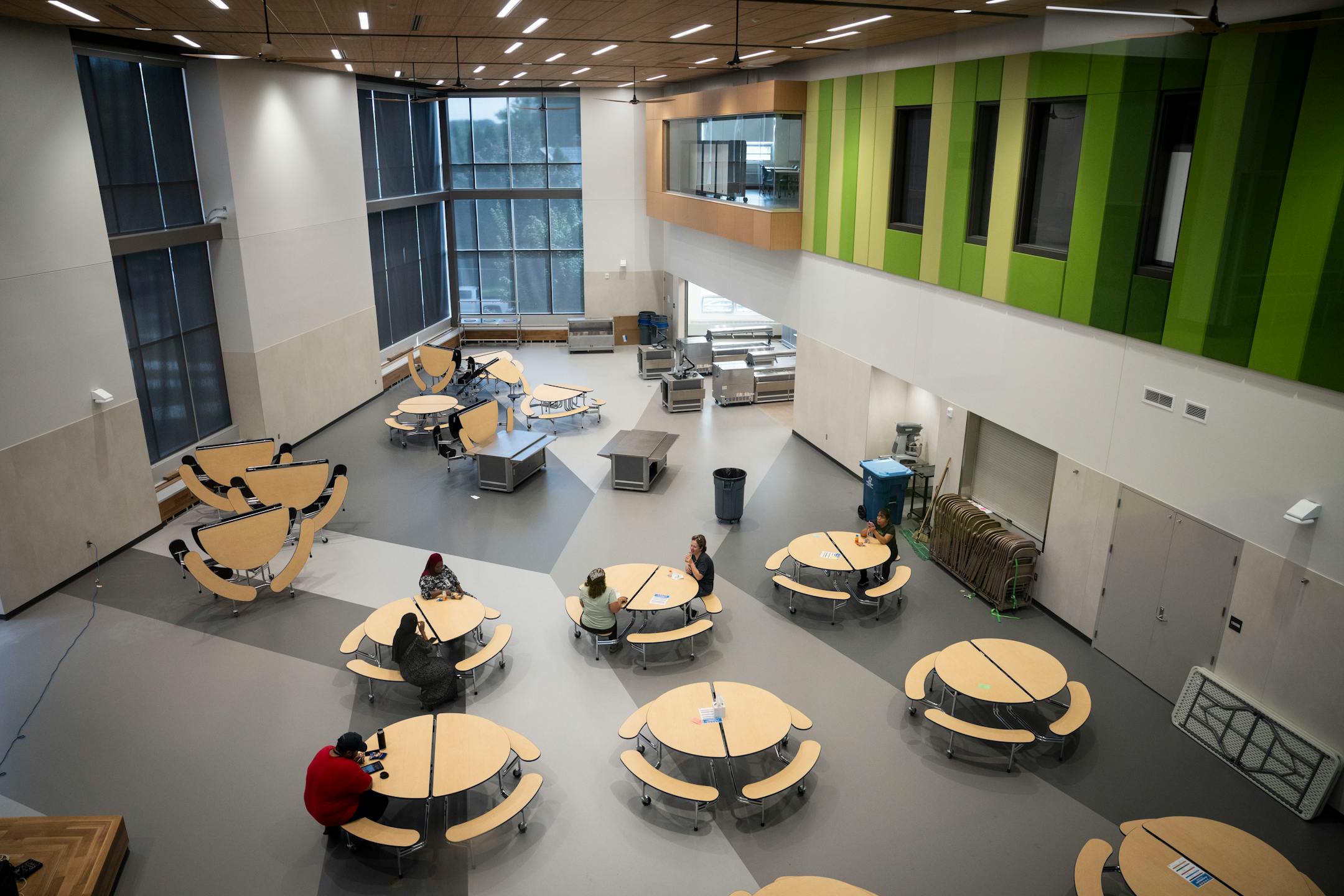
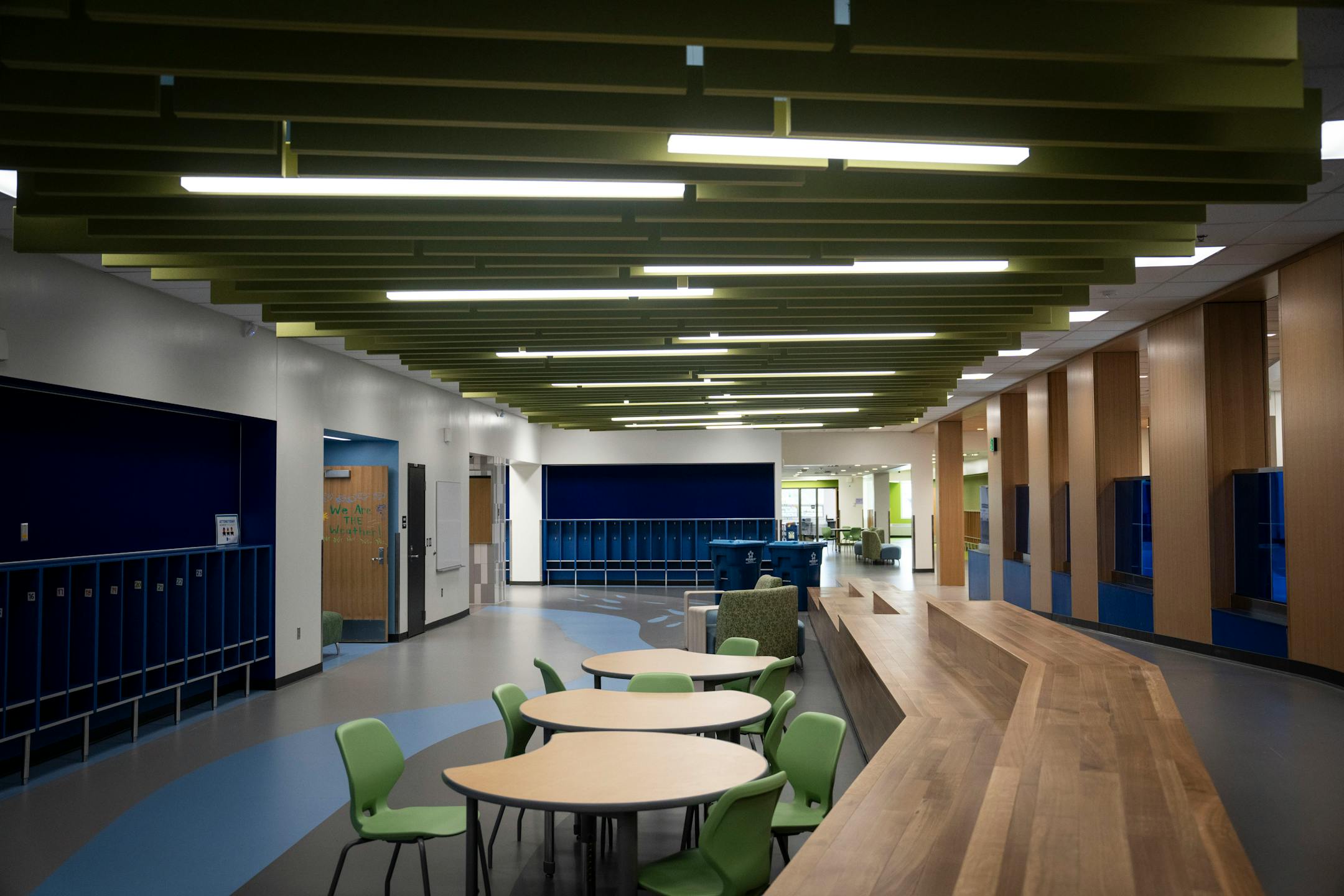
Informal learning areas incorporate nature and play at the new Bruce Vento Elementary School building on Aug. 29. (Renée Jones Schneider/The Minnesota Star Tribune)

Three east metro schools have introduced new features to boost security, flexible learning spaces and eco-friendly features.

Taking their cues from students, families, teachers and even neighbors, building architects have applied “school of the future” designs to new facilities debuting in the Twin Cities’ east metro this month.

Bruce Vento Elementary in St. Paul and Tartan High in Oakdale join a wave of new or expanded facilities across the state and the country that check all the priorities of 21st-century school design: flexible learning spaces, secure entrances and eco-friendly features.

At Bruce Vento, plans call for environmental lessons to be delivered with a sense of play in a new building — a prized opportunity for St. Paul Public Schools.

Tartan, as well as White Bear Lake High in 2024-25, has been expanded to give teachers the space needed to make the most of their creativity via new flexible learning spaces for small and large group instruction.

Safety and security also has been paramount in the new designs — and viewed as a necessity in an era when students, like those at Annunciation Church and School in Minneapolis last month, have been the victims of gun violence.

School communities had a major say in the final products.

“What’s important is what’s important for your community,” said Vaughn Dierks of Wold Architects and Engineers, which handled the Tartan and White Bear Lake projects.
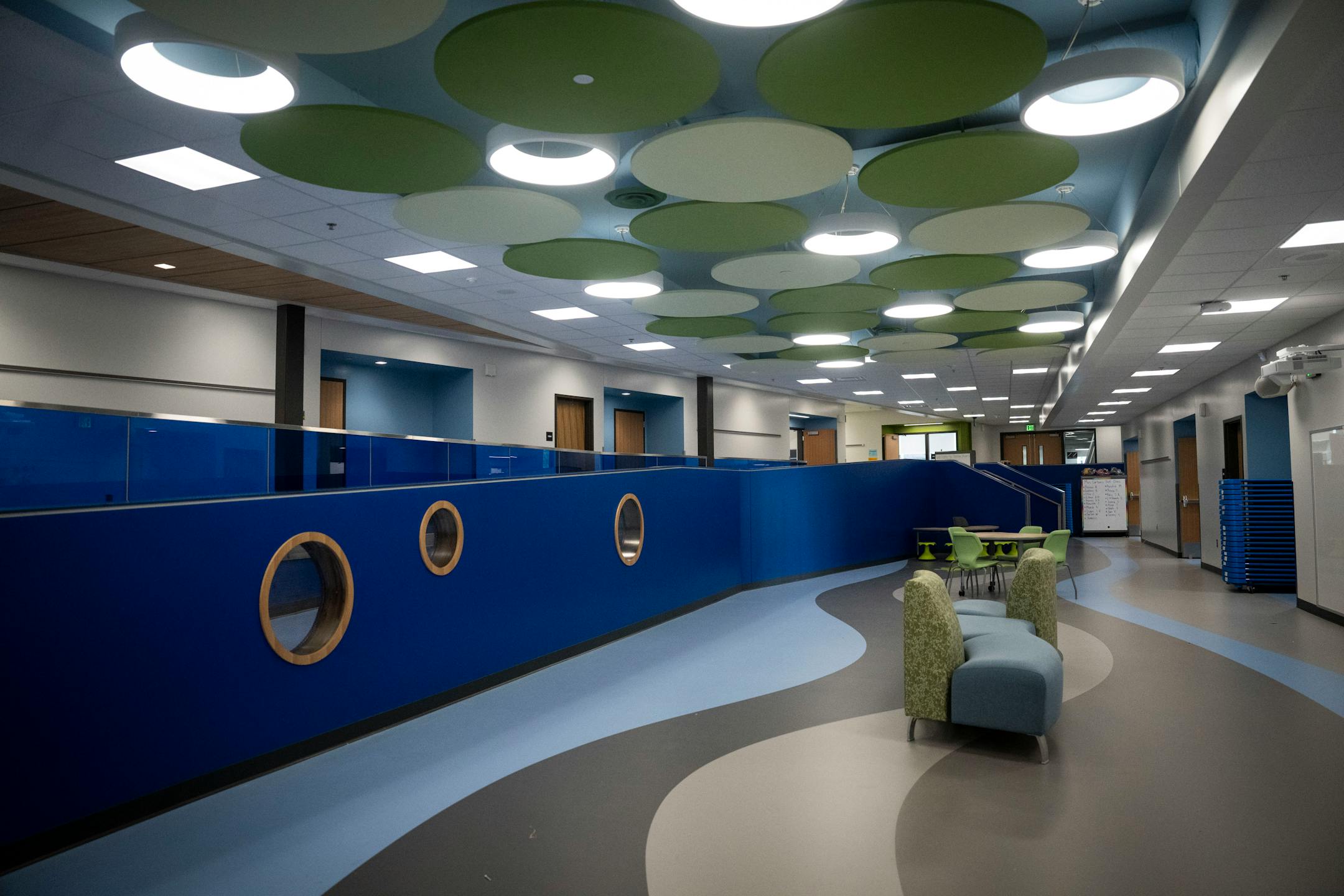
Informal learning areas incorporate nature and play, and staggered Gabion baskets let more light in to the building that a traditional retaining wall at the new Bruce Vento Elementary School. (Renée Jones Schneider, The Minnesota Star Tribune)

Going green

It was at a back-to-school event a few years ago when Bruce Vento families first weighed in on the look and feel of its replacement. Soon, students could peer out classroom windows to a new school rising to the east.

The design incorporates a “learning trail” weaving indoor and outdoor elements, said Heidi Neumueller of Cuningham Group architects.

At the same time, the district was fielding demands to reduce the energy intensity in its buildings, and the answer at Bruce Vento is a geothermal system that taps aquifers as a heating and cooling source.

There is a solar roof, too, plus cisterns to collect rainwater for new trees and vegetation. And the new garden planters to be watered are to be built from wooden beams salvaged from the old school.

Safe and secure

How schools keep students and staff safe isn’t necessarily in ways that one can see.

There are secure entry points, to be sure, and at Tartan High, wider hallways and a larger amount of glass — making it easier for teachers and other staff members to monitor and engage with students.

The glass is stronger in some places than others. Should an incident arise, doors can be shut and locked with the push of a button, and movement restricted throughout the school, including vertically and by zones.

“There’s card access for teachers throughout the building,” and security cameras, too, said Sara Guyette of the North St. Paul-Maplewood-Oakdale school district. She otherwise declined to go into detail about the placement of various safety measures.

The cafeteria has lots of natural light at the new Bruce Vento Elementary School. (Renée Jones Schneider/The Minnesota Star Tribune)

Evacuation routes are vastly improved. The school district demolished circular classroom towers that had made quick exits from the building problematic.

Perhaps most importantly, Sal Bagley of Wold Architects said, schools should be calming in their design — a view seconded by Guyette.

But Guyette also wanted to make one point clear: “Yes, we want it to look nice,” she said. “But the safety and security of students and staff is of utmost importance.”

Flexible learning spaces

Gone are the days of stand-alone classrooms. Now there are “learning studios,” spaces with flexible furniture and layouts that can support everything from small group collaboration to large group instruction, White Bear Lake High School Principal Russ Reetz said.

Teachers can collaborate across classrooms and students have the ability to choose how and where they engage in their learning.

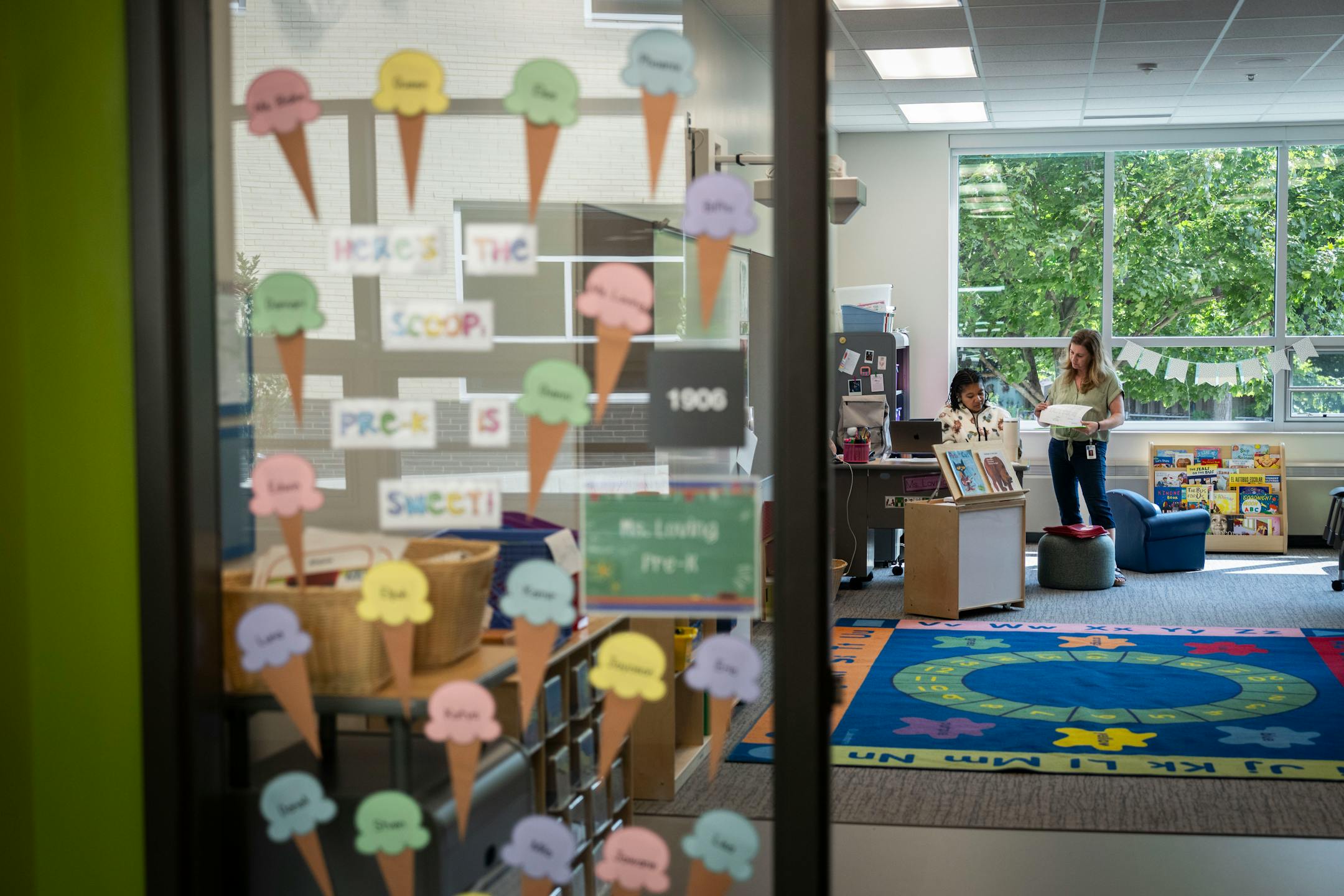
Teacher Naomi Loving, left, and ESL teacher Kristine Ranweiler chat in a classroom at the new Bruce Vento Elementary School. (Renée Jones Schneider/The Minnesota Star Tribune)

There’s no more hanging out in stairwells. The aim in White Bear Lake has been to create a vibrant learning community, and the reviews from students and staff have been positive.

“We have seen that when students feel a sense of belonging in their environment, engagement follows,” Reetz said. “The design has helped us bring our vision for meaningful, student-centered learning to life.”

about the writers

about the writers

Anthony Lonetree

Reporter

Anthony Lonetree has been covering St. Paul Public Schools and general K-12 issues for the Star Tribune since 2012-13. He began work in the paper's St. Paul bureau in 1987 and was the City Hall reporter for five years before moving to various education, public safety and suburban beats.

See Moreicon

Mara Klecker

Reporter

Mara Klecker covers suburban K-12 education for the Star Tribune.

See Moreicon

Mark Boswell

Deputy News Graphics Director

Mark Boswell is Deputy News Graphics Director at the Minnesota Star Tribune and has over 30 years experience as a visual journalist, illustrator and writer.

See Moreicon