How and where to spot owls in the metro area? Listen up.

Plus homely cardinals, missing goldfinches and a life-and-death battle between a hawk and a snake.

For the Minnesota Star Tribune
December 4, 2025 at 2:30PM
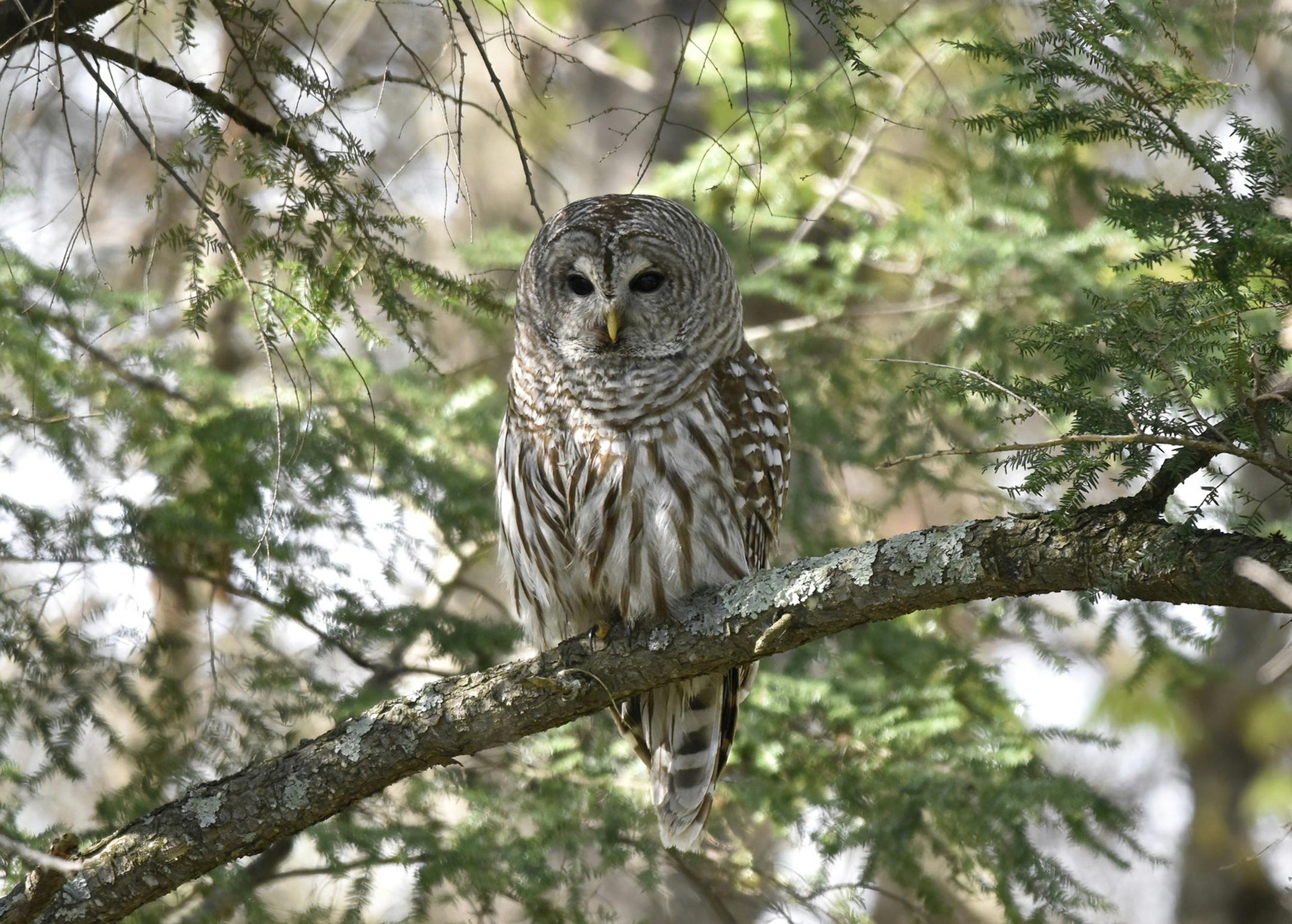
A barred owl on a tree branch in daylight.
Barred owls sometimes hunt in daylight. (Bob Hilbert)

Q: My son and I are fascinated by owls and would really like to see more of them. What owls might we see in the metro area and where should we look for them?

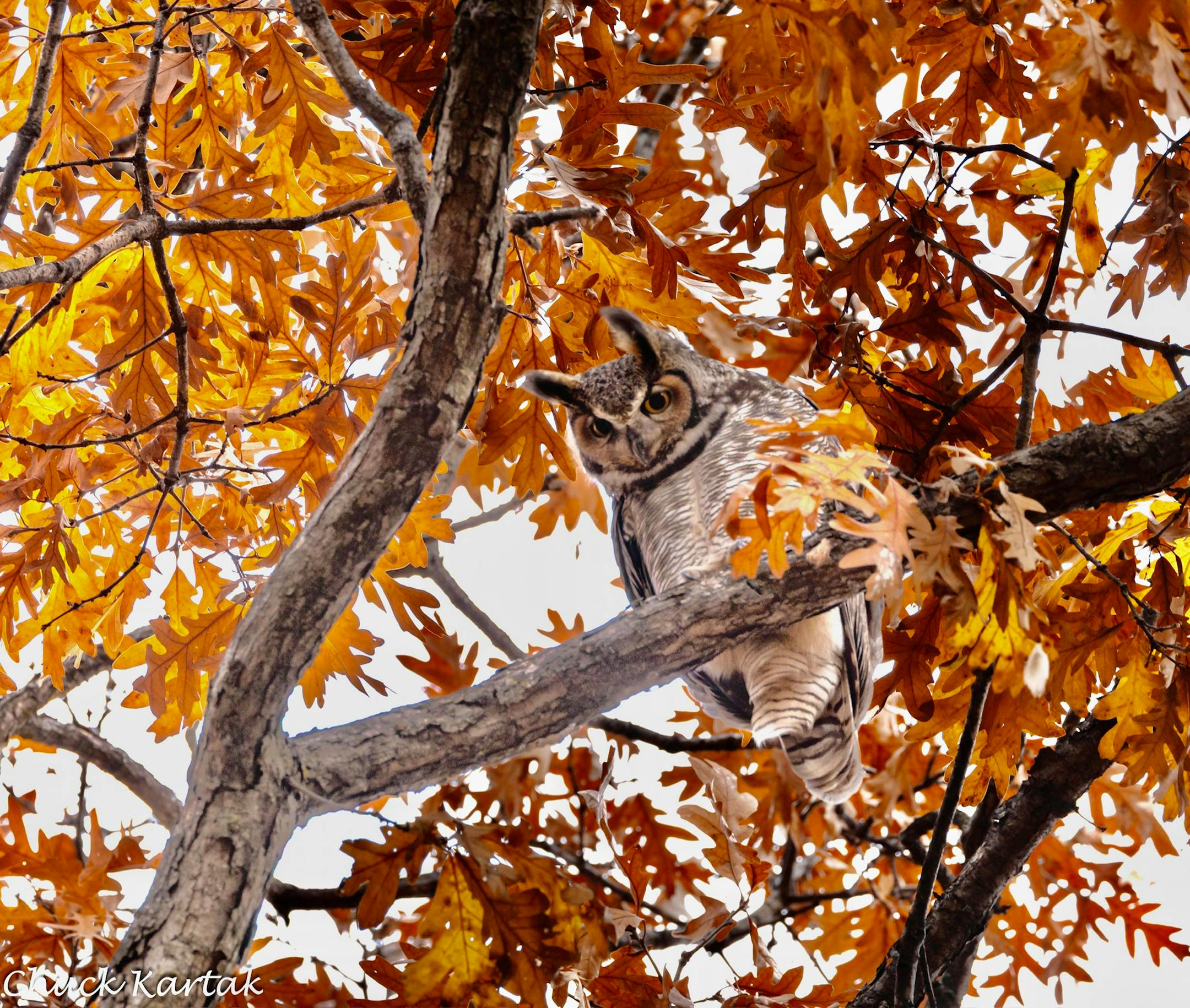
A: Two things clue us in that an owl is in the area. One is an owl calling, almost always at night. The owls most likely to be in our area are the massive great horned owl, the mid-sized barred owl and the small screech owl. Late in the year, great horned owls begin calling to each other as their breeding season gets underway. Hear great horned owls here: allaboutbirds.org/guide/Great_Horned_Owl/sounds. Barred owls also live around the area, and sometimes are even visible in the daytime. These brown-eyed owls have an interesting call, hear it here: allaboutbirds.org/guide/Barred_Owl/sounds.
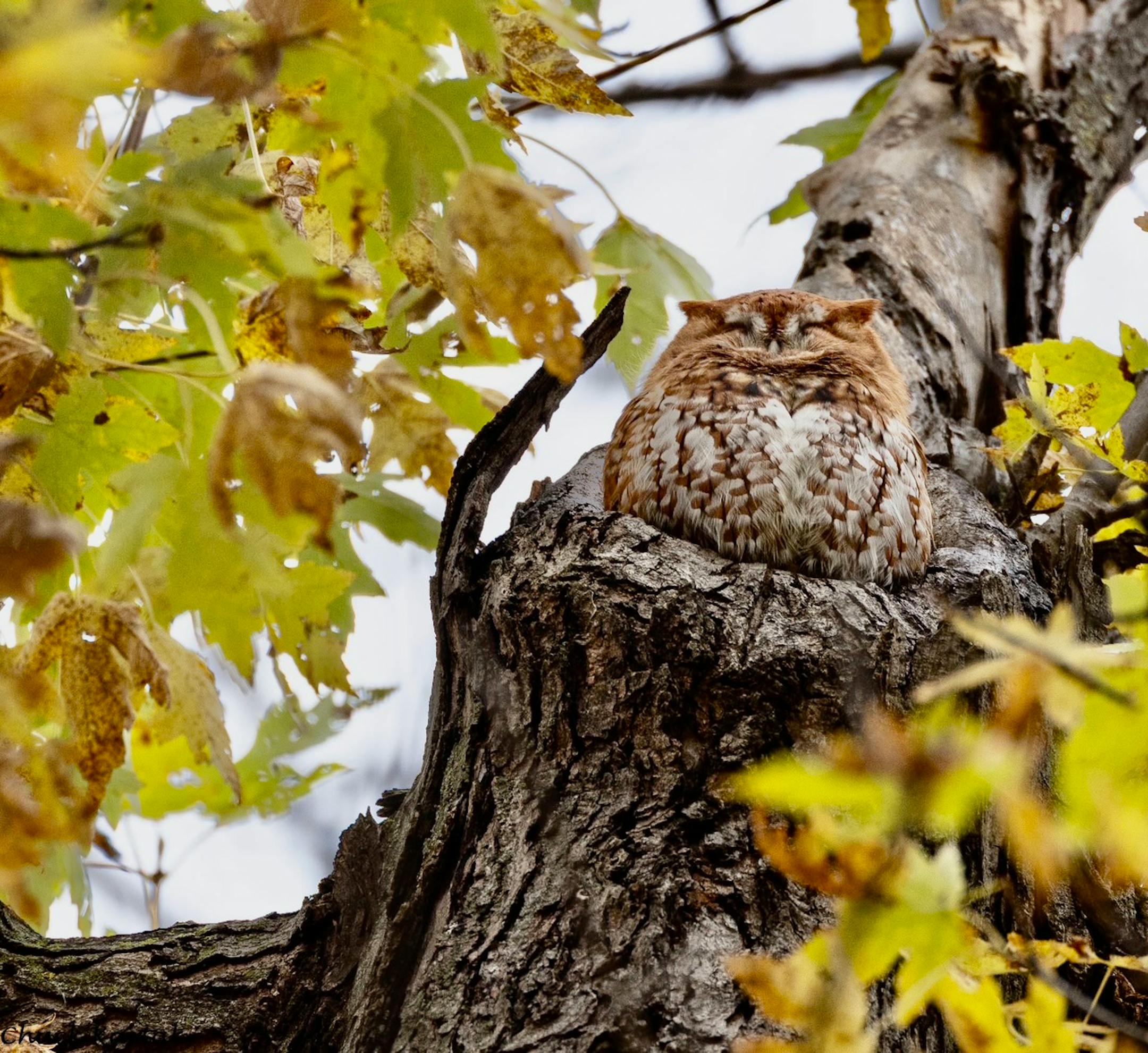
Screech owl rests in daytime. (Chuck Kartak)
Great horned owl on alert. (Chuck Kartak)

Screech owls are around all year, too, and can sometimes be spotted sitting in a tree hole. Hear these small owls here: allaboutbirds.org/guide/Eastern_Screech-Owl/sounds. If you hear any of these sounds, try checking the area for an owl.

Another way to spot owls (this is in the daytime) is to listen for songbirds and others making a big racket, calling and fluttering around a spot in a particular tree. This is mobbing behavior and usually indicates that the birds have spotted a raptor and are trying to drive it out of the neighborhood. We humans can train our binoculars on the same tree to see if we can spot an owl. Otherwise, visit parks and wildlife areas and survey the trees, both deciduous and coniferous, for owl shapes.
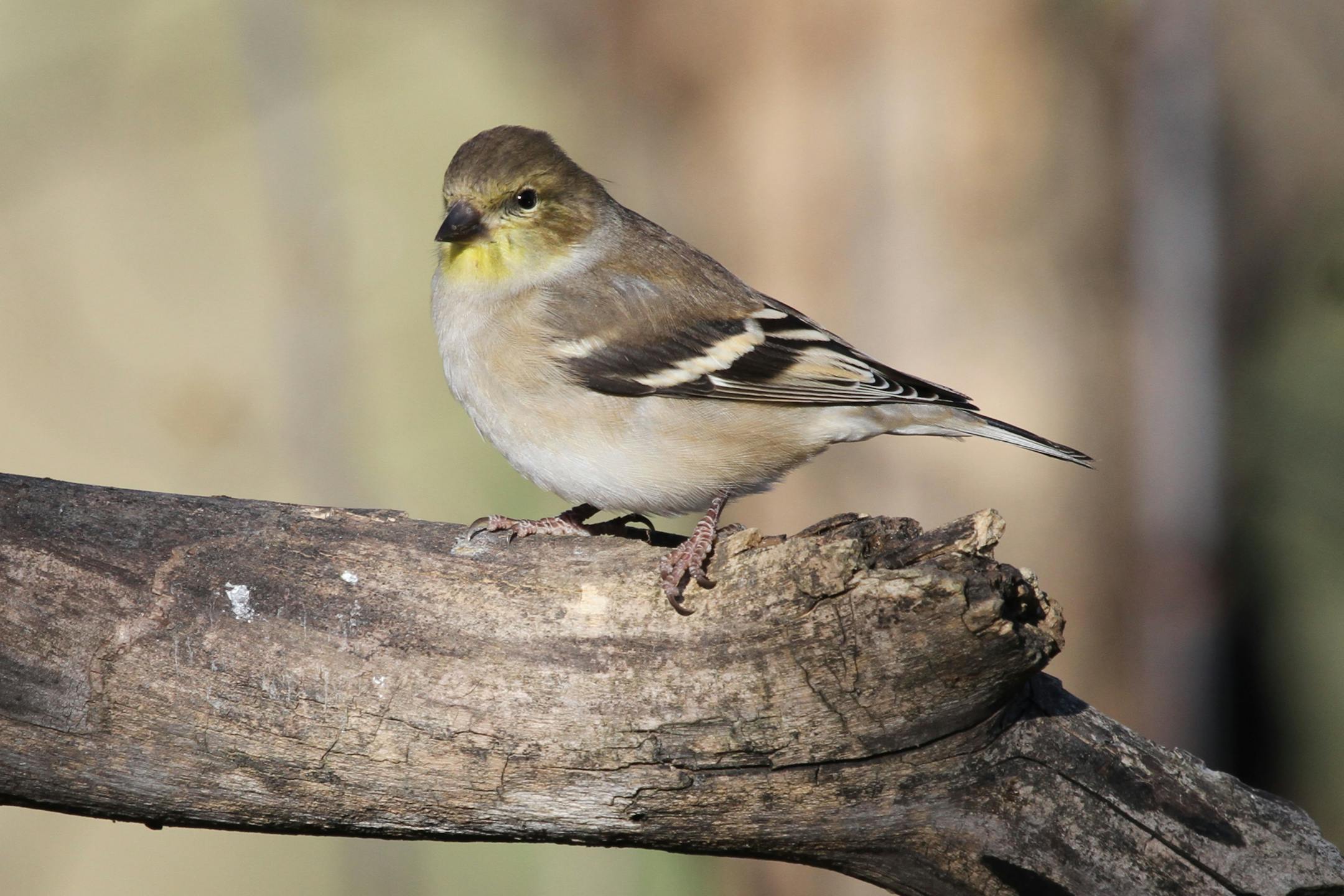
A goldfinch in muted fall coloring with very little yellow showing in its taupe coat.
Goldfinches "disappear" after autumn molt. (Don Severson)

No chickadees?

Q: I’m worried about chickadees. We saw none this summer at our feeders and birdbath and wonder if this species is in trouble. They’re so much fun to watch and have long been a favorite.

A: I couldn’t agree more, chickadees are a delight to watch at feeders and birdbaths and out in the wild. I checked with several sources on this issue, including the comprehensive atlas of all birds that breed in our state, and a person who bands birds at Carpenter Nature Center. They feel that the black-capped chickadee population in Minnesota is either holding steady or increasing slightly. The bird bander’s nets have been catching fewer chickadees in the past few years but he feels that this little bird’s population is cyclic. We may be on the down side of the cycle right now, but the overall trend is positive.

Chickadees tend to disappear from our feeders for most of the summer because they’re very busy raising their brood of up to eight nestlings. Like many other birds during nesting season, they’re focused on catching insects to stuff into their hungry offspring. I’ll bet you’re already seeing some ‘dees at your feeders again.
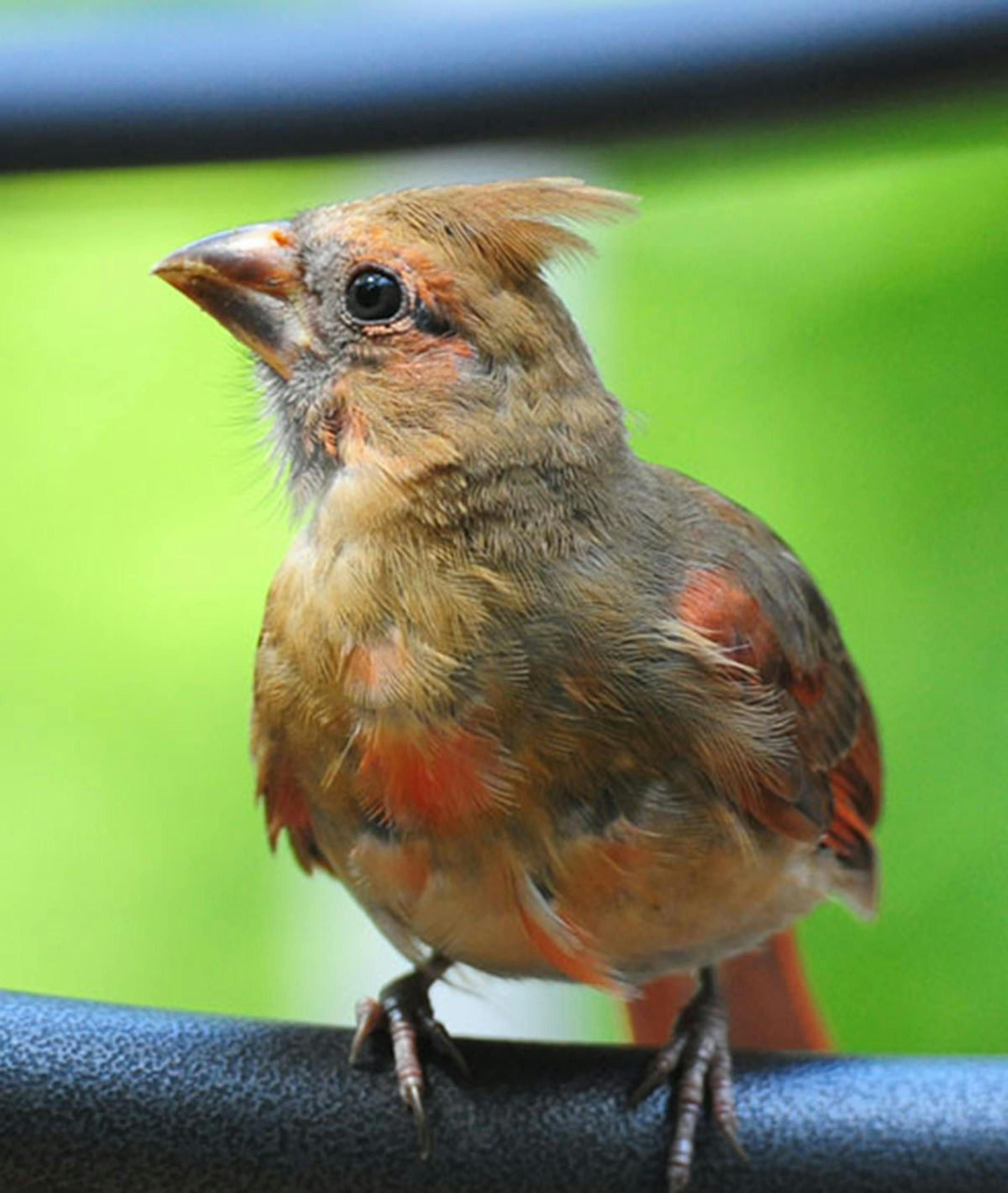
A juvenile cardinal with brown feathers flecked with red perches on a railing.
Young cardinals can be gawky. (Jim Williams)

Bland cardinals

Q: There’s a weird batch of cardinals in my backyard. Some are bright red, as you’d expect, but some are brownish and their beaks aren’t at all red. What’s up with this?

A: You’re seeing some adults plus some youngsters from last summer’s nests. Cardinals raise two broods a year, and the brownish birds are probably offspring from a later nest. They’re slowly molting into their adult plumage and their beaks will turn that recognizable bright orange color by the time winter sets in, in most cases.

Nest removal

Q: I used to see a large osprey nest on a light pole at Hwy. 100 and the Crosstown. Construction was slated for the site and as soon as the osprey moved on for the season, the pole was removed. I take it the DNR has some say in this, and I wonder what happens to the nest — is it destroyed or relocated?

A. You are exactly right, the state Department of Natural Resources requires a permit to remove unoccupied osprey nests. The agency complies with protections established under the Migratory Bird Treaty Act and the Golden and Bald Eagle Protection Act. The agency generally grants such permits between October and March, after nesting season ends and before the start of the next breeding season, but in some cases an emergency permit may be granted. You’ve no doubt noted how osprey nests are generally loose aggregations of sticks and almost surely aren’t sturdy enough to withstand relocation. An osprey pair will choose its own site to relocate to and bring in new sticks to form their new nest.

Dratted jays

Q: I live in a rural area and am blessed by many varieties of birds, like cardinals, finches, woodpeckers and chickadees. But the blue jays are such bullies and eat so much seed and suet. Is there any deterrent for blue jays that doesn’t drive off other birds?

A: I’d have to say that blue jays aren’t easily deterred, but they can be deflected. Try setting out a feeder designed to distract the jays from your other feeders, and the magic word here is “peanuts.” I have two metal mesh feeders filled with no-shell peanuts and these attract jays all day long. Woodpeckers and chickadees also peck through the mesh to get to peanut bits and even cardinals squeeze their big beaks through the openings. There don’t seem to be any conflicts at these feeders, since only one bird at a time perches on the mesh.

I also put about 30 peanuts in the shell into one of my domed feeders each morning, and the jays sweep in to carry these off to hide around the neighborhood. I’ll bet many of these are consumed by other birds and by squirrels, too. Once these peanuts are gone, the safflower underneath is exposed to attract cardinals and finches all day long. I hope these tactics work for you, because as pesky as blue jays can be, they’re also fun to watch and their extraordinary plumage is a delight to see.

Flightless finches?

Q: A friend who feeds birds and knows the difference between summer and winter goldfinch plumages says the finches have virtually disappeared from her feeders. I offered the theory that the finches were just starting their molt, which limited their ability to fly, so they disappeared until it was finished. Was I in the ball park?

A: Sorry, no. Waterfowl like ducks and geese lose the ability to fly when they undergo their summer molt, but this isn’t true in the songbird world. Goldfinch molt takes place over several weeks, with only a few feathers involved at a time. They never lose all their flight feathers at one time, as ducks and geese do. Summer’s little “wild canaries” gradually become taupe-colored birds, resembling sparrows. Many assume there are no goldfinches around even while 10 or 20 of them could be feeding at their feeders. I suspect that your friend’s goldfinches were foraging for seed heads out in the wild, but will return as these become scarce.

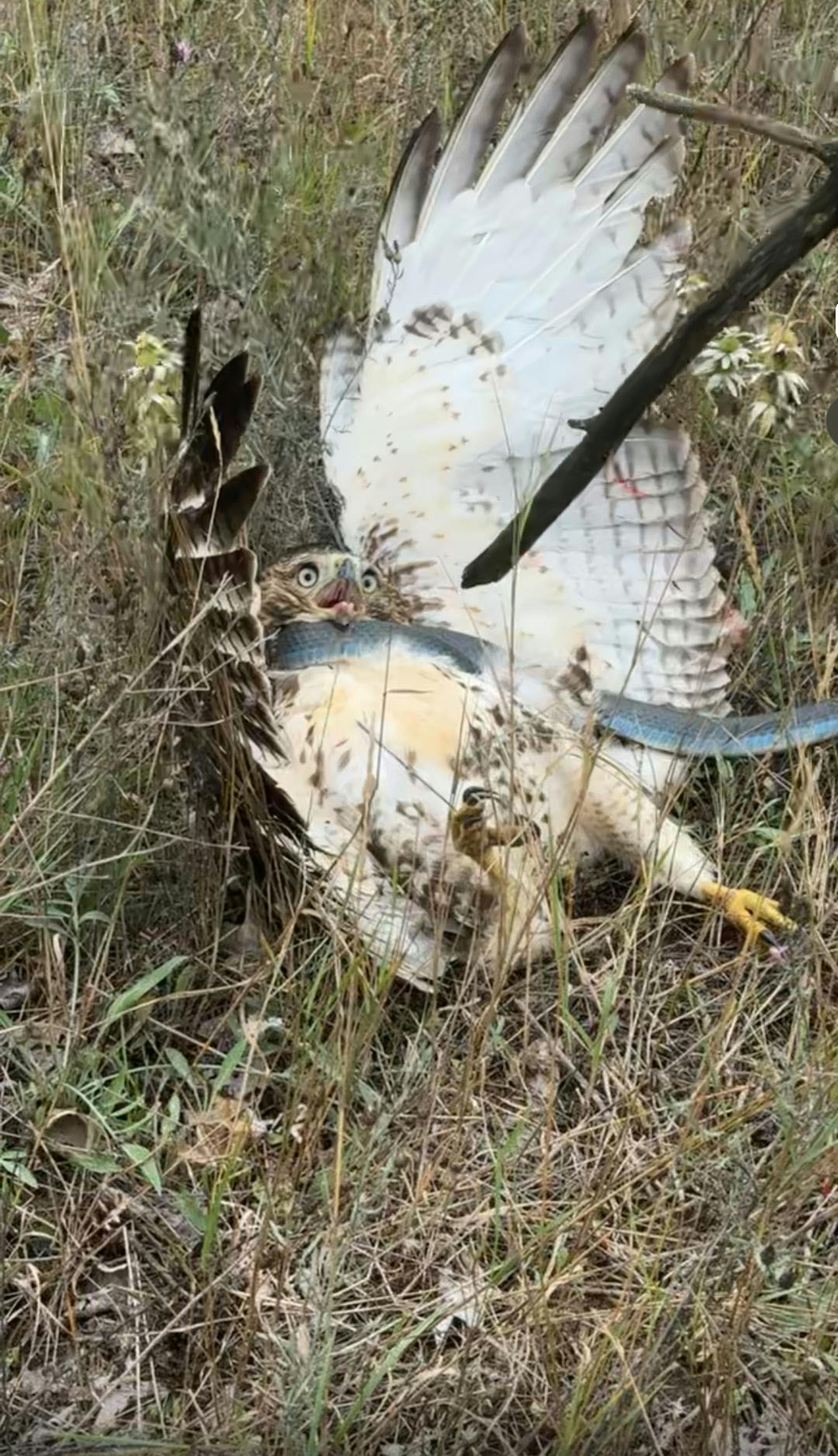
A red-tailed hawk on the ground with a snake around its neck.
A red-tailed hawk battles a snake. (Provided by Hayes brothers)

Note to readers: A proud granddad sent me an amazing photo and even more astonishing story: Bill Hayes’ grandsons, Joseph, Phillip and Andrew, ranging in age from 21 to 17, do a lot of hunting and spend a great deal of time outdoors. They were out checking their motion-activated trail cameras one fall day when they noticed a red-tailed hawk pecking at something in the grass up ahead.

As they approached, the hawk flew off, revealing a horrific scene: A second red-tail lay, thrashing, on the ground, a blue racer snake wrapped tightly around its neck, “in a death hold,” Hayes wrote. The young men sprang into action, using a stick to pull off the snake, which ended up succumbing to injuries inflicted by the two hawks. The grounded hawk flew off to hunt another day (and let’s hope it avoids snakes from here on out). Hayes is very proud of his grandsons’ quick, humane actions (and the fact that they had the foresight to take a photo).

St. Paul resident Val Cunningham, who volunteers with bird organizations and writes about nature for local, regional and national newspapers and magazines, can be reached at valwrites@comcast.net.

about the writer

about the writer

Val Cunningham

See Moreicon

More from Home & Garden

See More
card image
Jasper Lazor Photography

The A-frame shape of a tent inspired this Home of the Month winner in the woods of Ely, Minn.

card image
card image