
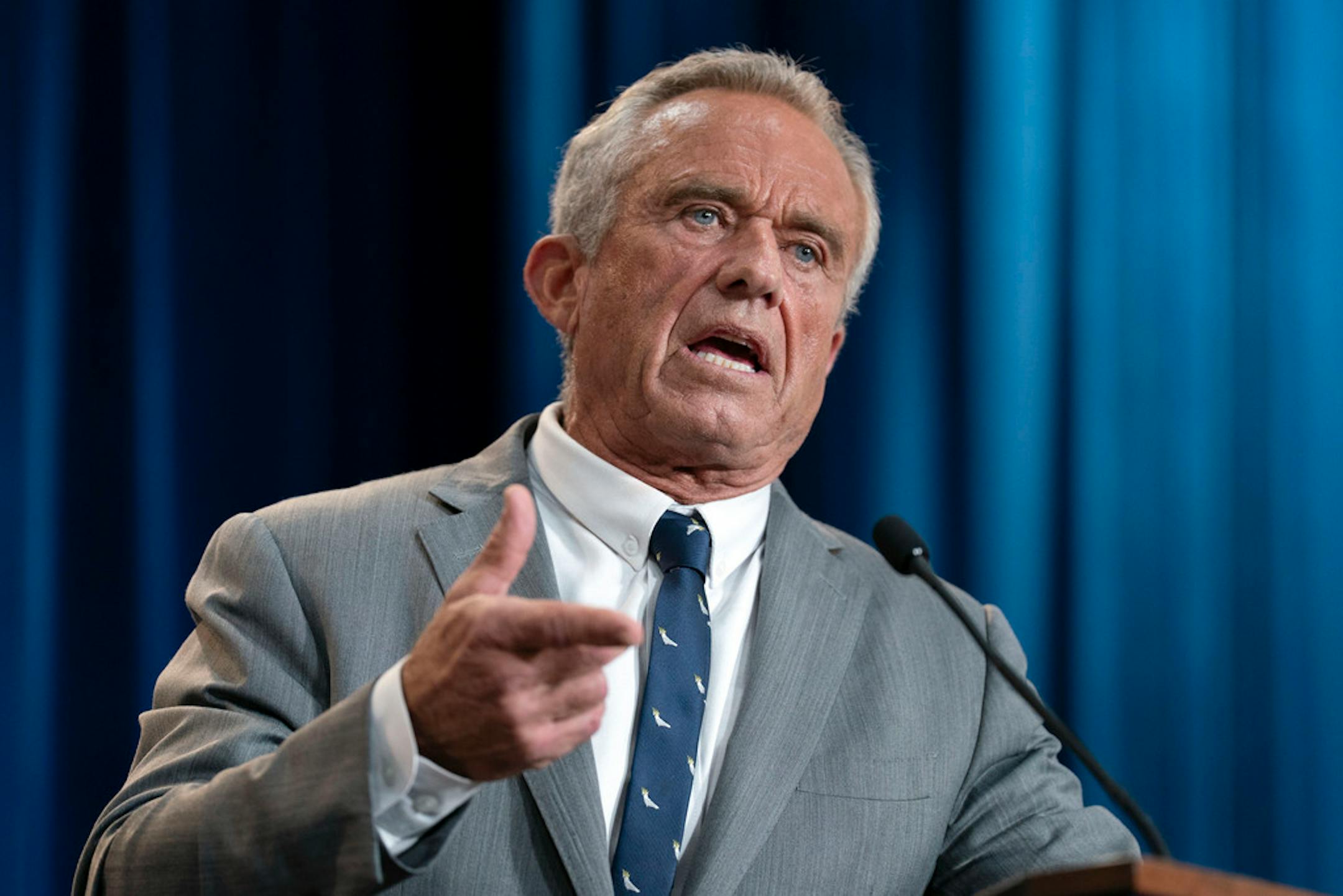
RFK Jr. announces end to some mRNA contracts, including for flu and COVID

The targeting of the vaccine technology once considered revolutionary follows intense criticism by conservatives and anti-vaccine activists.

The Washington Post
August 6, 2025 at 2:00PM
President Donald Trump once touted mRNA vaccines as a “modern-day miracle” during the coronavirus pandemic. But during his second term, the technology has come under intense scrutiny by Robert F. Kennedy Jr. (Jose Luis Magana/The Associated Press)

Health and Human Services Secretary Robert F. Kennedy Jr. announced Tuesday a crackdown on mRNA vaccine technology and research to develop it, following months of pressure from anti-vaccine activists.

According to HHS, the Trump administration has launched “a coordinated wind-down” of 22 mRNA projects supported by the Biomedical Advanced Research and Development Authority, the government’s biodefense agency.Other mRNA projects funded by HHS are not affected by the new announcement.

The contracts will either be canceled or altered, according to HHS, including projects focused on creating an H5N1 bird fluvaccine and developing respiratory virus therapeutics.

In total, the administration said the changes will affect nearly $500 million in mRNA-related projects, but details of all such contracts were not immediately made available. HHS said some late-stage mRNA initiatives will continue to preserve “taxpayer investment.”

Once celebrated as a major scientific advancement that allowed for the rapid development of coronavirus vaccines, mRNA technology has since come under scrutiny by conservatives and the Trump administration

“We reviewed the science, listened to the experts, and acted,” Kennedy said in a statement. “We’re shifting that funding toward safer, broader vaccine platforms that remain effective even as viruses mutate.”

Traditional vaccines deliver viral proteins or weakened versions of a virus to teach the immune system how to fight it. In contrast, mRNA vaccines work by delivering instructions to the body’s cells on how to manufacture viral proteins. They are faster to develop than traditional vaccines, which public health experts say make them a valuable tool in fighting emerging pathogens or the next pandemic.

The Trump administration has denigrated mRNA vaccines as a dangerous technology, but large-scale studies have established that they are safe and effective.

Some public health and vaccine experts criticized the administration’s moves as detrimental to the nation’s ability to fight diseases and grow its biomedical arsenal.

“If you’re a smaller biotech or just a smaller manufacturer, it really can discourage a company from making further investments,” said Richard Hughes IV, a former vice president of public policy at mRNA vaccine manufacturer Moderna who now teaches vaccine law at George Washington University Law School.

HHS said that an award to Moderna and the University of Texas Medical Branch to support development of an H5N1 vaccine was being canceled.

Public health officials have identified H5N1, the strain of avian influenza causing outbreaks in dairy farms, as a major threat if it evolves to spread more efficiently in humans. A Moderna spokesman said the company was not aware of new contract cancellations.

HHS’s contract with Arcturus Therapeutics to develop an mRNA H5N1 vaccine is among the ones spared “to preserve prior taxpayer investment,” the agency said.

Michael Osterholm, a University of Minnesota infectious-disease expert, called the targeting of mRNA “dangerous” and “shortsighted.”

“It was the great hope that we would have a much better prepared world for an influenza pandemic, should it occur, because we could quickly ramp up mRNA technology,” said Osterholm, who advised President Joe Biden’s transition team.

Federal officials also terminated a contract to Emory University that was intended to develop an inhaled mRNA COVID and influenza therapy.

In other instances, the connection to mRNA was not immediately clear. For example, a terminated contract to Tiba Biotech involved a different RNA technology, not mRNA.

Anti-vaccine activists who have pressured Kennedy to pull all mRNA shots off the market applauded the research funding cuts.

“This is good news and a tacit admission that the mRNA shots still on the market are not safe,” Mary Talley Bowden, founder of the anti-coronavirus vaccine group Americans for Health Freedom, posted on X.

President Donald Trump once touted mRNA vaccines as a “modern-day miracle” during the coronavirus pandemic. But during his second term, the technology has come under intense scrutiny by Kennedy, the founder of a prominent anti-vaccine group who once falsely called coronavirus shots the “deadliest vaccine ever made.”

HHS previously announced it was pulling millions of dollars in planned funding from BARDA to help Moderna develop an mRNA vaccine to combat bird flu in humans.

Career staff at the biomedical defense agency did not agree and saw withdrawal of the funding as a political move, The Washington Post previously reported, according to two people familiar with the discussions who spoke on the condition of anonymity to describe internal policy decisions. The career staff didn’t put up a big fight, according to one of the people, who is a former federal health official, because it seemed the Trump administration was strongly opposed to mRNA technology.

about the writer

about the writer

Carolyn Y. Johnson, Rachel Roubein

The Washington Post

More from Health Care

See More
card image
Leila Navidi/The Minnesota Star Tribune

Following concerns that Medtronic was overspending on the high-tech system and not developing it fast enough, FDA clearance is a major victory for the Minnesota-run medtech company.

Nancy Ingham gives newborn Sophia Rash a hepatitis B shot several hours after she was born, Jan. 17, 2006.
card image