
All the ways your access to vaccines has changed under RFK Jr.

Robert F. Kennedy Jr.’s leadership at Health and Human Services has led to changes in vaccine recommendations and access, sparking concerns among medical experts.

The Washington Post
July 24, 2025 at 8:39PM
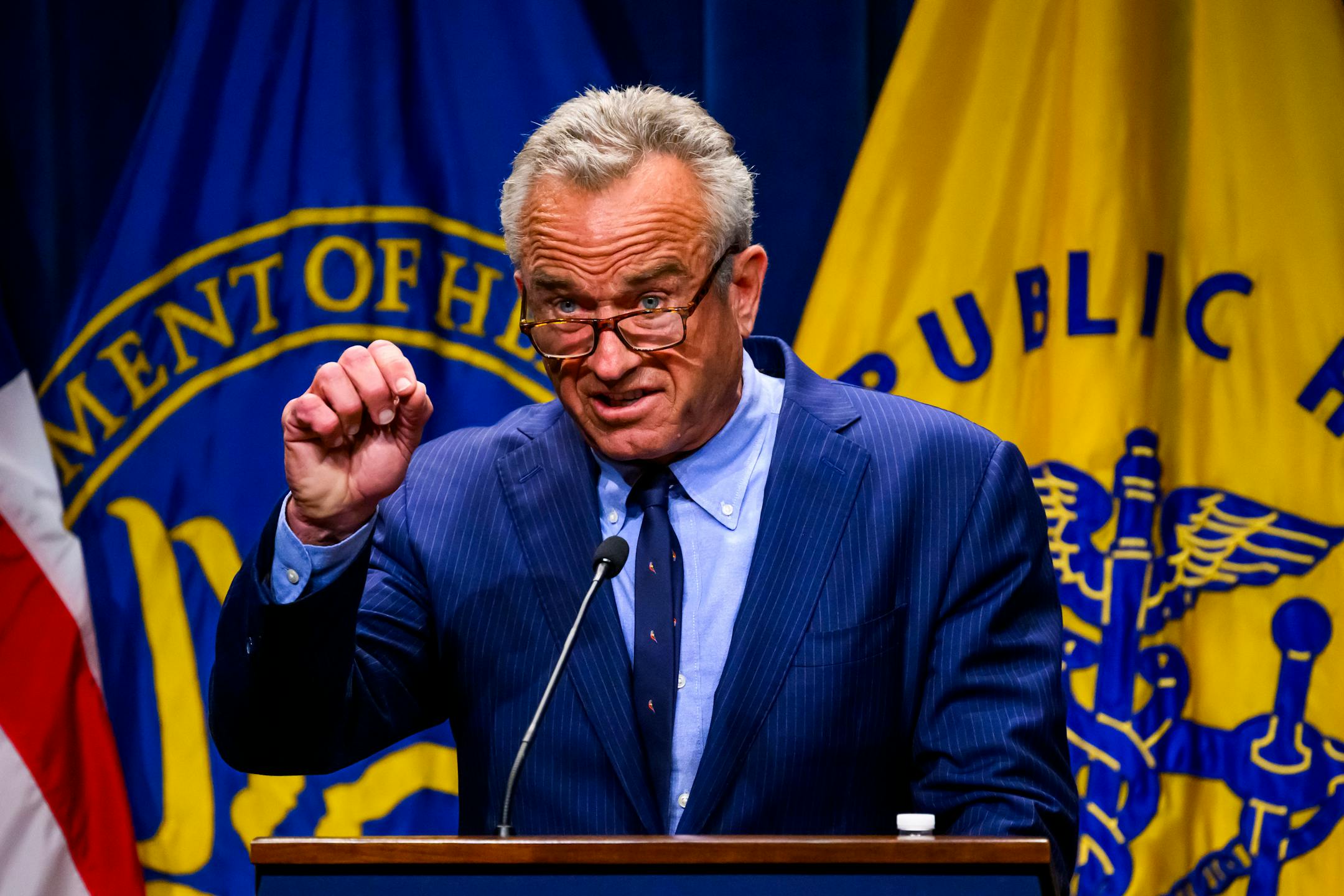
Health and Human Services Secretary Robert F. Kennedy Jr. speaks at a news conference about the Centers for Disease Control and Prevention’s autism survey in Washington, April 16, 2025. (PETE KIEHART/The New York Times)

Health and Human Services Secretary Robert F. Kennedy Jr. promised before his confirmation that he would not take away Americans’ vaccines. But in the four months since he took office, Kennedy, who has a lengthy history of disparaging vaccines, has undermined that access while agreeing to recommend some vaccines.

For people 65 and older or who are immunocompromised, their access to vaccines seems most secure because virtually all vaccine recommendations consider those groups to be at the highest risk for severe illness and death.

But the future of access is more uncertain for healthy adults and children.

Kennedy’s handpicked members on the federal panel that makes vaccine recommendations took actions recently that have raised alarms among medical and public health experts about access to and continued coverage of vaccines.

This is a rundown of what Kennedy and federal health officials have said and done about commonly administered vaccines.

Coronavirus

Changes for children, pregnant women

At Kennedy’s behest, the Centers for Disease Control and Prevention softened its long-standing recommendation for children to receive coronavirus vaccines, instead advising parents to first discuss the issue with doctors.

The CDC no longer has specific guidance for pregnant women. This has caused confusion and some pharmacists have not been allowed to or have declined to vaccinate them, doctors have said. Other clinicians believe pregnant women should default to the guidance for other adults to get vaccinated.

The American Academy of Pediatrics and the American College of Obstetricians and Gynecologists continue to recommend the shots for children and pregnant women. The AAP and other medical and public health groups filed a lawsuit seeking to overturn the revised guidance.

As of now, health officials still recommend most adults get annual coronavirus vaccines, but that may change in coming months.

The Food and Drug Administration is narrowing approval for updated shots to older adults and people at high risk for severe disease.

People with at least one health condition that puts them at high risk for severe COVID disease would qualify for updated coronavirus vaccines under a Food and Drug Administration proposal. Here are the eligible conditions:

  • Asthma
    • Cancer
      • Hematologic malignancies
        • Cerebrovascular disease
          • Chronic kidney disease
            • People receiving dialysis
              • Bronchiectasis
                • COPD (chronic obstructive pulmonary disease)
                  • Interstitial lung disease
                    • Pulmonary embolism
                      • Pulmonary hypertension
                        • Cirrhosis
                          • Nonalcoholic fatty liver disease
                            • Alcoholic liver disease
                              • Autoimmune hepatitis
                                • Cystic fibrosis
                                  • Diabetes mellitus, type 1
                                    • Diabetes mellitus, type 2
                                      • Gestational diabetes
                                        • Disabilities, including Down syndrome
                                          • Heart conditions such as heart failure, coronary artery disease or cardiomyopathies
                                            • HIV
                                              • Mood disorders, including depression and Schizophrenia spectrum disorders
                                                • Neurological conditions limited to dementia and Parkinson’s disease
                                                  • Obesity (BMI ≥30 or ≥95th percentile in children)
                                                    • Physical inactivity
                                                      • Pregnancy and recent pregnancy
                                                        • Primary immunodeficiencies
                                                          • Smoking, current and former
                                                            • Solid-organ or blood stem-cell transplantation
                                                              • Tuberculosis
                                                                • Use of corticosteroids or other immunosuppressive medications

                                                                  Otherwise healthy people could still receive the shots free if the CDC’s Advisory Committee on Immunization Practices decidesin late August or early September to more broadly recommend coronavirus vaccines updated for the 2025-2026 season.

                                                                  But that seems unlikely because Kennedy fired the previous panel and installed his own picks, most of whom have criticized public health guidance about coronavirus vaccines.

                                                                  Influenza

                                                                  Potential changes to cost and access

                                                                  Federal vaccine advisers voted in June to effectively remove an ingredient from multidose flu shots. Kennedy signed off on the panel’s recommendations. The move, which finalized a longtime goal of anti-vaccine activists, has limited consequences because 94 percent of recently administered flu shots did not contain the preservative thimerosal. But medical experts worry it could make the shots more expensive and harder to receive in parts of the country, such as rural areas, where vials are more commonly used with thimerosal to administer multiple doses without contaminating them.

                                                                  Vaccine manufacturers have said they have the capacity to replace the vials, according to HHS, which urged global health authorities to do the same.

                                                                  Respiratory syncytial virus for children

                                                                  New preventive product awaiting Kennedy’s sign off

                                                                  The new federal vaccine advisers voted to recommend the monoclonal antibody clesrovimab, a preventive product that acts like the immune system itself, to protect babies from the leading cause of hospitalization among infants in the United States. It will be up to Kennedy to sign off on final approval.

                                                                  It is the second such product recommended for all infants under 8 months old entering RSV season, typically in fall and winter.

                                                                  Experts have said having a second monoclonal antibody is important in case of shortages and may lower costs for taxpayers, insurers and patients.

                                                                  RSV for older adults

                                                                  Protection expanded for adults 50 to 59

                                                                  The CDC already recommends that all adults 75 and older and those 50 to 74 at increased risk for severe disease receive a single dose of an RSV vaccine. Kennedy in June signed off on the recommendation for high-risk adults in their 50s.

                                                                  The vaccine recommending panel had planned to review additional data at the June meeting to consider expanding the recommendation to high-risk adults under 50. But that discussion was removed for the late June meeting, raising concerns a recommendation could be in jeopardy.

                                                                  Childhood immunization schedule

                                                                  Potential changes to be reviewed by CDC vaccine panel

                                                                  Kennedy’s vaccine advisers announced plans to review the cumulative health effects of the entire childhood vaccination schedule, which recommends when and how many shots children receive. The schedule includes more than a dozen routine immunizations, many required by states to attend public school, including measles, mumps and rubella, polio and pertussis.

                                                                  Kennedy has repeatedly falsely linked the vaccine schedule to America’s chronic disease epidemic.

                                                                  Medical experts say there is no credible evidence to support Kennedy’s previous claims that vaccines are linked to autism or other chronic conditions.

                                                                  Measles, mumps, rubella

                                                                  Shift in government messaging

                                                                  As the United States experiences one of the worst measles outbreaks in decades, Kennedy has often given mixed messages about the measles vaccine that appeal to vaccine supporters and skeptics, resulting in a message public health experts called muddled when clarity is essential.

                                                                  He has said the MMR vaccine is the most effective way to prevent the spread of measles, but has also raised concerns — which public health researchers say are baseless — about side effects and how the vaccine is designed.

                                                                  Combination MMR and chicken pox

                                                                  Vaccine panel to weigh changes to access

                                                                  The chair of the newly overhauled federal vaccine panel plans to hold a vote to no longer administer a vaccine that combines chicken pox protection with the MMR vaccine. The panel heard part of a presentation that highlighted the known risks of the combination vaccine, known as MMRV. Pediatricians say the rare and benign side effects were exaggerated.

                                                                  During a congressional hearing, Kennedy raised concerns about administering a chicken pox vaccine to children, saying it increases the risk of shingles in older adults. Studies have not found evidence to back up that claim. Shingles is caused later in life by reactivation of the dormant virus.

                                                                  Shingles

                                                                  No changes yet

                                                                  Kennedy and other officials have not signaled plans to revisit the CDC recommendation for adults 50 and older to receive two doses of the Shingrix vaccine. About 15 percent of people who get shingles develop chronic severe pain, known as postherpetic neuralgia, or PHN.

                                                                  Hepatitis B

                                                                  Potential changes for newborn vaccinations

                                                                  The chair of the new federal vaccine advisory panel also said the group may look into whether hepatitis B vaccination of newborns is appropriate if the mother does not carry the virus, which can cause severe liver infections and damage. Kennedy has repeatedly criticized this type of vaccination, saying children are not at risk from a disease most commonly spread through blood or sexual contact.

                                                                  The American Academy of Pediatrics said in a recent statement that immunizing newborns against the disease is critical to reduce chronic hepatitis B later in life. “False claims that call this benefit into question jeopardize the health of children,” the AAP said.

                                                                  Polio

                                                                  No changes yet; Kennedy has expressed support for the vaccine

                                                                  During his confirmation hearings, Kennedy said he supports polio vaccines and vowed not to hinder access to the polio vaccine. The remarks came after the New York Times reported that a key ally of Kennedy had petitioned the government in 2022 to reconsider its approval of Sanofi’s stand-alone polio vaccine.

                                                                  HPV

                                                                  Changes to lower age recommendation delayed

                                                                  The fired panel of vaccine advisers had planned to vote at the June meeting to routinely recommend HPV vaccine to children ages 9 to 12 instead of 11 to 12. The HPV discussion was removed from the agenda. Pediatricians say the delays put the recommendation in jeopardy.

                                                                  Kennedy has previously falsely linked the HPV vaccine to higher rates of death. Medical experts point out it reduces the risk of death from cervical cancer. Before becoming secretary, Kennedy was involved in ongoing litigation against Merck regarding its HPV vaccine, Gardasil. A vaccine adviser he appointed was also involved in the case.

                                                                  Bird flu

                                                                  Federal funding pulled for vaccine development

                                                                  Kennedy’s health department pulled funding committed to help develop a vaccine to combat H5N1 bird flu in response to an outbreak that spread from dairy cattle to humans. Under President Joe Biden, HHS had announced its intent to award more than $750 million to vaccine manufacturer Moderna.

                                                                  Career health officials who awarded the funds viewed the withdrawal of the funding as a political move, the Post previously reported. In a statement, HHS spokesman Andrew Nixon argued that mRNA technology “remains under-tested,” adding the administration would not “spend taxpayer dollars repeating the mistakes of the last administration.”

                                                                  Diphtheria, tetanus and pertussis

                                                                  No changes yet, but criticized by Kennedy

                                                                  Kennedy has not spoken much about the DTaP vaccine that protects against the three pathogens since he assumed office. But in the last few years, he has falsely linked the vaccine to autism and diabetes.

                                                                  Caitlin Gilbert contributed to this report.

                                                                  about the writer

                                                                  about the writer

                                                                  Lena H. Sun, Lauren Weber, Rachel Roubein

                                                                  The Washington Post

                                                                  More from Nation

                                                                  See More