Republicans want Minnesota to cooperate with ICE. What would that look like?

Rules vary by county and city, and the governor cannot always unilaterally change how law enforcement works with ICE.

January 21, 2026 at 12:00PM
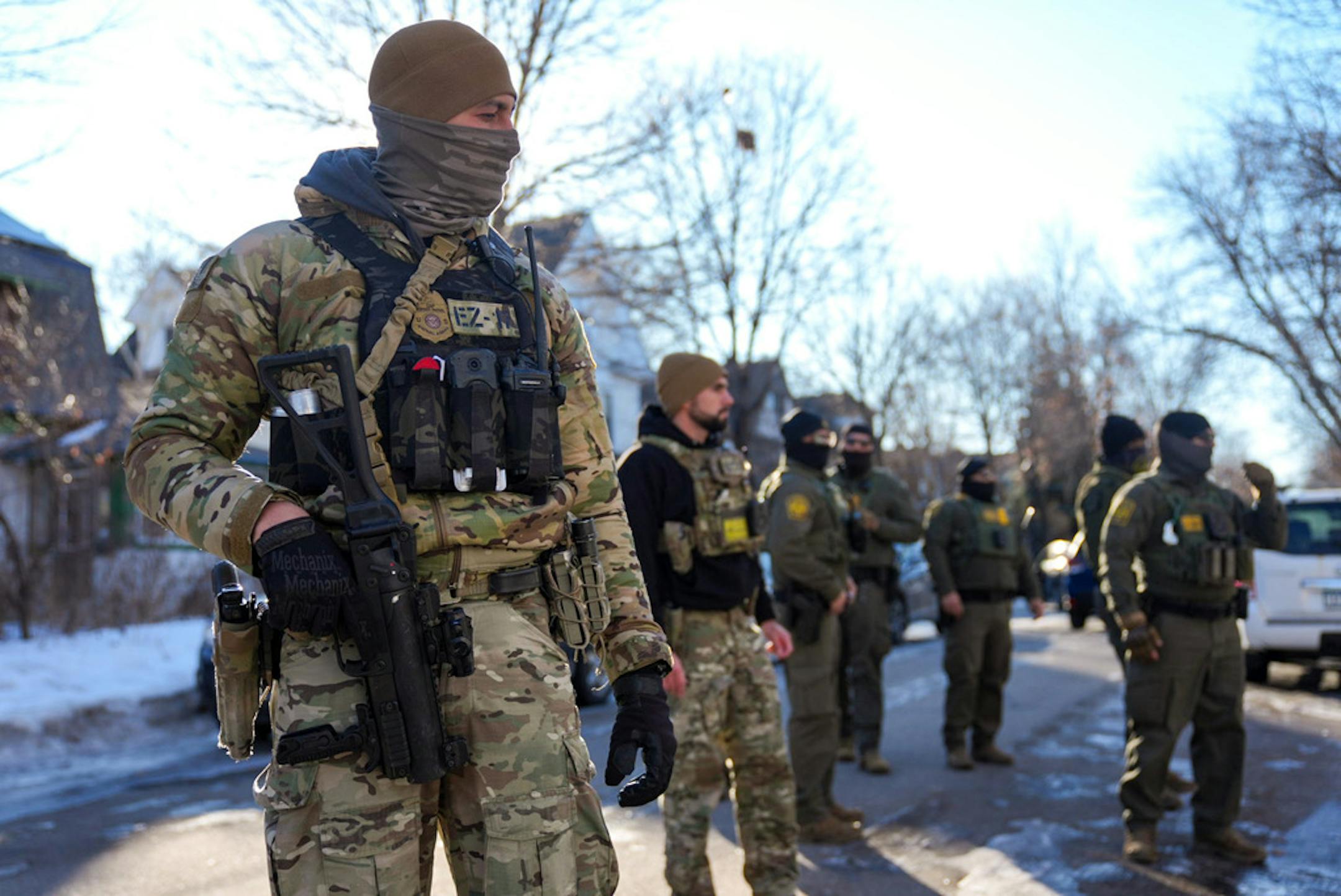
ICE agents stand in the street near 31st Avenue N. and 3rd Street on Jan. 14, 2026, in Minneapolis, Minn. (Alex Kormann/The Minnesota Star Tribune)

The Trump administration and other Republicans argue the surge of federal immigration agents to Minnesota is necessary in part because of “sanctuary” laws protecting unauthorized immigrants.

And with tensions high over the federal immigration crackdown, many in the national and local GOP are pushing Gov. Tim Walz and Minneapolis Mayor Jacob Frey to make concessions on some of those policies to better collaborate with U.S. Immigration and Customs Enforcement.

“Other states don’t have the chaos that Minnesota is experiencing because they work with, rather than against, our federal partners,” said Minnesota House Speaker Lisa Demuth, who is running for governor as a Republican.

Greg Bovino, Border Patrol commander at large, echoed those comments Jan. 20 at a news conference near Minneapolis, saying “had we worked together from the very beginning, perhaps we wouldn’t be in this city by the thousands.”

So what, exactly, does it mean to cooperate with ICE?

In a written statement to the Minnesota Star Tribune, the Department of Homeland Security said Walz and Frey should tone down “disgusting rhetoric” like the governor calling federal officers “modern-day Gestapo.”

The agency said state and local law enforcement should also “commit to honoring the ICE arrest detainers” of undocumented immigrants in custody and sign agreements with the feds to carry out immigration enforcement.

In practice, not all of those requests are simple to carry out. The reality of Minnesota’s immigration policies is complicated, and the rules vary by county and city. What’s more, the governor cannot always unilaterally change how law enforcement works with ICE, though he could push to rewrite state laws as Republican legislators have asked.

Here’s what to know about Minnesota’s cooperation with ICE:

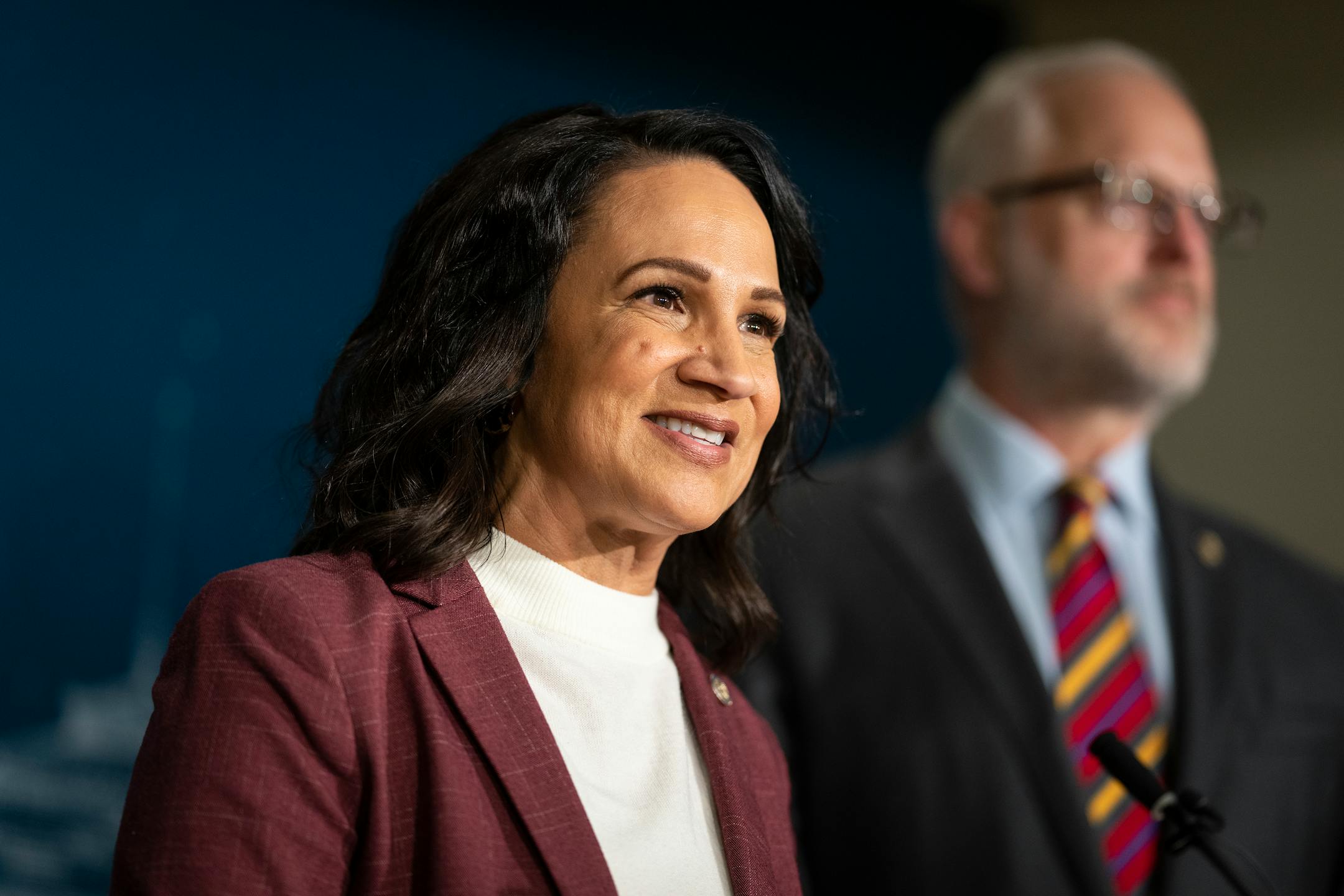
House Speaker Rep. Lisa Demuth (R-Cold Spring) said other states haven't experienced chaos similar to Minnesota because their officials have worked with "our federal partners." (Leila Navidi/The Minnesota Star Tribune)

Republicans ask for cooperation on ICE ‘detainers’

Much of the focus for Republicans has been on state and local law enforcement honoring ICE “detainers.”

A detainer is a two-part request made by the federal government. ICE wants local law enforcement to notify the feds as early as possible before releasing a person who could be deported. ICE also asks that jails or prisons hold that person for up to 48 hours after their release date until they can be taken into federal custody.

“If local officials, including those in the Twin Cities, don’t want ICE to arrest criminal aliens that are at large in their communities, the best solution is to turn them over to us in a safe, controlled setting like a jail or a prison,” Marcos Charles, executive associate director of enforcement and removal operations for ICE, said at the news conference.

Rick Hodsdon, general counsel for the Minnesota Sheriffs’ Association, said honoring a detainer is not explicitly prohibited in state law, but he doesn’t know of any sheriffs detaining people longer at the request of ICE without a criminal warrant.

“Walz has never told anybody not to, and he would have no authority to tell them to or not to,” said Hodsdon, who is also an attorney for Wisconsin sheriffs and part of a legal adviser group for the National Sheriffs’ Association.

Hodsdon said the detainer requests are a matter of civil law, while the Constitution and state statutes authorize law enforcement to arrest people for crimes. As a result, Hodsdon said, some county attorneys have for nearly a decade advised against honoring detainers without a warrant signed by a judge.

Last year, Attorney General Keith Ellison made clear his own views on the matter, issuing a nonbinding opinion that holding a person past their release time without a court order constitutes a new arrest that isn’t authorized under Minnesota law.

Hodsdon said another obstacle for sheriffs is that the federal government won’t provide legal backup. In 2019, the American Civil Liberties Union successfully sued Nobles County over ICE detainers.

“The federal government has said we would like you to honor our detainers, but if you get sued for doing so, you’re on your own,” Hodsdon said. “We won’t defend you, we won’t indemnify you, we won’t come to court to assist you, we won’t provide you any resources, we won’t reimburse you, we won’t give you any money.”

A handful of rural Minnesota counties have partnered with ICE, entering into agreements that can include incentives like salary reimbursements and bonuses for departments. Four citizens and the ACLU are suing one of the county sheriffs for the agreement, arguing it violates the law.

In its statement, DHS said it wants more state and local law enforcement to sign these agreements, which “have had tremendous success” in places like Florida.

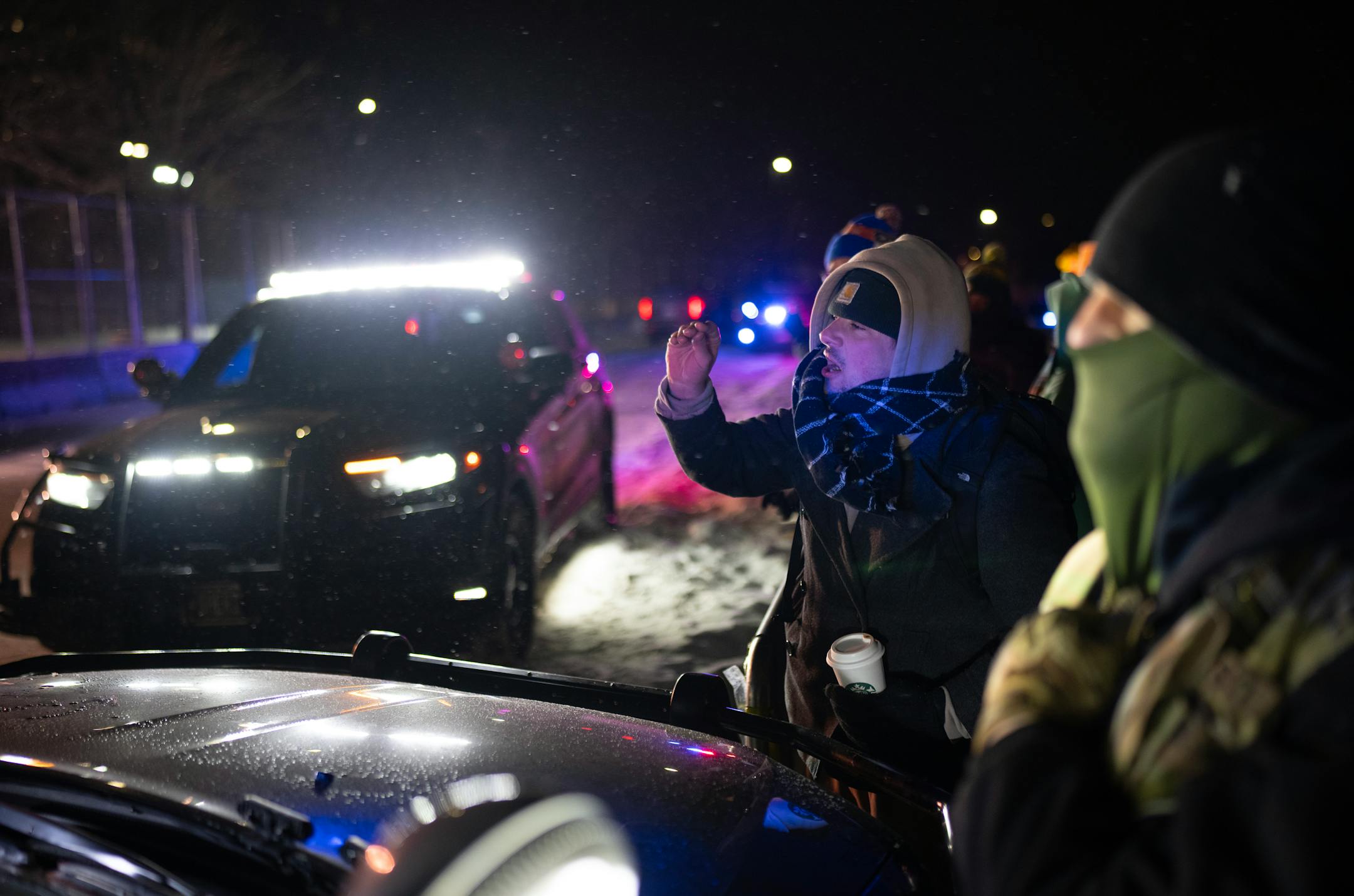
Demonstrators shout at Hennepin County sheriff’s deputies after they moved their vehicles to keep protesters on the sidewalk across the street from the Whipple Federal Building at Fort Snelling on Jan. 18. (Jeff Wheeler/The Minnesota Star Tribune)

When it comes to notifying ICE about a release ahead of time, Hodsdon said some sheriffs are more proactive. Others, less so. The Hennepin County Sheriff’s Office, for example, doesn’t issue that kind of notification without a judicially signed warrant.

Could Minnesota law enforcement honor ICE detainers?

Neither Walz nor Ellison can change Minnesota law unilaterally. Frey, as mayor, does not control the local jail, which is run by the Hennepin County sheriff. But Hodsdon said the Minnesota Legislature could pass a law that gives sheriffs the power to honor an ICE detainer or compels them to do so.

He said such a law would likely be challenged in court by advocates for civil liberties as unconstitutional, but it’s not clear how state or federal judges would rule.

Walz‘s office declined to comment on whether he would back a detainer law.

Even if the law changed, there’s a more practical hurdle: Some sheriffs may lack the money and time to carry out detainers, Hodsdon said.

In general, Minnesota law enforcement doesn’t work as closely with federal agents on immigration enforcement as some states, such as Florida, Hodsdon said.

He said the federal government would get better participation in Minnesota if it offered financial help rather than “guilt and shaming and rhetoric.”

“I’ve had many sheriffs who may be politically sympathetic to more extensive immigration enforcement, but they also say: ‘Why should my constituent property taxpayers pay for a federal responsibility?’ ” Hodsdon said.

How Minnesota’s prison officials handle ICE detainers

Federal officials have accused Walz of releasing “criminal illegal aliens from Minnesota’s jails.”

Walz doesn’t oversee jails, but his administration does run Minnesota’s prisons, where people are incarcerated for longer periods of time.

Walz’s Department of Corrections recently pushed back on the Trump administration and said it follows Minnesota law requiring the agency to notify ICE when someone in prison is not a U.S. citizen.

DOC said in a news release the state also “goes further by honoring all detainers,” when that isn’t a law. Corrections said it coordinates releases to ICE, though the agency does not hold people beyond when they would otherwise be released, said spokeswoman Shannon Loehrke.

Minnesota ‘in the middle’ on immigration laws

Broadly speaking, Minnesota’s rules for detainers are “pretty in the middle‚” and in general, its laws are not as protective of immigrants as states like Illinois, said Jehan Laner, senior staff attorney for the Immigrant Legal Resource Center.

Minnesota does have some statewide immigrant-friendly laws, including a 2023 law that allows undocumented immigrants to get driver’s licenses.

Some local governments have had sanctuary-type policies for decades that limit public employees, including police, from asking people about their immigration status. Minneapolis has notably barred police from helping with civil immigration enforcement.

Bovino said federal agents have worked well with local police in cities like Chicago and New Orleans, saying they “gave us a lot of good information.”

However, Minnesota is “not a sanctuary state,” Walz told a congressional panel last June. “The Minnesota Legislature has not passed legislation making Minnesota a sanctuary state, and I have not signed any such legislation into law.”

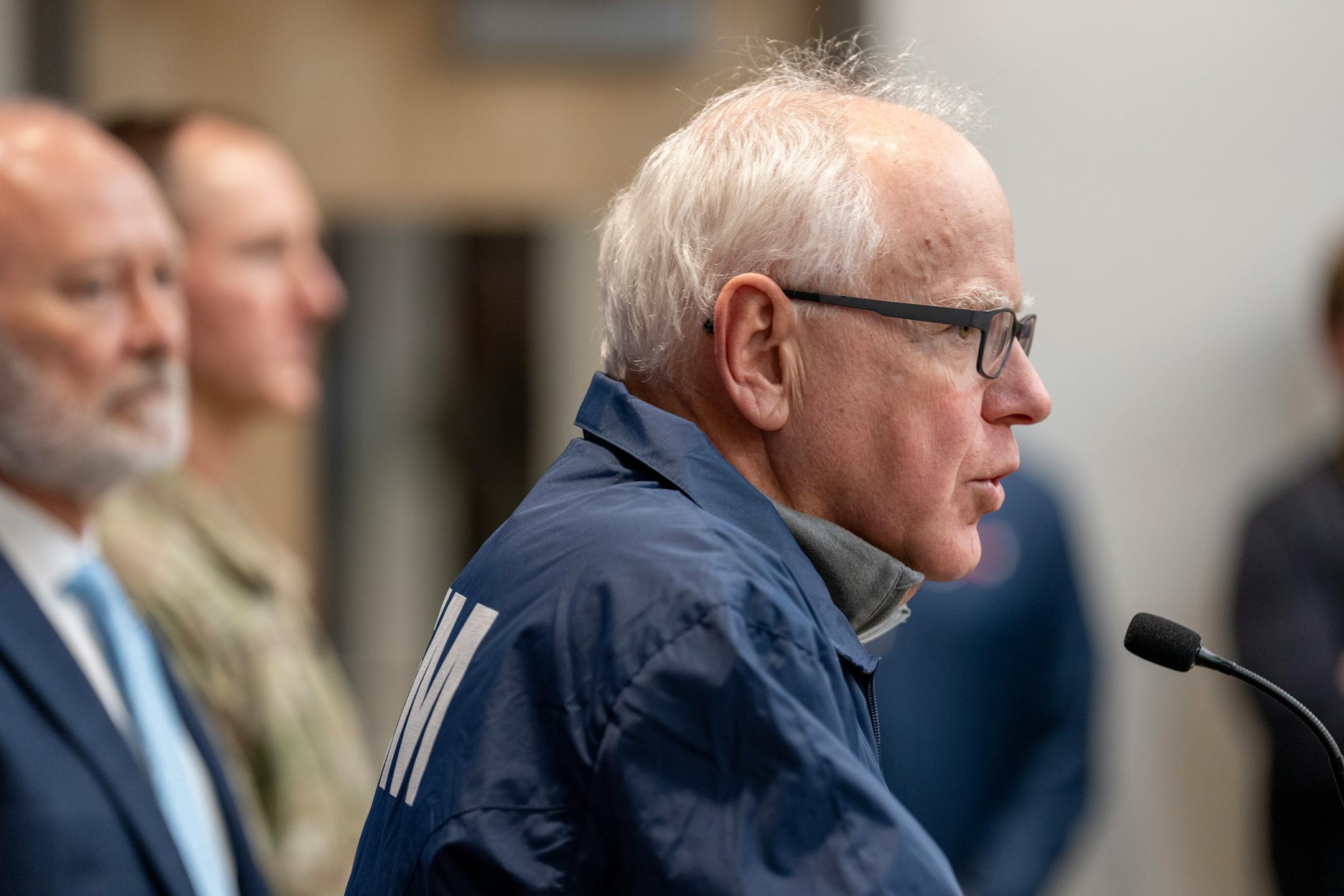
Gov. Tim Walz speaks at a press conference at the State Emergency Operations Center in Blaine on Jan. 8, just one day after Renee Good was fatally shot by an ICE agent in Minneapolis. (Alex Kormann/The Minnesota Star Tribune)

Virgil Wiebe, a University of St. Thomas law professor who has practiced immigration law since 1995, said Walz was right “in terms of noncooperation and disentanglement with the federal government.”

“Because there’s a lot more that has been done in other states.”

When the DFL had full control of the Minnesota Legislature in 2024, more than two dozen Democrats tried to ban law enforcement from honoring a detainer request or from helping ICE conduct civil immigration work in other ways.

What Democrats named the “North Star Act” would have sharply limited what information local law enforcement can divulge to the feds.

Democrats had majorities in the House and Senate at the time, but the bill failed because several DFLers wouldn’t support it and because Republicans were united in opposition.

Still, Republicans don’t exactly view Minnesota as a tough-on-immigration state. GOP lawmakers have tried to stop local bans on cooperating with ICE, legislation that has stalled without DFL support. The Republican-led legislation also would have required county attorneys to report the names of undocumented people arrested for violent crimes to immigration authorities.

Last year, the Minnesota County Attorneys Association said in a letter to lawmakers that the bill would have made prosecutors report to ICE “even if no charges are filed.”

Executive Director Robert Small wrote the organization feared the bill would impede the ability of county attorneys “to make independent decisions about cases they find meet criteria for criminal review” and in general could violate due process protections in the Constitution.

about the writers

about the writers

Nathaniel Minor

Reporter

Nathaniel Minor is a reporter for the Minnesota Star Tribune.

See Moreicon

Walker Orenstein

Reporter

Walker Orenstein covers energy, natural resources and sustainability for the Star Tribune. Before that, he was a reporter at MinnPost and at news outlets in Washington state.

See Moreicon

More from News & Politics

See More
Michele Tafoya, sideline reporter for NBC Sunday Night Football, lives in Edina with her husband and two children. Tafoya recently joined Tom Barnard on the popular KQ Morning Show.
Brian Peterson/The Minnesota Star Tribune

She is running as a Republican and looks to win the seat held by Democrat Tina Smith, who is not seeking re-election.

card image
card image