More Minnesota counties are partnering with ICE

Congress approved $170 billion for immigration enforcement, and local agencies that work with ICE could see new federal revenue.

The Minnesota Star Tribune
September 26, 2025 at 11:00AM
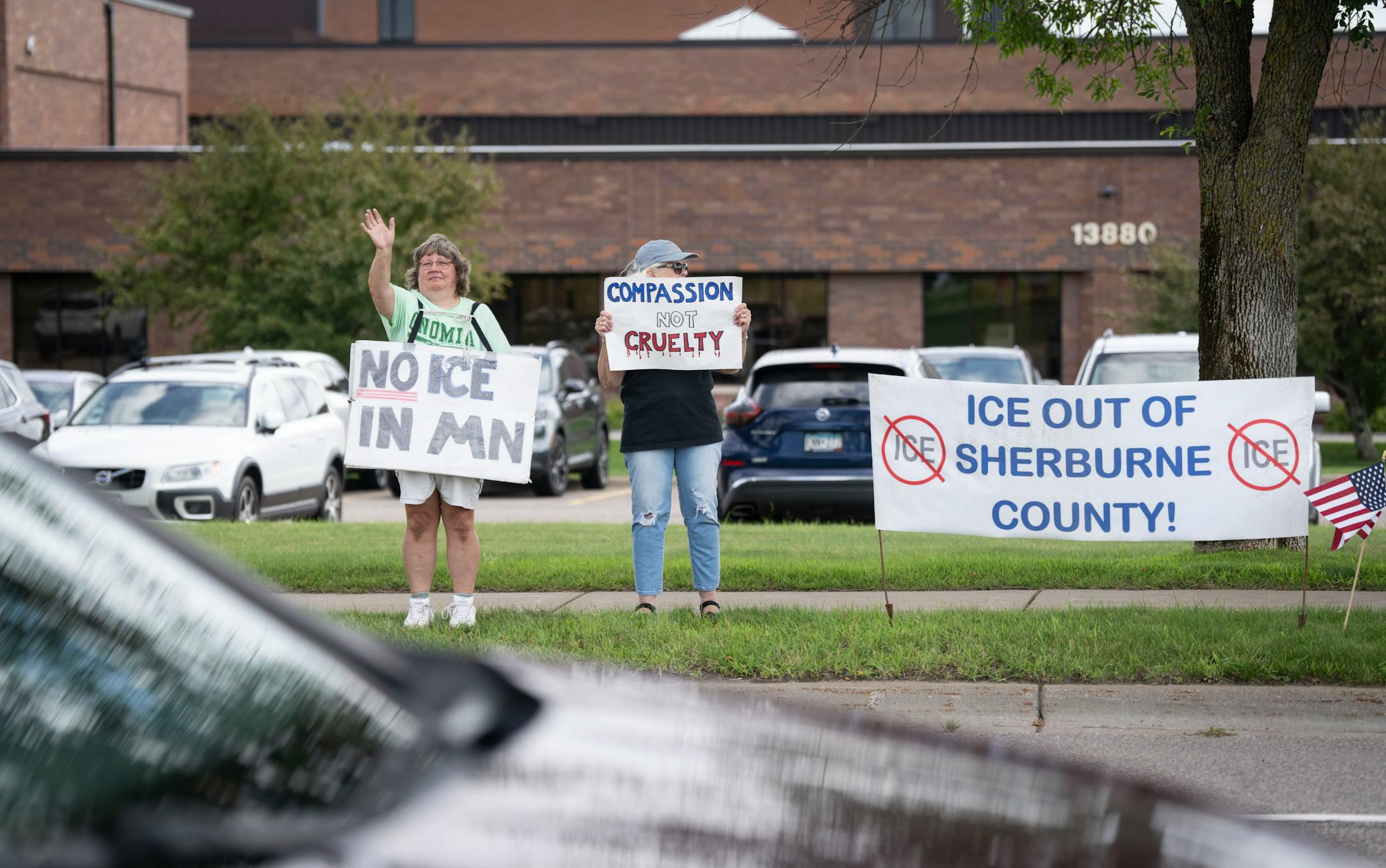
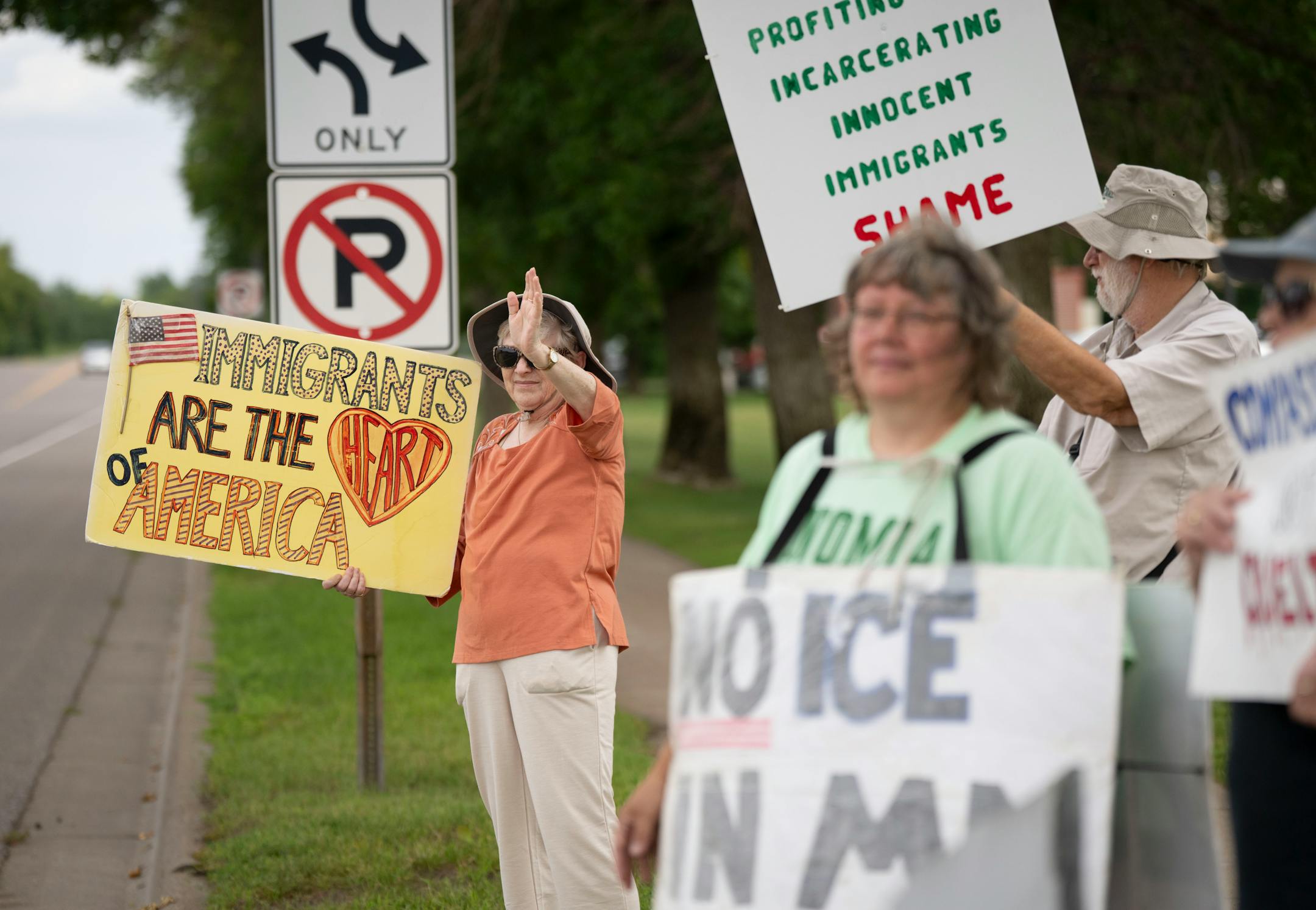
Kathy Geary waves to cars as she and others protest ICE in front of the Sherburne County Government Center on Aug. 6 in Elk River, where ICE detains dozens of people. (Renée Jones Schneider/The Minnesota Star Tribune)

President Donald Trump’s push for mass deportations could mean more money for Minnesota counties that partner with federal immigration officials.

Sherburne, Kandiyohi and Freeborn counties all have long-standing contracts to hold detainees for federal agencies, including Immigration and Customs Enforcement (ICE). Those agreements provide millions of dollars annually to help cover the costs of jail operations and renovations.

Since Trump took office again, seven rural Minnesota counties, including two with jail contracts, have signed agreements to partner with ICE. The deals include incentives like salary reimbursements and bonuses for departments that help arrest immigrants and “defend the homeland.”

The enormous budget reconciliation bill approved by Congress includes $170 billion for deportation efforts. There’s $14 billion set aside to reimburse local governments, which could begin training and start getting funding as soon as October.

Yet helping ICE has been far from a windfall for local governments, with reimbursements varying under Trump and former President Joe Biden. Over the last seven years, ICE revenue covered anywhere from 78% to less than 1% of jail operations, depending on the county.

“I don’t believe they are in it for the money,” Dave Zimmer, a retired Hennepin County sheriff’s deputy, now at the Center of the American Experiment, said of sheriffs who work with ICE. “I think it is more of a philosophical decision. They’re behind the efforts to shore up our failing immigration system.”

Opponents of Trump’s deportation push say residents should be troubled by ICE offering financial incentives to local law enforcement to help with federal immigration enforcement. They argue it raises legal questions and undermines residents’ trust.

“I think people see this as a very bad idea,” said Julio Zelaya of the Minnesota ACLU. “It attempts to blur the line between what is local and what is federal law enforcement.”
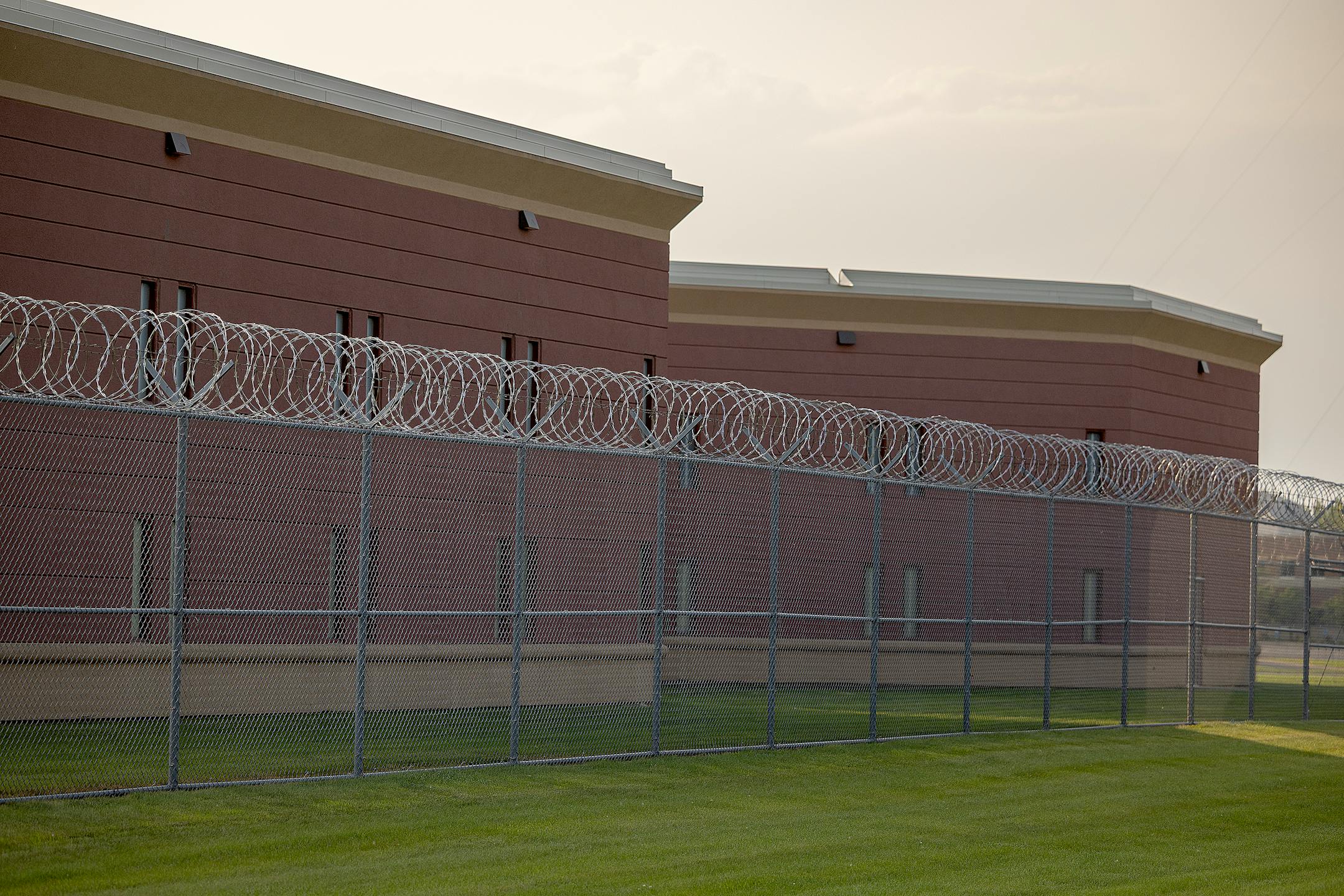

The Kandiyohi County jail in Willmar also holds ICE detainees. (Elizabeth Flores/The Minnesota Star Tribune)

Why sheriffs want ICE detainees

Sheriffs across Minnesota are responsible for holding people facing criminal charges. It’s an expensive job that can cost millions of dollars a year, even in small communities.

“The funny thing about jail operations, you can have two people or 20 and it has to be staffed,” said James Stuart, executive director of the Minnesota Sheriffs’ Association.

Some Minnesota counties found that accepting federal prisoners was a reliable way to generate revenue to offset those operating costs.

Sherburne County has been doing it for over two decades, expanding the jail twice, and using hundreds of its 732 beds to house inmates for the U.S. Marshal, Bureau of Indian Affairs and ICE, as well as other counties.

Nearly three-fourths of the inmates there are being held for the U.S. Marshal, with the remaining inmates coming from the county jail, ICE and overflow from other counties. Reimbursements for housing federal detainees brought in $18 million last year in Sherburne County. This supplements the county jail’s budget by about $2 million per year in personnel costs, which reduces the overall bill for taxpayers, Sherburne County Sheriff Joel Brott said in a statement to the Minnesota Star Tribune.

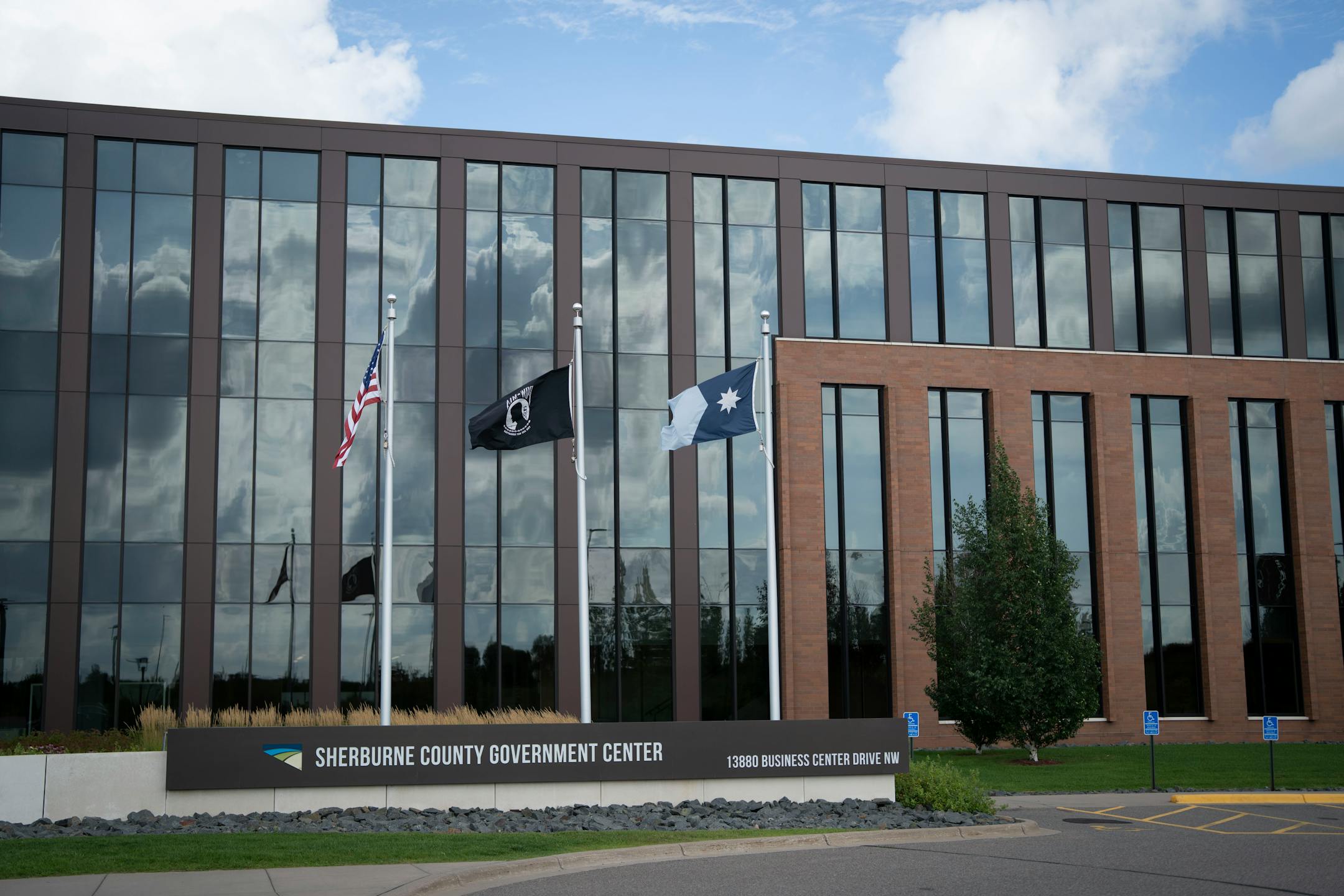
The Sherburne County Government Center photographed on Wednesday, August 6, 2025 in Elk River, Minn. ] RENEE JONES SCHNEIDER • renee.jones@startribune.com (Renée Jones Schneider/The Minnesota Star Tribune)

Brott said over the last 20 years, federal contracts helped pay for several projects in Sherburne County, including a $4.5 million remodel of the government center in 2018.

Revenues dipped as ICE inmate populations declined amid the COVID-19 pandemic and then “dropped to near zero with Biden administration policy changes,” Brott said. Now, payments from ICE have jumped in all three counties with jail contracts since Trump took office.

Some residents in Sherburne County are unhappy the jail is holding detainees for ICE.

Nancy Hassett, the treasurer for Minnesota Interfaith Coalition on Immigration, started organizing weekly prayer vigils outside the jail about six years ago when the county board was looking to increase the number of beds it would provide for federal inmates.

“It’s the inhumanity of it. It’s the [degradation] of their lives,” Hassett said of the detainees, some of whom are undocumented immigrants who arrived in the U.S. as children and some of whom have no criminal record or only traffic tickets.

Every Wednesday, a group of demonstrators gather to hold up signs in support of immigrants on a frontage road along Hwy. 10. At times, there have been a few hundred protesters, but lately, there’s been a half-dozen or so each week.

Other challenges come with accepting federal prisoners, and staffing is a big one. There’s been a statewide shortage of public safety officers since 2020, forcing communities to raise pay and offer incentives to attract and retain employees, including for those working in local jails.

“It doesn’t matter where it is. All public safety is struggling to keep people right now,” said Jim Mortenson, executive director of Law Enforcement Labor Services, which negotiates union contracts for police and sheriffs’ deputies.

Law enforcement officials say finding staff could be tricky if the Trump administration plans to dramatically increase immigrant detention including in Minnesota. A closed, privately owned facility in Appleton, Minn., is one of many nationwide under consideration.

Darla Scouten and Pam Brethorst wave to cars as they and others protest ICE in front of the Sherburne County Government Center, where ICE detains dozens of people during a demonstration on Aug. 6 in Elk River. A small group of people have been protesting in this spot for over six years. (Renée Jones Schneider/The Minnesota Star Tribune)

Will more communities agree to partnerships?

In early September, the Department of Homeland Security celebrated a sixfold increase with nearly 1,000 local agencies agreeing to partner with ICE. Part of the reason, federal officials said, was the billions Congress approved to reimburse local communities for their help.

“By joining forces with ICE, you’re not just gaining access to these unprecedented reimbursement opportunities — you’re becoming part of a national effort to ensure the safety of every American family,” ICE Deputy Director Madison Sheahan said in a statement.

Seven of Minnesota’s 87 county sheriffs have signed on to help ICE: Cass, Crow Wing, Freeborn, Itasca, Jackson, Kandiyohi and Mille Lacs. Most did not reply to requests for comment, but the two sheriffs who spoke to the Minnesota Star Tribune said they did so more to avoid legal liability than to earn money enforcing immigration laws.

Sheriffs have been frustrated by expensive lawsuits if they hold someone for ICE after their criminal case has ended. But refusing an ICE detainer request could lead to being branded as a “sanctuary” jurisdiction by the Trump administration.

The new partnership agreements emerged as a solution. Online training for local agencies to serve warrants, temporarily hold detainees or aid ICE task forces is expected to begin in October.

Freeborn County signed up for the warrant model so it could serve papers to people with immigration cases already in its jail, without needing an ICE agent to travel to Albert Lea.

“They’re already in our jail,” Sheriff Ryan Shea said. “To me, it is just a matter of saving taxpayer money.”

Itasca County signed a task force agreement and training for officers could begin in October. Sheriff Joe Dasovich said he doesn’t plan to team up with federal agents, but he wants his deputies to have the required authorization if it’s ever necessary.

“I want my guys to have all the tools they need,” Dasovich said. “If we are dealing with [immigrants], there’s a criminal justice reason. We are not out there hunting them.”

The Minnesota ACLU is organizing community members to pressure sheriffs to abandon the ICE agreements. Zelaya says these deals could lead to immigration laws being enforced differently county by county.

“We want to keep local law enforcement local,” Zelaya said. “Otherwise, it will create a group of individuals who have no choice but not to trust law enforcement.”

It’s unclear how popular these new ways to partner with ICE will be with Minnesota law enforcement leaders.

Stuart, leader of the Sheriffs’ Association, downplayed their importance. He doesn’t think there will be a surge of counties signing up. “I think what you see is what you’re going to get,” he said.

Reid Forgrave and Karina Kumar of the Minnesota Star Tribune contributed to this story.

about the writers

about the writers

Christopher Magan

Reporter

Christopher Magan covers Hennepin County.

See Moreicon

Jenny Berg

St. Cloud Reporter

Jenny Berg covers St. Cloud for the Star Tribune. She can be reached on the encrypted messaging app Signal at bergjenny.01. Sign up for the daily St. Cloud Today newsletter at www.startribune.com/stcloudtoday.

See Moreicon

More from St. Cloud

See More
The Abbey Church is a landmark on the St. John's University campus located in Collegeville.
The Minnesota Star Tribune

Local nonfiction: “Greater Minnesota” travelogue details a home-grown returnee’s conversion.

A shrine to St. Cloud, the patron saint of the Diocese of St. Cloud, is inside St. Mary's Cathedral in downtown St. Cloud. The statue is a replica of the oldest known statue of the saint. (Credit: Jenny Berg)
card image