
Readers Write: National debt, wealth inequality, transportation

National debt does matter.

The Minnesota Star Tribune
July 26, 2025 at 8:59PM
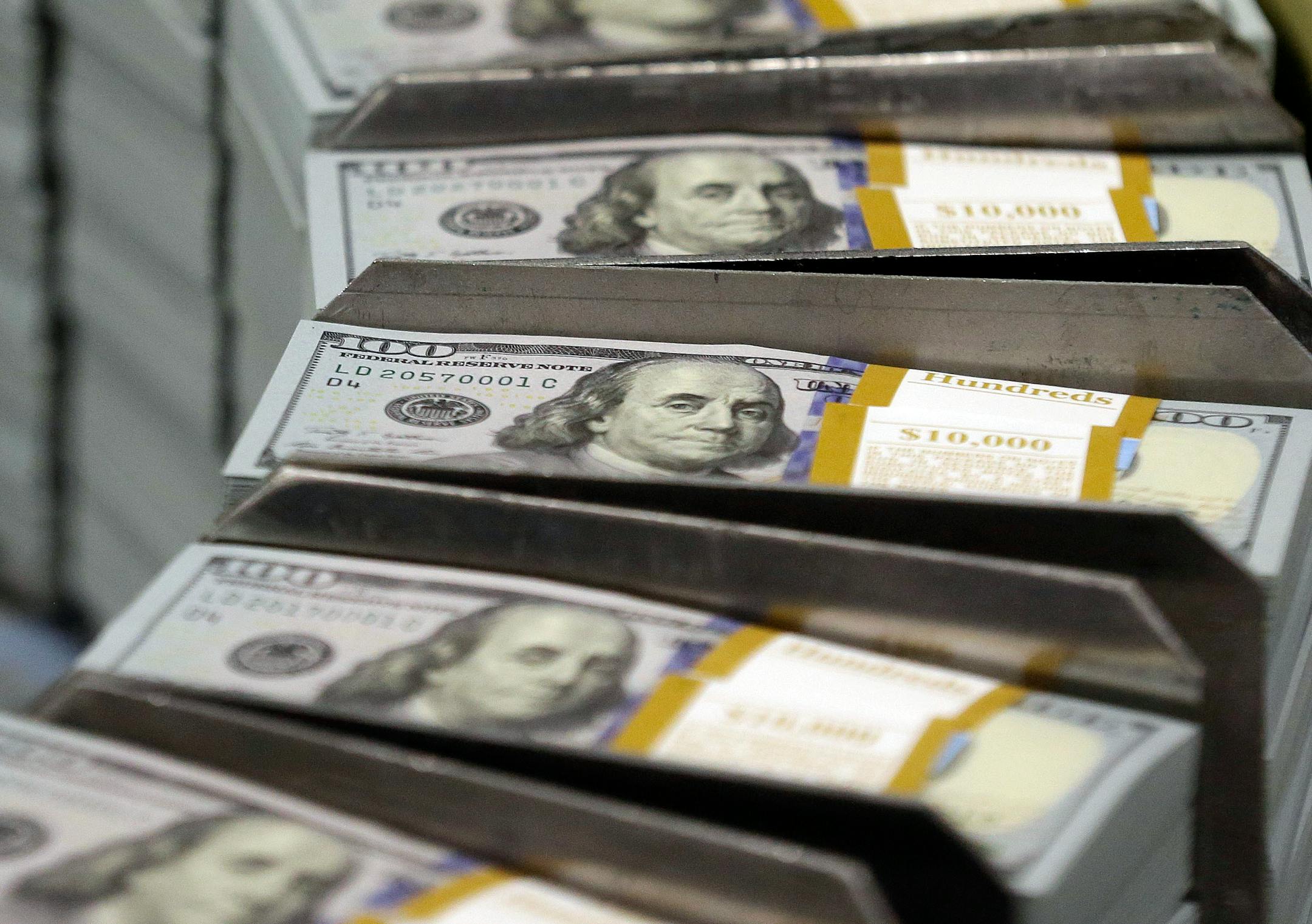
FILE - Cut stacks of $100 bills make their way down the line at the Bureau of Engraving and Printing Western Currency Facility in Fort Worth, Texas, Sept. 24, 2013. All the hand-wringing over a potential government default if Congress doesn’t increase the national debt limit has conjured up images of past government shutdowns. In fact, there’s a big difference between a government default and a government shutdown. A default would occur if the government exceeds its legal borrowing limit and can no longer pay all its creditors or pay for existing programs. (AP Photo/LM Otero, File) (LM Otero/The Associated Press)

Opinion editor’s note: Strib Voices publishes letters from readers online and in print each day. To contribute, click here.

•••

I see the Minnesota Star Tribune has run its periodic “national debt doesn’t matter” opinion piece on Sunday (“The national debt: You can stop worrying now,” Strib Voices, July 20). This one has the bonus feature of denigrating the entire field of economics as a bunch of charlatans. It’s amazing how careful the Strib is about offending some people while entirely ignoring the sensibilities of others. The problem with these columns is they all want to lecture us ignoramuses on how things work, while conveniently glossing over the most important part.

We all know the federal debt is not the same as household debt, so please dispense with that straw man. I can only speak for myself, but I worry about the federal debt because I think additional debt service cost has to be compensated by the returns from economic growth. That proposition is becoming imperiled.

The population of the industrialized world is aging. Public spending is increasingly servicing the demands of that population. Economic growth has slowed. The U.S. has had the luxury of cheap borrowing, but it is not guaranteed. Recent tremors in the bond market point to investors increasing demands to be compensated for carrying U.S. debt. Do we keep borrowing when the cost of debt exceeds its productivity? Then what? Default? Hyperinflation? I don’t want that as my legacy.

If you want people to worry less, please do not print another glib exposition on the ease of financing deficits. That kind of stuff just makes me worry more.

Regina Anctil, Minneapolis

•••

Fazio’s commentary attempts to minimize a number of problems with our national debt. However, some aspects are not so easily sidelined. Currently about 17 cents of every tax dollar goes to paying interest on the national debt. These are billions of dollars that could have been invested in producing goods and services. And what does the government do about the next jolt to the economy like a pandemic or recession? Pump in more money and increase the national debt and the interest payments on the debt? At some point, this is not sustainable. Which brings us to the creditors, the governments and other investors that have bought our government debt, relying on America’s political and economic stability. If they get nervous, the interest rates go up to meet their need for a higher return on the investment. All this causes higher interest rates in general and economic stagnation.

Dennis West, Minneapolis

•••

Here are the facts of life: We currently pay over $800 billion a year in interest on the national debt. Money used to buy government bonds could better be used to invest in the private sector. If we fail to get our financial house in order by balancing the budget and paying down the debt, there will come a day in which investors refuse to buy government bonds at a favorable rate. It will not be pretty when that happens.

There was a time when we at least had one political party that was fiscally responsible. That was the GOP, which was hijacked first by the Tea Party and later by President Donald Trump.

Jerome Miller, Sebeka, Minn.

WEALTH DISPARITY

Income inequality drives people to succeed

A recent letter to the editor (“Unaddressed inequality will doom us,” July 20) fails to go below the headlines. Yes, it is often surprising as to how much a few people earn (leaders, entertainers, athletes). Differences in earnings are one of the keys to the success of our economic system. Why? Because it creates incentive, effort and inventiveness. Having arbitrary limits on our income is a disincentive. This factor is clearly seen by the number of small businesses created by income inequality: “I can earn more having my own business rather than working for someone else.” Those who do work for larger companies have incentive mechanisms that reward their efforts and inventiveness.

For sure, we need to address the needs of those who are less fortunate, but it is interesting that the income equality discussion rarely — if ever — includes how the contributions our massive governmental social programs nor our pervasive charitable ones provide some balance. The recent letter infers that income inequality is a bad thing. This raises the question, why? Without it, we have diminished incentive, which is harmful to all of us, as it doesn’t drive accomplishment.

Charles C. Wanous, Bloomington

•••

Unaddressed inequality will doom us” encouraged me to comment on that letter on CEO compensation. It is no longer tolerable for corporations to justify high CEO pay by insisting competition for executives demands such high compensation to attract new leaders. CEOs don’t singularly direct corporate policy or decisions, nor are they solely the ones to be credited with a corporation’s success. Boards of directors and employees deserve just as much, if not more, credit for profits and policy direction. It is disingenuous to suggest huge CEO compensation is necessary or justifiable. I, too, believe such compensation is obscene and immoral! It’s time for corporate America to recognize a responsibility to employees and the communities in which they operate. Perhaps a universal tax of 25-50% of executive income with proceeds paid to a fund for the homeless or SNAP recipients. Stop enriching the few when there are so many needy causes to support.

Tom Droegemueller, Mound

TRANSPORTATION

Invest in rail transit

The July 19 article “Storage site at Mpls. light-rail station a poor use of prime land” entirely misses the point of rail transit, which is to provide a fast way to get a large number of people to distant destinations.

It is not to spur development, although it does that. It is not to get people between dense urban neighborhoods and downtown; buses can do that more flexibly at a much lower cost. Light rail stations don’t just serve people who live nearby. They gather people who use feeder bus routes and bicycle commuters (using our extensive network of off-road all-season trails); low ridership estimates for stations cited in the article excluded these important groups.

Rail transit works when people need to move a long way in a congested corridor, if there is a right-of-way where trains can go fast. The Green Line extension can get people from Hopkins to downtown in 20 minutes using an existing diagonal rail route. It can move people much more quickly than cars or buses in traffic. It will serve this metro area as it soon grows to 4 million people, a size where metro areas worldwide invest in rail transit. And it will reduce a major use of fossil fuels, as the fight against global warming inevitably comes to dominate public policy.

Richard Adair, Minneapolis

PUBLIC ART

Which is the fairest one of all?

After reading the Minnesota Star Tribune article about the new murals on the Midtown Greenway, I rode through to check them out (“Mural, mural on the walls,” July 19). They are beautiful, dramatic even! Full of color and honoring the great people of this city. Many, many thanks to the artists and those who made these works of public art possible. I hope there are more to come!

Frank Schweigert, St. Paul

about the writer

about the writer