
Advertisement

Readers Write: Education, support after the ICE surge, constitutional rights, war with Iran

Minnesota vs. Mississippi: Needs even more context.

The Minnesota Star Tribune
February 21, 2026 at 12:00AM
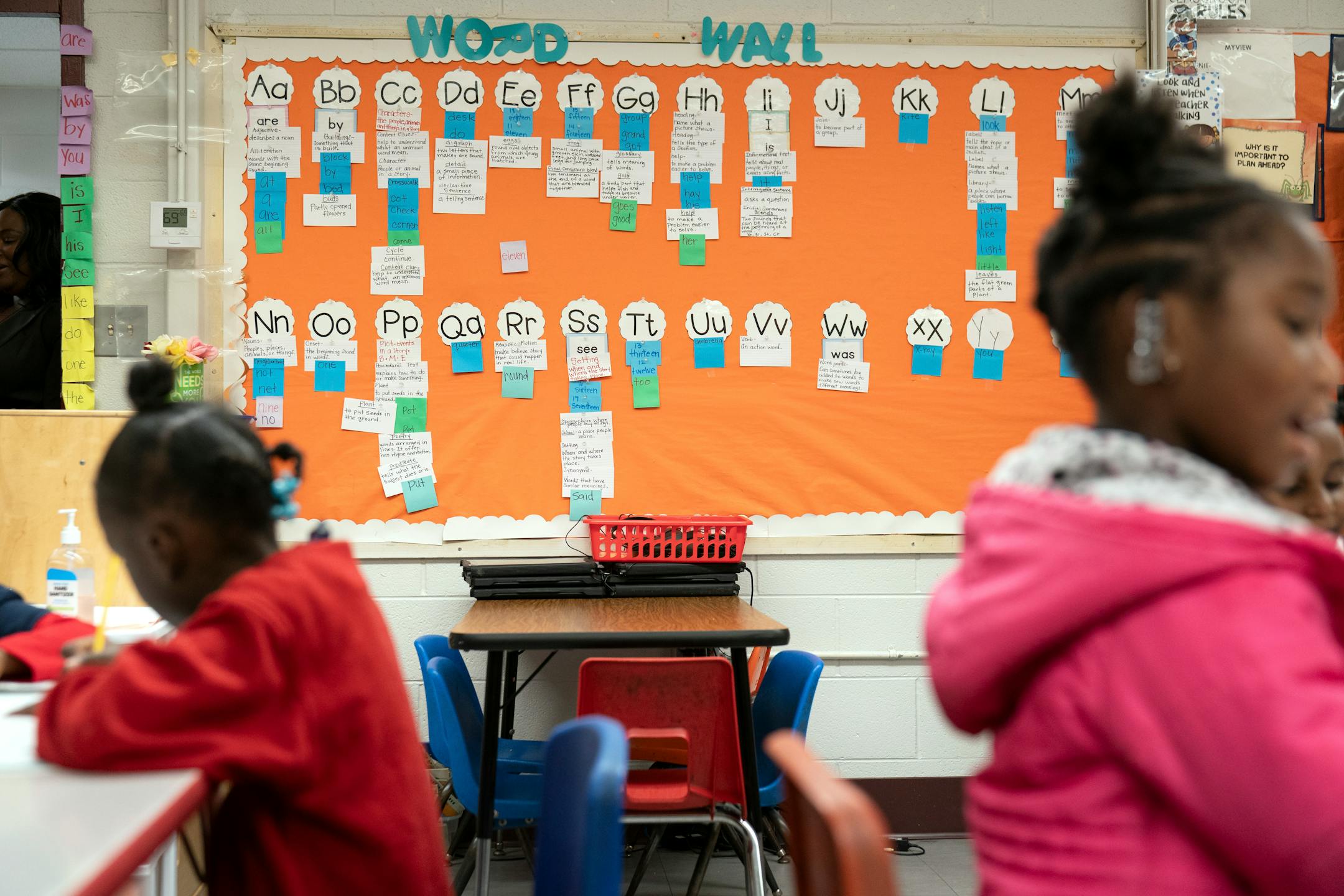
Students take part in a reading lesson at Hazlehurst Elementary School in Hazlehurst, Miss. (RORY DOYLE/The New York Times)
Advertisement

Opinion editor’s note: Strib Voices publishes letters from readers online and in print each day. To contribute, click here.

•••

The recent counterpoint “Minnesota failure, Mississippi success in education? Needs more context” (Strib Voices, Feb. 18) comparing educational outcomes in Minnesota and Mississippi using ACT, SAT and overall NAEP averages misses a critical issue: Demographics matter.

When NAEP results are broken out by student subgroup (comparing low-income students to low-income students, and students of color to students of color), Mississippi is beating Minnesota in fourth-grade reading across nearly every demographic. And, contrary to the author’s claims, Black and economically disadvantaged students in eighth grade perform better in Mississippi than they do in Minnesota. In fact, Minnesota’s eighth-grade reading scores for all students have now fallen below the national average (sources: ciresiwalburnfoundation.org/read).

These results highlight Minnesota’s historic opportunity gaps and our state’s failure to educate all of our children.

Mississippi schools serve a significantly higher percentage of students of color and students living in poverty than Minnesota. Comparing overall state averages without acknowledging those differences can obscure what’s actually happening. If a state is producing stronger literacy results for comparable groups of students, we should aim to learn from that state — not dismiss their success.

Minnesota has made progress with the recent passage of the READ Act. The question now is whether we will implement it with the urgency and accountability needed to produce gains comparable to those in Mississippi. Minnesota families deserve clarity about how our students are doing.

Daniel Sellers, Minneapolis

Advertisement

The writer is executive director of the Ciresi Walburn Foundation.

•••

In a Feb. 15 opinion article titled “Worried about ICE’s impact on school funding? Let’s focus on ESAs instead,” the author advocated for school vouchers, euphemistically called Education Savings Accounts.

Iowa is in the third year of a three-year phase-in of school vouchers. Having served as superintendent in Big Lake, Minn., from 2015-2020 and in Iowa before that, I will share some insights that Minnesotans should consider before pursuing public funding of private schools.

Taxpayer money given to families to pay for private education does allow more students to attend private schools. In Iowa, private school attendance has increased by 1% (7,500 students) due to the $8,000 parents receive for each child attending a private school. However, Iowa has made several missteps with its version of school vouchers. Starting this school year, all families, regardless of income, will receive vouchers costing taxpayers $350 million. That’s $350 million to fund 7,500 students’ private education, which equates to over $40,000 per student. Lacking any explanation from Gov. Kim Reynolds or Republican legislators on why wealthy Iowans should receive a government handout, one can surmise that private school parents are reliable Republican voters who make sizable campaign contributions. It’s political payback.

Iowa’s voucher law doesn’t require any accountability for hundreds of millions of public money. In fact, Iowa passed a law last year to block the state auditor (a Democrat) from auditing private school use of tax dollars. Also, private schools have no additional reporting requirements and may deny enrollment to any student deemed undesirable or with special needs. Iowa also allows voucher money to be used to pay fees and expenses that public school parents must pay themselves. Book fees, instrument rental, the purchase of athletic equipment and special tutoring are all allowable uses of taxpayer money.

Advertisement

Numerous private schools have increased their tuition since the advent of vouchers. The increases have been significant enough to prevent some students from attending a private school, even with the $8,000 voucher. Iowa has taken a completely hands-off approach to private schools and their use of public funds.

The author wants the reader to believe that providing vouchers is a win-win for private and public schools. This is not reality. Many of Minnesota’s small, rural districts are already struggling with declining enrollment and funding shortfalls. State funding of private schools will quicken their demise, as politicians will provide less funding to public schools in response. This is happening in Iowa, as state funding for Iowa schools has been below the inflation rate for years.

Polls consistently show nearly two-thirds of Iowans are opposed to the present voucher law.

Since Minnesota consistently ranks in the Top 10 states for K-12 education, while Iowa, under years of Republican leadership, has tumbled from a Top 5 state to somewhere in the middle, Minnesotans should avoid Iowa’s unfair and unpopular voucher system.

Steve Westerberg, Forest City, Iowa

The writer is a retired K-12 educator.

Advertisement
RESPONSE TO OPERATION METRO SURGE

COVID-level support would be a mistake

Commentary author Alexandra Skinner says that the Immigration and Customs Enforcement “invasion” of Minnesota created a public health crisis due to families missing work and school (“ICE created a public health crisis. Minnesota must act as it did during COVID,” Strib Voices, Feb. 20). She proposes that Minnesota provide income support and eviction protection as it did during COVID to affected families.

During COVID, the government placed restrictions on people that prevented them from working. Therefore, the government had to provide income to those it forced to stop working. That isn’t what happened during the ICE surge. People who were here illegally, or who had family members here illegally, hid from law enforcement. It was their choice to come here illegally and their choice to hide. It does not make sense for Minnesota taxpayers to pay people who are here illegally so they can hide from U.S. law enforcement.

James Brandt, New Brighton

CONSTITUTIONAL RIGHTS

MAGA’s arguments fall apart

In “Constitutional rights are under assault in Minnesota” (Strib Voices, Feb. 17), E. Thomas Sullivan and Richard W. Painter failed to mention a corollary of the 10th Amendment known as the “Anti-Commandeering Doctrine” and, especially, its application to the 1997 Supreme Court case Printz v. United States. In Printz, a Montana county sheriff, Jay Printz, challenged a requirement of the Brady gun control bill that state Chief Law Enforcement Officers (CLEOs) conduct background checks on prospective handgun purchases. The court ruled that “The Federal Government may neither issue directives requiring the States to address particular problems, nor command the States’ officers . . . to administer or enforce a federal regulatory program.” This is ironic given MAGA’s insistence that, under the Supremacy Clause, Minnesota CLEOs must assist the Trump administration’s immigration crackdown. Are they also implicitly claiming that Printz was wrongly decided?

Ronald Mahler, St. Paul

•••

Advertisement

In a Feb. 18 letter (“ICE is so rotten it has to go”) the writer states it seems clear that ICE officers are not accountable under the U.S. Constitution to state authorities.

However, a 2025 paper by a University of Wisconsin Law School attorney says that federal officers are not immune from state and local prosecution for a crime committed in that state. Furthermore, this practice stretches back to at least the time of the early 1800s.

David Allan, Minnetonka

IRAN

We might be going to war. Who knows why

The U.S. military is moving into position to strike Iran. What is the reason for this? President Donald Trump has not made a convincing case to the American public and has sought no authorization from Congress. In 2018, Trump pulled us out of the 2015 Joint Comprehensive Plan of Action, which imposed restraints on Iran’s nuclear activities. U.S. intelligence reports that Iran is not making nuclear weapons. Trump created this mess in 2018 and is now acting on his own to exacerbate it. When will America be great again?

Christopher Hagen, Plymouth

about the writer

about the writer

Advertisement