
Opinion | Worried about ICE’s impact on school funding? Let’s focus on education savings accounts instead.

Now enacted in nearly 20 states, ESAs offer children and parents better opportunities and choices.

February 15, 2026 at 7:30PM
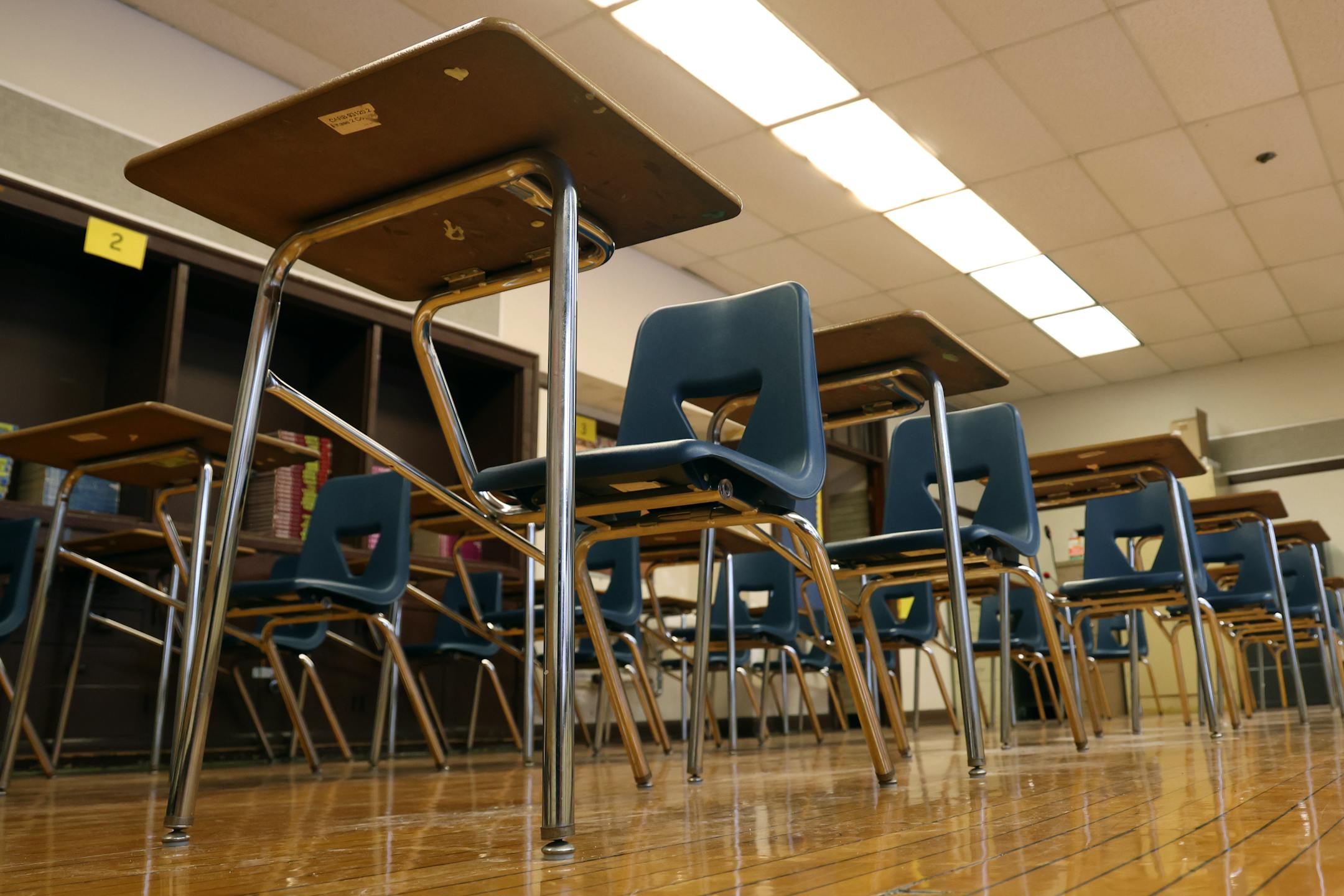
"Instead of worrying about how declining attendance may affect next year’s education budgets, perhaps it’s time to instead focus on enacting ESAs in our state," Annie Holmquist writes. (Antonio Perez/Chicago Tribune)

Opinion editor’s note: Strib Voices publishes a mix of guest commentaries online and in print each day. To contribute, click here.

•••

If the last month or so has taught us anything, it’s that pretty much every area of life in Minnesota has been affected by the presence of ICE.

The education system is no exception. As a recent Minnesota Star Tribune article explained, the reality of ICE’s presence in Minnesota has weighed heavily on school leaders, particularly as they contemplate what reduced attendance due to fearful students staying home could do to their school financials next year. For example, Fridley Superintendent Brenda Lewis said upwards of $100,000 could be lost in her district with just 25 fewer students on the attendance rolls.

Such fears are understandable. No one likes budget cuts. Yet what I find troubling about this is the underlying assumption that more dollars automatically equal a better education.

We’ve been sold this line year after year. It comes up in practically every election as we’re asked to vote for more money to fund school operating costs or other needs — all for the children, of course.

Minnesota now spends over $18,000 per student each year. What kind of educational outcomes does all this spending get us? As a billboard last fall by the Ciresi Walburn Foundation noted, only 50% of Minnesota’s students can read at grade level. But even that number is pretty positive when one digs through Minnesota Department of Education records to look at individual districts. Consider the aforementioned Fridley school district, for example, where only 34% of students were proficient in reading last year — meaning that two-thirds of its students were not proficient.

In fact, as other billboards from the Ciresi Walburn Foundation pointed out, Mississippi — long known for its bottom-of-the-pile position in just about everything — is beating our state in teaching kids to read.

That’s not based on selective data, either. As a recent New York Times column by Nicholas Kristof explains, Mississippi is one of the leading lights in education today. The state ranks first in the nation in fourth-grade reading and fourth- and eighth-grade math, after adjusting for poverty and racial demographics. Neighboring Louisiana and Alabama are following Mississippi’s formula with great success — so much so that Kristoff suggests other states should follow their lead.

The ironic thing, however, is that these states are pulling off such miracles with far fewer dollars than Minnesota. Of these three states, Louisiana has the highest spending per student at $13,760 per year — at least $4,000 less than Minnesota forks out for each student.

But these three states also share another thing in common: education savings accounts (ESAs). Instead of having tax dollars go to the school district, ESAs allow education funds to follow the student to the school that best suits his or her needs. Similar to an HSA account, ESAs typically put around $7,000 in a digital wallet that parents can use toward tuition, books and other approved education expenses.

Enacted in nearly 20 states now, ESAs are beneficial to multiple parties. Children benefit because ESAs offer them a chance to get into smaller schools with more tailored education options. Parents benefit because they get a chance to direct their tax dollars toward education options that actually help their struggling children while also easing the strain on their pocketbooks.

And while it may surprise some, teachers can also benefit from ESAs because they provide the financial means for families to pay a high-quality instructor to tutor or head up a micro-school — the increasingly popular modern version of the old one-room schoolhouse. Such options allow teachers to break free from the administrative burdens and behavioral chaos of traditional schools that continually hinder their instruction time.

Amazingly, polling suggests that ESAs are a bipartisan issue, as nearly 70% of Minnesotans support them. That’s a refreshing statistic in this time of upheaval, division and uncertainty.

Instead of worrying about how declining attendance may affect next year’s education budgets, perhaps it’s time to instead focus on enacting ESAs in our state, enabling both sides of the aisle to come together and do something positive for the state’s children and families.

Annie Holmquist is a writer and editor living in St. Paul. Her other writings can be found in the Epoch Times, Intellectual Takeout, 1819 News and her Substack, Annie’s Attic.

about the writer

about the writer

Annie Holmquist

More from Commentaries

See More
card image