
Opinion | A key Minnesota fraud vulnerability: Obsolete systems

The technology used by state and county workers to administer programs is not up to the task.

February 15, 2026 at 10:59AM
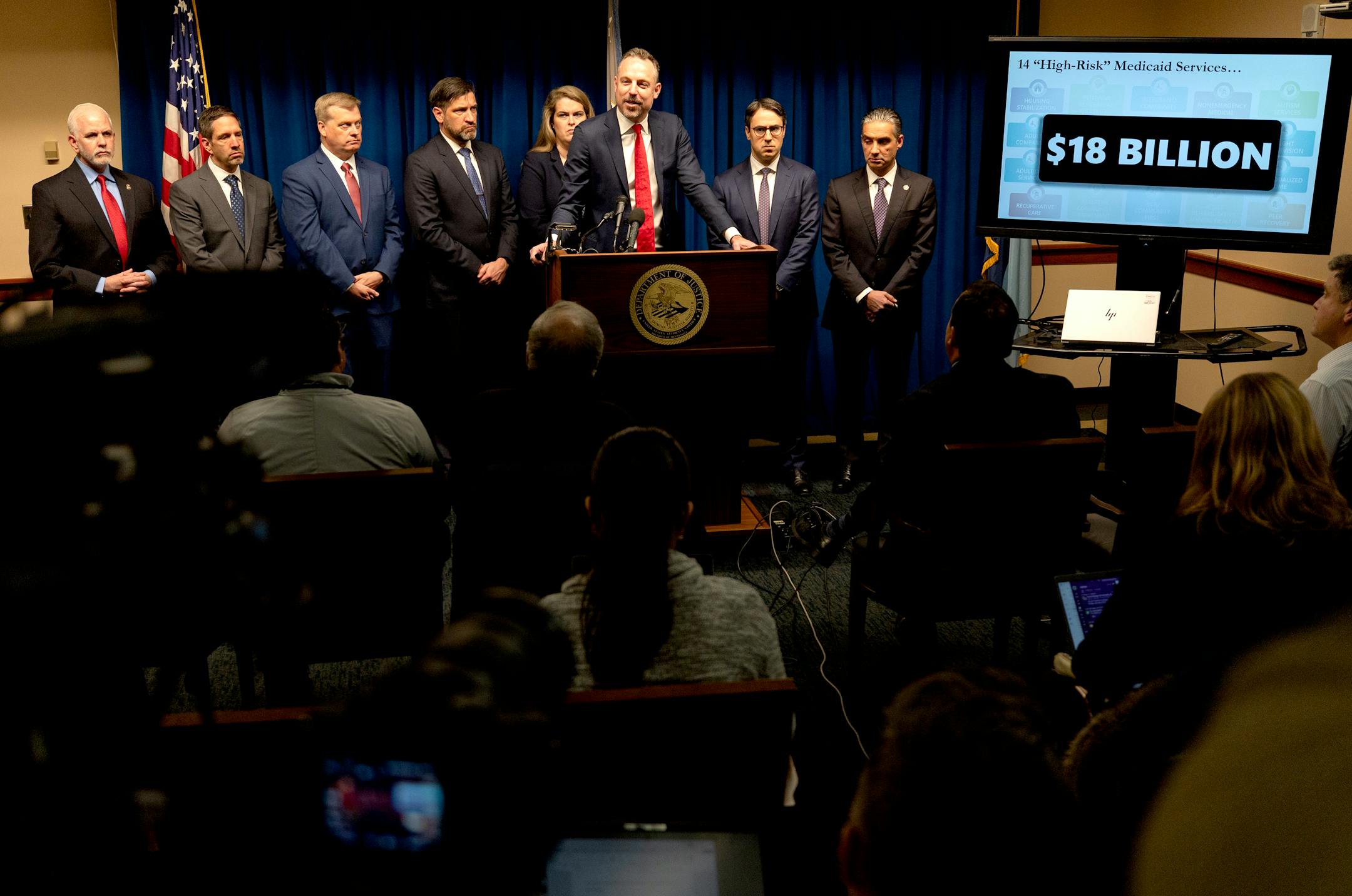
Then-U.S. Attorney Joseph H. Thompson during a press conference addressing fraud in Minnesota at the United States Courthouse in Minneapolis on Dec. 18, 2025. ] CARLOS GONZALEZ • carlos.gonzalez@startribune.com (Carlos Gonzalez/The Minnesota Star Tribune)

Opinion editor’s note: Strib Voices publishes a mix of guest commentaries online and in print each day. To contribute, click here.

•••

I have served on the Minnesota House Fraud Prevention Committee for almost a year now, and my membership on that committee has given me an opportunity to explore the root causes of the undeniably egregious levels of fraud that we have experienced in Medicaid-related programs administered by the Minnesota Department of Human Services (DHS).

Working with my colleagues and with the staffs of the DHS and Minnesota IT Services (MNIT), I have learned that our most serious vulnerabilities are related to the obsolete systems used by DHS and county workers to administer these programs, rather than any malice or incompetence on the part of these dedicated workers, whose goal is to enable the provision of services that are desperately needed by our most vulnerable neighbors. As the Legislature prepares to reconvene for the 2026 session, these are the specific actions that I believe need to be taken to bring fraud in these programs under control while preserving access for the people who rely on them.

This plan provides specific actions, mostly investments in modernized information systems infrastructure, to address specific weaknesses that I have identified in the processes used by the Department of Human Services to manage its client base and its contract service providers, inadequacies in its acquisition and entry of essential data from authoritative sources, and blind spots created by the mis-organization of the data in the analytical systems it uses to manage programs and identify patterns of fraudulent activity. These deficiencies are longstanding in nature — spanning multiple administrations and legislatures in most cases — and they will not be solved overnight.

The lion’s share of the fraud being identified by the ongoing investigations is perpetrated by businesses that invent nonexistent clients or enroll real clients in programs without their knowledge. For example, the Fraud Prevention Committee heard testimony from one woman who only learned that she had been enrolled in the Medicaid Housing Assistance Program (now canceled) when she received a related “Explanation of Benefits” form from her Medicaid health insurance provider.

The DHS is fundamentally incapable of maintaining the integrity of information about the clients who enroll in its programs. In large part, this is because Medicaid program enrollments are managed in two separate enrollment and eligibility systems, METS for basic Medicaid and the 1980s-era MAXIS system for all cash benefit programs and ancillary Medicaid programs. The related claims are managed through MMIS, a third ancient mainframe COBOL system. There is no master client database, and attempts to map client data across the multiple systems (the so-called Shared Master Index) have failed. Client data is manually entered into MAXIS, and there is no process for verifying the identities of enrollees or validating and aligning the data entered about them across the systems.

The solution to this problem is already available and waiting to be implemented. If you access your federal accounts (IRS, Social Security, Medicare, TSA) using Login.gov, you know that you had to go through a rigorous process of verifying your identity before your Login.gov account was approved. Minnesota already has an equivalent capability called LoginMN that is currently being tested as part of the rollout of the new Paid Family Medical Leave (PFML) program by the Department of Employment & Economic Development (DEED).

The possession of a verified LoginMN account should likewise be a basic prerequisite for enrollment in any DHS Medicaid program, and the verified information in the enrollee’s LoginMN record should be considered the authoritative source of basic personal information about the enrollee. Using their LoginMN accounts, clients should be required to initiate their own program enrollments through the existing MNBenefits website to prevent fraudulent businesses from inventing clients or enrolling clients in programs without their permission.

Similarly, the DHS is fundamentally incapable of properly vetting prospective contract service providers. The principals of these entities should also be required to establish LoginMN accounts, which would facilitate vetting using automated third-party services like Dun & Bradstreet and Thomson Reuters. As long advocated by my colleague, Rep. Kim Hicks, most professional services funded by Medicaid should require licensing to ensure that providers are qualified to provide services.

Because the ancient MAXIS system used to process enrollment and eligibility for cash benefit systems has never been capable of ingesting data directly from other systems, all data must be manually keyed into it. So, instead of electronically taking authoritative employment and income data from the regular employer submissions to the DEED Unemployment Insurance database, income data is manually keyed by county workers from the applicant’s easily counterfeited paper paycheck stub — and it must be keyed separately for each program enrollment.

If the applicant has entered personal application information into DHS’ MNBenefits portal, that data must be printed out and rekeyed into MAXIS as well. MNIT has now identified software that can be used to enable electronic data entry into MAXIS from external sources like MNBenefits, DEED third-party services such as “The Work Number,” as well as the “Federal Data Services Hub,” which provides electronic data services to verify the validity of Social Security numbers and federal income tax data. This would dramatically improve the accuracy of the data used in evaluation of enrollment and eligibility applications, and just as dramatically improve the productivity of the county caseworkers charged with processing enrollment applications. Implementation of this “Application Programming Interface Management” software is a foundational capability that is a prerequisite to the implementation of most of the other software improvements discussed in this plan.

Another type of fraud is the padding of hours of service provided to clients in hourly service programs like day care or personal care attendant services for people with disabilities. This type of fraud can be addressed with the universal use of Electronic Visit Verification (EVV) systems as advocated by my colleague Rep. Mohamud Noor, co-chair of the House Human Services Committee. EVV systems require providers and their clients to electronically “punch in” and “punch out” when service delivery begins and ends to ensure that the DHS is only paying for services that the client has received.

Finally, it seems like it should be trivial to identify patterns of fraud such as multiple fraudulent providers operating out of the same address. The reason it’s not trivial is that the balkanization of systems that characterizes the front end of the process is carried over into the back-end analytic systems that are used to root out fraud. In the DHS’ so-called “data warehouse” there are separate, unintegrated piles of data, one for each administrative system, making it hard to connect the dots between fraud occurring in one system/program and fraud occurring in other systems/programs.

In a real data warehouse, the data in these separate piles would be integrated into a single database, where there would be standardized tables holding unified and authoritative data organized by subject (rather than by source) so that analysis of enrollments and claims by client, service provider, program and time period would be easy, regardless of the source of the data. Building a real data warehouse on a modern data analytics platform would require a substantial investment in both time and money, but it is also an essential prerequisite to a broader modernization program that would require the migration of “clean” legacy system data to more modern systems.

Ultimately, the DHS’ ancient systems themselves must be replaced. Systems like MAXIS and MMIS are being held together with duct tape and baling wire, and it’s impossible to hire IT workers who are willing to code in DOS (MAXIS) and COBOL (MMIS). At any given time, there is a multiyear backlog of programming requests just to keep up with changes in federal and state laws and policies governing these programs.

With recent changes in federal law, the state faces stiff penalties in programs like the SNAP nutrition program if it is unable to achieve federal standards of program integrity. The burden on the county workers charged with administering these programs is already crushing, and the impact on our property taxes is growing. To its credit, the DHS recognizes this and has initiated a promising modernization effort called the Medicaid Enterprise System (MES) program, which must be funded by the Legislature.

While the cost of these system modernization efforts will be substantial and their implementation will not occur overnight, the payback in terms of fraud reduction and worker productivity will provide a rapid return.

Steve Elkins, DFL-Bloomington, is a member of the Minnesota House.

about the writer

about the writer

Steve Elkins

More from Commentaries

See More
card image
Carlos Gonzalez/The Minnesota Star Tribune

The technology used by state and county workers to administer programs is not up to the task.

card image
card image