

Ramstad: Sezzle keeps rising, while its stock takes a wild ride

A lot has happened to Minnesota’s most successful fintech this year.

Columnist Icon
The Minnesota Star Tribune
November 10, 2025 at 7:47PM
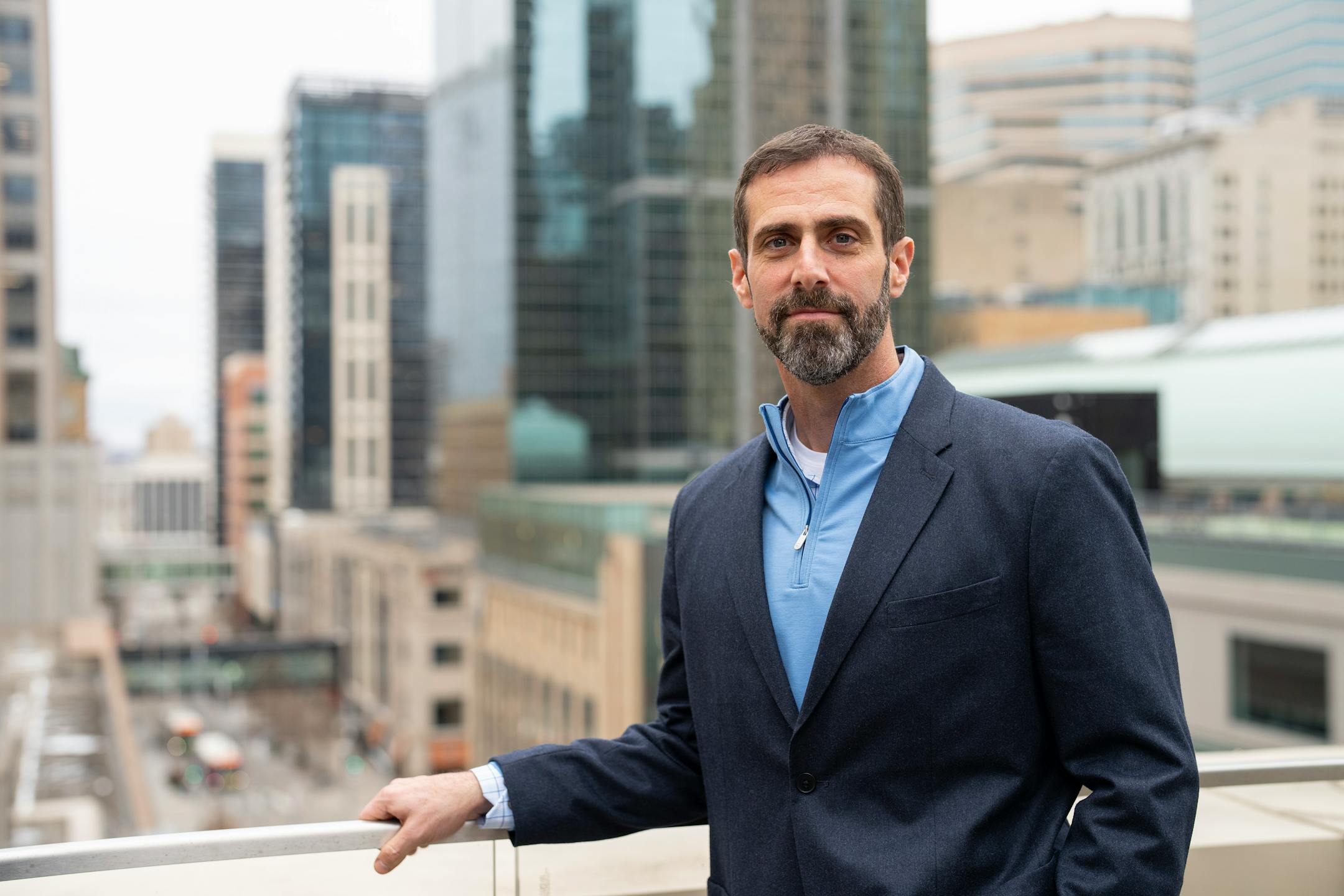
Charlie Youakim, CEO of Sezzle, photographed in Minneapolis in 2024. (Alex Kormann/The Minnesota Star Tribune)

Halfway through this very odd year for both the stock market and the American economy, Minneapolis-based payments company Sezzle led Minnesota’s publicly traded companies in stock performance, with shares that tripled in value.

Then came July and August. Sezzle shares peaked on July 3, started downward and then plunged in August after it reported second-quarter earnings.

Today, Sezzle’s platform for managing consumer payments as an alternative to credit cards has more users than ever and is yielding record profits. Its shares are up 40%, which is well above the 15.6% total return of the benchmark S&P 500 index but far below their summertime peak.

This rollercoaster performance proves the timeless aphorism attributed to multiple market and CEO sages: “The stock is not the company, and the company is not the stock.”

Recent days produced more volatility. Sezzle released third-quarter results after market close on Wednesday, saw a 12% drop the next day, then showed a partial recovery Friday and Monday.

“I try not to care about the market. I think that’s one of the keys of making a profitable company,” Sezzle CEO Charlie Youakim told me on Friday.

That’s really hard to do, however, especially when the company continues to show strong revenue and profit growth against its prior-year results. Sezzle’s revenue was up 76% in the second quarter and 70% in the third, while adjusted profits in both periods grew more than 50%.

“I remember the day we announced our results for the second quarter,” Youakim said. “I told everyone ‘Great job. I’m not sure how the market is going to see this, but don’t worry about it, because we’re doing a great job.’ And then I could not believe what happened. I was shocked. We were shocked. Like, wow, what is going on?”

Sezzle by almost any financial measure is the most successful tech startup of the last decade in Minnesota. Formed in 2016 by Youakim, Killian Brackey and Paul Paradis, it took an unusual route to the public markets through Australia in 2019. Three years later, it made the hard turn away from a grow-at-all-costs strategy that drives many tech startups into a business model that sustains profitability.

When I wrote about that transition in early 2023, Sezzle was worth a mere $65 million on the Australian Stock Exchange. Later that year, the company transitioned its investors to a U.S. listing on the Nasdaq.

Today, Sezzle’s market value is $2 billion, an improvement of more than 30 times.

To many Minnesotans, the company remains little-known, and the appeal of what’s called the buy-now-pay-later (BNPL) industry is little understood. The main customers are young adults without credit cards or who want to avoid the fees of credit cards.

Sezzle was the first real American competitor to the Australian and European firms like Affirm and Klarna that created the BNPL industry and remain world leaders.

Credit card companies and banks have recognized the growing competition, however, and scrambled to create pay-on-a-schedule offerings of their own. Last week, Minneapolis-based U.S. Bank rolled out a credit card that lets consumers decide how many months they will take to repay a purchase at no interest.

All of them are simply providing high-tech versions of the installment plans retailers have offered for decades. In countries as varied as Sweden and Colombia, a clerk at a store will routinely ask “Quotas?” or “Installments?” when a shopper checks out, and the shopper will declare how many months it will take to pay.

“Our view is that, at some point, maybe in 20 years, buy-now-pay-later volume reaches 10% of credit card volume” in the United States, Youakim said.

One explanation for the rise and fall (but really just fine) performance of Sezzle’s stock this year is it was seen as insulated from the Trump administration tariff policies dominating market sentiment this spring. This summer and fall, investors flew to companies in artificial intelligence and away from ones, like Sezzle, subject to consumer behavior.

Last week, however, investors displayed some wariness on AI stocks, and it was another sign that investor sentiment doesn’t necessarily reflect corporate performance.

The CEO of the AI firm Palantir Technologies swore on national TV after a prominent investor announced he was shorting that company’s shares, or betting on them to fall, even as that company delivered strong sales and profit growth.

Youakim told me Sezzle recently formed a team to think about how to use AI. Rejecting the idea that AI will replace people and jobs, Youakim said the question executives need to answer about AI is, “How can you make the people in the company way more productive so that you can get five projects done this year instead of just one?”

Sezzle cut 340 jobs during its strategic turn in 2022 toward sustained profitability. It had less than 300 people when Youakim and I spoke in early 2023. Today, the company employs about 460 people and is nearly four times larger by revenue.

“We’re in a great industry,” Youakim said. “I couldn’t be happier with the team and what’s going on. My job is to keep on helping us find the right strategies.”

about the writer

about the writer

Evan Ramstad

Columnist

Evan Ramstad is a Star Tribune business columnist.

See Moreicon

More from Business

See More
card image
Evan Ramstad

The fourth generation of descendants of George Marvin are teaching the fifth how to lead one of the nation’s biggest makers of windows and doors.

card image
card image