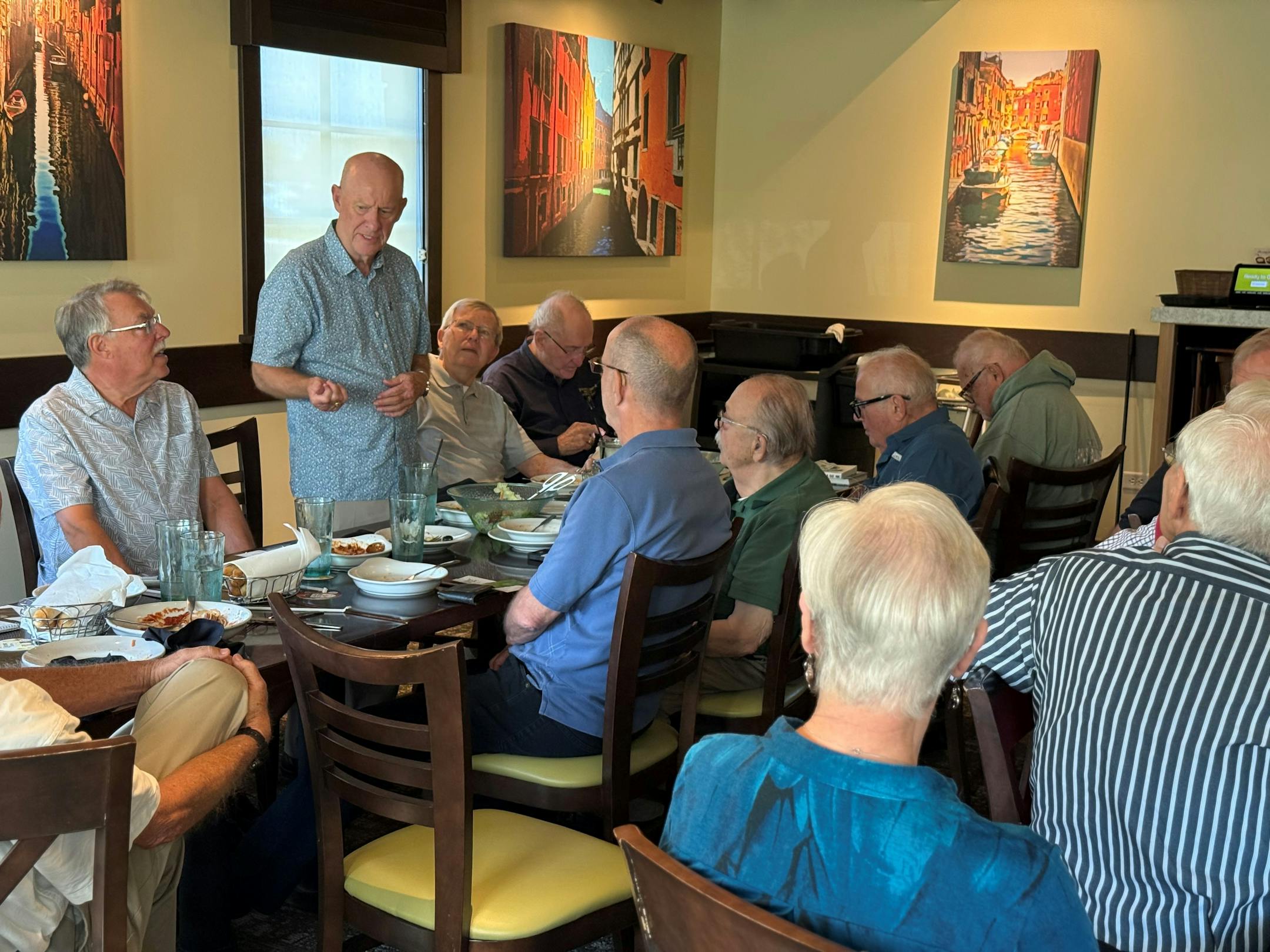
Ramstad: Remembering Minnesota’s tech titans in their heyday

Minnesotans celebrate supercomputer designer Seymour Cray’s 100th birthday, remembering the impact he and Control Data founder Bill Norris had on a nascent industry and growing state.

Columnist Icon
The Minnesota Star Tribune
October 4, 2025 at 12:49PM
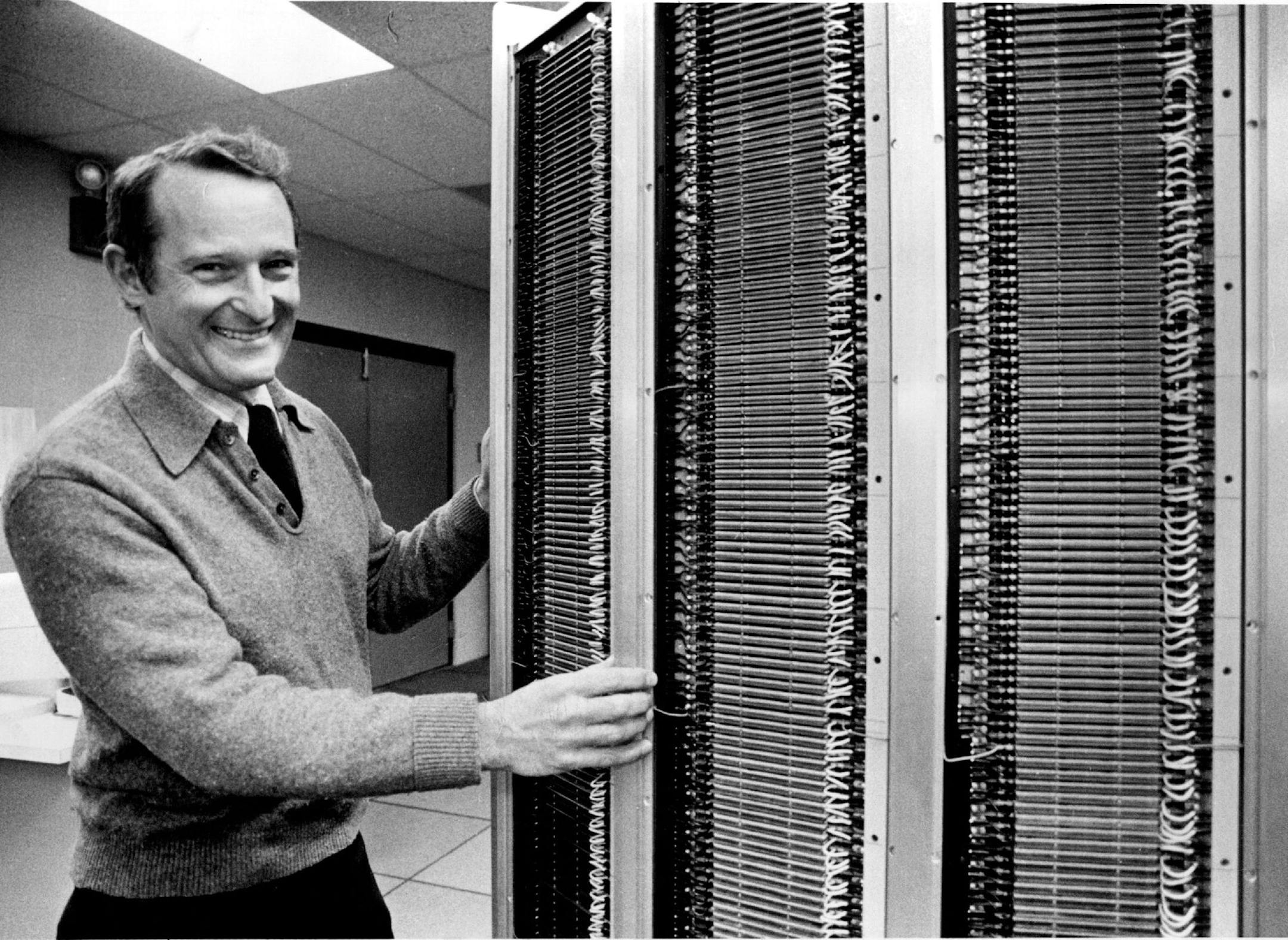
November 7, 1982 Seymour Cray, founder of Cray Research, and the company's first supercomputer, the Cray-1. Upgraded models of the Cray-1 now are being sold, and the more advanced Cray-2 has been announced. December 22, 1981 Marlin Levison, Minneapolis Star Tribune ORG XMIT: MIN2014070112453348
Seymour Cray, founder of Cray Research, and the company's first supercomputer, the Cray-1, in December 1981. (The Minnesota Star Tribune)

One of the most consequential departures in the history of Minnesota began with a two-page typed memo with the subject line, “Emotional Problems.”

Seymour Cray, the legendary designer of powerful computers at Control Data Corp., wrote the missive on Valentine’s Day 1972 to his boss, Bill Norris, the company’s founder and a legend of equal stature in the annals of American tech.

“Because of the recent developments in Control Data technical direction I believe it is important and urgent that I present as clearly as possible my emotional attitude toward the company and the implications it has on our continuing relationship,” Cray wrote.

The implication? Cray was itching to start his own firm.

This past week, about two dozen people who worked at Control Data met for their annual reunion lunch and paid special tribute to Cray, who would have turned 100 years old last Sunday. His company, Cray Research, built the world’s first supercomputer and, with its initial public offering in 1975, helped revive the stock market from its doldrums that decade.

“I had tremendous respect for the man and everything’s he done,” said Sam Slais, an engineer who troubleshot Cray’s designs.

Once, after Slais found one of Cray’s mistakes, a nervous manager told Slais he’d have to take it up with Cray directly. Before Slais finished describing the problem, Cray told him, “Say no more. You’re right.”
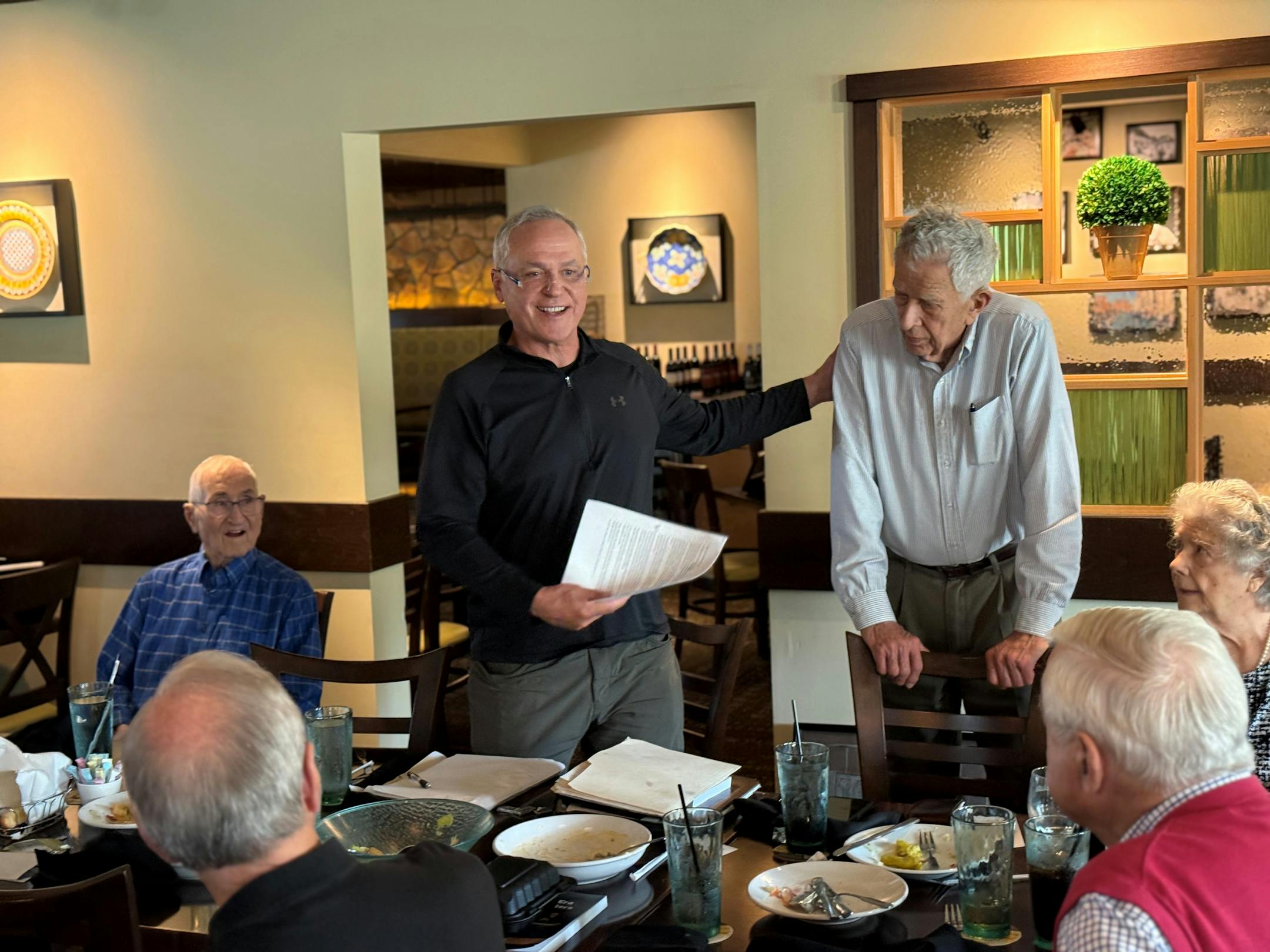
Roger Norris, son of Control Data founder Bill Norris, taps the shoulder of Dean Laurance, organizer of Control Data reunions, during a lunch in Bloomington on Sept. 29. The annual reunion of Control Data employees focused on the 100th birthday of Seymour Cray, a hardware designer at Control Data who founded Cray Research and designed the nation's first supercomputer. (Evan Ramstad)

Dean Laurance was a mechanical engineer at Control Data when he was asked 60 years ago to organize a Christmas lunch for colleagues. He’s been organizing the annual reunions ever since and, of course, the attendees these days are in their 80s and 90s.

As I listened to their stories of those heady days from the 1960s to the 1990s — when they and other Minnesotans played such a central role in the development of cutting-edge computers — I imagined that 50 or so years from now, the twentysomethings at Google, Tesla and OpenAI will gather in restaurants around San Jose and San Francisco recalling these days when they are swimming in deep pools of money and possibility.

The names Control Data and Cray have disappeared from the sides of buildings and from public consciousness in Minnesota, but they haven’t really gone away.

Just six weeks ago, the biggest transaction Minnesota has seen in four years involved one of the descendant companies of Control Data: Bloomington-based Dayforce, known for many years as Ceridian, was purchased for $12 billion by a private equity firm.

And as they left the reunion lunch, the Control Data veterans could look across the highway in Bloomington and see the Seagate Technology plant, originally built to make hard drives for Control Data computers. The parking lot at the plant is full and Seagate is flourishing these days, its stock at record highs amid perceptions that artificial intelligence will need astounding amounts of data storage.

For the guests at the Control Data reunion, Roger Norris, son of Bill Norris, brought copies of Cray’s memo to his father and another dated March 6, 1972, that crystallized Cray’s departure.

“It’s a description of his reasonings for starting his own firm,” Norris said. “A classic line is in there. He said, ‘The games that grown men play in corporate life I find revolting and I cannot participate.’”

Norris’s father had himself quit an earlier pioneer in computing, Sperry Univac, to form Control Data. Remarkably, Norris had Control Data invest $250,000 in Cray Research after Cray bolted to form it.

In 1992, Norris, then 80 years old, recalled that moment in a Minnesota Star Tribune interview:

“Seymour wanted to take a different course, and I thought he should,” Norris said. “Besides, we made a good return on that investment.”

Also joining the Control Data reunion this year was John Rollwagen, who joined Cray Research for about a year as finance vice president and became CEO as the company grew into one of the hottest stocks of the 1970s.

John Rollwagen, standing, told stories about Seymour Cray, a computer designer at Control Data and founder of Cray Research, the maker of the nation's first supercomputer. Rollwagen joined Cray Research as a finance executive and later became its CEO. Former Control Data workers gather about once a year to recall Minnesota's pioneering computer firm. (Evan Ramstad)

Rollwagen recounted his fateful first encounter with Cray, a story he also told in Don Hall’s terrific 2014 corporate biography “Generation of Wealth: The Rise of Control Data.” He also described Cray’s unrelenting focus on the future by describing a time when Cray burned a small boat he had built rather than sell it to someone else.

The boat was flawed, Rollwagen said, and Cray didn’t want a future owner to call him up seeking advice for fixing it.

“That was a very important lesson for people at Cray [Research],” Rollwagen said. “If you’re going to be a new person at Cray, there are a lot of people who have been successful, and they’ll give you some ideas and advice. And I would say, don’t do what they say. The one thing we know for sure is that whatever we did last time won’t work this time.”

about the writer

about the writer

Evan Ramstad

Columnist

Evan Ramstad is a Star Tribune business columnist.

See Moreicon

More from Business

See More
card image
Hormel headquarters in Austin, MN. ] GLEN STUBBE * gstubbe@startribune.com Friday September 11, 2015 Despite woes throughout the food industry, partly due to consumers turning away some from processed foods, Hormel has managed to continue prospering -- even though a good part of its business -- Spam, chili -- is about as processed as you can get. But the company's turkey and pork offerings are riding a hot protein trend. And over the past two years, it's made some of the biggest acquisitions in