

Ramstad: Even Trump’s favorite economist says the U.S. needs immigration

President Trump isn’t just trying to stop illegal immigration. He’s clamping down on all immigration, and people don’t like it.

Columnist Icon
The Minnesota Star Tribune
August 16, 2025 at 1:25PM
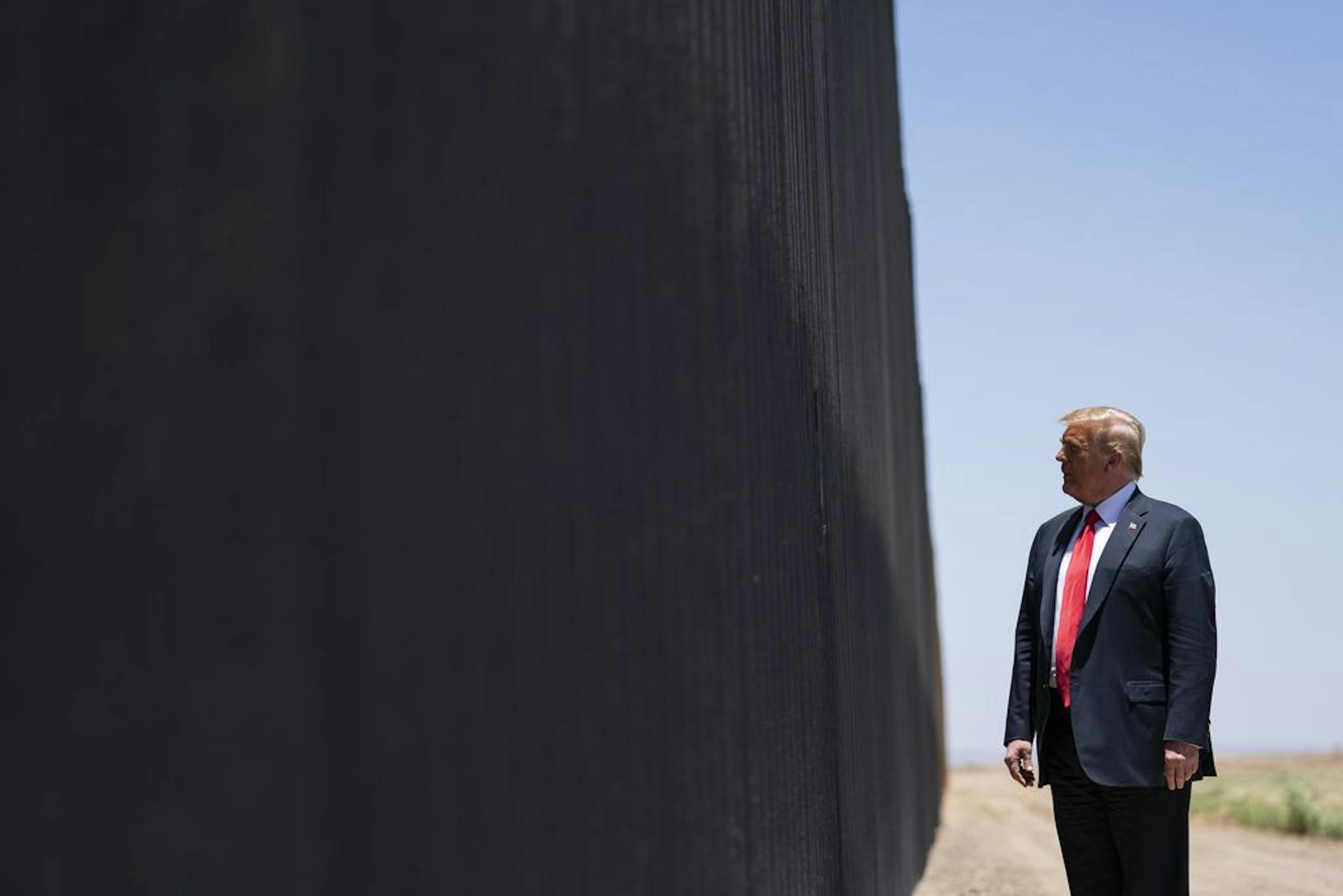
FILE - In this June 23, 2020, file photo, President Donald Trump tours a section of the border wall in San Luis, Ariz. A federal appeals court has ruled against the Trump administration in its transfer of military money to build sections of the U.S. border wall with Mexico.
In June 2020, President Donald Trump toured a section of the U.S.-Mexico border wall in San Luis, Ariz. In his second term, Trump is taking a harder line on all forms of immigration, legal and illegal. (The Associated Press)

The White House posted an article on its website Aug. 3 amplifying a CNN report that the country is “on track to see negative net migration for the first time in at least five decades.”

That’s jargon meaning fewer people will move into the U.S. this year than move out of it.

The White House cited this prospect — though we’re months away from seeing data that confirms it — as a sign President Donald Trump had fulfilled “his promise to end the migrant invasion and deport criminal illegal immigrants from our communities.”

But boasting the U.S. will lose people is a wink and nod at the real intent of Trump’s immigration strategy. He’s not just trying to stop the flow of undocumented, or illegal, immigrants. He wants immigration cut back more broadly.

Look at how the administration is trying to obtain information from colleges and universities about international students. Or notice the slow tightening of rules for H-1B visas, the ones that tech companies rely on to import talent.

And see how folks in Long Prairie, a small town in central Minnesota with two beef processing plants, stepped in to help 120 or so Haitian-born workers one of those businesses let go when the administration revoked their protected visa status. The Department of Homeland Security took the action in June, but then said Haitian immigrants could stay until September. Now, according to union officials and others in the community, everyone is wondering what’s next.

“This administration has made it very clear that it wants to crack down on individuals who are here unlawfully and who have criminal backgrounds,” said Loan Huynh, who chairs the immigration practice at Fredrikson & Byron, a Minneapolis law firm. “But what we’re seeing is really a tightening up on all immigration.”

It’s not just growth-first pundits like me who dislike this.

A Gallup Poll taken last month found only 30% of Americans want immigration decreased, down from 55% last year. The same poll found 79% of Americans hold a positive view of immigration.

Pew Research a month earlier found most Americans held mixed to negative views about Trump administration tactics to slow immigration.

Even one of Trump’s favorite economists, Stephen Moore, is wringing his hands over the topic. Moore is the former Heritage Foundation expert Trump tried in his first term to appoint to the Federal Reserve Board, and he showed up at the White House on Aug. 7 with some dubious charts after the president fired the head of the Bureau of Labor Statistics.

“Legal immigration might be more vital to our economy today than ever before,” Moore wrote last month in a Washington Post op-ed.

He and co-author Richard Vedder added, “Because of our inverted population pyramid, immigrants will contribute virtually all of the net increase in the American workforce over the next two decades. Without continued immigration, the U.S. workforce would start shrinking.”

From July 2023 through June 2024, the latest annual data available, about 2.8 million more people came to the U.S. than left it. That was a record level of positive net migration, which in part reflected a change in methods used to collect the data.

The U.S. added 2 million people to the labor force in that same period, which means immigrants already are responsible for the net increase in workers on the national level.

Here in Minnesota, immigrants have been responsible for the state’s population and workforce growth for more than a decade. The Department of Employment and Economic Development reported earlier this year the state’s foreign-born population climbed by 2023 to about 9% of the overall population and 11% of the state’s workforce.

Those are levels unseen since the peak of European migration to the U.S. a century ago.

That trend continued in the July 2023-June 2024 period, when Minnesota’s population added about 40,000 people — but added fewer than 11,000 if you exclude Hispanic, Asian and mixed-race people. We’ll get a first glimpse into data for the year ending June 2025 next month.

The state’s food processing companies employ foreign-born workers at a higher level than any other industry, but Brookings Institution research shows Minnesota’s health care and senior home providers will need the most workers in coming years.

This past Wednesday, Greater MSP and the Minneapolis and St. Paul chambers of commerce staged an event designed to spur business and political leaders to focus more on the region’s growth, which data shows is lagging relative to 11 other major metropolitan areas across the country.

One of the most interesting pieces of data cited at the event was that the Twin Cities leads all 12 metro regions in the percentage of foreign-born people who actually work.

“People come here to work,” said Julia Silvis of Greater MSP. “Why would you want to drive people away?”

Trump and his appointees talk endlessly about an “invasion” of illegal immigrants. They are distracting Americans from the risks the administration is taking by trying to limit all immigration.

about the writer

about the writer

Evan Ramstad

Columnist

Evan Ramstad is a Star Tribune business columnist.

See Moreicon

More from Economy

See More
card image
Mary Altaffer/The Associated Press

There are seven answers in the form of tech companies like Nvidia, Apple and Microsoft. But their outsized impact could spell disaster if the AI bubble bursts.