Pardoned auto shop owner freed after rare government reversal

Fong Khang spent seven days in detention despite being a legal resident and receiving clemency for past crimes.

The Minnesota Star Tribune
February 1, 2026 at 11:00AM
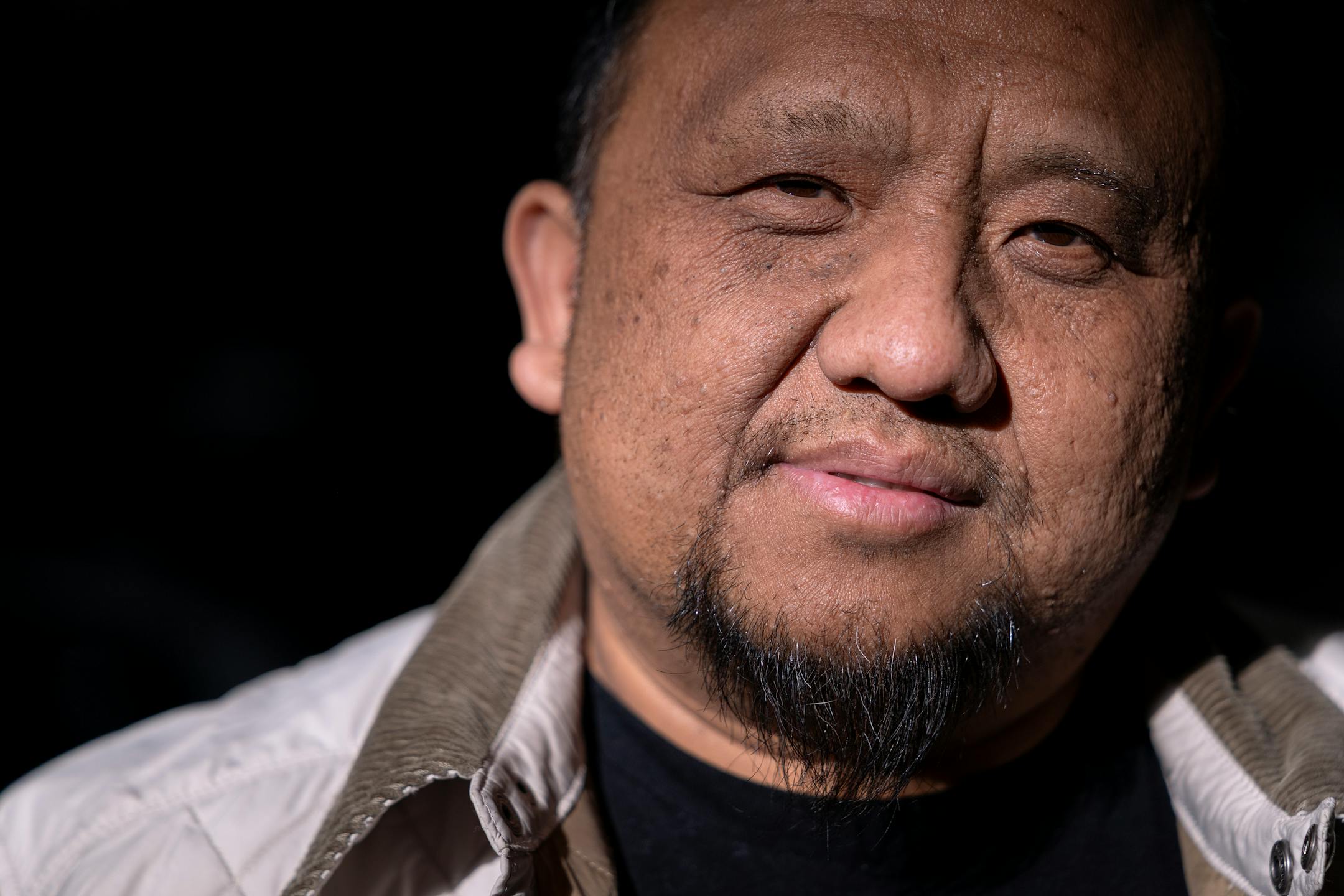
Fong Kang/aka John Wayne Pha photographed at his auto shop JWP Automotive in St. Paul on Jan. 30. Fong Kang/aka John Wayne Pha was detained by ICE one day after state pardoned him. (Carlos Gonzalez/The Minnesota Star Tribune)

A day after Fong Khang received a pardon from the state of Minnesota, his mug shot landed on a federal website touting “More Worst of Worst” arrests, packaged between photos of two convicted murderers and two sex offenders.

Khang was freed Jan. 28, after seven days in detention, when federal officials deviated from their usual practice and agreed to support his wrongful detention case.

Still, Khang is haunted by that grim portrayal, which he and his supporters don’t believe fits a man convicted of four nonviolent felonies, the most recent of which took place more than 15 years ago.

“It was just horrible,” said Khang, better known in the Twin Cities by his adopted name, John Wayne Pha. “When some of my friends saw that, they were like: ‘Who is this guy? Is this true?’”

Khang is the first to admit he was no angel when he was young. But he doesn’t understand why the government picked on him, a man described by local prosecutors as a model of rehabilitation who became a successful businessman with a client list that includes CEOs and NBA stars. A refugee from Laos, he became a legal permanent resident in 1983

“I’m not an illegal,” said Khang, who came to the U.S. with his mother and two older siblings at the age of one. “I’m an American. I feel like I really belong here.”

As an immigrant with a criminal record, Khang has been at risk for deportation. In 2008, the federal government ordered that he be removed from the country because of his criminal past. That order was unfulfilled due to Laos’ refusal to accept deportees at the time.

Khang has checked in at least once a year with immigration authorities since that order was issued, most recently in December.

Still, he has been looking over his shoulder as President Donald Trump has attempted to make good on his promise to carry out the “largest deportation” in American history.

That’s why Khang went to the Minnesota Board of Pardons last year seeking clemency, which is difficult to obtain. His successful petition drew support from four law enforcement officials, including Hennepin County Attorney Mary Moriarty, who called him a “tremendous example for turning one’s life around.”

Khang, who now owns two auto shops in the Twin Cities area, drew his first criminal citation for speeding at 17. He lost his license when he couldn’t pay the $95 ticket, he said, but he kept driving anyway, using a friend’s name whenever he got pulled over by police. That resulted in three convictions for giving false information to police.

His real problems began in his 20s, when he got hooked on drugs and began stealing to support himself. His first felony conviction occurred in 2006, when he was caught stealing a computer in Fridley. He racked up three more theft convictions in 2007 and his fourth and final felony conviction — for receiving stolen property — in 2010.

Nobody was physically injured or threatened with violence in any of the crimes, according to a review of police reports. Khang received probation for each of his offenses and spent a total of 568 days in jail or the workhouse.

Khang changed course when he got out of jail after his last conviction and discovered his mother was dying of cancer. He was hired at a local printing press and invited his mother to live with him, caring for her until her death six months later. A month after that, he married his high school sweetheart and, soon after, changed occupations.

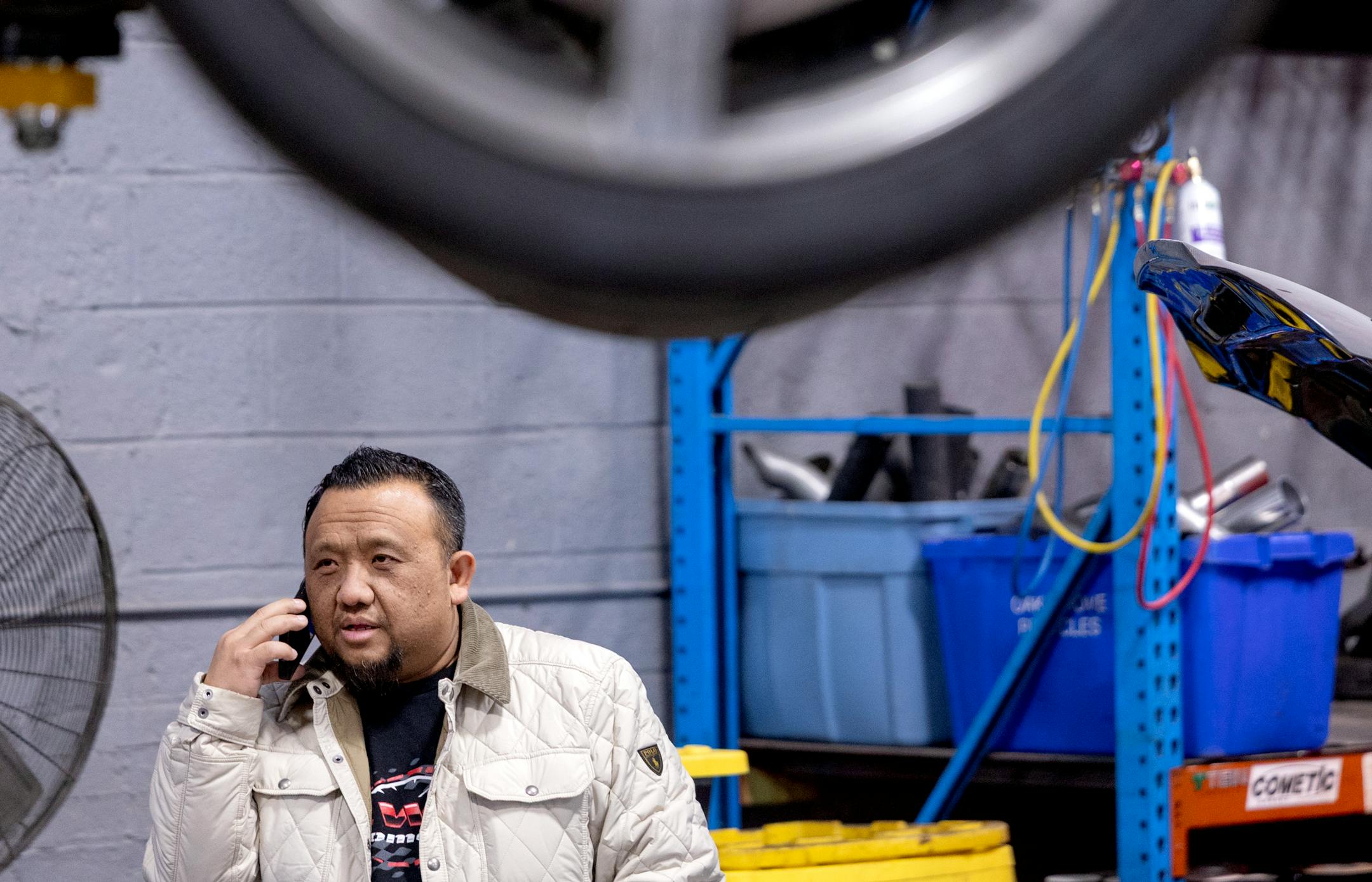
Fong Kang, aka John Wayne Pha, takes a call at his auto shop JWP Automotive in St. Paul on Jan. 30. (Carlos Gonzalez/The Minnesota Star Tribune)

“It was hard to get a job because of my track record, so I got a job at a recycling place, where I drove a forklift for a year,” Khang recalled. “Then I got a job as a mechanic.”

Khang, who became obsessed with cars while growing up in southern California, started his own car repair business in 2016, after the fourth of his four daughters was born. He said it was part inspiration, part desperation.

“My wife and I realized we couldn’t both have jobs anymore, not when someone had to work the night shift and someone else had to work the day shift,” he said.

Khang took their life savings of $30,000 and put it all into Budget Auto Repair in New Brighton. Within three months, he was earning as much as he and his wife had made together. He began hiring employees and the business continued to grow. After four years, he opened a second shop, JWP Automotive, in St. Paul.

The new shop allowed Khang to chase a new market, automotive enthusiasts willing to spend up as much as $100,000 to fix up classic American sports cars. The vehicles sometimes spend as long as a year on the shop floor, where they are typically upgraded with custom-built engines that produce three to five times the power of the original engine. It’s not unusual for a single car to require 200 to 300 hours of labor.

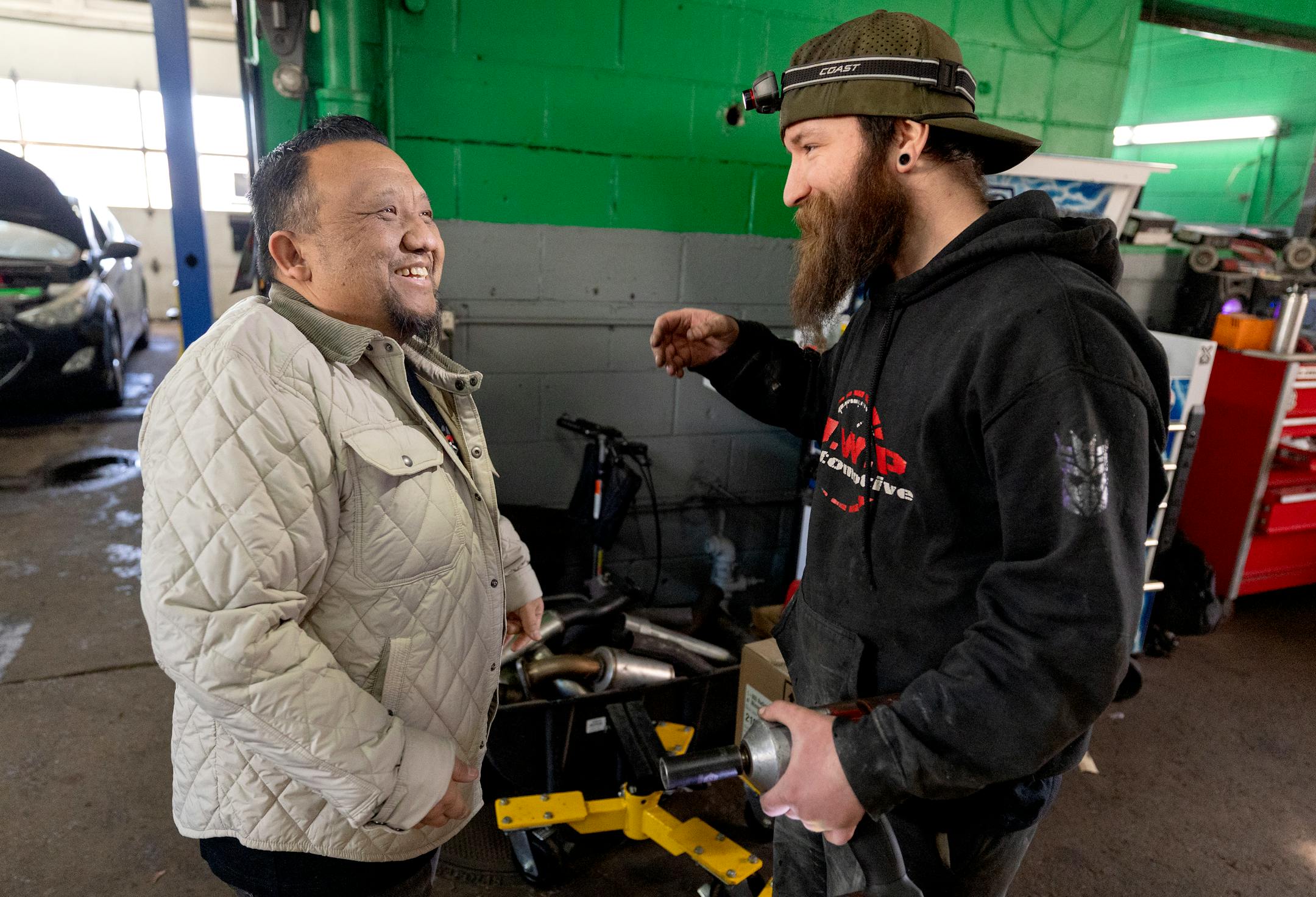
Fong Kang, aka John Wayne Pha, is greeted by technician Morgan Cosgrove at Budget Auto Repair in New Brighton on Jan. 30. (Carlos Gonzalez/The Minnesota Star Tribune)

Khang said he wonders if some of his customers will hear of his recent legal troubles and stay away.

He’s also concerned for his fellow Hmong immigrants, especially those from Laos who came here to escape reprisals for helping Americans during the Vietnam War.

“We didn’t bleed for you here, we bled for you there,” said Khang, whose family changed its name from Pha because his father was a well-known commander who helped American troops during the war.

Khang said there were no warning signs that immigration authorities were looking for him before he was detained on Jan. 21. If they wanted to take him in, he said, why didn’t they do it at his last check-in visit on Dec. 23? Instead, Khang said, two immigration agents stopped him on the way to work, forcing him to abandon his car on the side of the highway.

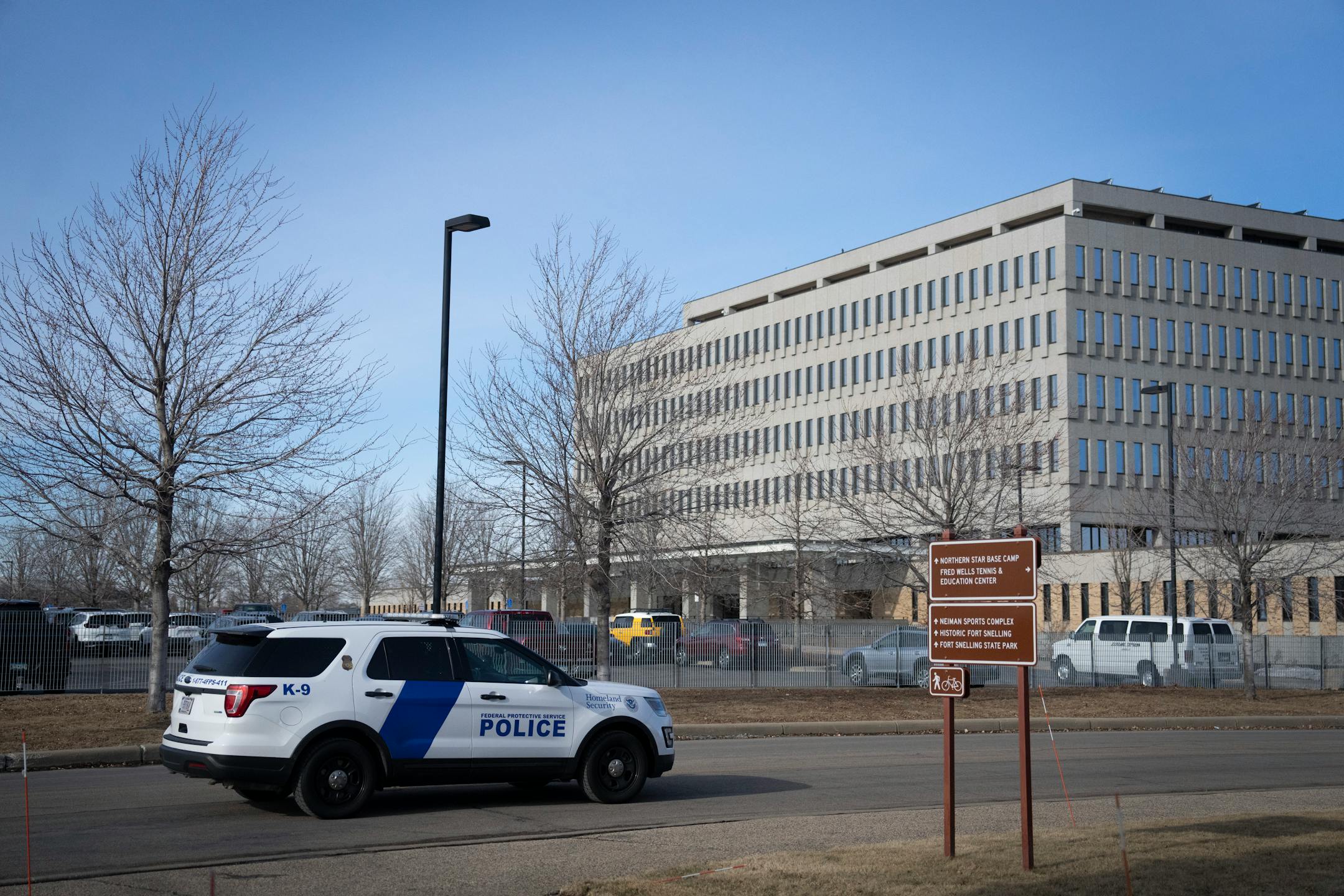
He was initially detained at the Whipple Building near Fort Snelling, where a federal official tried to speak with him in Spanish.

“I said, ‘I’m sorry, I don’t speak Spanish,” Khang recalled. “And she looked at the ICE officer and said, ‘Make sure he gets sent to his country.’ And I was like, ‘Whoa!’ ”

Khang said he spent four hours in a garage-sized holding cell with 68 other male inmates, all of whom shared one semi-private toilet. Then he was put on a plane to Texas despite a judicial order barring his removal. Such violations have been common.

“I just felt like we were cattle,” Khang said.

A Homeland Security officer drives past the Bishop Henry Whipple Federal Building in Minneapolis on Jan. 29, 2025. (Renée Jones Schneider/The Minnesota Star Tribune)

Once in Texas he was moved to a cramped detention center. There he shared a makeshift cell with 100 other men for two days. Altogether, he said, there were 10 cells, all clustered under a giant tent.

There was one phone for the entire group of 1,000 detainees, who were permitted to talk for no more than five minutes per call. It could take four days for that phone to make the rounds, Khang said.

“I never saw the phone while I was there,” Khang said. “My wife was really scared.”

Khang was returned to Minnesota, where he sat in a jail cell for another five days until the government set him free.

He was released after federal officials filed a motion seeking his release. Of the 200 wrongful detention lawsuits reviewed by the Star Tribune, this was the only case in which the government sought the release of a detainee.

Officials from the Department of Homeland Security did not respond to questions about the case.

Khang’s lawyer, Mai Moua, argued in court filings that the government never had a right to detain him because his pardon extinguished any grounds for deportation.

Khang said he hopes federal officials make it easier for people with active immigration cases to turn themselves in instead of putting them through the ordeal of a public arrest. In some cases, records show, federal agents have broken into homes and smashed car windows in order to take an immigrant into custody.

“You don’t have to grab us off the street,” Khang said. “You can kick in our door if we don’t comply.”

about the writer

about the writer

Jeffrey Meitrodt

Reporter

Jeffrey Meitrodt is an investigative reporter for the Star Tribune who specializes in stories involving the collision of business and government regulation. 

See Moreicon

More from News & Politics

See More
card image
Jeff Wheeler/The Minnesota Star Tribune

The moment will test Klobuchar’s record of bipartisan work in Washington and relationships with Minnesota progressives, who want a fighter against the Trump administration.

card image
card image