
Brown: One takeaway from Mamdani’s win? Affordability is a winning message.

Two generations of Americans have been disappointed by politics. They will rise.

Columnist Icon
The Minnesota Star Tribune
November 10, 2025 at 10:59AM
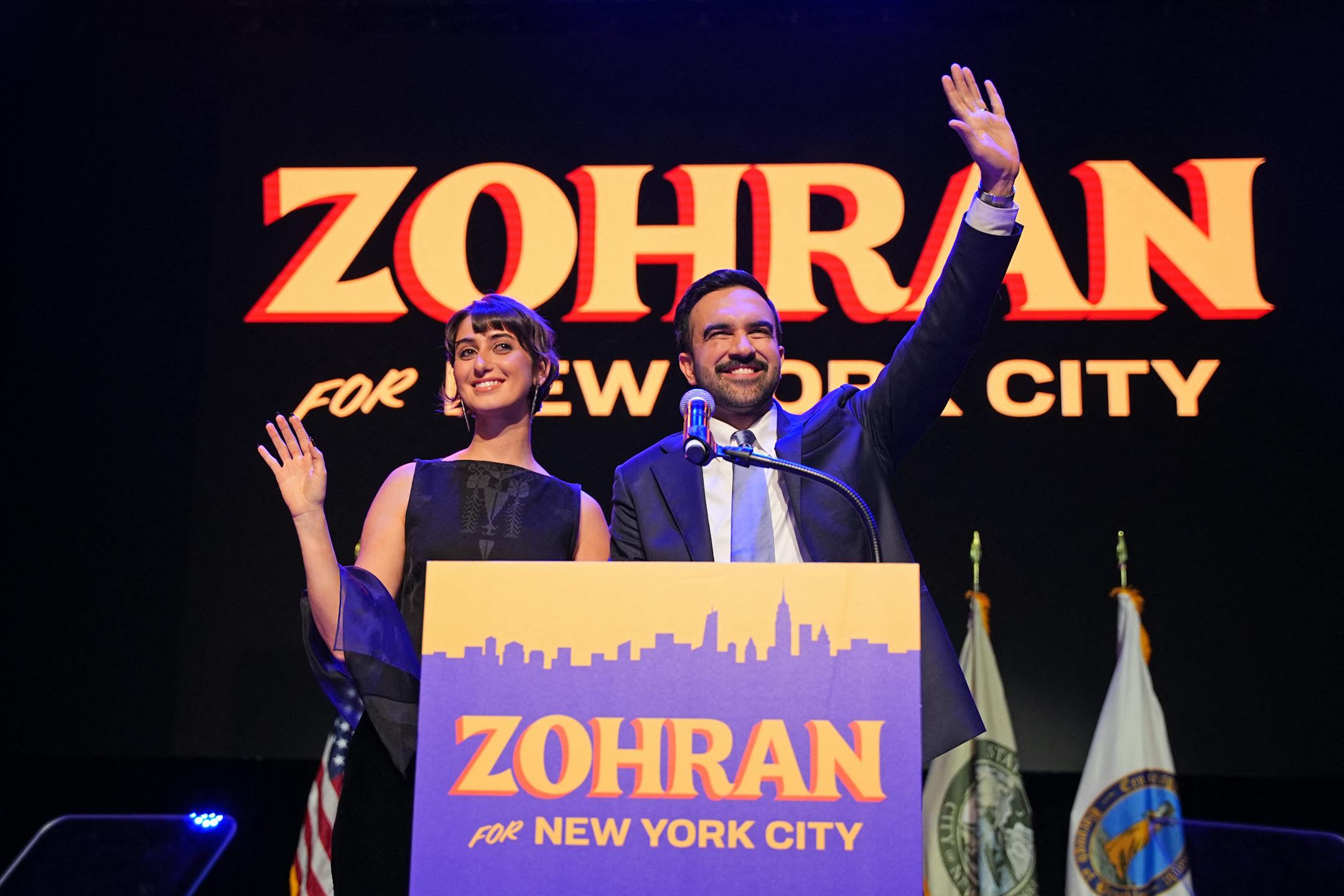
Zohran Mamdani celebrates alongside his wife, Rama Duwaji, during an election night event: Here in Minnesota, it might seem change is coming more slowly. (Angelina Katsanis/Tribune News Service)

Opinion editor’s note: Strib Voices publishes a mix of commentary online and in print each day. To contribute, click here.

•••

Late on election night, my friend Karl texted me from New York: “There are fireworks in our neighborhood right now.”

He lives in a residential part of Queens, the kind of place where people walk their kids to school before taking the train to work. And yet, even though people had to get up the next day, many were celebrating the seismic election of democratic socialist Zohran Mamdani, 35, as the next mayor of New York City.

I looked out my window as I turned off the lights. On a cloudy night our northern Minnesota home plunges into total darkness. Comparing the scene to the excitement (and, for some, unease) settling upon New York, I felt every inch of the 1,351 miles that separated us.

But by the time I woke up the next morning, it occurred to me that what happened was not so simple as voters shifting to the opposition in an off-year election. The through line is not left or right, Democratic or Republican. We are witnessing the awkward, chaotic rise of a new generation of American politics.

How could that be? After all, Minnesota elections received much less national attention and weren’t nearly as interesting. In my region, nearby school bond referendums in Hibbing and Deer River failed by large margins, but statewide most referendums passed. The Duluth City Council tilted slightly to the left.

In St. Paul, Mayor-elect Kaohly Her defeated incumbent Melvin Carter. This was a surprise, but more indicative of voters’ quiet desire for change than for a revolution.

Meanwhile, in Minneapolis, a high-profile mayor’s race turned into a defective Jucy Lucy. No cheese at all. Incumbent Jacob Frey was re-elected by 6 points after achieving a majority in the second round of ranked-choice voting. He led by 10 points on first-choice ballots.

Nationally, Democrats exceeded expectations in winning the Virginia and New Jersey governor races. They easily passed a redistricting initiative in California designed to blunt GOP redistricting schemes in Texas and other red states.

But how do we square any of this with last year’s results, the mandate for President Donald Trump and a Republican Congress? These outcomes are more related than conventional wisdom would suggest.

I spent 21 years in a community and technical college classroom and have three young adult children, so I’ve learned a lot from young people. Current economic dynamics block this new generation from buying a home, finding an affordable apartment or escaping debt.

Young adults seek rewarding careers that are being destroyed by machines, AI and unprecedented greed. We handed them devices that beam addictions and neuroses all hours of the day. Young people might appear apathetic, but they’re really just disappointed. They’re smart enough to intrinsically sense how inauthentic our politics has become.

In every election, someone like me breathlessly declares that young people have the power to change everything if they only voted in greater numbers. Usually it doesn’t happen, and sometimes even a robust youth vote fails to change much. But we keep uttering the platitude like some kind of dusty old prayer.

An aging America has disappointed two consecutive generations of young people, sufficient that many of them, like me, now see gray hair and problem areas in the mirror. But the dam can no longer hold. Change always comes, never on time or by invitation. And it has arrived.

A Washington Post exit-poll analysis of Mamdani’s win in New York showed that two-thirds of New Yorkers under 45 voted for Mamdani, while former Gov. Andrew Cuomo won voters 45 and older by 10 points. New York might be a deep blue city, but Trump did better there last year than any Republican in a generation. Why the sudden shift? It has less to do with Mamdani’s socialist beliefs and more to do with his extremely disciplined message about affordability and quality of life.

Now, here in Minnesota, it might seem like change is coming a little more slowly. After all, Omar Fateh, a democratic socialist who some compared to Mamdani, fell short of defeating Frey. Minneapolis demographics run younger than New York’s, so it wasn’t just about age. Fateh never achieved the same message discipline or popular appeal as Mamdani. The opposition to Frey was divided. Facing a mushy choice, grumpy voters reverted to the status quo.

From these seemingly mixed results comes a truer understanding of what’s happening in America, and here in Minnesota, too. Governments, companies and ideological movements have suppressed human potential in the past, but never forever.

Die-hard partisans might always vote “red” or “blue,” but there is a large swath of our population only wearing ideologies like seasonal clothing. They will gravitate toward any authentic opportunity to create positive change in their lives. Trump. Mamdani. Someone whose name we don’t yet know.

These populist figures might fail, and often do, but the root of reactionary populism isn’t going anywhere until we deal with it.

New York City is not Minnesota, but the cost-of-living crisis is everywhere. New York proved fertile ground for a dramatic result last Tuesday, but such surprises are possible anywhere politicians fail to make opportunity for the next generation.

about the writer

about the writer

Aaron Brown

Editorial Columnist

Aaron Brown is a columnist for the Minnesota Star Tribune Editorial Board. He’s based on the Iron Range but focuses on the affairs of the entire state.

See Moreicon