
Rash: The clock is ticking on the credibility of ‘60 Minutes’ — and CBS

Administration sources’ silence cannot be used as a “kill switch” on a story.

Columnist Icon
The Minnesota Star Tribune
December 23, 2025 at 11:00AM
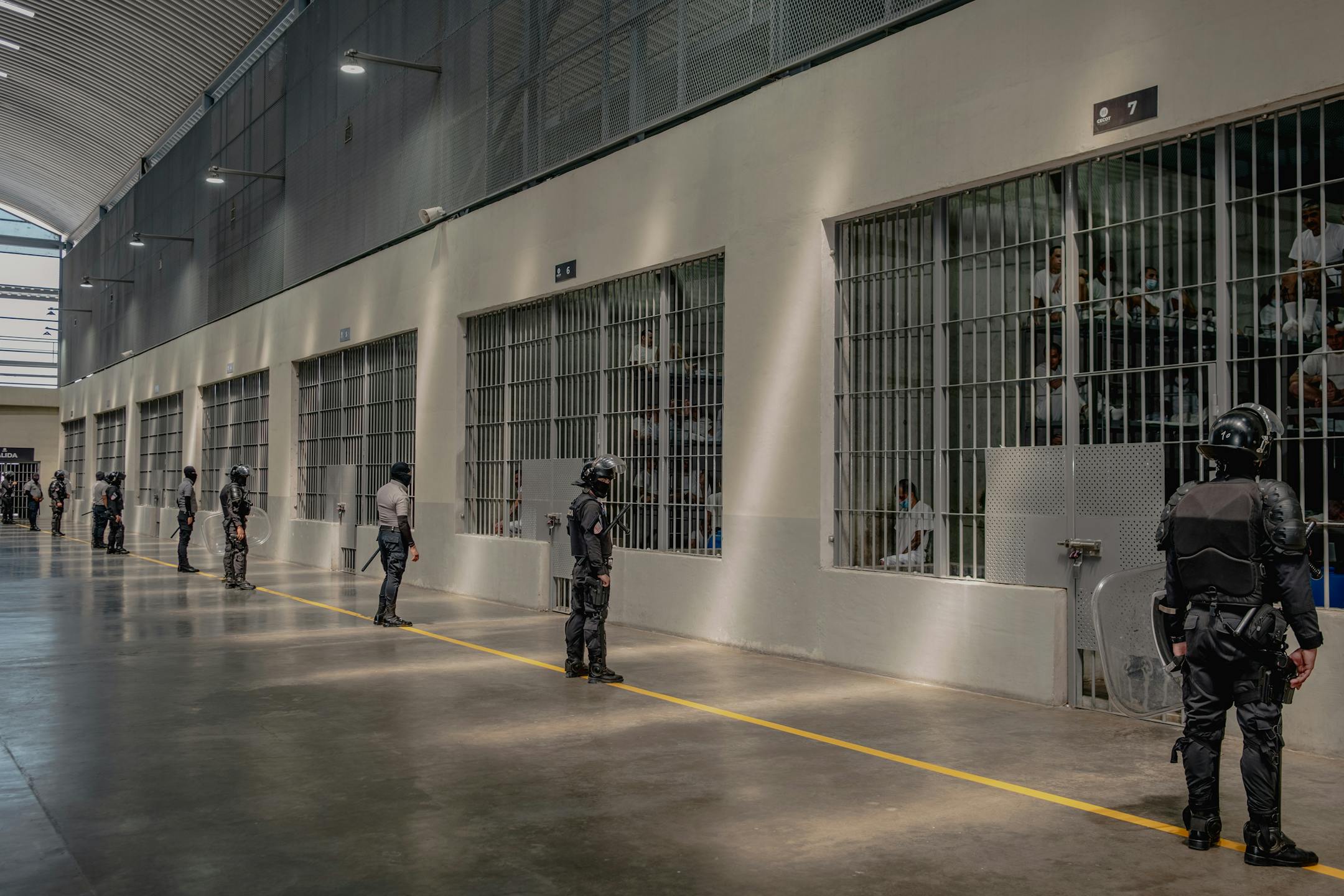
Prison guards at the Terrorism Confinement Center, or CECOT, in Tecoluca, El Salvador, on March 11. CBS held back from airing a "60 Minutes" segment on the Trump administration’s deportation of Venezuelan men to CECOT. (Fred Ramos/The New York Times)

Opinion editor’s note: Strib Voices publishes a mix of commentary online and in print each day. To contribute, click here.

•••

For 57 years, the sound of the “60 Minutes” stopwatch has signified more than just the end of an NFL game. It’s stood for broadcast journalism excellence, earning CBS considerable cachet — and cash — by featuring the first and still best network newsmagazine.

But all of that is at risk — and more profoundly, yet another one of the country’s already precarious democratic norms is imperiled — by the network’s flinching from airing a report on the Trump administration’s deportation of Venezuelan men to a notorious CECOT prison in El Salvador.

In an extraordinary exposure of what are usually internal machinations, “60 Minutes” correspondent Sharyn Alfonsi’s internal note to colleagues raises the kind of questions that the show often examines in other institutions. The report, wrote Alfonsi, was screened five times and cleared by network attorneys and its Standards and Practices unit. “It is factually correct,” continued Alfonsi, who added: “In my view, pulling it now, after every rigorous internal check has been met, is not an editorial decision, it is a political one.”

And politics are indeed at the center of CBS parent Paramount Skydance, a corporate conglomeration made possible by the approval of the Trump administration after Paramount paid $16 million to settle a lawsuit by President Donald Trump against “60 Minutes.”

But that hasn’t placated the president, who as recently as Friday railed at a rally in North Carolina that “I love the new owners of CBS” but that “60 Minutes” just “keeps hitting me, it’s crazy.”

The face of that new ownership is David Ellison (son of billionaire Trump backer Larry Ellison), whose company is engaged in a hostile bid for Warner Bros. Discovery, which among many media entities owns CNN, another frequent Trump target. As part of Paramount’s public pressure campaign to get Warner Bros. Discovery shareholders to scotch a deal with Netflix, they’ve argued that Paramount Skydance would have an edge in gaining government merger approval from the Trump administration.

Billionaires in the executive suite or Oval Office aren’t who CBS risks rendering voiceless, however. “These men risked their lives to speak with us,” wrote Alfonsi about the former detainees in her report. “We have a moral and professional obligation to the sources who entrusted us with their stories. Abandoning them now is a betrayal of the most basic tenet of journalism: giving voice to the voiceless.”

Alfonsi and “60 Minutes” were willing to give voice to the administration, too, requesting responses or interviews from the White House, the Department of Homeland Security and the State Department. None would respond. But Bari Weiss, the newly installed editor in chief of CBS News, held the story despite all the prior approvals, reportedly insisting that they get a senior source on the record.

That gambit was effectively refuted by Alfonsi, however, who rightly wrote: “Government silence is a statement, not a VETO. Their refusal to be interviewed is a tactical maneuver designed to kill the story. If the administration’s refusal to participate becomes a valid reason to spike a story, we have effectively handed them a ‘kill switch’ for any reporting they find inconvenient. If the standard for airing a story becomes ‘the government must agree to be interviewed,’ then the government effectively gains control over the ’60 Minutes’ broadcast. We go from being an investigative powerhouse to a stenographer for the state.”

That belief is shared by Jane Kirtley, director of the Silha Center for the Study of Media Ethics and Law. Speaking from London, Kirtley concurred that “it’s absolutely appropriate, and I would say mandatory, for editors to direct reporters that if they’re going to do a critical story about someone that they give them a chance to respond.”

But, continued Kirtley, “it is also not the case that the failure to get a response means that you necessarily have to spike the story. Because if that really were the case then that would mean a source or potential source would have the ability to censor,” and you can’t, concluded Kirtley, “give censorship authority to a source.”

In a statement, Weiss said she “looks forward to airing this important piece when it’s ready,” and in another internal but widely reported email, seemed to refine her requests for more context and a renewed push for on-camera interviews (even though they clearly were requested). Perhaps that will happen, and perhaps — especially after the story about the news story seemed to spin out of CBS’ control — the segment will eventually air. But before Alfonsi’s and Weiss’ counter-epistles become just another episode in these sharply partisan times, a timely reminder about the existential necessity of a rigorous, vigorous press to our democracy is worth considering.

“The role of the independent media,” said Kirtley, “is to hold government accountable, and it doesn’t matter to me whether it’s a Republican or Democratic administration.”

Kirtley, who worked in law and media in Washington, D.C., for nearly 18 years, said, “I know all about the delicate dance between sources and government.” Without an independent eye on government, she said, “then ultimately the public is who suffers from this, because they are left only with a version of events the government chooses to provide. And you know from your travels abroad, and I know from my travels abroad, that in countries where the government captures the narrative the public is the loser because they don’t know what the reality is.”

For her part, Alfonsi finished her internal missive by referring to a previous time the “60 Minutes” stopwatch seemed to stop, when it spiked an exposé of tobacco companies. “By pulling this story to shield an administration, we are repeating that history, but for political optics rather than legal ones. We have been promoting this story on social media for days. Our viewers were expecting it. When it fails to air without a credible explanation, the public will correctly identify this as corporate censorship. We are trading 50 years of ‘Gold Standard’ reputation for a single week of political quiet. I care too much about this broadcast to watch it be dismantled without a fight.”

That ethos should guide not just how Alfonsi feels about a newsmagazine but how we all feel about the nation.

about the writer

about the writer

John Rash

Editorial Columnist

John Rash is a columnist.

See Moreicon

More from Columnists

See More
Attendees of the Wrap gathered at the Heritage Center in Minneapolis on Jan. 3.
card image