

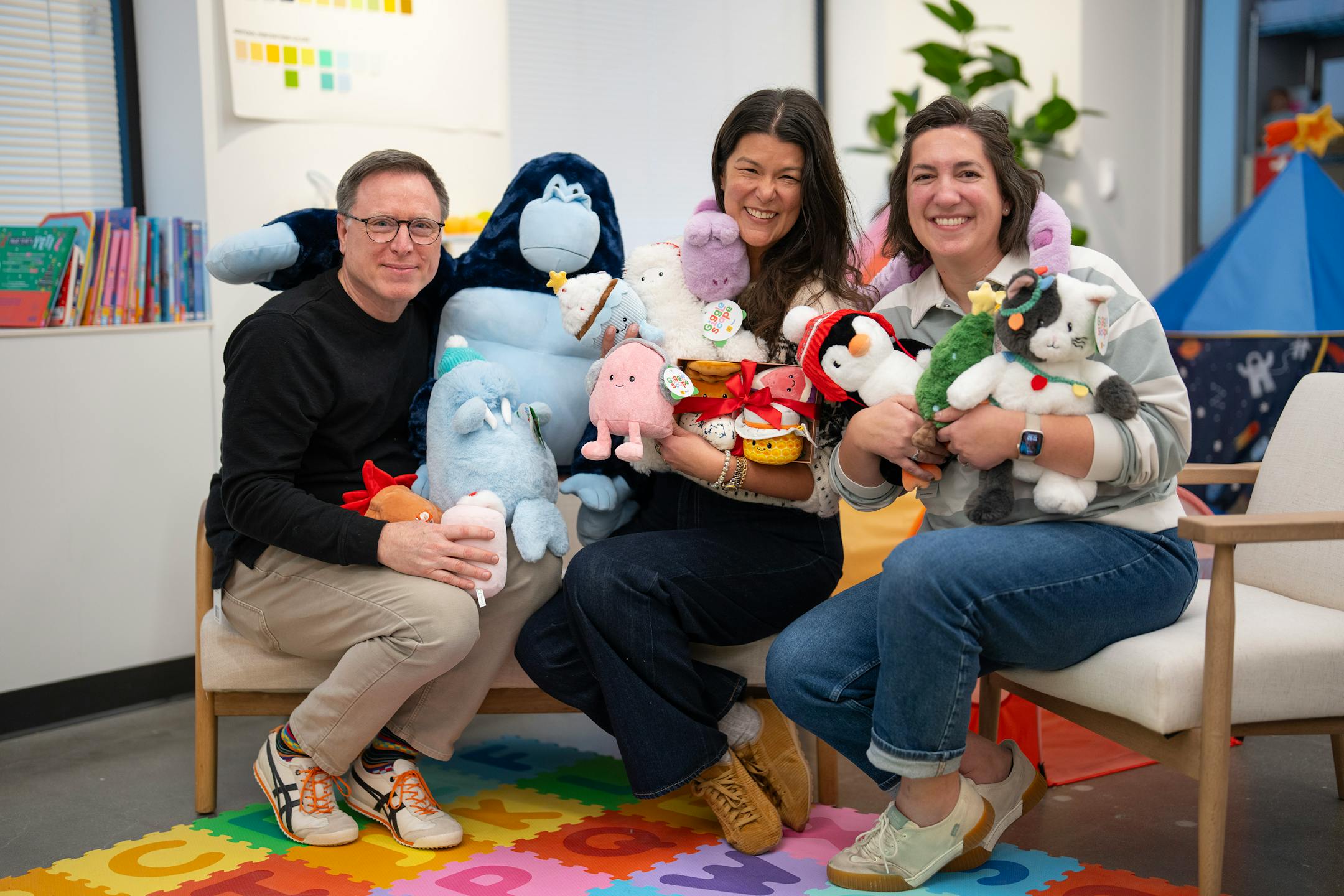
Target execs typically aren’t comfortable picking favorites — they love everything in the store, naturally — but SVP Jenny Breeden, who oversees owned brand product design and packaging, reached for the plush toy charcuterie box set — complete with a smiling fig and a winking hunk of blue cheese. “Not for the kids,” Breeden declared. “This is for a hostess gift. A party. This is going to be mine. It’s my favorite.” It sells for $10.
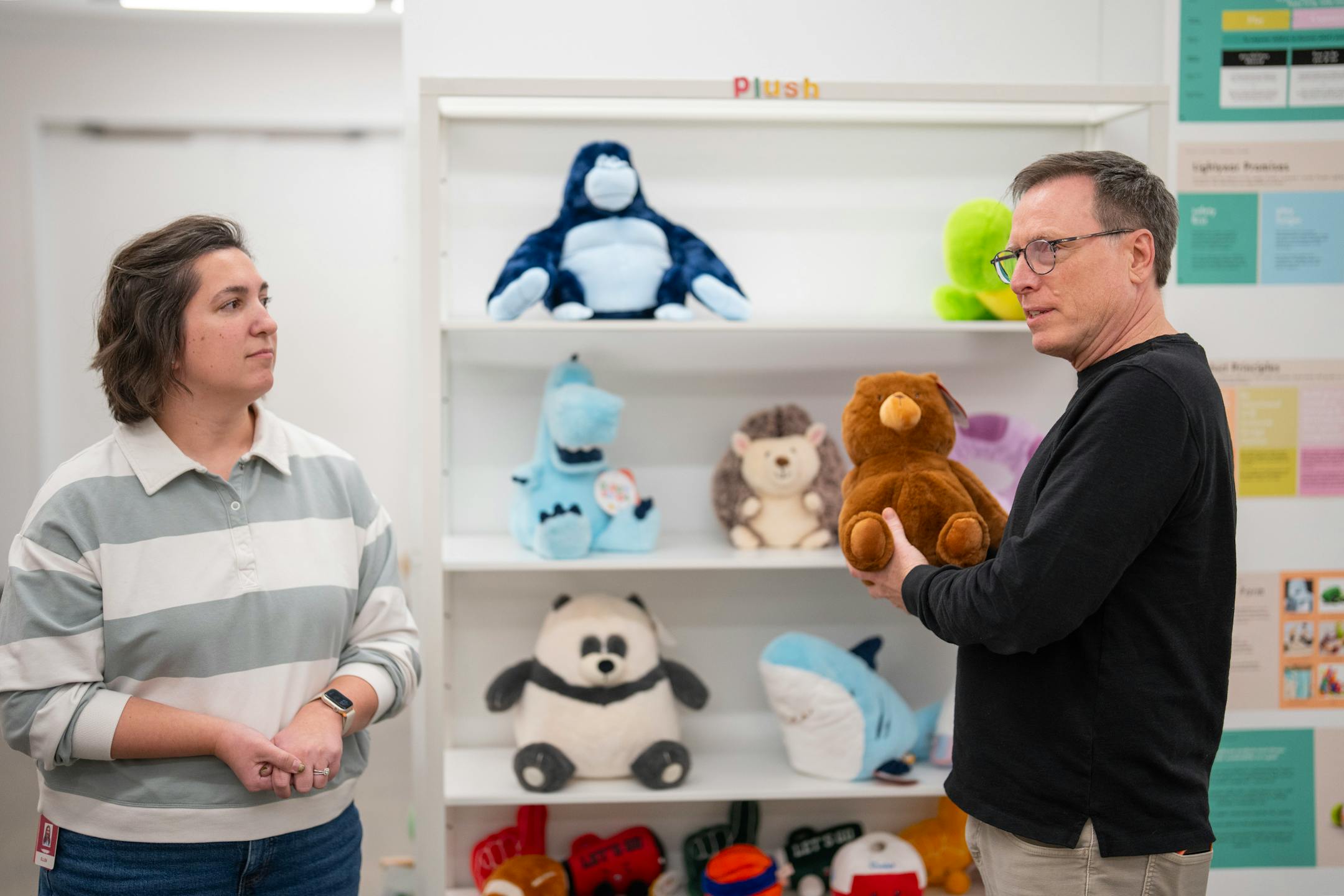
Breeden showed Strib retail reporter Carson Hartzog and me around the Target HQ toy design workshop of Gigglescape, a house brand the retailer launched in 2024. It was one week before Christmas, but no elves scurried about — just product designers Ellen Rizzardi and Jeff Carter, whose heads are already in Halloween and Christmas 2026. Still, they were happy to offer some insights into what’s selling this holiday season.
They started where Gigglescape started: with plush toys. “We were talking to parents, asking what’s important when you buy plush, and we let their kids roam the room,” Rizzardi said, gesturing around the design workshop (every house brand has one at the Target’s Minneapolis headquarters, with its current product collection arranged on display shelves and a color guide and materials for what’s coming next). Her design partner, Carter, took the cue, shoving his hand inside the mouth of a stuffed shark. He then held it up, as the boy had done during pre-launch testing. “The insight there is we need more interactivity … to surprise and delight kids.”
Gigglescape’s plush Yeti is a top seller this holiday, Breeden said. And that’s no surprise, considering a larger-than-life likeness dubbed the “Get Ready Yeti” has been a star of Target’s holiday marketing. Along the same lines, there’s a 100-piece Gigglescape puzzle featuring a photo of Rudolph’s Mix, a seasonal snack mix you could eat while piecing the puzzle together. Expect to see more of this sort of cross-department promotion, Breeden said. “Because of the breadth of our owned-brand products, we can draw themes across categories and tell bigger stories.”
House brands continue to grow in importance for the retailer, which is struggling to regain its footing. Incoming CEO Michael Fiddelke has repeatedly emphasized his intent to lean into design creativity. Target currently has 40 of its own in-house brands, representing $30 billion in annual sales. Children’s clothing line Cat & Jack has surpassed the $3 billion mark, so extensions for kids are on Target’s hot list. Gigglescape is expanding into imaginative play at budget friendly price points — $10 for a doll; $25 for the entire kitchen sink (bubbles appear on the little plates when run under water).
“Our guest loves newness,” Breeden said. “We have to be bringing new ideas all the time.”
Exec moves

Joe Keeley had the luxury of being choosey about his next project after selling College Nannies to Bright Horizons in 2016 (and sticking around for three years to lead digital integration). In 2020, he came out of what he called a sabbatical to co-found and lead JustiFi, a fintech platform for software companies and franchise networks. The idea came from the Rally Ventures team, including managing partner Justin Kaufenberg, co-founder of SportsEngine and Casey Kipfer, SportsEngine’s former payments director (and brother of another co-founder, Carson Kipfer). Keeley said he’d give them five years with the goal of “taking a whiteboard idea from 0 to 1.” Five years later, JustiFi has surpassed $1 billion in annualized payment processing and Keeley is passing the baton to Brett MacKinnon, another SportsEngine alum, who had been serving as chief operating officer at JustiFi.

“We’ve proven that when platforms have control over their embedded finance strategy, they can move faster, differentiate more effectively, and deliver more value to the small business customers they serve,” MacKinnon said in a statement. “Joe built an incredible foundation — a team that thinks like operators, solutions that solve real problems, and partners who share our commitment to small business banking success."


