
Editor's Pick

Editor's Pick

Is Duluth at a vacation rental ‘tipping point’?

About 180 permits are in effect citywide, but several hundred more short-term rentals can be found in Duluth online.

The Minnesota Star Tribune
October 19, 2025 at 11:30AM
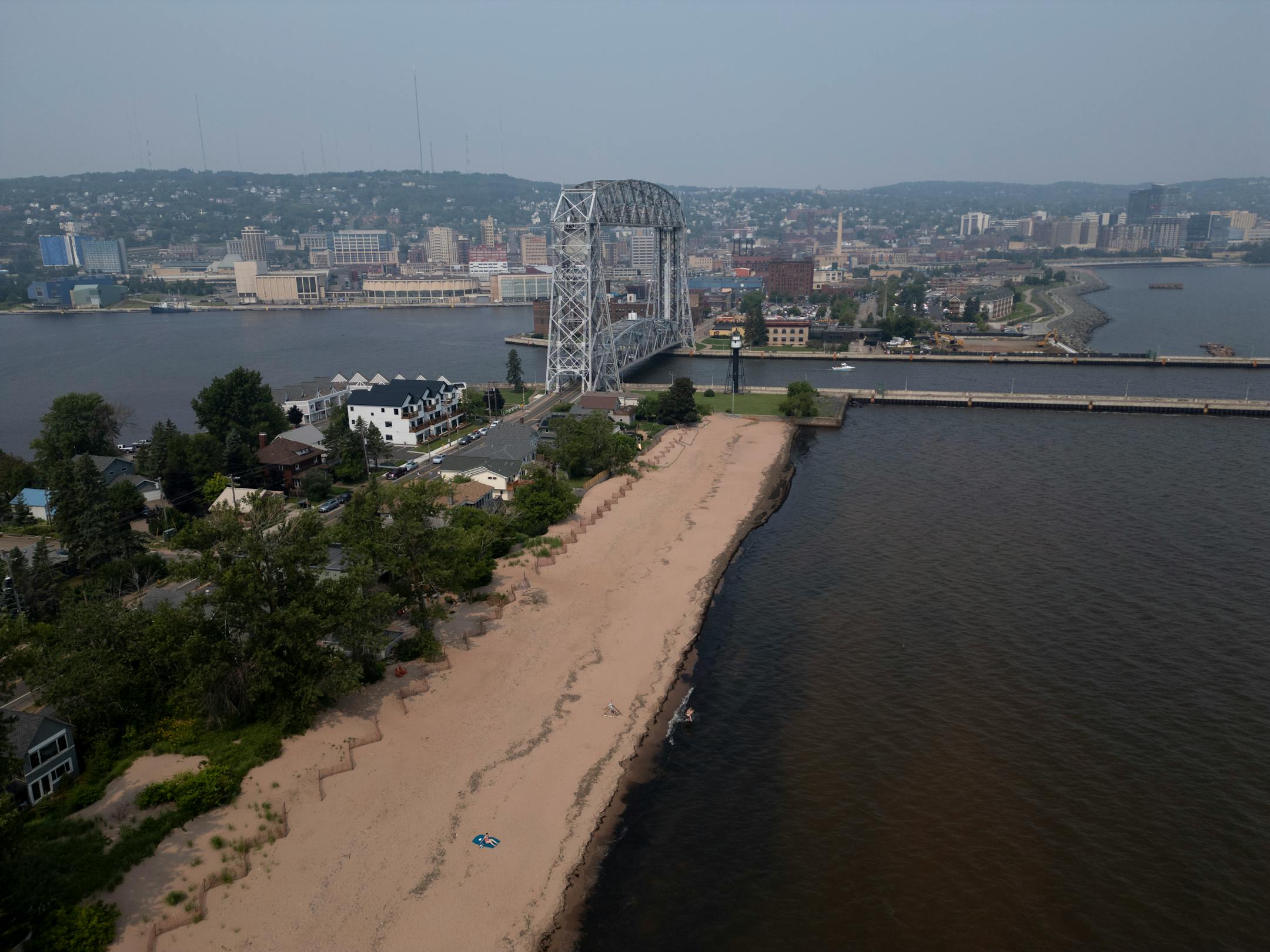
Park Point is the Duluth neighborhood with the highest concentration of vacation rentals. (Aaron Lavinsky/The Minnesota Star Tribune)

DULUTH – Steve Pitschka and his wife were among the first to offer short-term vacation rentals in the beach-lined Park Point neighborhood where they live.

For each of their four rentals, they’ve dutifully applied for and won some of the limited number of city short-term rental licenses for residential properties, paying thousands in fees and keeping up with costly code inspections.

But they’ve found that increasingly, they are competing with scofflaws for rental business — property owners who “just put the shingle out” and ignore the city’s process.

“We are rule followers,” Pitschka said. “And it will probably force us out of business.”

The proliferation of unlicensed rentals and the sheer number of Airbnbs and VRBO-style rentals across Duluth has led the city to re-examine its vacation rental rules.

The review is happening while the city confronts a persistent housing crunch worsened by the vacation rental boom. The city’s latest housing study shows record high home prices and a paucity of homes for sale.

But the number of short-term rentals in residential neighborhoods has nearly doubled in the last three years, with the city allowing more licenses as housing is built.

About 180 permits are in effect citywide through August, including some for commercial properties, which are not limited. But several hundred more properties can be found for rent in Duluth online.

The City Council has been asked to approve a one-year moratorium on new short-term, bed and breakfast and other types of vacation rental licenses, so the city can study the situation — a move Pitschka and others support. City staff would examine things like neighborhood saturation and how the city deals with unlicensed properties.

Other Minnesota cities and counties, like Lake County, have made similar moves in recent years, or have outright banned such rentals. Cities with bans include Edina, Bloomington and Apple Valley. Otter Tail County last year put noise and occupancy restrictions on its ordinance, similar to what Crow Wing County did a few years prior.

As housing demand grows, so does the vacation rental market, said Ben Van Tassel, director of planning and economic development for Duluth.

And every time a new permit application goes before the city’s planning commission, “it gains a lot of attention from neighbors,” he said, mostly over concerns about the number of vacation rentals in a given area, or the introduction of one to a neighborhood.

About two dozen properties — a quarter of those in Duluth with a residential permit — are licensed short-term rentals on Minnesota Point, popular for its miles of public Lake Superior beaches. It is the Duluth neighborhood with the highest concentration of vacation rentals.

A review of Park Point listings shows at least another dozen apparently unlicensed properties there.

Van Tassel said it has been difficult for the city to enforce rogue vacation rentals due to the amount of online monitoring involved. Right now, the city investigates complaints about unlicensed properties in the order they are received.

With addresses typically absent from listings, pinpointing unlicensed rentals is time-consuming. Exterior photos aren’t always included, and the mapping tool that Airbnb uses, for example, isn’t exact.

During a moratorium, Van Tassel said, the city would look to improve and streamline its licensing and permitting process and consider raising or lowering the limit, while getting its arms around enforcement. Changes could include raising license fees to help pay for enforcement.

“There are property owners that are going through the process properly, waiting on a wait list,” he said. “We need to have adequate enforcement to … make the process fair for those who are following the rules.”

Duluth made sweeping changes to its rental rules in 2021, allowing up to 10 new full-time, short-term rental permits in residential neighborhoods each year, depending on the increase in residential housing units. It doesn’t matter if the added unit is an apartment, single-family house or condo, and hundreds of apartment units have opened since the most recent cap was instituted.

This is allowed until the city reaches a limit of 120 short-term rental licenses in residential neighborhoods.

People are awarded residential permits through a lottery, and only about 40 spots remain before the cap will be reached. More than 30 names remain on the list seeking such a permit.

Duluth City Councilor Roz Randorf represents the sections of the city with the most vacation rentals, including downtown and Park Point. She’s a sponsor of the moratorium measure.

“We’ve seen what happens in cities that don’t pay close attention,” she said, noting they can “atrophy” with too much housing turned to short-term rental stock.

Vacation rentals are helpful to property owners for a variety of reasons, Randorf said, and she wouldn’t want to take them away.

“But livable neighborhoods don’t mean every third house is a vacation rental,” she said. “And right now, the city runs very lean, and so our ability to enforce the rules for people who are abusing the system ... it’s very difficult.”

An Airbnb spokesperson said in a statement that it works with Duluth officials to promote responsible hosting and shares information with hosts about local requirements.

A moratorium on new short-term rentals will only “harm responsible Duluth residents” while reducing options for families, the spokesperson said.

Airbnb said hosts agree to comply with local laws when they sign up.

Short-term rentals can be a financial boost to hosts, the company said, and also to the state. Minnesota hosts contributed nearly $564 million to the state’s economy last year, according to Airbnb.

Charlene Roise is studying the impact of vacation rentals, licensed and not, for the nonprofit grassroots effort MP50, focused on building a 50-year resiliency plan to protect Minnesota Point.

“There’s a tipping point where the short-term rental population of residences out on the point will become so great that we start to lose our real community,” she said, one that has historically been tight-knit even as it has evolved.

“It’s never been a rich person’s paradise,” Roise said.

She and others would like the city to explore scattering vacation rentals across the city, because “it’s good for people learning more about Duluth and it’s good for Duluthians learning more about people,” she said.

Saturation is what concerns Carolyn Kerns, surrounded by vacationers as neighbors. The longtime Minnesota Point resident lives among several Airbnbs on its northern end, close to the Aerial Lift Bridge. She loves introducing visitors to the beauty of the neighborhood, she said, but is bothered by the conversion of family houses to rentals when it’s done in an “extractive” way, by people who don’t live in the community.

“You can have short-term rentals that are really lovely and work in the favor of the community,” Kerns said. “But that’s not what’s happening.”

Permits already in process won’t be affected by a moratorium, which the council will vote on at the end of the month.

about the writer

about the writer

Jana Hollingsworth

Duluth Reporter

Jana Hollingsworth is a reporter covering a range of topics in Duluth and northeastern Minnesota for the Star Tribune. Sign up to receive the new North Report newsletter.

See Moreicon

More from Real Estate

See More
iStock
Isometric small house and green dollar sign on weight scales. Balance, price, real estate and home concept.
iStock

With the dream of home ownership out of reach for many Americans, President Donald Trump has floated the idea of a longer mortgage than the usual 30-year fixed-rate one.

card image
card image