As Duluth’s Park Point washes away, its residents take the reins

More Lake Superior mega-storms led a group of residents to form a nonprofit to protect one of the largest freshwater sandbars in the world.

The Minnesota Star Tribune
August 23, 2025 at 4:16PM
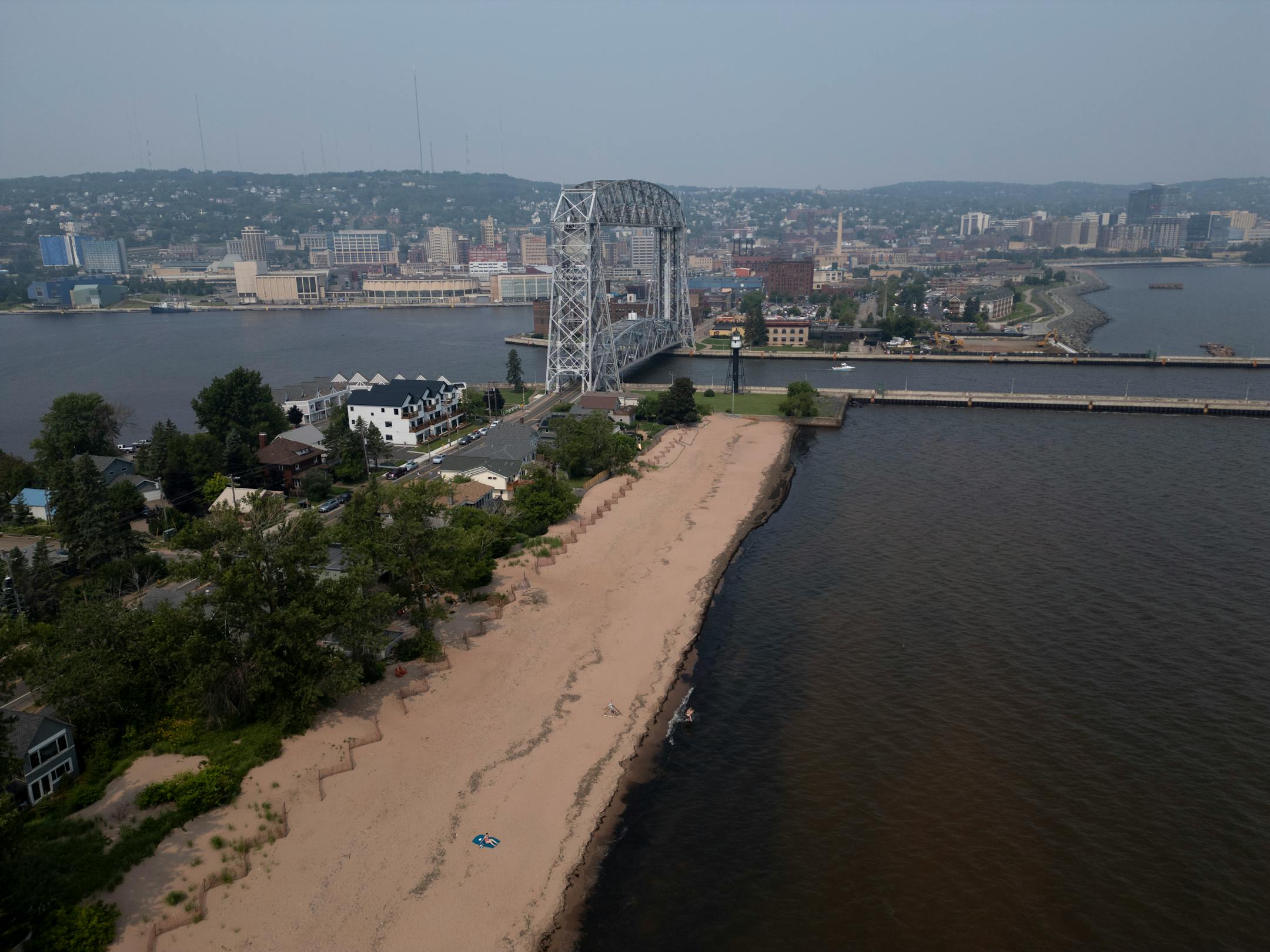
A section of Park Point beach under threat of erosion south of the Lift Bridge shown on July 31, 2025. (Aaron Lavinsky/The Minnesota Star Tribune)

DULUTH – Currents racing at up to 8 feet per second created dangerous waves at the mouth of the Duluth canal during a June 21 storm, as extreme weather phenomena whipped up Lake Superior.

An air pressure-driven meteotsunami and wind-driven seiche made water fluctuate across the massive lake, receding from some shores by several feet and flooding others, as it sloshed back and forth like a bathtub.

It was the most powerful seiche to reach Minnesota Point since 2012, said longtime resident Paul Treuer, with the water level suddenly rising by more than a foot.

For him and other residents of Minnesota Point, home to the Park Point neighborhood reached by the Aerial Lift Bridge, the storm served as another reminder of Lake Superior’s might as extreme weather increases across the globe.

“This place is in trouble,” Treuer said. “It’s just a sandbar that we live on ... it’s not permanent.”
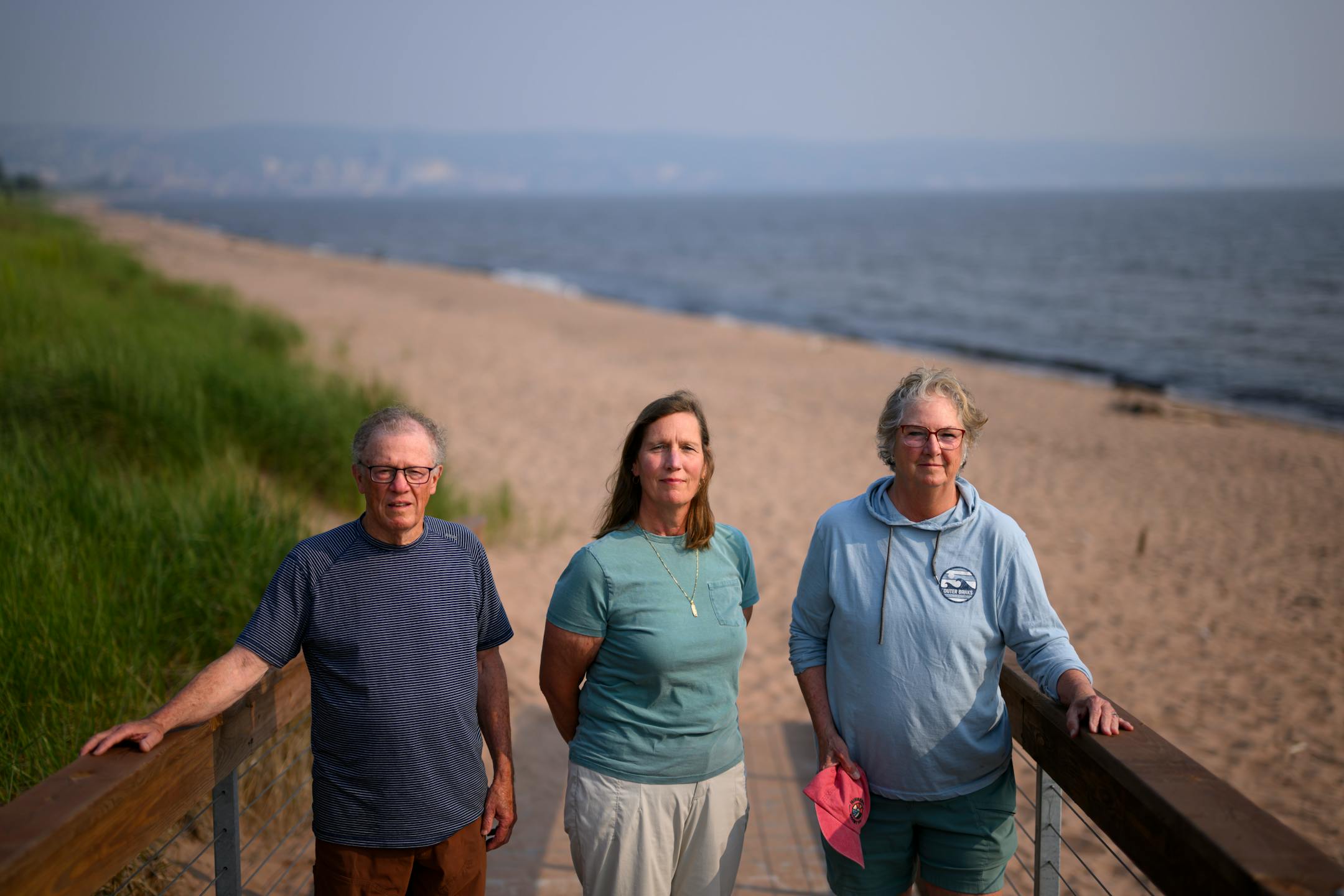
Park Point residents Paul Treuer, left, Dawn Buck and Pat Sterner, right, are working to save their home. (Aaron Lavinsky/The Minnesota Star Tribune)

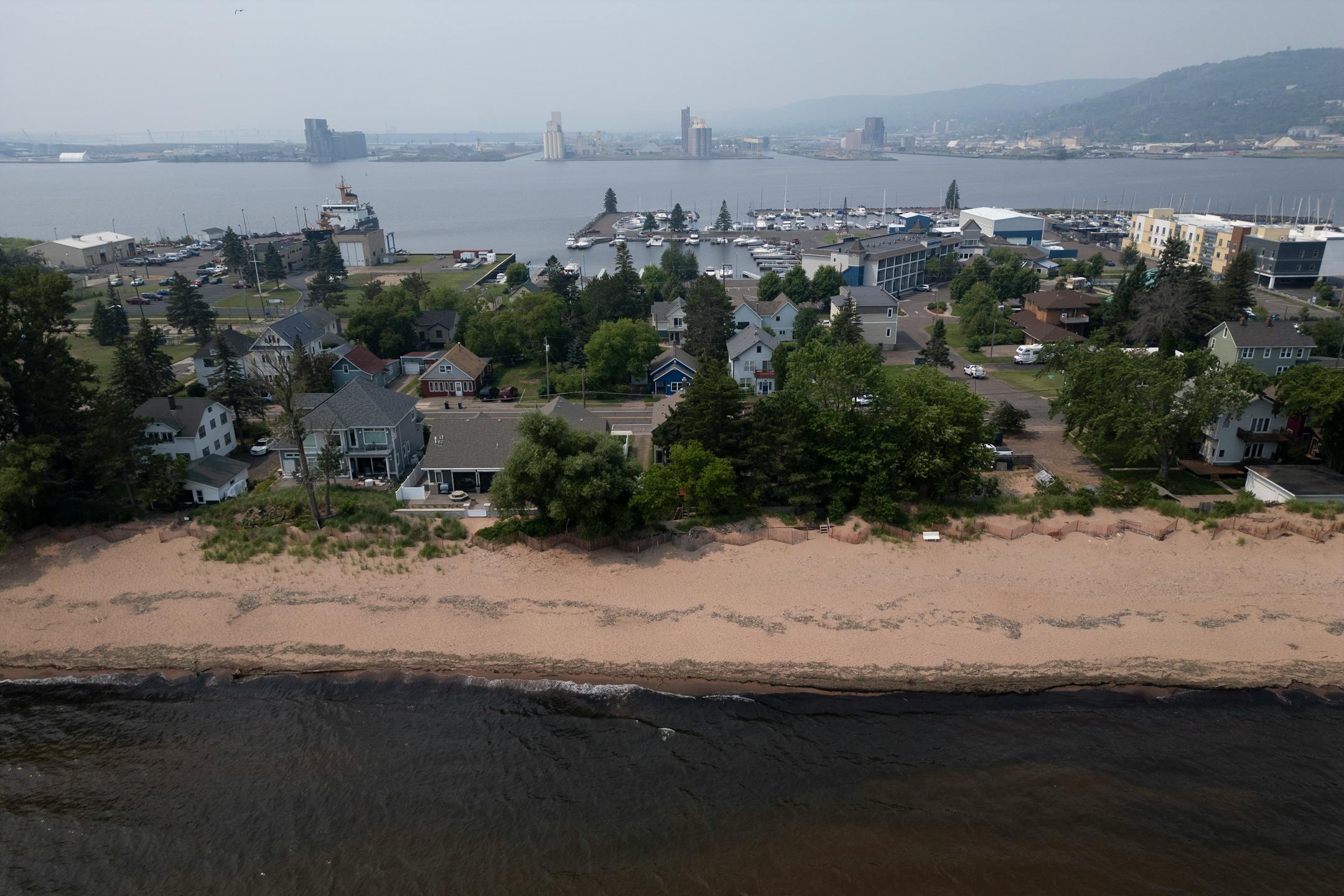
That nearly 7-mile sandspit protects the ships and terminals inside the busy international Duluth-Superior port, where more than 700 vessels move 30 million tons of cargo each year. It is also home to 1,300 people, a U.S. Coast Guard station, an airport, marina and hotels, and it sees hundreds of thousands of annual visitors to its miles of public beach. And it is part of a delicate ecosystem, with an old-growth red and white pine forest, unmarked Indigenous burial grounds and rare coastal dunes found nowhere else in Minnesota.

Fierce storms create huge waves that slam into the barrier island’s famous shores, washing sand away, shearing off large sections of dunes and uprooting trees. When water levels are low, high winds push piles of sand into yards and the main road. When water levels rise, lower-lying parts of the island, especially on the bay and harbor side, are flooded.

A trifecta of storms between 2017 and 2019 brought days of battering waves and caused millions in damage to Duluth shores. In 2019, storm surge from waves as high as 15 feet swamped parts of Park Point, and the Lift Bridge — the only way off the island — was temporarily shut down.

Members of the Park Point Community Club, including Treuer, got serious then about protecting the barrier island’s residents and hundreds of structures, investigating what kinds of long-term government-crafted plans already existed. Turns out, there wasn’t much.

They tapped water science experts at the University of Minnesota Duluth and made inroads with city officials, the Minnesota Department of Natural Resources and the National Oceanic and Atmospheric Administration.

After less formal environmental work through the club, they revived an old preservation nonprofit held by the community club and renamed it Minnesota Point 50 (MP50) in 2023. It’s a nonprofit grassroots effort to build a 50-year resiliency plan to protect the point, led by seven board members who are residents of the point.

MP50 held a public kick-off summit this summer to first launch a five-year plan that resulted from a study. The summit pulled together the community and representatives from the city, the DNR, the Minnesota Sea Grant and the NOAA.

The group is providing “a real service to the community and the state,” said Jim Filby Williams, the city’s director of parks, properties and libraries.

Starved and drowning

In the 1860s and 1870s, the U.S. Army Corps of Engineers carved shipping channels through the sandbar and into the harbor in both Wisconsin and Minnesota, severing it from mainland Duluth and Wisconsin Point. Breakwaters, piers and dredging dramatically changed how sand and other sediment pushed by wind and waves was distributed along the point.

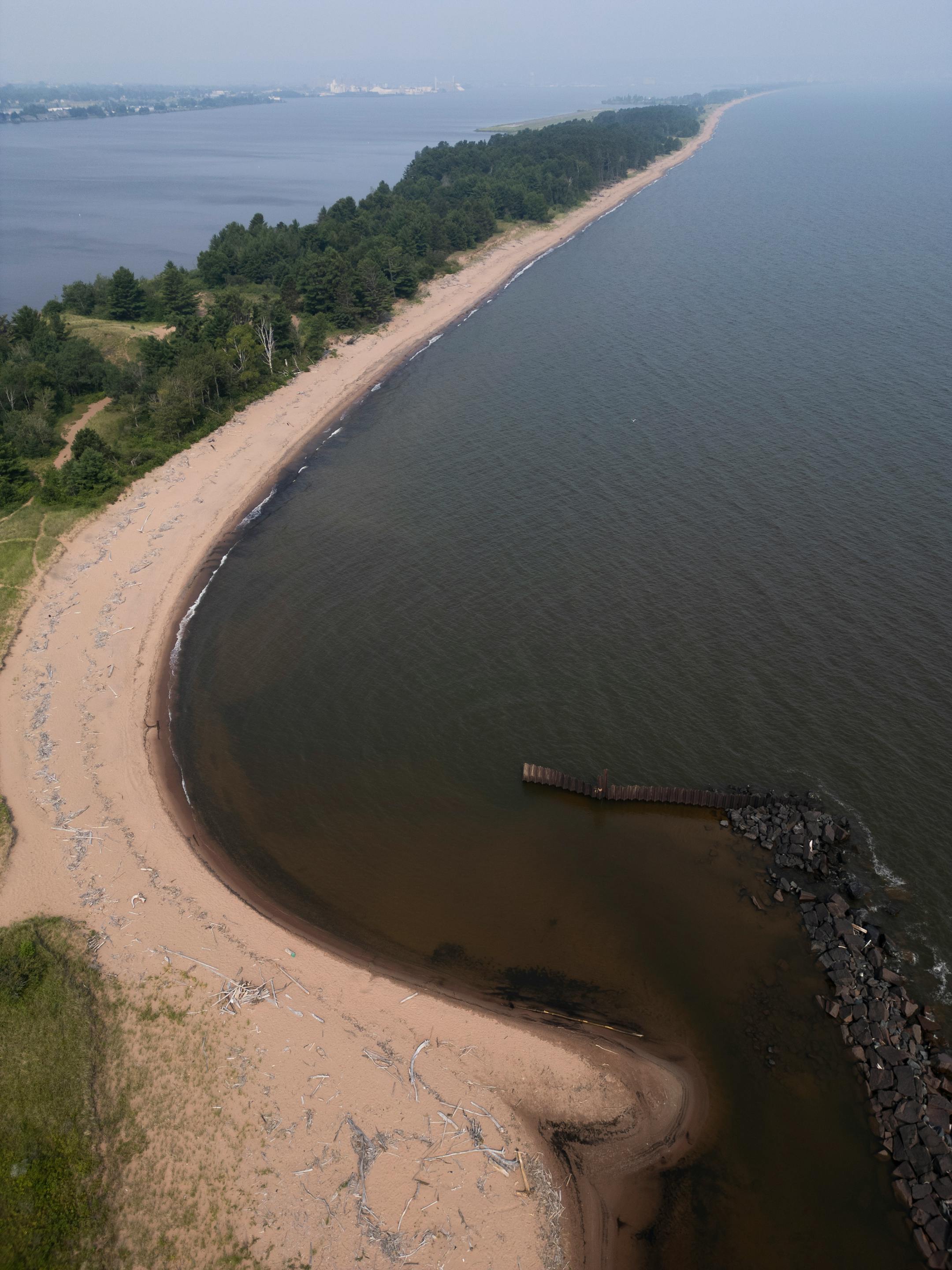
Since then, the beaches haven’t been replenished in the same way, leading to heavy erosion on the south and north ends of the point, near the Wisconsin entry and the Lift Bridge, respectively.

Glacial rebound, a slow but steady lifting of the lake bottom, is tipping water toward Duluth. And as years with little ice coverage on Lake Superior become more common, the point experiences intense waves even in winter months.

University of Minnesota Duluth scientist John Swenson has said erosion on both sides is starving the point, higher water levels are drowning it and powerful winds are battering it.

On average, between 2.2 and 3.6 feet of sand erode from the lake side each year, according to the DNR.

Erosion and flooding have become more prevalent amid heavy use of the point by visitors and vacationers, said Pat Sterner, a member of MP50.

“More use is great, but it stresses the entire ecosystem,” she said.

An area under threat of erosion past the breakwater on the southern tip of Minnesota Point is shown in July. (Aaron Lavinsky/The Minnesota Star Tribune)

A perfect storm

MP50 is involved in grant-writing and organizing, and working with local scientists and experts. The group is planning printed guides, one for property owners and one for visitors for hotels to hand out. For visitors, it will include how to treat the dunes, and for property owners, it will share how to prepare for floods.

MP50 also sought scientific evidence of the point’s biggest threats and how to combat them.

The DNR worked with the group to apply for and receive a two-year grant from the National Fish and Wildlife Foundation. It paid for assistance from the Association of State Floodplain Managers, which used historic patterns and scientific modeling to plot out best- to worst-case scenarios. It found that if Lake Superior rose beyond 607 feet, which is the building code elevation new structures must have, nearly 150 homes and buildings would flood and more than $7.4 million in damage would result.

The lake reached 604.75 feet in 2019, a record number.

“We’re already seeing storms that are pretty reflective of what we think the perfect storm would look like,” said Eleanor Rappolee, a geographic information system analyst for the floodplain association.

Their studies showed that the most vulnerable buildings are single family houses on the harbor side that were built before 1980, especially those with basements. The study suggests filling basements in. The point in the ground where it becomes saturated with water is only about 15 feet down.

New houses on Minnesota Point must be elevated above a certain threshold and built without basements, per modern regulations. But new development should be avoided as much as possible, Rappolee said.

Park Point is home to 1,300 people, a U.S. Coast Guard station, an airport, marina and hotels. (Aaron Lavinsky/The Minnesota Star Tribune)

Breach fears

MP50 members worry the next mega-storm might send waves across the island.

Narrow sections of the point where that is most likely sit at the ends and at a spot inside the Park Point Recreation Area. The city is in the midst of redesigning the sinking recreation area, where the road is precipitously close to the water.

A breach near the Lift Bridge would affect the entire point. A breach near the south end could affect the shipping industry and access to the airport.

The Army Corps is nearing the end of a multi-year study to see whether and how much it is responsible for the erosion damage. Its harbor dredging for beach “nourishment” in recent years has been controversial, with metal shards and other debris littering the shores where it’s been deposited. The sand replenishment, which has been done a handful of times, is intended to replace what’s been washed away. It is considered a short-term fix.

The Corps didn’t respond to questions about the study, but Filby Williams said the results will show how much the Corps could pay in restoration efforts.

Brandon Krumwiede, a scientist with the NOAA in Duluth, said part of the study is exploring whether the point is seeing a net loss in sediment or if it is just pushed around offshore until it is blown back to the beach.

Barrier islands like Minnesota Point “need a sediment source to keep them alive,” he said. Submerged breakwaters to absorb waves are among potential restoration efforts.

Residents, particularly on the north end near the bridge, have been subject to “some scary situations,” including 10-foot piles of sand in their yards, Filby Williams said.

Recent city work on the point has included planting beach grass, a threatened species in Minnesota, to slow erosion, and installing sand fencing to help restore dunes and keep sand in place.

Lake Superior water levels rise and fall in cycles that typically span a decade or so. It is on a downward trend now, data shows, but climate scientists predict higher highs and lower lows in a shorter span of time.

The work resulting from MP50’s organizing shows “hard evidence,” Treuer said, of what could happen to Minnesota Point.

Anticipating that can help with repairs and fortification, he said, “and I think that’s what our role should be. To quantify it and prepare for it, rather than react to it.”

about the writer

about the writer

Jana Hollingsworth

Duluth Reporter

Jana Hollingsworth is a reporter covering a range of topics in Duluth and northeastern Minnesota for the Star Tribune. Sign up to receive the new North Report newsletter.

See Moreicon

More from Duluth

See More
card image
Photo provided by Jon Woerheide, Lutsen Volunteer Fire Department

The 2024 blaze destroyed the historic lodge in the middle of a February night, when no guests were booked.

Rising above the treeline (Top of this photo), on the shore of Birch Lake, the Twin Metals Copper Nickel Mine Plant site and Tailings Management site is part of the proposed plan. ] In theory, the copper-nickel mine Twin Metals wants to build in the headwaters of the Boundary Waters Canoe Area Wilderness is a zero-discharge mine — a closed loop that will endlessly recycle millions of gallons of water, including rainwater and the polluted process water it uses to extract ore and