Editor's Pick

Editor's Pick

NDAs, code names and shell companies: How Minnesota officials support data center secrecy

Governments are signing non-disclosure agreements and concealing basic information about potential data centers.

December 18, 2025 at 12:00PM
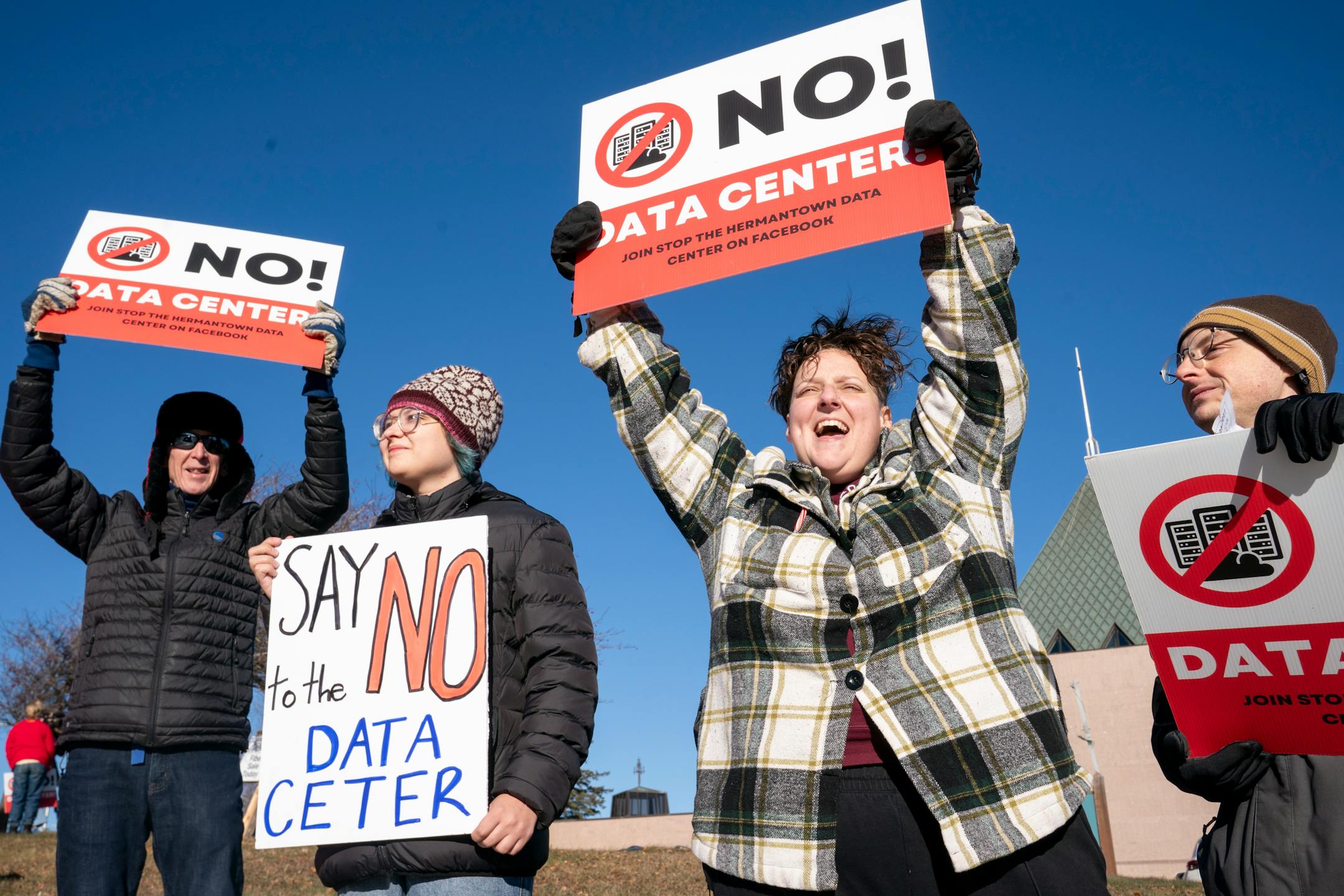
Zoie Soder, 21, of Duluth, second from left, holds a sign while Kassie Gibbons, 35, of Duluth, chants during a protest organized by "Stop the Hermantown Data Center" in Duluth in November. Opponents have criticized the city's decision to sign a non-disclosure agreement with the construction company developing the project. (Erica Dischino)

As the development firm Oppidan explored building a large-scale data center in North Mankato, they emailed a request: “Can the city sign an NDA?”

Five minutes later, North Mankato said yes.

The city’s community development director signed the non-disclosure agreement, which meant neither he or anyone else in the city could talk publicly about much of what Oppidan was planning, like the name of a tech giant that might use the data center.

This kind of secrecy has spread in Minnesota as the tech industry sprints to build data centers for cloud infrastructure and artificial intelligence products.

Eight Minnesota cities, two counties and at least one state agency and school district have signed non-disclosure agreements. Many local officials also work with companies in other ways to conceal information — at least initially — about the projects.

The data center industry and some city officials say companies want privacy to workshop designs that will better fit a community, safeguard business plans in a white-hot competitive market and prevent speculation about a project before its details are finalized and eventually released.

“The technological innovation that you have gives you an edge over other competitors in a highly competitive marketplace,” said Dan Diorio, vice president of state policy for the industry trade group Data Center Coalition. “So you certainly want to do what you can to protect that.”

At the same time, the scarcity of information is driving some Minnesotans to form community groups, pack council chambers, file lawsuits and protest on street corners in furious opposition to these projects. A state lawmaker tried to ban these NDAs because of a Rosemount data center, while an outcry in Hermantown made a county official regret signing one.
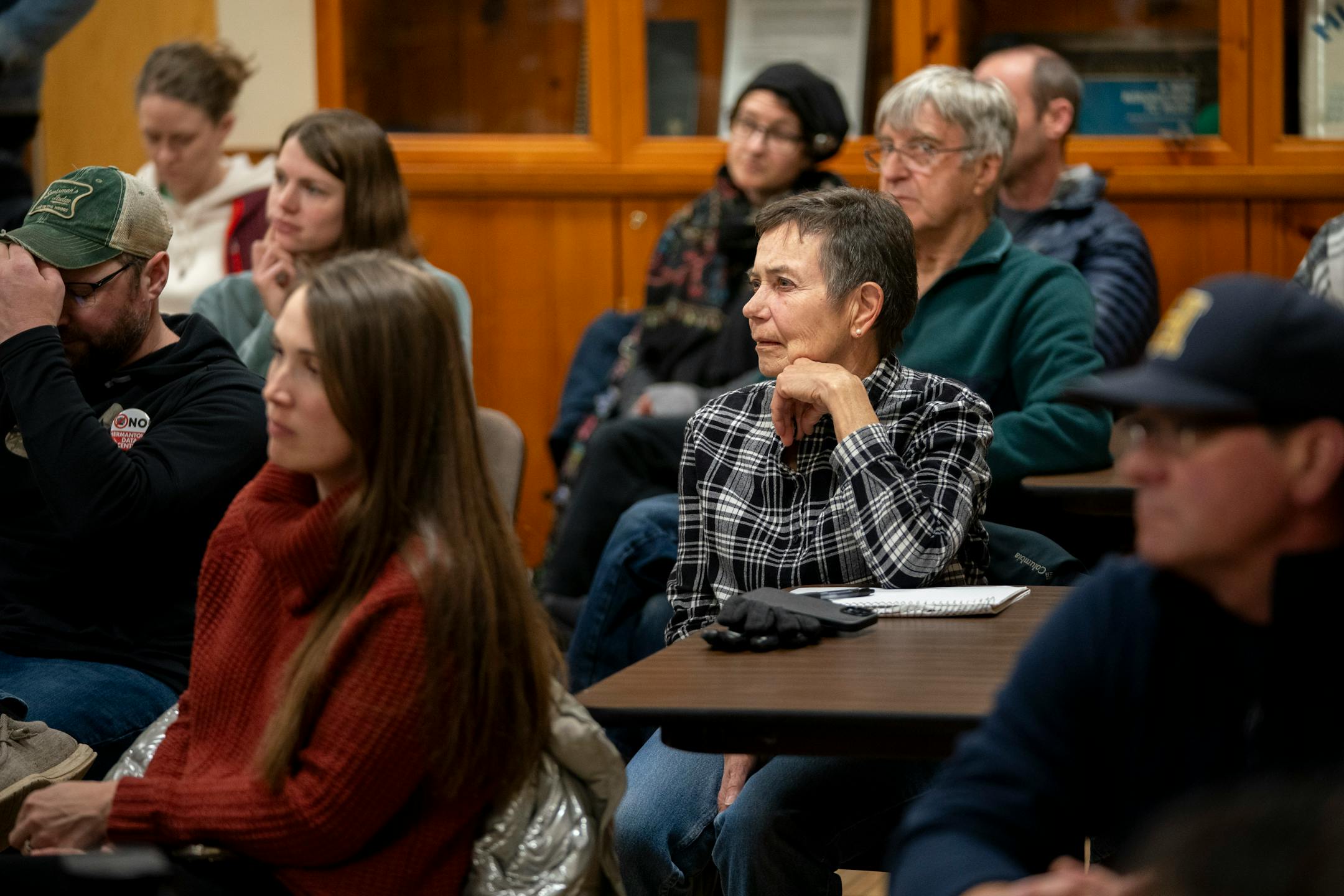
“[Hermantown] has been really trying to obscure this and say, ‘Oh, there’s nothing to see here. Go on with your business. We’ve got this under control,’” said John Gustafson, who lives near the potential data center. “And that’s really been unhelpful for the community.”

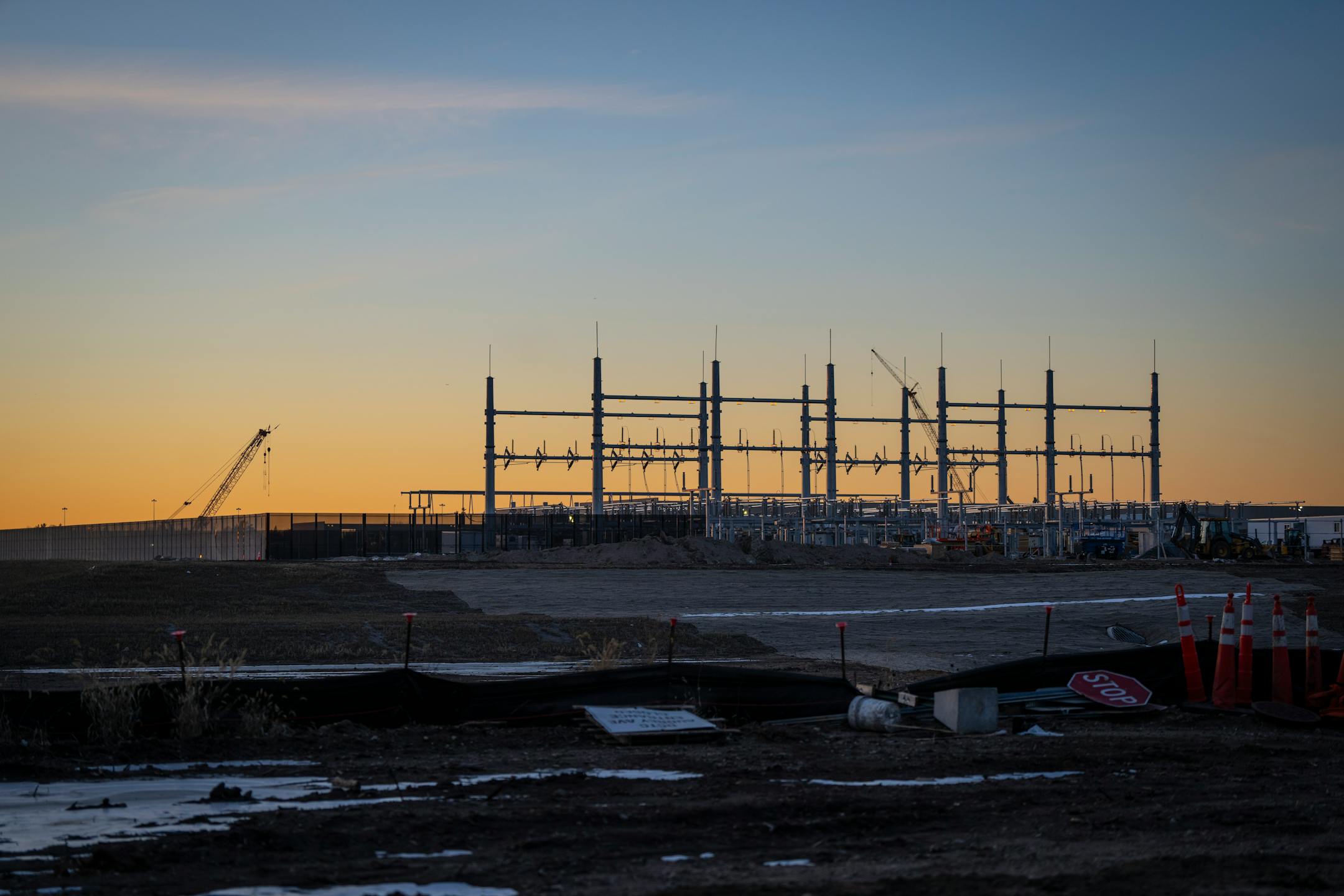
The construction site of the data center in Rosemount on January 7, 2025. (Renée Jones Schneider/The Minnesota Star Tribune)

Project Bigfoot starts a trend

In Rosemount, the blank walls of Minnesota’s first large-scale data center are under construction next to farm fields and small university research buildings.

The owner of the project is Meta Platforms, the parent company of Facebook and Instagram.

Meta revealed its involvement in 2023, but, before that, the company asked Rosemount to sign an NDA while planning its data center and negotiating with the city over aspects of the project.

For more than a year, local officials referred to the data center in city documents and public meetings as “Project Bigfoot.” The mayor said the NDA, signed when Meta was vetting multiple sites, blocked Rosemount from revealing Meta’s identity. The city approved a development plan and rezoning for the project without publicly saying it was a data center. Meta worked through a front company called Jimnist LLC, masking its involvement.

At one point, a Meta representative emailed with the University of Minnesota using the alias “Ken Confidential,” according to reporting and records obtained by Public Records Media, a nonprofit that advocates for government transparency.

Since then, many — but not all — data center developers planning more than a dozen major projects have followed Meta’s lead. They commonly use code names for data centers, work through front companies, and constrict government with non-disclosure agreements.

The Minnesota Star Tribune asked every city with a known data center proposal whether anyone in government had signed an NDA. Of the 12 cities contacted, only four never signed any.

Outrage in Hermantown

These practices have sparked anger in many cities and towns, such as Hampton and Farmington. Environmental nonprofits, which are critical of the energy and water demands of data centers, have sued cities over the secrecy actions.

Local opposition has erupted most notably in Hermantown, near Duluth.

A meeting of the "Stop the Hermantown Data Center" group in Solway Township, Minn. in November. (Erica Dischino)

Hermantown leaders, including the mayor, discussed initial details of the potential data center in private as early as September 2024. Yet the city refused to tell the public that a mystery development was a data center until a year later.

In the meantime, Hermantown changed land use plans, carried out preliminary environmental review on the land where the server farm would go, and turned away questions from nearby residents about whether the project was a data center.

The Star Tribune first reported that the development, code named “Project Loon,” will be a data center by obtaining public records.

Even now, Hermantown won’t say who the company behind Project Loon is or if they know who it is, calling it a Fortune 50 business working through the Minneapolis construction firm Mortenson. Hermantown also signed an NDA with Mortenson.

Once it was widely known that Project Loon would be a data center, a citizen group mobilized to stop it. It filed petitions and joined a lawsuit. The group has held in-person meetings, created a website and social media accounts, and knocked on doors to spread the word.

The most polarizing debate in Hermantown usually centers on its powerhouse high school boys hockey team moving into a tougher competitive class.

Yet before a fiery October council meeting, hundreds rallied with signs and matching red shirts near City Hall. They spent hours telling elected officials they did not want a data center. Many focused on the secrecy of the proposal.

Hermantown resident Katie Hawkins accused city staff of holding “back door” meetings with developers, businesses and elected officials to pave the way for the project, “without the public recognizing what has hit us.”

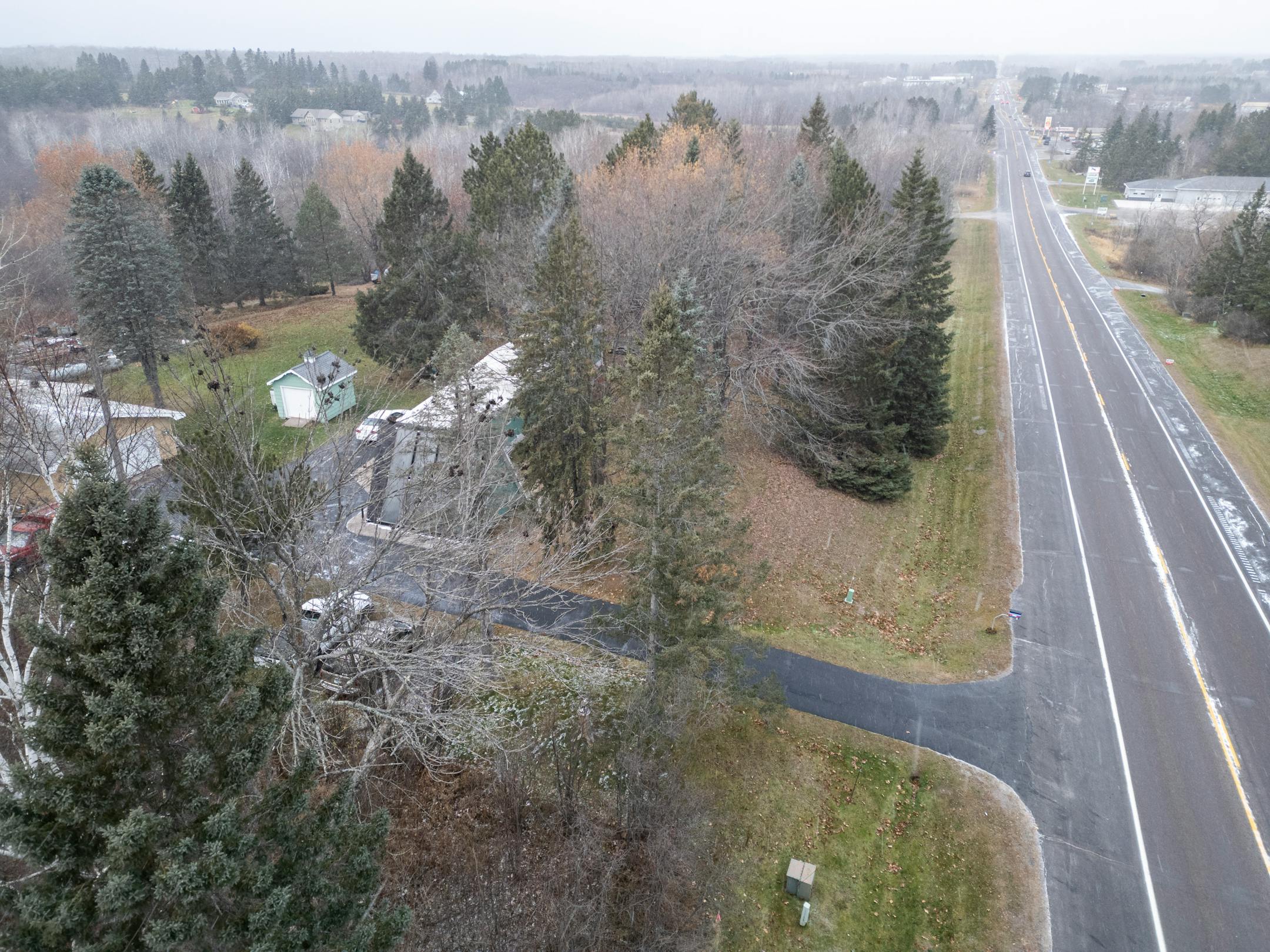
The 200-plus acre land proposed for the Hermantown data center is seen along Midway Road in Hermantown in November. (Erica Dischino)

Why cities sign NDAs

In Hermantown, St. Louis County Board chair Annie Harala said she considered an NDA part of “the early dance of conversations” around economic development when companies are exploring a project they haven’t committed to.

She said she signed one to learn more about the project in the hopes of promoting growth in a region where it can be hard to do business.

That’s a common refrain from local officials, who view data centers as a rare opportunity for more tax revenue and other community benefits, such as an influx of construction workers.

Officials say information is revealed eventually, and that they are following land use regulations and state public records laws. Many say NDAs are not limited to the data center industry.

Hermantown’s economic development director, Chad Ronchetti, has said the city gives the same level of privacy and confidentiality to all developers evaluating projects there, regardless of whether an NDA is signed.

But without that secrecy agreement on the front end, many believe no data center would be possible.

“The developer simply was unable to discuss potential end-user details without such agreement,” said Elizabeth Howard, the city administrator in southern Minnesota’s Pine Island, in an email.

Some reject NDAs

Chaska had a different response when a data center developer came to town.

When CloudHQ presented Chaska with an NDA to sign, the city declined. It didn’t halt conversations with CloudHQ, which has preliminary city approval for a 1.5 million square foot data center on farm land next to a suburban neighborhood.

City Administrator Matt Podhradsky said Chaska has an informal policy against NDAs for any project. The city believes the practice conflicts with state public records laws meant to promote transparency.

Other cities and counties eyed for data centers haven’t signed NDAs either. Some weren’t asked.

At least one developer has rejected the secrecy contracts. Blake Nixon is president and CEO of Geronimo Power, a company known for building clean power projects that has also proposed a massive data center in southwest Minnesota.

Nixon said Geronimo is not asking local governments to sign NDAs, in part after seeing negative reaction in the wind farm industry when companies insist on them.

“If you can’t talk openly about what you’re trying to do, that says bad things,” he said. “It causes people not to trust what’s going on.”

Harala of St. Louis County now thinks differently about NDAs after her experience with the Hermantown project. She said they pit counties against each other in competition for projects, and that she’d probably not sign another one.

“I have some heartache from very dear friends who felt like I was hiding something,” Harala said.

Not every data center company follows the same blueprint for releasing information. Becker signed an NDA with Microsoft, but early on the Seattle tech giant revealed its interest in a data center when buying land under its own name and not using a front company to conceal its intentions.

The developer Oppidan has disclosed its involvement in a planned data center in Apple Valley, as well as projects in Hampton and North Mankato that have since been halted. Oppidan has also released other key details, like estimates of how much energy and water each facility would use.

Sen. Erin Maye Quade, DFL-Apple Valley, introduced legislation late in the 2025 session that would ban local governments from signing NDAs with data center developers. (Glen Stubbe/The Minnesota Star Tribune)

NDA ban fails at state Capitol

State Sen. Erin Maye Quade, DFL-Apple Valley, watched as Meta’s project unfolded near her hometown, a process she called “incredibly alarming.”

While the data center will be just outside of her district, Maye Quade represents most of Rosemount. “I was floored that elected officials could sign NDAs to keep secret projects from their constituents,” she said.

Late in the 2025 session, Maye Quade introduced legislation that would ban local governments from signing NDAs with data center developers.

The issue did not fall cleanly along partisan lines. Three Republicans voted for the ban in the Senate, while five Democrats voted against it.

At least five Senators who voted against the ban had known data center proposals in their districts.

As legislators debated the measure on the floor of the state Senate, some said it would make Minnesota less competitive. A ban could drive away companies who say NDAs are essential to shield trade secrets and to hide promising sites from competitors while they do early legwork on a project’s viability, like whether a city or utility can meet its infrastructure needs.

Sen. Rich Draheim, a Republican from Madison Lake near North Mankato, said in an interview he favors some regulations and disclosure for data centers. But he said it should be up to local governments to decide whether to use NDAs.

DFL State Senator Grant Hauschild voted against banning local governments from signing NDAs with data center developers. (Richard Tsong-Taatarii/The Minnesota Star Tribune)

DFL Sen. Grant Hauschild of Hermantown voted against the ban, and had also sponsored bills to extend tax incentives for data centers. At the time of the vote, Hermantown had not disclosed the NDA — or the potential data center — to the public.

Hauschild would not say if he knew about the Hermantown data center before the vote. The Star Tribune asked seven times for an interview and Hauschild declined.

In a statement, Hauschild said he “did not know the details of the Hermantown project or how NDAs were being used locally.”

He said he voted against the legislation in part because it had not been fully vetted by a legislative committee.

Another crucial vote was Republican Sen. Bill Lieske of Lonsdale. The Meta data center and two other active projects are in his district, along with two more data centers that have since been halted.

Lieske opposes government use of NDAs, and said residents in his cities, like Farmington, think they can’t get proper answers on whether the projects will deplete local water sources or raise electric bills.

“I think almost everybody in my communities are upset about NDAs,” Lieske said. “I’m not seeing anybody that’s like, ‘Oh yeah we really like that you’re keeping secrets from us.’”

Still, Lieske voted against Maye Quade’s ban. He wanted a broader NDA prohibition and said the legislation would have singled out one industry. The legislation failed on a tie, 32-32.

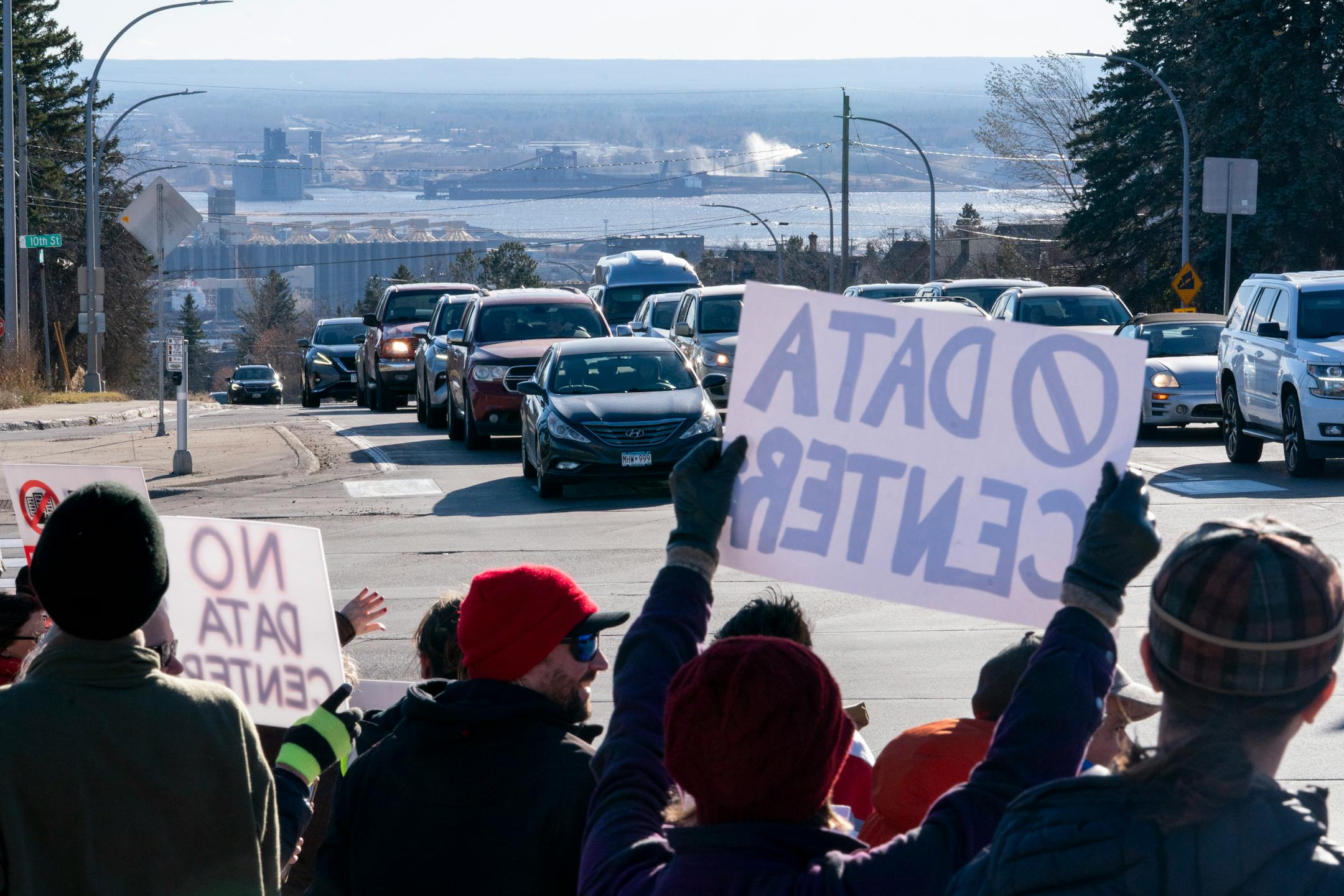
Protestors from the "Stop the Hermantown Data Center" gathered in Duluth in November. (Erica Dischino)
about the writers

about the writers

Walker Orenstein

Reporter

Walker Orenstein covers energy, natural resources and sustainability for the Star Tribune. Before that, he was a reporter at MinnPost and at news outlets in Washington state.

See Moreicon

Jana Hollingsworth

Duluth Reporter

Jana Hollingsworth is a reporter covering a range of topics in Duluth and northeastern Minnesota for the Star Tribune. Sign up to receive the new North Report newsletter.

See Moreicon

Eva Herscowitz

Reporter

Eva Herscowitz covers Dakota and Scott counties for the Star Tribune.

See Moreicon

More from Outdoors

See More
card image
Old Saw Media/Giants Ridge

Pizza! French fries! A longtime Minnesota ski instructor shares his favorite venues for shredding in the Upper Midwest.

card image
The Gateway State Trail is an urban trail amid lakes, wetlands and fields.