
Opinion | ICE surge costs should revive Minneapolis police staffing concerns

The depletion of the department was and still is unsustainable.

February 16, 2026 at 8:38PM
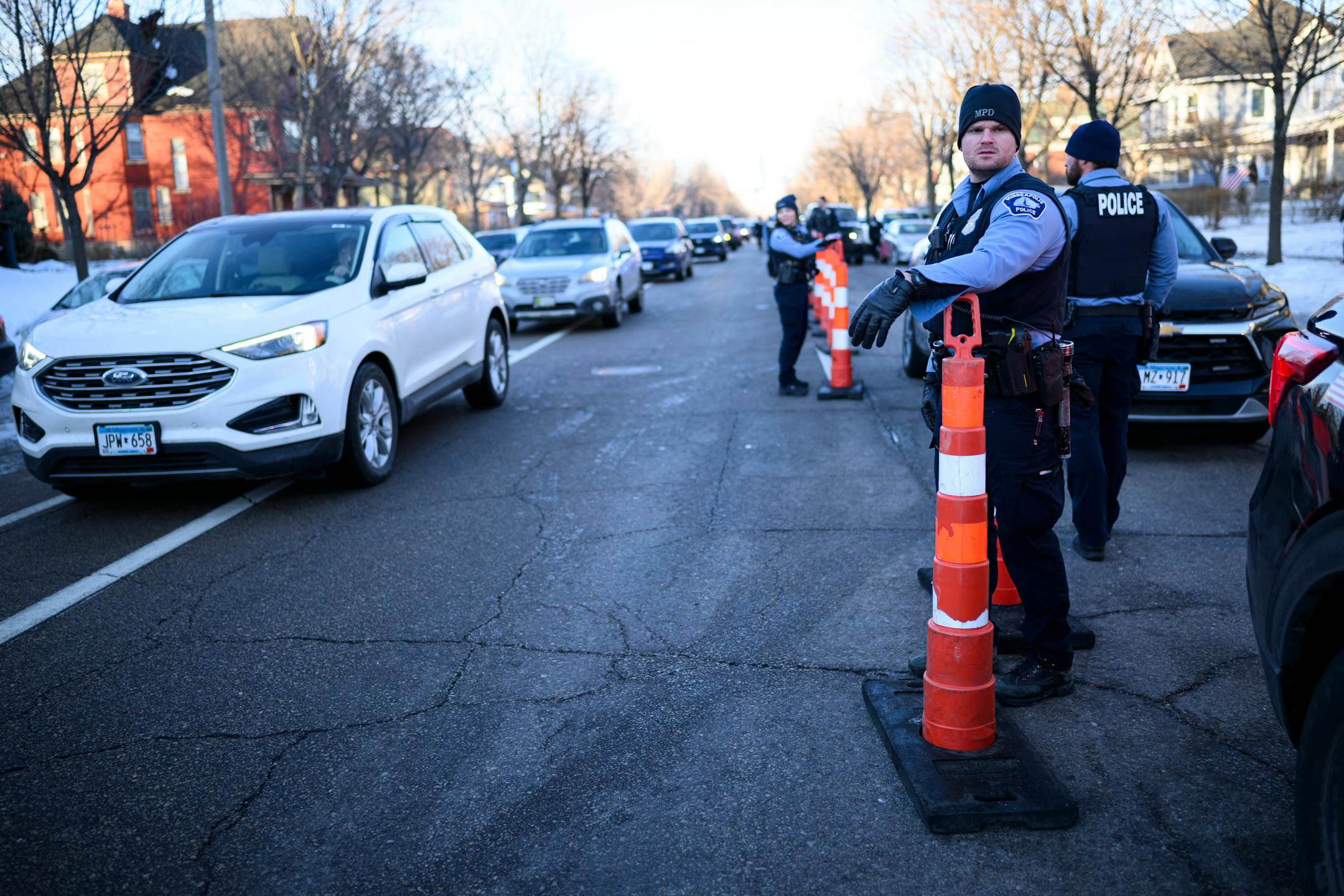
Minneapolis Police officers work traffic control along Portland Avenue on Jan. 9 near the memorial for Renee Good in Minneapolis. (Aaron Lavinsky/The Minnesota Star Tribune)

Opinion editor’s note: Strib Voices publishes a mix of guest commentaries online and in print each day. To contribute, click here.

•••

A Feb. 13 article (“Mpls. takes estimated $203M hit from surge”) presented a calculation of the costs to Minneapolis, both in the public and private sectors, of the Immigration and Customs Enforcement surge. On the public-sector side, a large proportion of costs were due to Minneapolis police overtime. It also puts a fine point on the woeful human resources of the Minneapolis Police Department.

Virtually all this recent expense was driven by the need to respond to the volatile situations caused by ICE operations. In a 40-year police career with the MPD and the University of Minnesota Police Department, I was often assigned or led police response to civil protest. The mantra of “we do not want to become the issue” served us well.

In my opinion the brutal, inexperienced, undisciplined, poorly trained and evidently unsupervised actions of ICE ignited what violence there was. While it seems the Trump administration saw a “riot” in everything, I did not. There were individual criminal acts, but they were often constrained by their fellows. I saw nothing to justify copious quantities of chemical agents and less-lethal projectiles. Also lacking was anyone in ICE leadership getting out from behind the barricades to talk to protesters.

Dating to at least the antiwar Honeywell demonstrations, under the leadership of then-Chief Tony Bouza, protesters assumed they could express their First Amendment grievances and the police would act in a professional and disciplined manner. I would wager even those who were reflexively hostile to the MPD held that expectation in the back of their minds.

But the issue is budget. The recent article reported that the MPD has already run through all of its budgeted 2026 overtime. A Minnesota Star Tribune article in December reported that some Minneapolis City Council members had accused Police Chief Brian O’Hara of poor budget management. They apparently do not understand, or are comfortable with, the consequences of a critically depleted MPD. The depletion was caused in part by the actions and statements of their predecessors, as well as their own. For example, cutting the budget for a successful recruiting program. It was generating the three hiring objectives I always sought: numbers, quality and diversity.

In the aftermath of the Alex Pretti killing, O’Hara had to cancel all days off and call in all available officers, excepting those who had just gotten off the night shift. That alone had a nearly $2 million price tag.

Council members can bemoan the overtime costs as they wish, but the citizens and businesses of Minneapolis expect and deserve prompt response to their 911 emergencies. They have every right to call when they are in need. In addition to the blown budget, the consequences of this paucity of officers includes increased response times to calls, especially true emergencies. (The average response time to the most serious 911 calls was six minutes in 2020. In 2025 that had risen to eight minutes, 29 seconds. O’Hara is striving in the short term to drive it down to seven minutes.)

It also includes falling clearance rates for crime, as the detective cadre has been reduced by 41%. As a former robbery investigator and founder of the Repeat Offender Program, I know failure to interrupt career offenders only generates more crime.

Last, as O’Hara has often said, the consequences on the health and welfare of officers is not sustainable. To the extent overtime was ever a motivator, those days have long passed. Officers need more recovery time and time with their families. Their pension plan is portable. They could easily be recruited away by a suburb with similar or better pay, definitely better support from their elected officials, and better life balance. Experience as an MPD officer is still often valued.

The overtime problem will go away when the MPD is adequately staffed. The council would serve its constituents by joining the effort and showing support. Some council members are already excellent on doing so. To the others: Go on some ride-alongs, attend some roll calls, get to know the officers that provide service to your constituents. Tell them who you are and what matters to you. Attend some swearing-in ceremonies, awards programs and retirement coffees. It is hard to stereotype people you know.

Support the working class? What would you call people who work three shifts around the clock in all elements?

Gregory Hestness, of Minneapolis, is retired. He was chief of the University of Minnesota Police Department and deputy chief of the Minneapolis Police Department.

about the writer

about the writer

Gregory Hestness

More from Commentaries

See More
card image
Aaron Lavinsky/The Minnesota Star Tribune

The depletion of the department was and still is unsustainable.

card image