
Opinion | Minnesota is a state of unaccountability

When did we decide that the proper consequence for deep systemic failure is a soft landing?

December 16, 2025 at 7:36PM
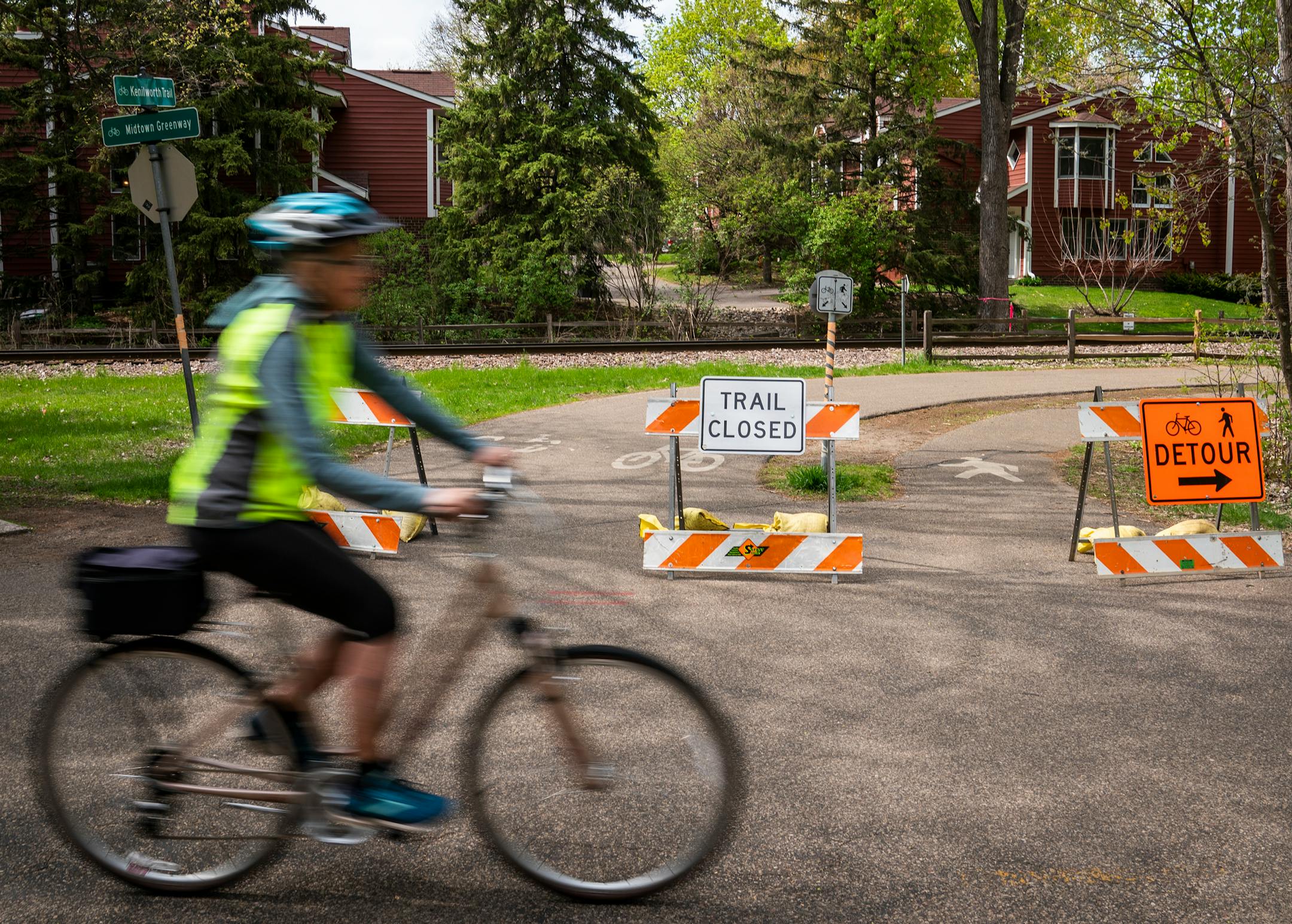
A bicyclist rides past where the Kenilworth bike trail is closed where it hits the Midtown Greenway. The trail was closed for "half a decade for Southwest line construction," Adam Platt writes. "Imagine closing a freeway or even a road for six years. ... [I]t’s simply an unconscionable level of public inconvenience rooted in one of the costliest public infrastructure debacles in the region’s history." (Leila Navidi/The Minnesota Star Tribune)

Opinion editor’s note: Strib Voices publishes a mix of guest commentaries online and in print each day. To contribute, click here.

•••

If you believe Gov. Tim Walz’s laudable decision to hire a director of program integrity is the beginning of an accountability era in Minnesota, count me a skeptic.

Why? Because Minnesota has become the place bureaucrats go to escape consequence, where no matter how big the public sector screw-up, all that ensues is media attention … sometimes. It’s hard to explain to outsiders how difficult it is to shame a Minnesota official into public contrition or, god forbid, a change of course.

Let’s start at the top, with our social service fraud scandals. Is it half a billion? A billion? Two billion? Does it matter? It’s outrageous at half the amount. This legacy of a bureaucracy too politicized to respect the public that pays its salaries, and a state agency culture too cowardly to make its employer — the taxpayers — primary, shows us exactly what two decades of one-party rule gets you.

#Socialservicegate may be front of mind, but the last few weeks have offered plenty of other reminders.

The Minneapolis Federation of Educators (MFE) made peace this fall with the Minneapolis Public Schools (MPS) and avoided a strike. MPS’s revolving door of superintendents have presided over a multi-decade decline of the city’s public schools. Yet after every contract brinkmanship, the MFE declares it’s ready to fix things with better pay and smaller class sizes. And yet with every contract, MPS sheds more families and makes no progress, or backslides on key measures of student achievement.

My family’s 20-year tour of duty in MPS ended after the 2022 strike, which followed a district “redesign” that sent thousands of families (and their tax dollars) to open enrollment after MPS gerrymandered them into long treks to underperforming schools, seemingly for no other reason than contempt for “privilege.”

I remember a parents’ meeting that superintendent Ed Graff was too timid to attend, where his underlings gave a room at Roosevelt High the equivalent of the middle finger. Their redesign was an utter disaster, as any person with common sense tried to tell them. Increasingly short of families and tax dollars, the current MPS leadership struggles to keep its undercapacity, underfunded infrastructure afloat as it, like its predecessors, still fails to educate many students.

We learned in our two decades that Minneapolis’ deeply politicized school board has little competency in public education, that the best teachers and practices often go unrewarded, while the worst have lifetime job security. It’s a closed loop.

Similar failures nationwide have led to theories that kids aren’t failing, but are victims of unfair grading and tests, a convenient way to rationalize failure. I remember being told for years by my kids’ school leaders that the A’s and B’s they received in math while oddly not meeting state testing standard for grade level were the result of biased tests. (We learned otherwise in college.)

A classic coda: my daughter’s high school teachers lobbying her, period after period, on the first day after the 2022 strike, to have parents go to that night’s school board meeting and demand teachers not have to makeup weeks of missed class as required by law.

Because, you know, it was “all about the children.”

Prior to the current state scandals, far and away the biggest local flush of taxpayer money had been Southwest light-rail line, which I long supported in these pages. Ostensibly now opening in 2027, the Met Council did recently announce the “reopening” of the adjacent Kenilworth bike trail.

It had been closed for half a decade for Southwest line construction, cutting off access to downtown from the southwest bike network. Why was a narrow trail closed since 2020? Seemingly due to constructing the $1 billion half-mile Kenilworth corridor tunnel. (The trail, in a classic bit of gaslighting, is actually still closed to build a tunnel pumping station.)

Imagine closing a freeway or even a road for six years. Could it have been avoided? That’s not the relevant question. Because it’s simply an unconscionable level of public inconvenience rooted in one of the costliest public infrastructure debacles in the region’s history. And let’s not forget the dirtiest little secret of this project: The entire billion-dollar tunnel mess could have been avoided if planners had accepted a time penalty of a few minutes between Minneapolis and Eden Prairie and built a single-track bridge rather than a double-track tunnel.

Recently retired Met Council chair Charlie Zelle apologized to the Rondo neighborhood for building Interstate 94 60 years prior. But as for a state auditor’s report that the Southwest line project had failed to properly manage its contractors or enforce standards, all he had to say was that he accepted it. Taxpayers weren’t deserving of the empty symbolism Rondo residents got. It is a telling analogy: race and identity generate groveling; wasting taxpayers’ time and money gets a shrug.

Public employees and teachers historically cannot be criticized. They are the martyrs of the workforce, always above reproach and thus accountability. Woe be to anyone who asks anything of them.

There are deep-seated cultural reasons why these organizations operate this way. What they need is de-politicized leadership to shake them out of their current operative mentality and into a service mentality. The best CEOs lead this way.

You find my rhetoric harsh? You say your kids had great teachers (mine had some as well); what’s six years of biking on glass and potholes between friends; and at least all those misspent social service dollars didn’t go to Trump and his creepy henchmen!

Well, sure.

But when did we decide as Minnesotans that the privilege of government service and employment merited anything but the best effort? That the proper consequence for deep systemic failure is a soft landing? That wasting the state’s wealth and our children’s futures is nothing more than a political talking point?

My dad would often proclaim to anyone who would listen that “absolute power corrupts, absolutely!” Minnesota is now the embodiment of that aphorism. A place where voters who value competence are left with a choice between awful and worse.

Adam Platt is editor of Twin Cities Business. He has lived in the Twin Cities since 1981.

about the writer

about the writer

Adam Platt

More from Commentaries

See More
card image
Leila Navidi/The Minnesota Star Tribune

When did we decide that the proper consequence for deep systemic failure is a soft landing?

card image
card image