Editor's Pick

Editor's Pick

Minnesota’s Northstar rail line, which never met its potential or expectations, winds down service

After years of sparse ridership, the last train will run on Sunday, Jan. 4.

The Minnesota Star Tribune
January 4, 2026 at 11:00AM
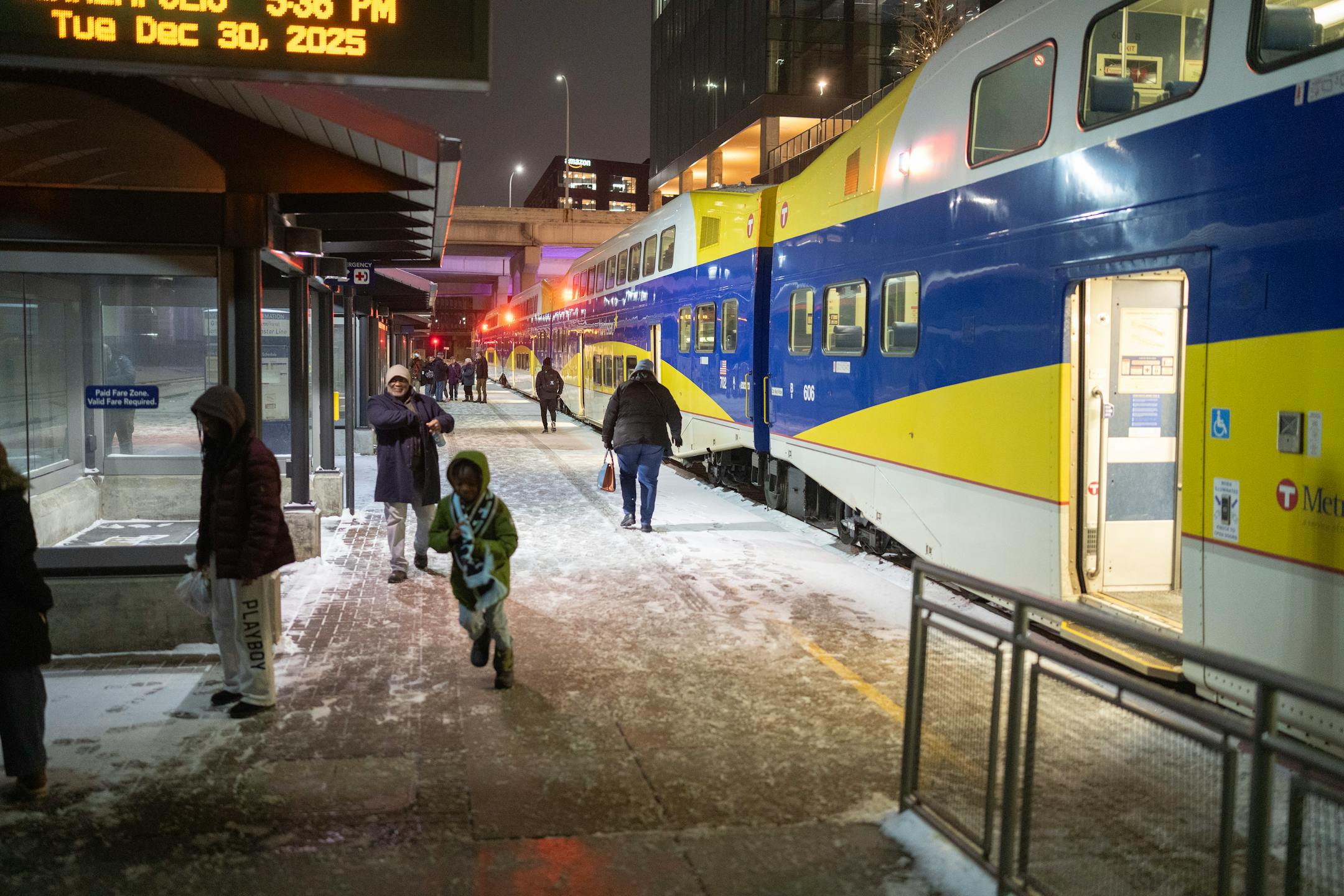
Eugene Ashong of Plymouth, left, returns from a roundtrip train ride on the Northstar rail line from Minneapolis to Big Lake with his family on Dec. 30. The last Northstar commuter train will run on Jan. 4, after years of lackluster ridership figures. (Jerry Holt/The Minnesota Star Tribune)

From its very first day, Minnesota’s Northstar rail line was always supposed to be more than what it was.

The 40-mile commuter rail line ended within the view of a grain elevator on the edge of Big Lake when it opened in 2009, but supporters believed it would someday connect the much larger city of St. Cloud to Minneapolis. Some even hoped it would be the first of several regional rail lines that would link the Twin Cities to Duluth and other destinations.

But that is not how things turned out. After years of sparse ridership, the last Northstar train will run on Sunday, Jan. 4.

Now, advocates worry that Northstar’s sputtering end amounts to a step backward for what were once grand plans for passenger rail service across Minnesota.

“[Northstar] was supposed to be the start of that,” transit advocate Ian Gaida said on a recent group ride organized by Streets.mn. “And instead of trying to continue that legacy, we’re just sort of giving up on it. That kind of leaves a bad taste in my mouth.”

There is one notable bright spot for Minnesota rail enthusiasts — Amtrak’s successful Borealis line between St. Paul and Chicago. Advocates are still pushing for new passenger rail lines, including an extension of Amtrak’s Borealis to St. Cloud and Fargo and the Northern Lights Express line from the Twin Cities to Duluth.

But the Duluth proposal is facing an uncertain future, as is an extension of the Blue Line light rail through north Minneapolis to the northwest suburbs.

“It’s really disappointing,” El Tinklenberg, who was the Minnesota transportation commissioner under former Gov. Jesse Ventura, said of Northstar’s end. “We worked hard over a lot of years to build the credibility of rail transit.”
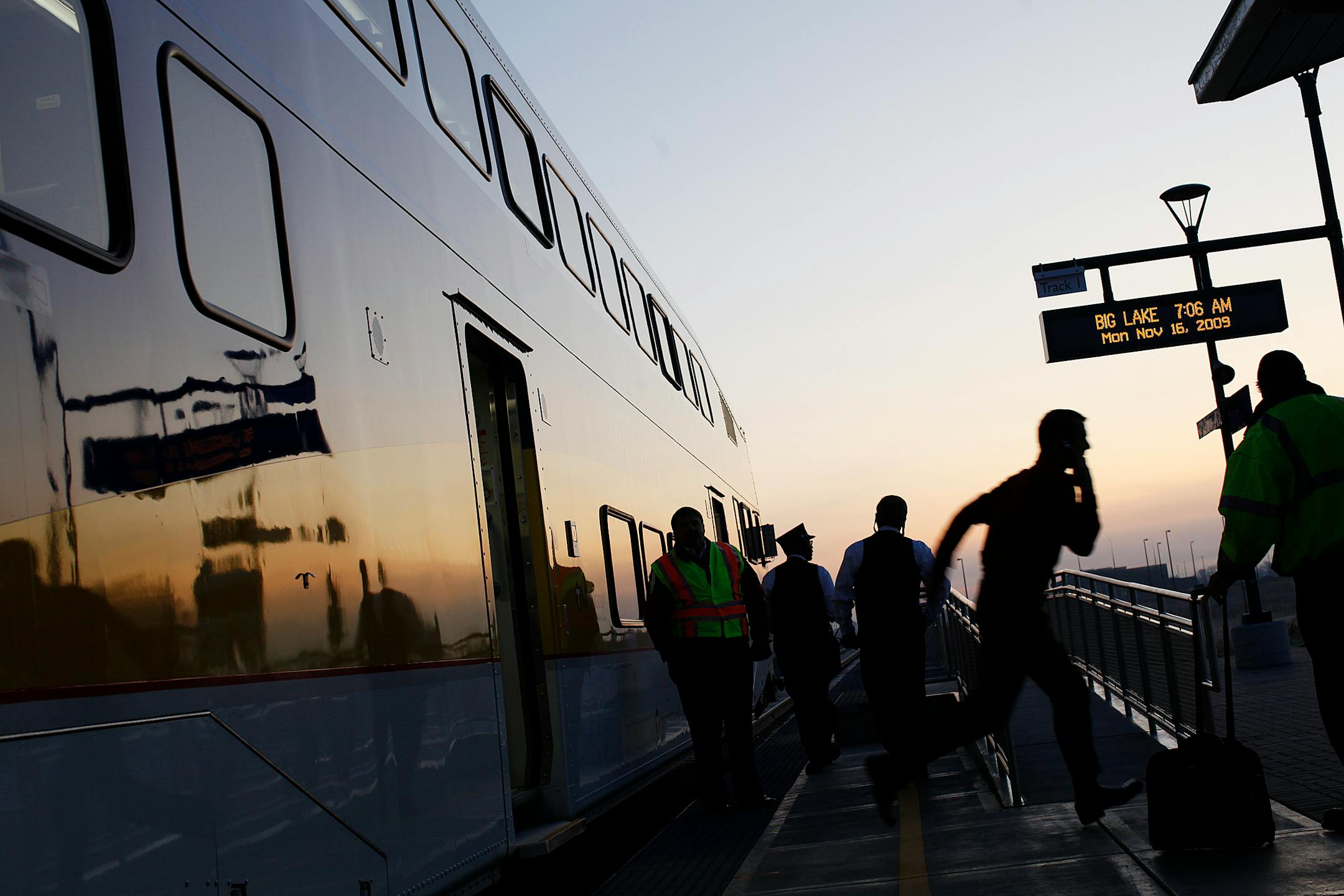
Commuters and rail staffers walk the Big Lake platform as the sun rose on the morning of Nov. 16, 2009, as the 7:19 a.m. Northstar commuter train prepared to leave for downtown Minneapolis on its first day in service. (Jerry Holt/The Minnesota Star Tribune)

Metro Transit officials, meanwhile, have characterized Northstar’s demise as a “transition” to more frequent and flexible bus service. Where the Northstar now makes only four roundtrips a day during the week and runs only occasionally on weekends, new replacement buses will run as often as every 30 minutes during rush hour.

“Transitioning to bus service will provide nearly 400 weekly trips — 10 times our current 40 commuter rail trips — spanning all times of day and days of the week,” Metro Transit spokesman Drew Kerr wrote in an email. “Residents throughout the northwest metro will have significantly more flexibility to use transit when it works best for their schedules, all at a lower cost.”

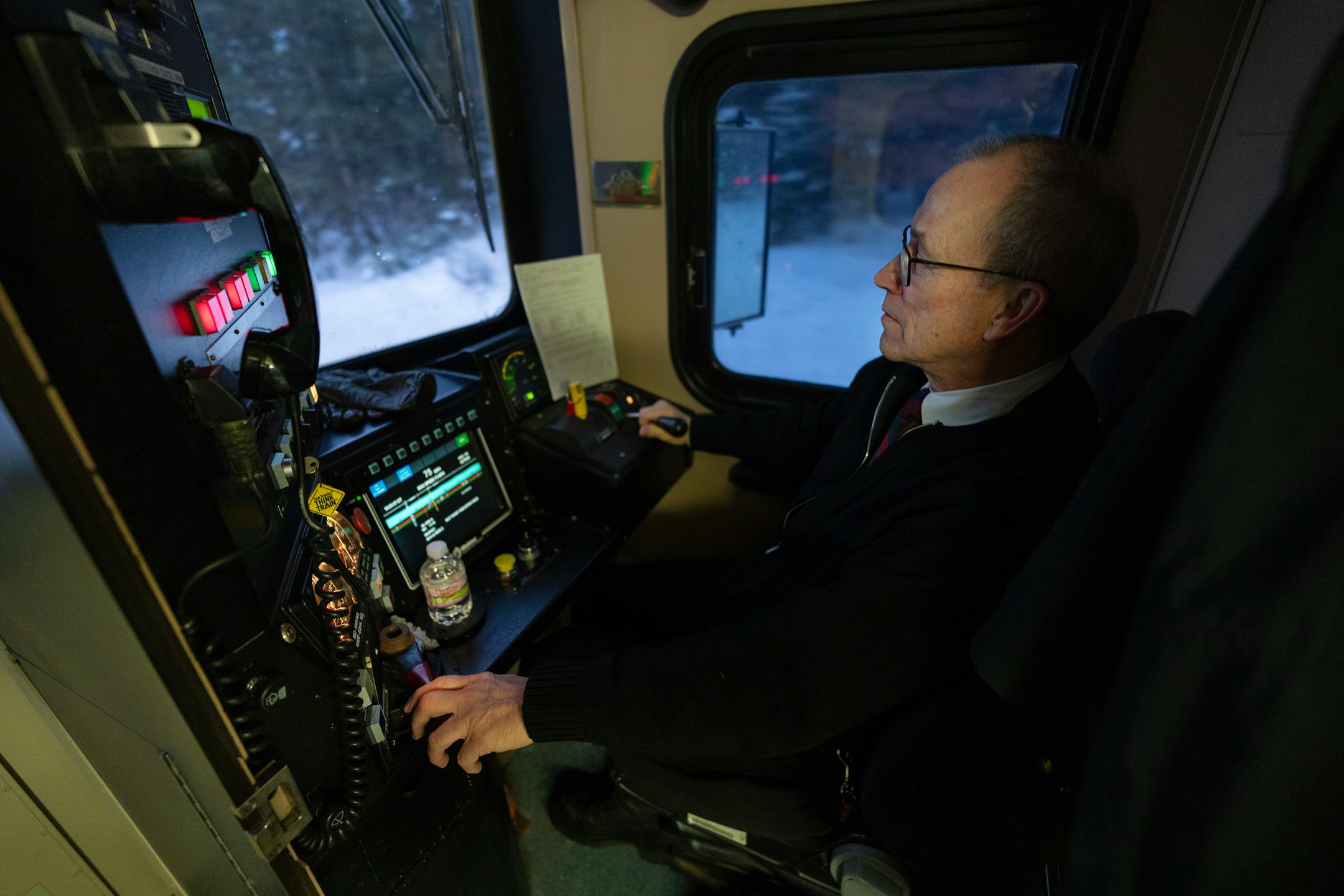
Todd Stock, engineer of the Northstar commuter train, operates the line from Big Lake to Minneapolis on Dec. 30. (Jerry Holt/The Minnesota Star Tribune)

Northstar’s stars never quite aligned

In the late 1990s, the Northstar had momentum in local city halls and capitols in Washington, D.C., and St. Paul. U.S. Rep. Jim Oberstar, the longtime high-ranking member of the House Transportation Committee told the St. Cloud Times in 1999 that federal money was available for the project — and that the line needed to end in St. Cloud. “It is pointless to have a partial project,” he said.

The line had the support of the Federal Transit Administration and Ventura as well. But the Minnesota House, under the Republican leadership of then-Majority Leader Tim Pawlenty, twice blocked a needed state match for the project.

Pawlenty gradually changed his tune and eventually supported Northstar after being elected governor, and after the line was halved to comply with new Bush-era rules that emphasized cost-effectiveness.

The shortened line met the federal government’s criteria, but still confounds Tinklenberg who called the new federal guidelines “bogus.” He believes that had Republicans not blocked state funding, which in effect delayed the line, it would’ve reached St. Cloud from the beginning.

Pawlenty, in an interview, called that thought “fanciful revisionism.” Powerful public officials, he noted, including himself and then-Vice President Joe Biden, were pushing for the St. Cloud extension as the Big Lake leg was preparing to open in 2009.

But that support never turned into construction. The line lost a powerful backer in 2010 when Oberstar was evicted from office in the tea party wave. Ridership never met expectations then cratered during the pandemic, further eroding support. By 2024, a St. Cloud extension was estimated at as much as $690 million.

In early 2025, the Metropolitan Council and the Minnesota Department of Transportation announced the line may be shut down. The council finalized the plan in an August vote.

Rep. Jon Koznick, R-Lakeville, who’s targeted Northstar for years, called its demise a “victory for fiscal conservatives and common sense.”

Pawlenty, once a critic, then a backer, has become a critic again. “It’s sad but appropriate,” he said of the line’s suspension, “and probably belated.”

Eugene Ashong of Plymouth plays a game with his son Nyema during a family train ride on the Northstar line on Dec. 30. (Jerry Holt/The Minnesota Star Tribune)

Train fans say it should’ve changed with the times

Metro Transit cut Northstar service drastically during the pandemic in 2020, reducing weekday service and eliminating most weekend service. It restored some service in 2023, but the line never returned to its full pre-pandemic schedule.

That lack of service dissuaded commuters from returning to the train, said Darren Olson, manager of Northstar for BNSF Railway, which operated the line.

“We were never really given an opportunity to come back,” said Olson. He was not speaking on behalf of the railroad, he said.

Transit advocates, including Gaida, argued the Met Council could have saved Northstar by expanding service — or at least restoring it to pre-pandemic levels.

Ryan Wade, a Minneapolis father of two, said he’s enjoyed taking his 4- and 5-year-old children on sight-seeing trips to Red Wing on Amtrak’s Borealis. But Northstar’s limited schedule — and lack of destinations beyond desolate park-and-rides — make it tough to use.

“I would love to have ridden this more,” he said.

Commuters like Michelle Trevisan of Ramsey say they’ll give the new buses a try, but anticipate they will be slower and less comfortable than the train. “My commute’s going to double,” she said.

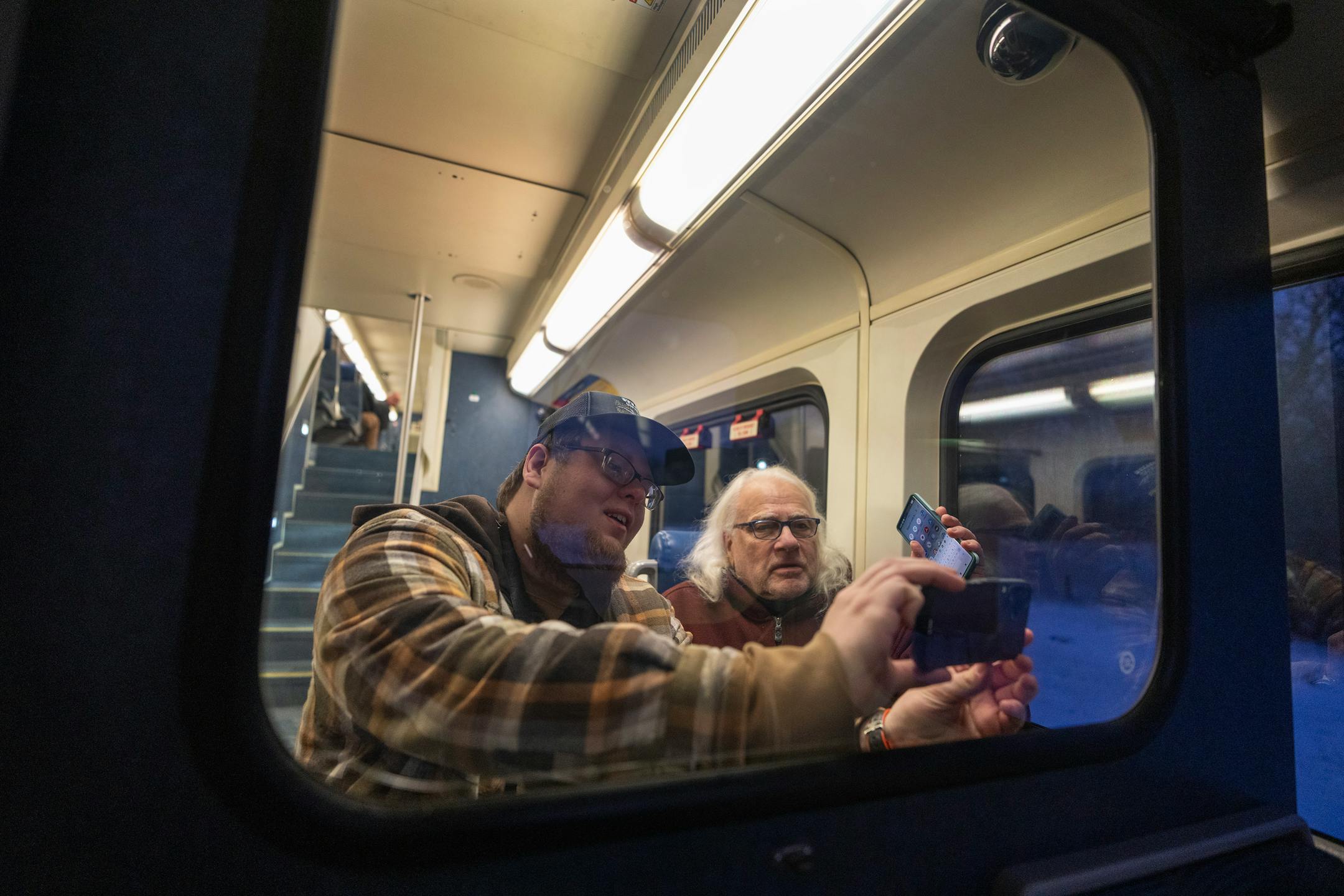
Conner Blauket, left, of Mankato and Mark Monfils take videos as they ride the Northstar train from Big Lake to Minneapolis on Dec. 30. (Jerry Holt/The Minnesota Star Tribune)

In an email, Metro Transit’s Kerr said officials regularly reviewed service changes based on ridership data and other factors but “based on our assessments we did not move ahead with restoring full pre-pandemic service” on the Northstar.

The sun was setting as the Northstar train carrying the Streets.mn group pulled into Big Lake station. Riders milled about for a few minutes, posing for selfies with locomotives and train cars, before piling back on board for one last ride south.

“It’s bittersweet,” said Don Zatroch, who’d advocated for Northstar decades ago. “Probably more bitter than sweet.”

about the writer

about the writer

Nathaniel Minor

Reporter

Nathaniel Minor is a reporter for the Minnesota Star Tribune.

See Moreicon

More from News & Politics

See More
card image
Renee Jones Schneider/The Minnesota Star Tribune

Walz has faced national scrutiny over fraud in state programs, and a growing number of Democrats have privately expressed concern about his run for a third term.

card image
card image