Twins flirting with worst fan turnout in Target Field history

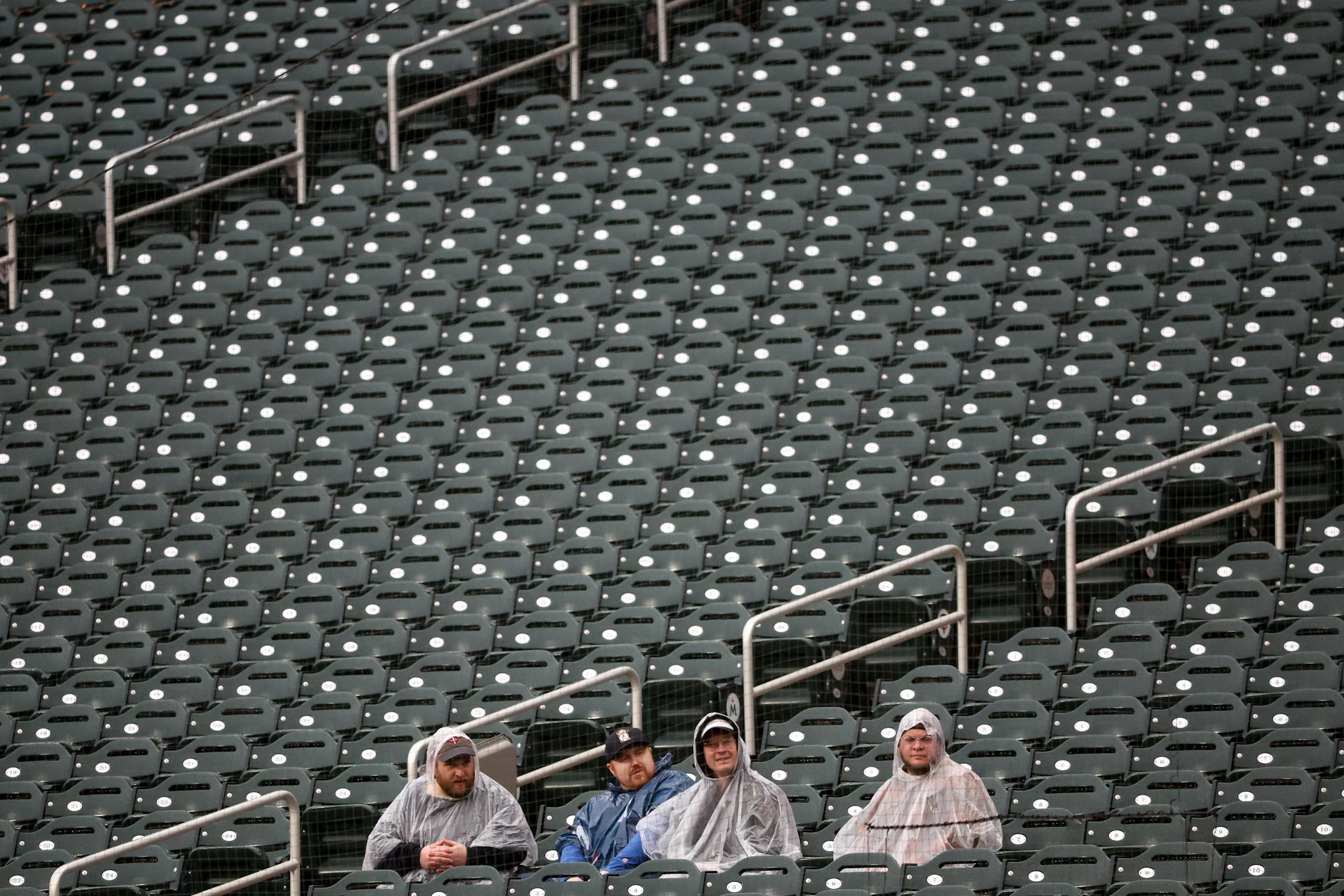
Minnesota is on pace to sell 1.8 million tickets this year, down from 1.95 million last year. After averaging 24,094 fans per game last season, the Twins are averaging 22,298.

August 12, 2025 at 11:00AM
As attendance numbers have steadily declined since the opening of Target Field in 2010, this season has a chance to be the worst in Target Field history aided by a fire sale at the MLB trade deadline two weeks ago. (Jerry Holt/The Minnesota Star Tribune)

The Twins were the talk of the sports world when they debuted Target Field in 2010. Not only was the new ballpark a massive upgrade over the downtrodden Metrodome, Sports Business Journal named it the Sports Facility of the Year in 2011.

Attendance numbers backed up that ranking, as the organization and its fan base appeared to be an idyllic marriage. Minnesota sold 3.2 million tickets and averaged 37,798 fans per game in 2010 — numbers that ranked sixth in Major League Baseball.

Fifteen years later, the fan base is diminishing.

Attendance has dropped 43% since 2010, with this season culminating in one of the worst in Target Field history.

The Twins are on pace to sell 1.8 million tickets this year, down from 1.95 million last year. After averaging 24,094 fans per game last season, the Twins are averaging 22,298.

On April 14, the Twins drew the smallest crowd in Target Field history with an announced attendance of 10,240. It was the seventh home game of the season.

Dave St. Peter, the team’s outgoing president, predicted that the team would level off at 2.7 million fans after Target Field’s initial seasons. In January, he said the 2025 attendance target was 2 million.

Following Minnesota’s fire sale at the trade deadline, the Twins likely will fall well short of that number.
ADVERTISEMENT
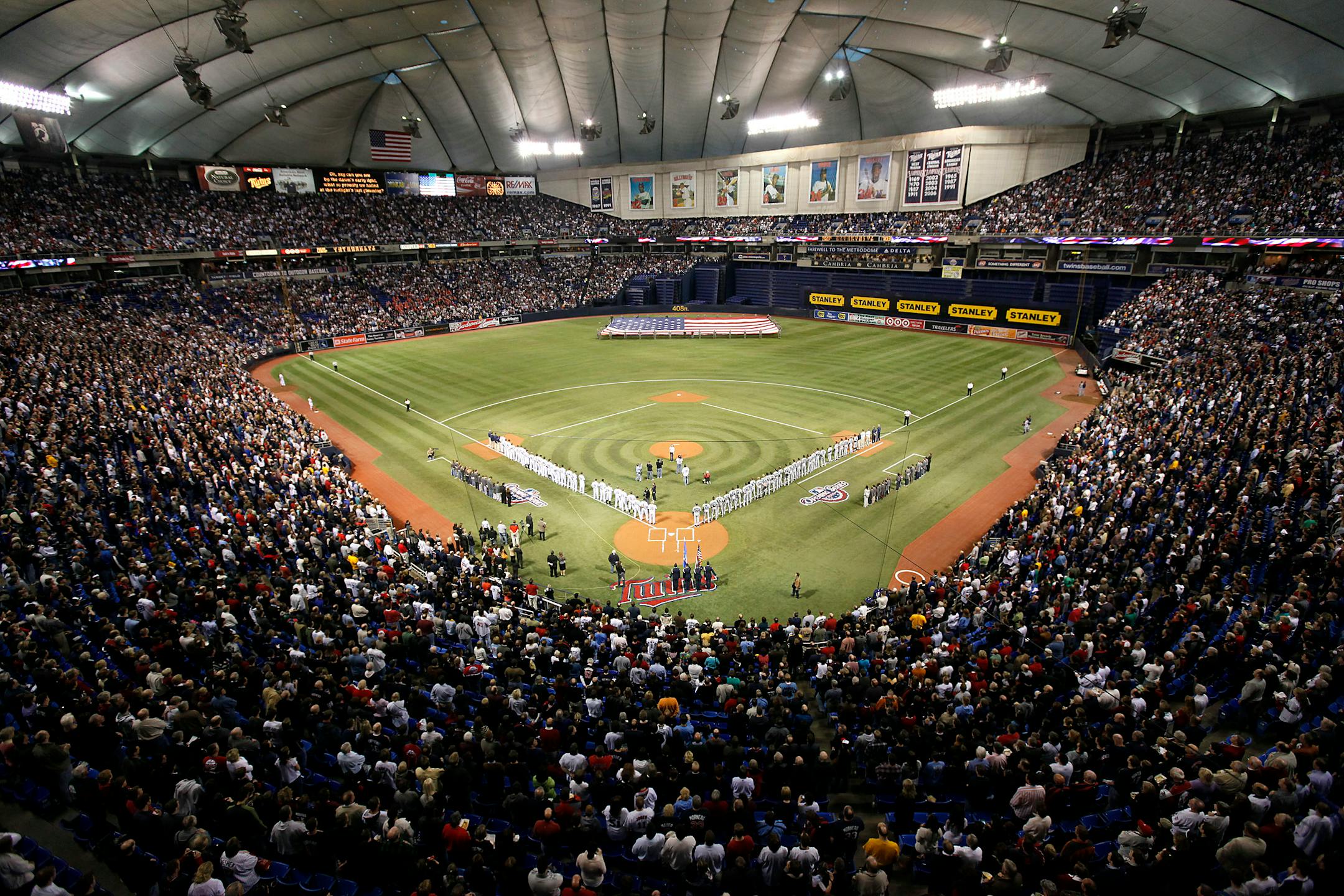
Twins fans fill the stands at the old Metrodome stadium during a game against the Seattle Mariners in 2009. (Carlos Gonzalez/The Minnesota Star Tribune)

How we got here

To keep the Twins in Minnesota, the Pohlads — Carl Pohlad bought the team in 1984 and his grandson, Joe, is now the team’s executive chair — threatened contraction or a possible move elsewhere if a new stadium wasn’t built.

“A new stadium will mean a better place to play, and a chance to put some better players on the field with the additional revenue,” Carl Pohlad said in 2006.

The Twins won the American League Central in 2010, and the belief from fans was that a new stadium would enable the team to consistently field a competitive team.

In a 2014 Star Tribune story, former state Sen. Steve Kelley, a lead legislative proponent of the public-subsidy package to build Target Field, said he never believed that a new ballpark would automatically translate into a winning team.

“There’s no way to build a building that will guarantee success,” Kelley said of Target Field. “Some legislators may have thought this will just sort of fix all problems.”

But he said he and others always believed that the new ballpark simply “gives the Twins the best opportunity to compete [and that] then the responsibility’s in their hands.

“If they continue to fall, I think that would be sad.”

Everything came to a head two weeks ago when Twins President Derek Falvey traded 10 major league players from the 26-man roster, including valuable relievers Jhoan Duran, Griffin Jax and Louie Varland, and dumped much of the salary of shortstop Carlos Correa.

From the outside, it appeared Falvey was waving the white flag on a season that didn’t feel over. And since the team had been for sale since October — before Wednesday’s breaking news that the Pohlads would retain majority ownership and not sell — saving $26 million in payroll this season seemed to be a benefit for the Pohlads.

“They sold everyone,” Twins fan Mitch Callister said Friday night at the Twins’ first home game since the trade deadline. “And they didn’t get that much back. I’m down on ’em completely.”

“I didn’t like the Duran trade,” Taylor Paullina added. “I didn’t like the Varland trade. They made no sense.”

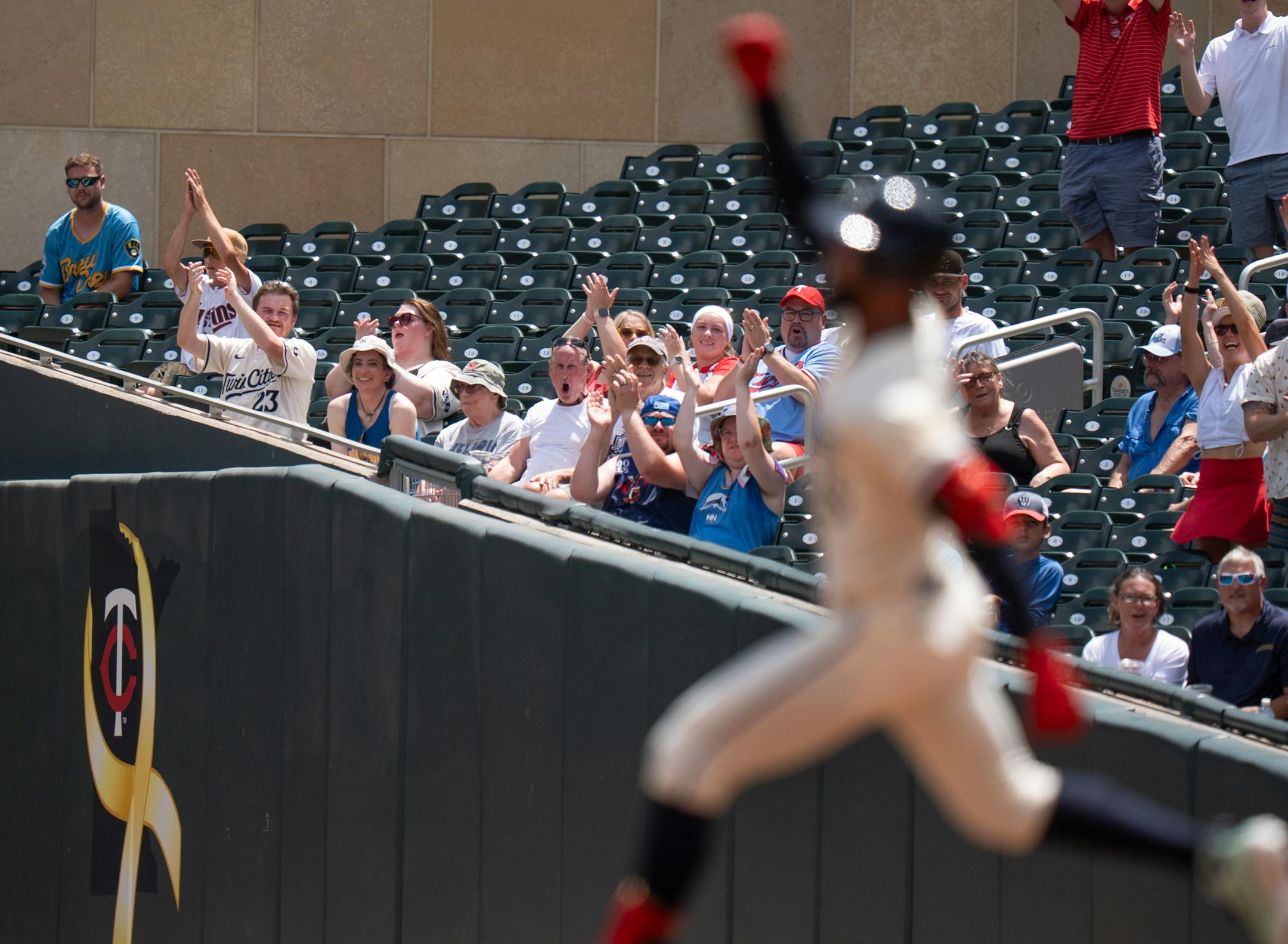
Despite the sell-off, fans showed up for the three-game series against the Kansas City Royals this past weekend. They were treated to a 2-1 series victory Sunday afternoon when Luke Keaschall blasted an 11th-inning walk-off home run.

The average attendance was 25,842 per game, 3,500 above the season average but typical for an early August series before school begins and with summer-like weather. Lines stretched far enough that security was seen walking around the main entrance at Gate 34, thanking fans for their patience. The lines for food were long, enough so that fans had to pay attention to the concourse TVs to avoid missing the action.

As of Wednesday, The Twins are 7½ games out of the playoffs to sit at 56-63 on the season. Before the trade deadline, they were coming off a 13-1 loss to the Boston Red Sox that put their record at 51-57.

As for the rest of the season, how many fans will use the tickets they have purchased? Attendance the past two Septembers — when the Twins were winning the division in 2023 and in the playoff race until late in 2024 — was steady.

“I don’t know what the outcome of the next couple of weeks with a young team is going to be,” said Sean Moore, the Twins chief revenue officer, “but you might see the call-ups of some of these young prospects that were brought up actually bring people out to the ballpark.”

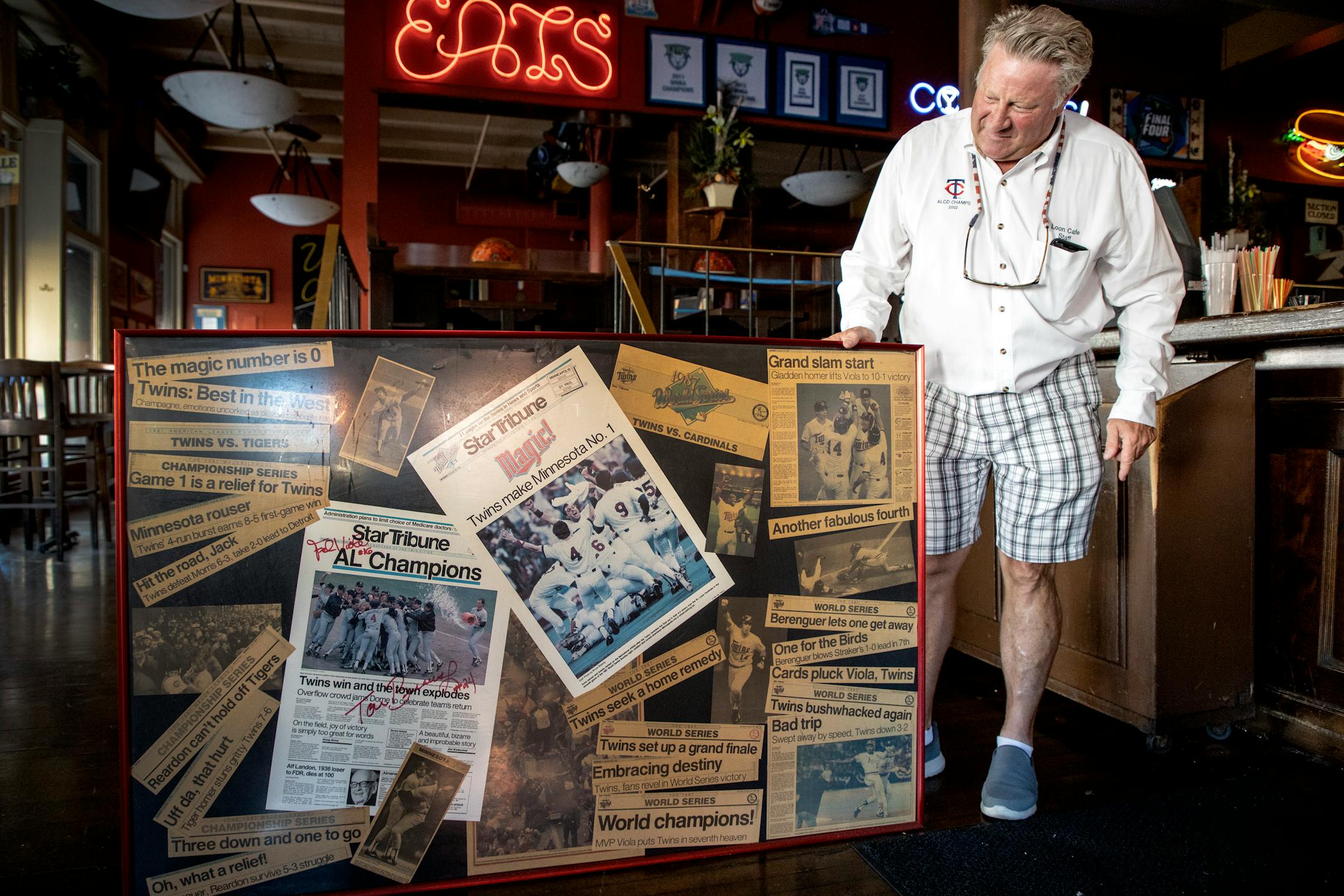
Tim Mahoney, owner of the Loon Cafe, is photographed with Twins memorabilia in 2020. (Carlos Gonzalez/The Minnesota Star Tribune)

Who’s affected most?

The Loon Cafe sits several hundred steps from Gate 34. The restaurant, a hub for baseball connoisseurs, has a motto: “Baseball is spoken here.”

Owner Tim Mahoney is now concerned about how much baseball will be spoken at his spot over the final home games of the Twins’ regular season after Black Thursday.

“It makes such a difference if they are in the playoff race,” Mahoney said. “Not necessarily in the playoffs, but to get in there. Then there is still interest and excitement.”

Blessed with 45 televisions, the Rabbit Hole has become the spot to watch sports in the North Loop. Just three blocks from Target Field, part of the allure for owner Deepak Nath was the location.

“Our attendance reflected [the Twins’ slow start],” he said. “Then we went on a bit of a winning streak in May and June, and the excitement started to catch on. People were coming out before and after games to watch the games. Then the fire sale came. It was comical.”

Now what?

“We’re not planning for there to be much foot traffic,” Nath said. “Not only because the team did what it did. The ongoing sale saga has created a distaste for this team. People don’t want to support the Pohlads because it doesn’t feel like they are willing to invest in a winning product on the field.”

For cousins John Lee and Bobby Goral, owners of Cuzzy’s, a sports bar located a few blocks from Target Field, the sell-off was frustrating.

“We go as they go,” Lee said of traffic at the bar during the Twins season. “Unfortunately, that’s the nature of the beast.

“You can see it [on] television. If it’s late in the year and there’s no contention, it’s a ghost town. You gotta put some sort of competitive product on the field every year. I know they say they try to do that every year, but it doesn’t always appear that way.”

Fans watch a game between the Twins and the Chicago White Sox in April at Target Field. (Ellen Schmidt/The Associated Press)

What’s next?

Now that the Pohlads will retain control of the organization, will payroll be diminished again next season?

The salary of Correa (the highest-paid player in team history at $33 million per season) was shed last week in a trade to Houston. Might front-line starters Pablo López ($21.75 million per season) and Joe Ryan (a 2025 All-Star who is three years away from free agency and an extremely valuable trade chip) be sent to other teams?

The Twins recently sent season-ticket renewals for 2026. They won’t have data until early next year to determine the impact of the sell-off.

Patrick Reusse of the Minnesota Star Tribune contributed to this story.

about the writers

about the writers

Ryan Kostecka

Sports editor

Ryan Kostecka is the Minnesota Star Tribune's sports editor.

See Moreicon

La Velle E. Neal III

Columnist

La Velle E. Neal III is a sports columnist for the Minnesota Star Tribune who previously covered the Twins for more than 20 years.

See Moreicon

More from Twins

See More
card image
Mike Janes

Winokur, a 6-foot-6 shortstop and center fielder, hit .226 with 17 homers, 68 RBI and 26 stolen bases in high Class A this year.

card image
card image