From diamonds to hockey, a look at the Twins’ new minority owners

The sale of part of the team will allow the Pohlad family to pay off “a significant amount” of the organization’s $500 million debt.

December 18, 2025 at 12:56AM
The Minnesota Twins at their 2025 home opener at Target Field in Minneapolis. (Jeff Wheeler/The Minnesota Star Tribune)

The family of a New York diamond trader, a Minnesota investment manager and a National Hockey League team owner are all new minority owners of the Twins, joining the Pohlad family’s decades-long quest to sustain a championship-level — and profitable — Major League Baseball organization.

After receiving approval from MLB officials, the Twins announced Tuesday that “several prominent Minnesota business leaders” bought interests in the team, including principal investor George Hicks and Craig Leipold of the NHL’s Wild. Glick Family Investments, a New York-based family firm, is also a principal investor.

In his first public comments as the Twins top executive — the intrafamily leadership change was another announcement from Tuesday — Tom Pohlad declined to disclose how much of the team sold. But he said the proceeds were an amount his family was “happy with.”

The Pohlads, who have owned the Twins since 1984, needed the cash infusion to improve the organization’s financial footing, including $500 million of debt. The family initially announced plans to sell the team in October 2024 but then decided to keep it by August.

“With these proceeds, we’re able to pay off a significant amount of debt,” Tom Pohlad said. “And that will allow us to reinvest in this team when the time is right.”

The Pohlad family saw the team’s debt grow to about a third of its market value in the past five years. The organization’s revenue no longer supported its expenses, Pohlad said, following the pandemic, a lost TV deal and other challenges.

None of the new owners wanted a controlling stake in the Twins, Pohlad said, though the Glick family, Hicks and Leipold will sit on an advisory board with members of his family.

“I view that board as an opportunity, as a place to help push us as a family on how we get to where we want to go,” Pohlad said. “There will be a healthy sense of accountability for us as owners.”

The investors “were really comfortable, convinced and ultimately confident” the Pohlads were “the right people to continue to lead this organization,” Pohlad added.

“They believe that there is opportunity to improve the business of the Minnesota Twins, that there is opportunity to grow revenue here — and that comes from re-engaging our fans and winning more baseball games,” he said.

The Twins declined to make the new limited partners available for comment.

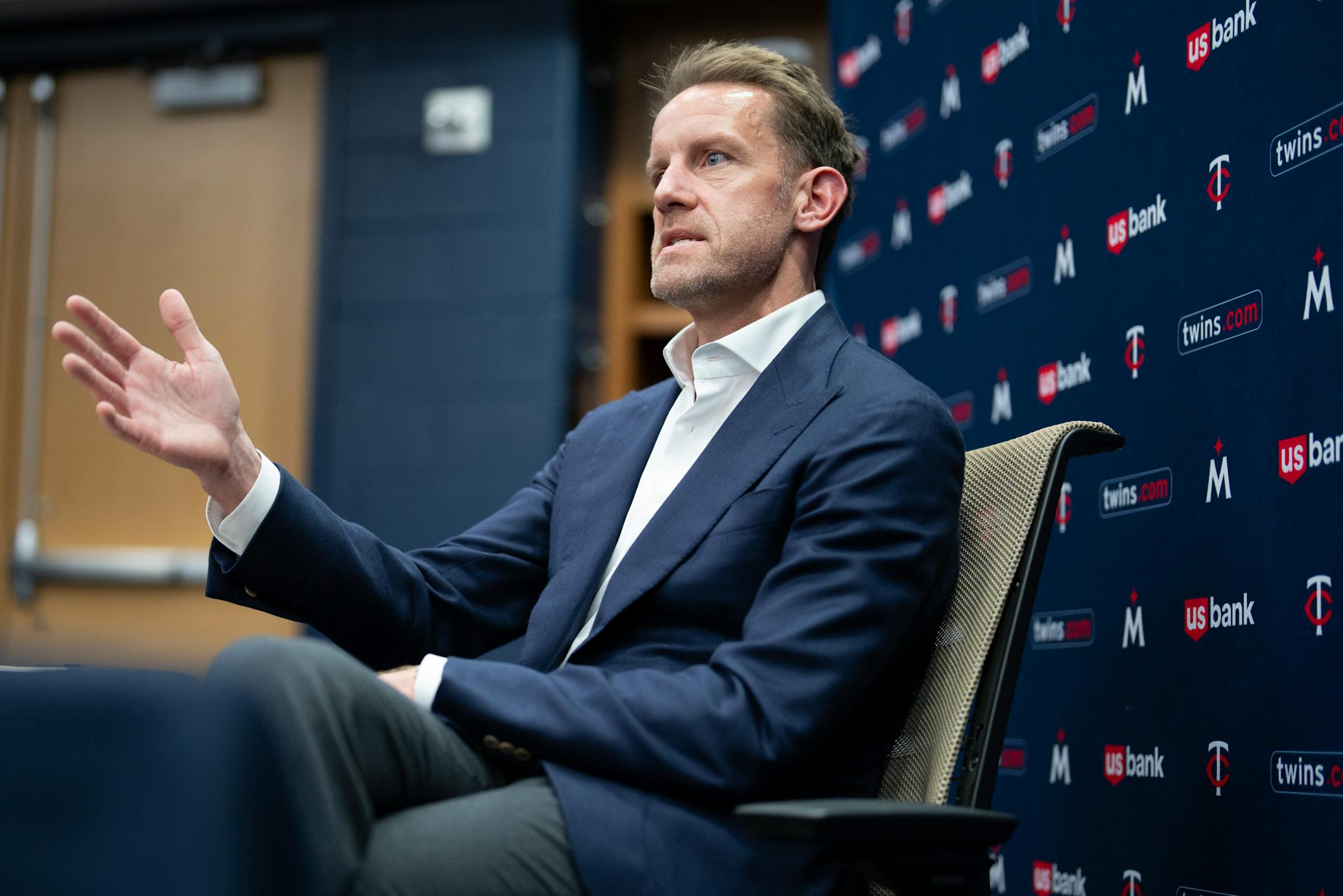
Tom Pohlad speaks at a press conference in the Twins Clubhouse at Target Field in Minneapolis on Wednesday. Tom was named the successor to his brother, Joe, in running the Twins organization. (Alex Kormann/The Minnesota Star Tribune)

Shedding Yankees gear

The Glick family is very familiar with diamonds, albeit not the baseball kind — its patriarch is a legend in the jewelry business.

Simon Glick runs his family’s New York-based office that invests in real estate as well as IT, manufacturing and financial services companies, per a database that tracks venture capital investing. His father, Louis Glick, built up the family’s fortune by trading rare diamonds beginning in the 1940s. Diamond rings bearing his name appear to sell well north of $50,000.

A 2014 story in the Times of the United Kingdom labeled Simon Glick as a rarely photographed “secretive New Yorker.”

Tom Pohlad joked the Glicks, who don’t have any Minnesota roots, “got rid of all their Yankees gear.” Pohlad added they are long-term oriented as “really smart investors.”

“They understand that the real opportunity in this organization comes with winning more baseball games,” Pohlad said.

Minnesota financier takes a stake

From Pipestone, Minn., lifelong Twins fan Hicks boasts a résumé full of Minnesota connections.

After graduating from Gustavus Adolphus College — where he played football — and then the University of Minnesota Law School in the 1970s, Hicks worked as a finance executive at Minnetonka-based Cargill. Two coworkers left the commodities company with him to create Värde Partners in 1993, taking the Swedish word for value as its name.

In more than three decades, this Minneapolis-based investment firm grew from a startup to the manager of approximately $16 billion worth of assets. It makes money partly by investing in the distressed debt of companies reeling from events like recessions and restructuring. This included betting on Enron’s debt after the energy company famously crumbled, the Minnesota Star Tribune reported in 2004.

Värde Partners co-founder George Hicks. (Steve Niedorf)

Around 2015, Hicks moved the firm’s headquarters from Bloomington to downtown Minneapolis to sit within the region’s financial hub. He transitioned from co-chief executive officer to executive chair in 2022, telling the Star Tribune in 2020 how he wanted to increase his focus on philanthropy. He sits on the board of trustees of environmental nonprofit the Nature Conservancy’s Upper Midwest chapter.

As a principal investor, Hicks leads a group of stakeholders that Pohlad said includes “really experienced business people” with “strong community ties.”

“Most of them are lifelong Twins fans, and they care passionately about this team, and they believe in what we can build going forward,” Pohlad said.

Pohlad didn’t disclose the names of the other investors.

A Wild advisor

Leipold joined the deal as a limited partner after Hicks and the Glicks, Pohlad said.

The Wild owner won’t have as big a stake as the other two. Pohlad noted Leipold invested in the Twins in his personal capacity and not via Minnesota Sports and Entertainment, the Wild’s parent company.

“I don’t want to overstate the investment, if you will, particularly out of respect for others in the group that played definitely central roles,” Pohlad said. “But Craig’s going to be a great advisor, and as we’re developing a relationship, he’s becoming a friend.”

Leipold became majority owner of the Wild in 2008, when he led an investment group that paid $260 million for the hockey team as well as the master lease for Xcel Energy Center, now known as Grand Casino Arena, and other facilities.

A native of Neenah, Wis., he launched his business career in the 1970s at Kimberly-Clark Corp. He made his mark as an entrepreneur, founding one of the country’s first telemarketing firms and growing a commercial raingear company.

Leipold sold both enterprises for profits and married his wife, Helen, an heir to family-owned cleaning supplies giant S.C. Johnson. Chasing a long-held desire to be in sports business, he briefly considered investing in an NBA team before launching the Nashville Predators, an NHL expansion team, in 1997.

After a decade of ownership, he sold the team, saying Nashville’s hockey fanbase lagged other markets. A year later, he bought the Wild from founding owner Bob Naegele Jr.

Since then, Leipold, now 73, has added even more sports franchises to his roster, including the Wild’s Iowa-based AHL affiliate. Most recently, he acquired a majority stake in Minnesota’s Major League Volleyball expansion team, which will start play in 2027.

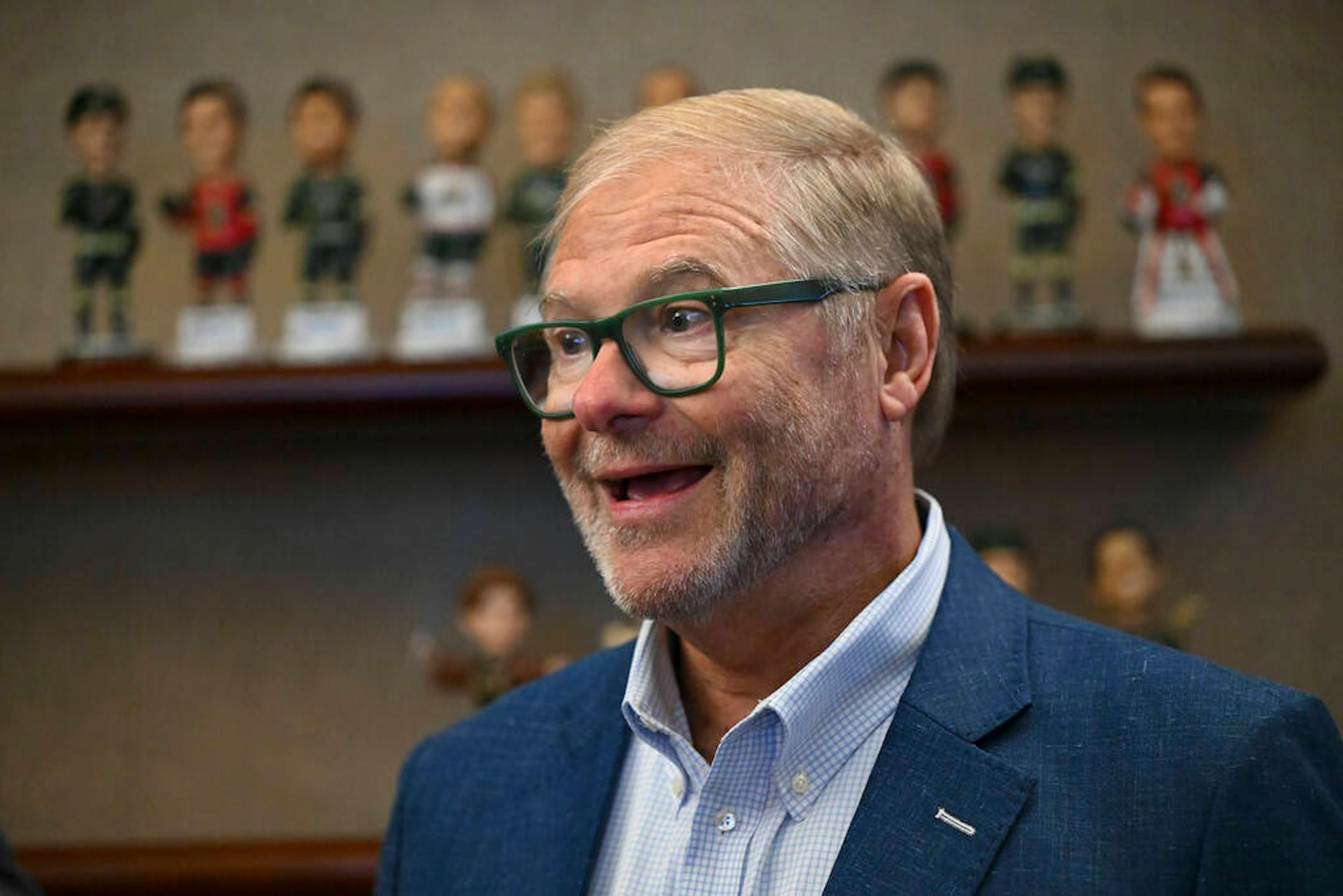
Minnesota Wild owner Craig Leipold chats with members of the media before a game in 2024. (Aaron Lavinsky/The Minnesota Star Tribune)
about the writers

about the writers

Katie Galioto

Reporter

Katie Galioto is a business reporter for the Minnesota Star Tribune covering the Twin Cities’ downtowns.

See Moreicon

Victor Stefanescu

Reporter

Victor Stefanescu covers medical technology startups and large companies such as Medtronic for the business section. He reports on new inventions, patients’ experiences with medical devices and the businesses behind med-tech in Minnesota.

See Moreicon

More from Business

See More
card image
Jeff Wheeler/The Minnesota Star Tribune

The sale of part of the team will allow the Pohlad family to pay off “a significant amount” of the organization’s $500 million debt.

card image