Joe Pohlad keeps the faith even after Twins fire sale and fan backlash

“The goal is to win a World Series. That doesn’t mean it doesn’t come with some pain in the short term.”

The Minnesota Star Tribune
October 1, 2025 at 2:09PM
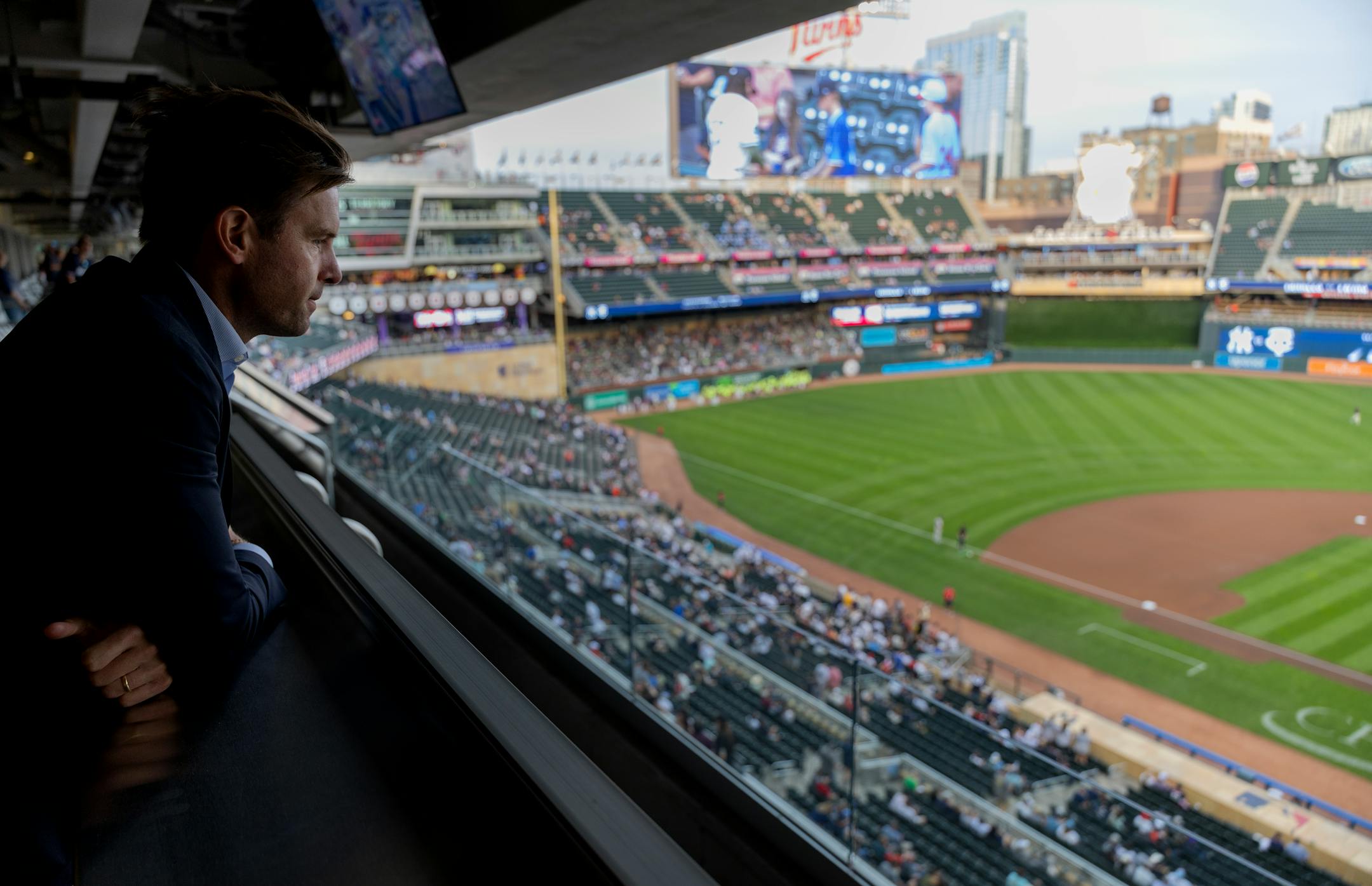
Twins Executive Chair Joe Pohlad watches a game against the Yankees at Target Field on Sept. 16. The 43-year-old is a third-generation Twins owner, having taken over the team his grandfather, Carl, purchased more than four decades ago. (Carlos Gonzalez/The Minnesota Star Tribune)

Joe Pohlad, the maligned executive chair of the Minnesota Twins, ordered a black coffee at a swanky hotel restaurant near Target Field on a chilly recent morning. The night before had been another low point in a season full of them: A rain-delayed loss to the lowly Chicago White Sox, before an announced crowd of just 13,000 and putting Pohlad’s team 16 games below .500.

It felt like a good day to brood. Yet Pohlad focused on something Twins fans haven’t felt much lately: Optimism.

This season has weighed on the 43-year-old third-generation scion of one of Minnesota’s wealthiest families. The franchise had seemed on a winning trajectory until payroll cuts were followed by an epic collapse in 2024, which led to this summer’s fire sale when the Twins traded nearly half the team.

Two weeks later came the Pohlads’ decision to retain team ownership nearly a year after putting the franchise on the market. Instead, the family brought in two limited partnership groups and their accompanying cash. The day after the season ended came the firing of manager Rocco Baldelli.

Only a few years after assuming the helm as the public face of the Twins, Joe Pohlad has turned into the man fans love to hate.

Backlash from fans and pundits has been fierce. A survey of Twins fans by the Athletic showed 98.5% of fans wanted the Pohlads to sell the team. ESPN graded the Twins season an “F,” calling it “the kind of season that can set an organization back five years, where it kind of feels like the whole organization has given up.”

That fan frustration has infiltrated Pohlad’s daily life. In recent weeks, people often approach him in hushed tones, almost like he’s in mourning. He deals with it with an even-handedness friends call his trademark.

“Know that it’s just a period in time,” Pohlad said. “It’s like parenting. When your kid’s having a hard time, you try not to have them focus on the moment itself but realize the sun’s going to come up tomorrow.”

ADVERTISEMENT

The case for pessimism is easy: The team dealt 11 players, including star shortstop Carlos Correa and beloved closer Jhoan Duran, before the July trade deadline. So soon after their 2023 playoff breakthrough, it felt like the franchise was waving a white flag for the foreseeable future.

You have to squint to see the case for optimism: After the trades, the Twins’ farm system ranks second in baseball, including slugger Walker Jenkins, the sport’s 14th-ranked prospect. A core of Joe Ryan, Byron Buxton, Pablo López and Royce Lewis is under team control through 2027 or longer.

“I’m trying to get my head out of all the negativity,” Pohlad said. “But I am overwhelmingly confident about Twins baseball. I’m confident because we have got all the right [pieces] … And we have the resources that we’re ready to invest when needed.

“On top of all that — and this sometimes gets lost — we want to win!" he continued. “The goal is not to compete. The goal is to win a World Series. That doesn’t mean it doesn’t come with some pain in the short term. Building a true winner comes with some challenge. Right?”

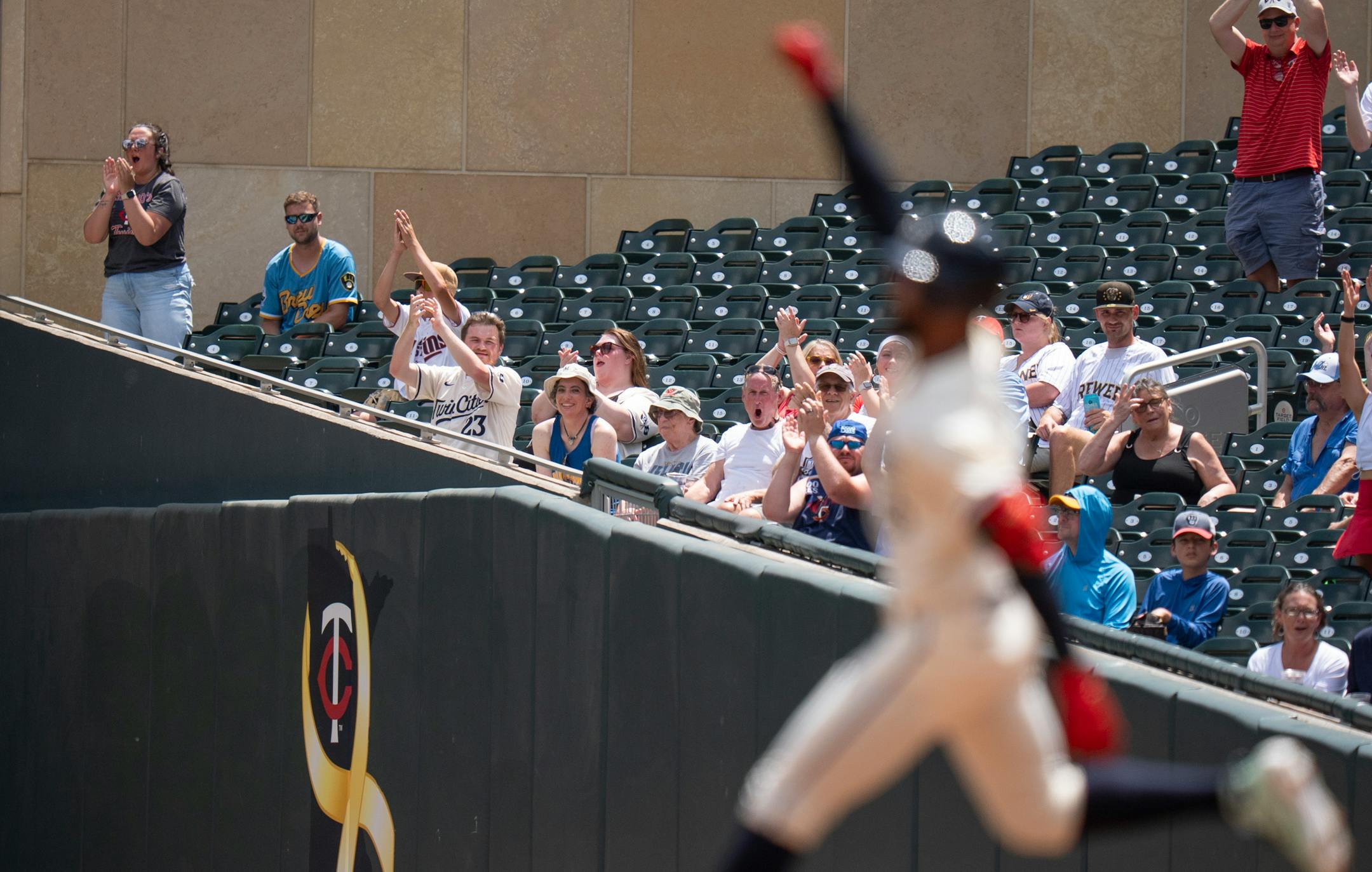
Twins fans — surrounded by plenty of empty seats — celebrate star center fielder Byron Buxton's first-inning home run June 22 at Target Field. (Jerry Holt)

• • •

Pohlad is a private person in a public role. Close friends and colleagues call him remarkably deliberate and intentional.

There’s an earnest, zen quality to him; he listens to his favorite band, the folk rockers Bon Iver, to center himself most mornings, and he’ll pause his favorite television show, the HBO drama “The Leftovers,” for deep talks on faith with his wife, Sara. He runs Bde Maka Ska and Lake of the Isles several mornings a week with a close childhood friend. He avoids social media.

In a wide-ranging interview with the Minnesota Star Tribune, he chose his words carefully, sometimes thinking 20 seconds or longer before responding, knowing every statement could be dissected.

He declined to discuss why the family put the team on the market a year ago and then shifted course this summer, only saying major decisions are made by family consensus. “You can’t explain every hard decision,” Pohlad said.

Pohlad’s relationship with the Twins dates back to when his late grandfather, Carl Pohlad, bought the team when Joe was a toddler. Joe Pohlad has worked for the team since 2007. He has sat in the executive chair since 2022. In his four-decade relationship with the Twins, Pohlad calls 2025 the low point.

Even current players have spoken up. All-Star pitcher Ryan said the Twins’ “biggest mistake” was letting Sonny Gray leave via free agency after finishing second in 2023 American League Cy Young Award voting. That period, shadowed by the team’s television struggles that left some fans unable to watch games for months, seeded fans’ current frustration: A $35 million cut in payroll after the franchise’s first playoff series win in two decades. Pohlad’s comments before the 2024 season about trying to “right-size” the business still dog him.

For a mid-market team in a big-market sport, the question is whether one step back can mean two steps forward.

But, it’s worth noting: 2023’s excitement was based on a team that won a wild-card series, not a World Series. That resurgent team only had the 11th-best record in baseball — a fringe playoff team, not a bona fide contender.

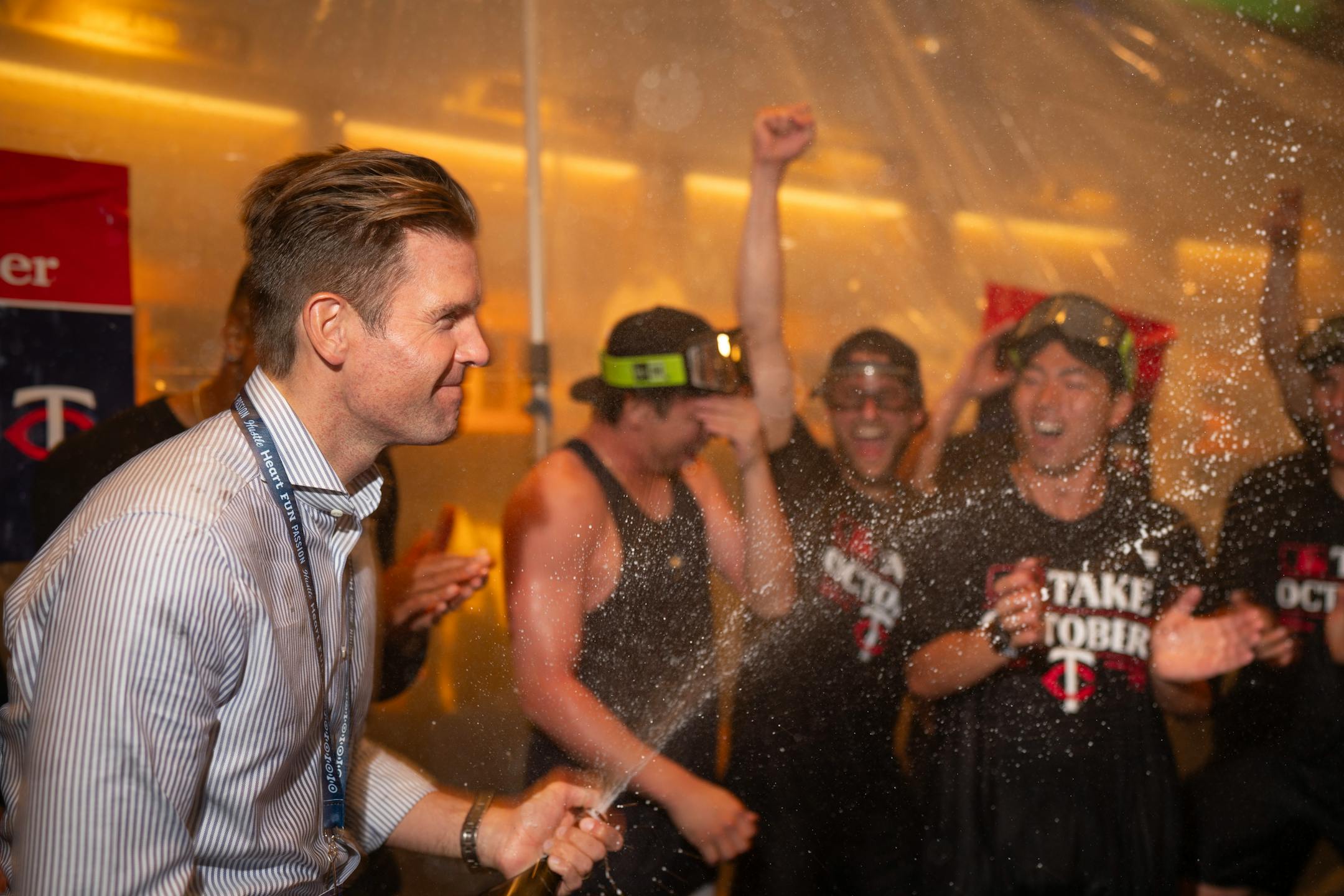
Joe Pohlad, executive chair of the Twins, was handed a bottle of champagne to spray following the Twins win over the Toronto Blue Jays on Oct. 4, 2023, to take their American League wild-card series. (Jeff Wheeler/The Minnesota Star Tribune)

“A year and a half or two years ago, they were darn near a model franchise, according to industry people,” said Terry Ryan, the former Twins general manager. “But it wasn’t working. They turned around and did something good [at the trade deadline]. They might have gone further than fans hoped they would. But that attitude might change here in the next 12 months.”

If youngsters pan out, Terry Ryan said, “all the sudden, people will forget.”

• • •

Like any Twins fan of a certain age, Pohlad’s most salient childhood baseball memory came on Oct. 27, 1991.

But that memory wasn’t so much Jack Morris’ 10 shutout innings, or Gene Larkin’s walk-off drive, or teammates mobbing Dan Gladden at home plate. His memory is set in the Metrodome parking garage when his younger brother, Chris, slipped on a stray skateboard.

Growing up Pohlad meant the team doctor treats your kid brother’s broken finger before Game 7 of the World Series.

Growing up Pohlad meant plenty more: Mandatory Sunday dinners underscoring loyalty to family, with roundtable questions that pondered the meaning of life. Games of capture the flag with neighbor kids near Interlachen Country Club, where his grandparents lived off the fifth hole. Playing diplomat as the middle brother even as heated basketball or ping pong games devolved into fights. Crushing Mountain Dews and Oreos with high school friends while playing “GoldenEye 007″ on the Nintendo 64. Trying out for the Breck School musical as a senior and landing a role as a Jet in “West Side Story.”

Everyone at Breck knew his family owned the Twins. Still, the Pohlad name wasn’t an all-encompassing shadow, said Andrew Murphy, one of Joe Pohlad’s best friends since fifth grade.

“That speaks to their humility,” Murphy said.

His parents emphasized humility to balance wealth, which stems from their array of businesses spanning banking, automotive, film, investments, robotics, commercial real estate and more. The Rev. James Chichetto, who taught Pohlad as a freshman at Stonehill College, recalled Pohlad often talking of his grandfather — yet Chichetto didn’t know the family’s wealth until graduation.

“He never told about his grandfather’s success — it was always the quality of the man,” Chichetto said. “Joe never said anything about the Minnesota Twins. Not arrogant, not smug. Just modest. He was only 18, but he talked like he was 55.”

His parents dictated Joe’s high school summers were spent working: At Bruegger’s, as a bank teller, 5 a.m. wake-up calls for a landscaping job.

“It opened my eyes up to a different world,” Pohlad said. “My parents wanted all three of us to have career experiences that weren’t just handed to us.”

The Twins were never front and center. Today, Pohlad’s three sons attend virtually every summer home game, and his oldest, an eighth-grader, peppers team employees in the press box with incisive baseball questions.

But Pohlad didn’t love baseball growing up. He remembers pitching in a junior varsity game and thinking, “I am not good at this.” When he attended Stonehill, a small Catholic college near Boston, even early-2000s Red Sox fever didn’t capture him.

Love for baseball came at a crossroads. After college, uncertain about life, he worked in marketing for a Pohlad-owned bank in Arizona, then moved to Portland, Ore., for a project management job at a creative agency. That job didn’t work out. He had once wanted to study architecture or theology; now, he was adrift and unemployed.

“When you have all the opportunity in the world, it’s hard to focus in on what you want to do,” Pohlad recalled.

It was 2007, the year after a magical Twins season: Johan Santana’s second Cy Young Award, Justin Morneau’s MVP, Joe Mauer’s batting title. For weeks, Pohlad trudged to the neighborhood coffee shop in Portland, returned to his place and switched on baseball. It brought peace. “Something about baseball,” he said, “filled my cup.”

One day, feeling like a deadbeat, he called his older brother, Tom.

His brother voiced what later would seem obvious: “Why don’t you consider moving home and working for the Twins?”

When he joined the team later that year, it wasn’t as the anointed one. He met with then-team President Dave St. Peter to chart a path toward a broad understanding of the business. Employees got to know him as a person, not an owner.

“Joe never played that ownership card,” St. Peter said. “He didn’t want the fast track. He knew this was the long game.”

“This isn’t out of the movies where the owner dies, the son takes over and he was born on third base,” said another childhood friend, Thomas Simmons. “He deeply cares about the Twins.”

Pohlad started in baseball operations, doing visas for players, filling out purchase orders for bats, balls and other equipment for the majors and minors. He did a crash course in scouting. He wrote the minor league handbook. He moved into marketing, and he worked the retail side at the sparkling-new Target Field. At night he’d sit with the public relations department in the press box and learn the game. For a spell he led the Twins’ flagship radio station; the family later sold that media company at a steep loss. A few years ago, he led a comprehensive team rebrand.

“Our family doesn’t operate in terms of, ‘You get this business, you get this business,’ ” Pohlad said. “You need to prove yourself and show your worth.

“I wanted the responsibility to carry forth our family business,“ he continued. ”I wanted the responsibility to do right by our employees, do right by our fans, do right for the community. It sounds stupid and cheesy. But that’s genuinely where the starting place was from an early age.”

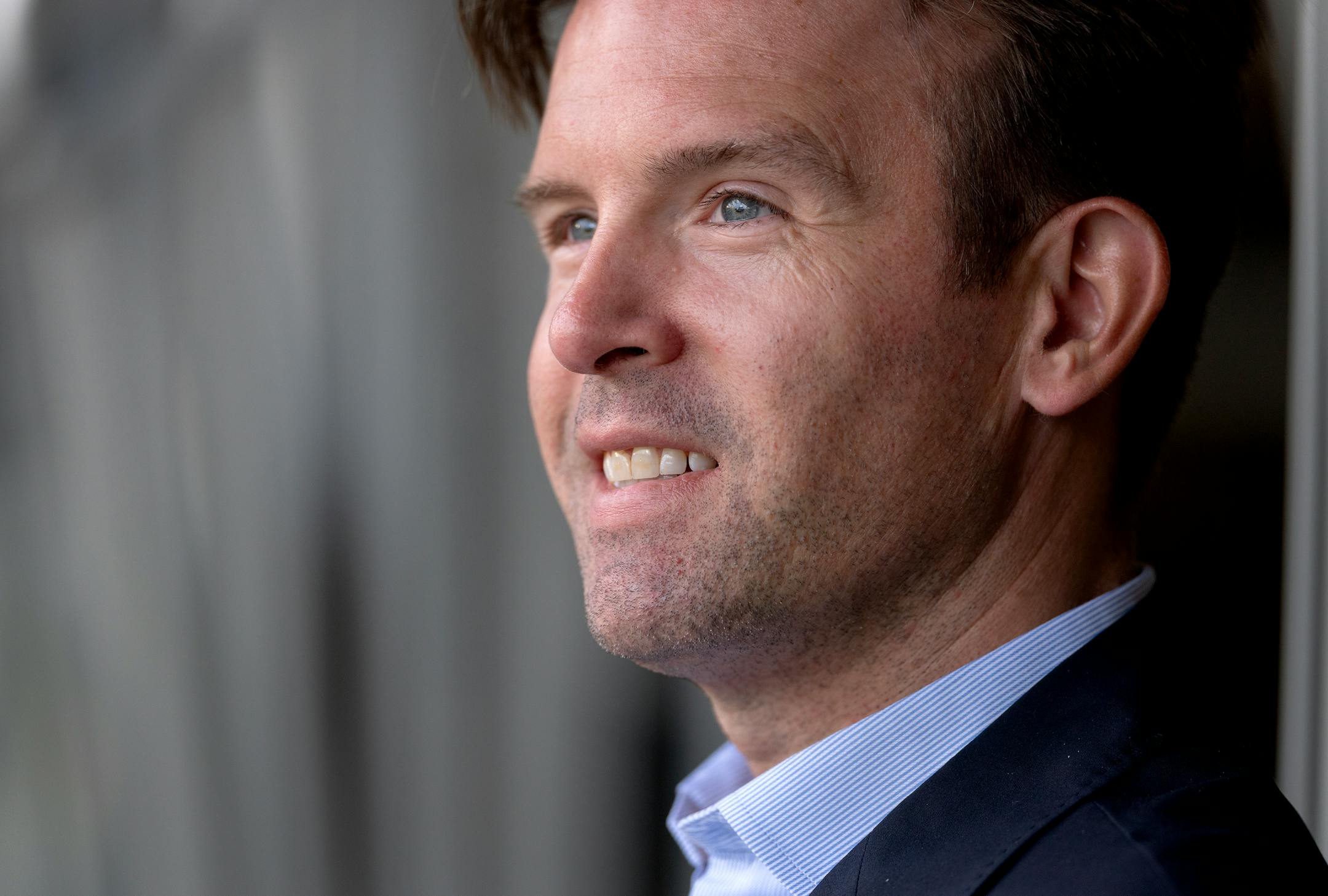
Minnesota Twins Executive Chair Joe Pohlad photographed at Target Field in Minneapolis. (Carlos Gonzalez/The Minnesota Star Tribune)

• • •

Loyalty is big to the Pohlads.

Stefan Van Voorst, a former nonprofit leader who owns Public Domain cocktail bar in the North Loop, is one of Pohlad’s close friends. The past several years have been some of the hardest in Van Voorst’s life: divorce, starting a business, anxiety and depression. Pohlad checked on him daily.

“He’s one of those ride-or-die friends,” Van Voorst said. “That’s a literal life-saver.”

Friends say Pohlad doesn’t complain about this fan backlash. But they do notice a heaviness about him.

“One of the first things he said to me after he got the role,” said Van Voorst, “is the challenge with leadership is things aren’t always in alignment with each other. Is the goal to win a championship? Is it to make a bunch of money? Is it how can we best benefit the city? That’s a big insight that 99 percent of Twins fans never think about.”

This is not like previous low points, like in the late 1990s and early 2000s when the team felt close to moving or dissolving. In 2001, Pohlad’s grandfather volunteered that the team disappear as part of an MLB contraction plan, which remains a sore point with fans decades later.

“We’re miles ahead from the late 1990s in the Metrodome,“ St. Peter said. ”I know it’s in vogue right now to be mad at the Twins, mad at the Pohlads. They accept that, and over time they’ll navigate through this just as they have other low points.”

Professional baseball is a case study in the push-pull of patience and urgency. A batter lays off bad pitches then jumps on a hanging curve. Teams develop a prospect for five years with no promise he will make the bigs.

Yet teams in smaller markets confront a paradox: Building a winner too quickly can backfire, but championship windows can be short.

“Baseball is all about finding that right balance between patience and striking when the moment is right,” Pohlad said.

At the North Loop restaurant, a server refreshed Pohlad’s cold coffee. He’s a man of moderation, but talking about the Twins future, he grew animated.

“Fans just want to win, and they want to win every year,” he said. “I do too! Everybody’s lives are better when their team is winning. But at some point, you ...”

He paused, choosing his words carefully.

“We’ve tried to do that for a few years now, and it just hasn’t worked out,” he said. “At some point you gotta look at yourself and be like, ‘You know what? We’ve gotta try something different.’ And not everybody’s going to like it. You’ve gotta own it. Fans are going to be upset. They’re going to say what they’re going to say. And you gotta keep moving forward, and trust that you’re making the right decision.”

about the writer

about the writer

Reid Forgrave

State/Regional Reporter

Reid Forgrave covers Minnesota and the Upper Midwest for the Star Tribune, particularly focused on long-form storytelling, controversial social and cultural issues, and the shifting politics around the Upper Midwest. He started at the paper in 2019.

See Moreicon

More from Twins

See More
card image
Mike Janes

Winokur, a 6-foot-6 shortstop and center fielder, hit .226 with 17 homers, 68 RBI and 26 stolen bases in high Class A this year.

card image
card image