
Pohlads remain Twins owners after finding investors, but MLB’s economic realities still favor the big-market teams

The salary cap question looms over baseball, and that battle could cause a work stoppage after the 2026 season.

The Minnesota Star Tribune
September 1, 2025 at 1:01AM
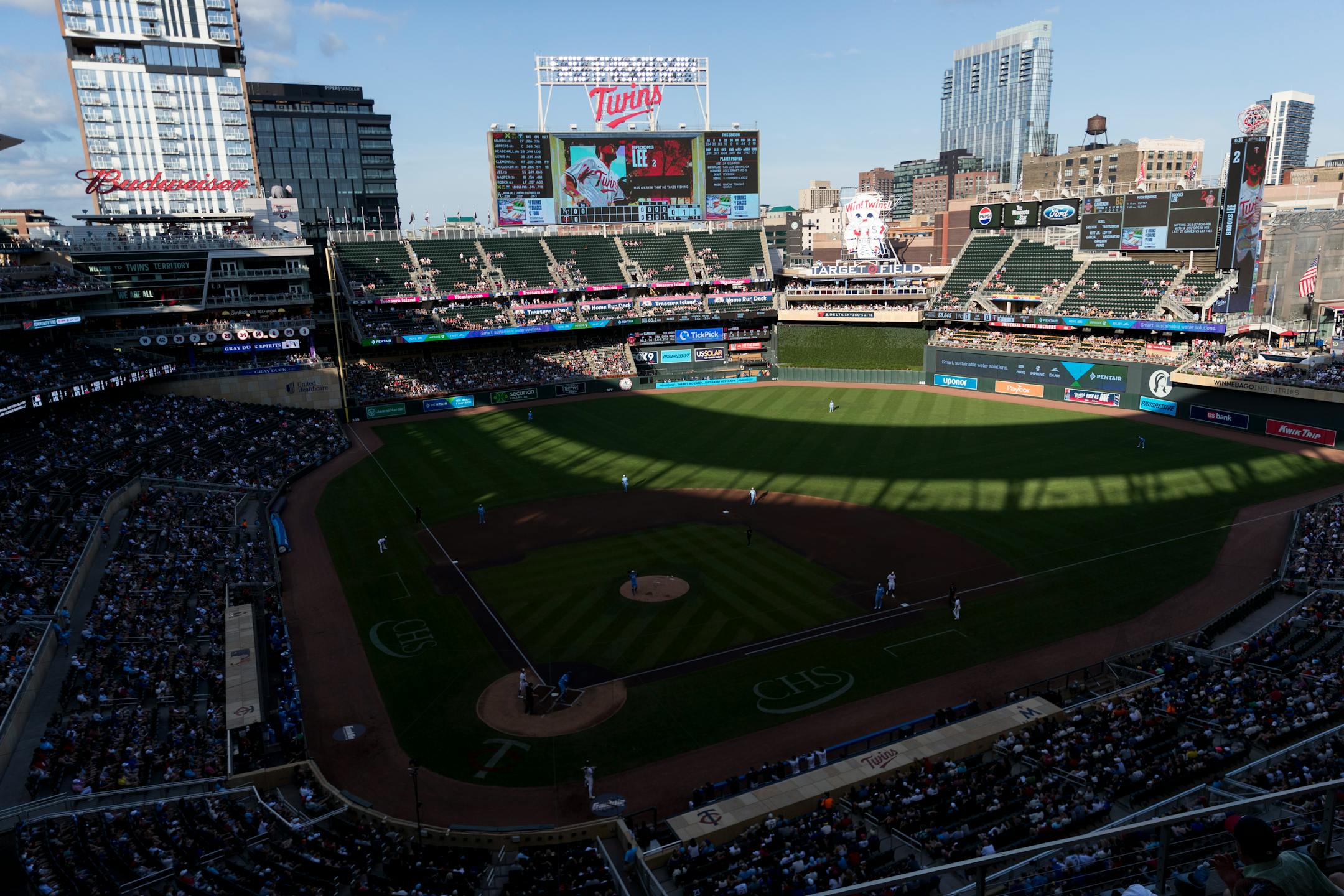
The Minnesota Twins play against the Kansas City Royals at Target Field in Minneapolis on Aug. 9.
As the sun sets on another Twins season, the disparity between MLB's rich and poor has never waned. (Rebecca Villagracia/The Minnesota Star Tribune)

The Twins solved their short-term $400 million financial dilemma by agreeing to sell portions of the franchise to as-yet-unidentified minority investors, a transaction that is still in progress. It took more than 10 months of uncertainty before that solution became clear.

And that might be the easy part.

The Twins’ long-term financial outlook might take far longer to guarantee, at least as a family-owned asset of the Pohlads, and depends upon navigating a far more turbulent path — baseball getting a new collective bargaining agreement after next season, a process that could shut down business for a lengthy period of time.

Joe Pohlad, executive chair of Minnesota’s Major League Baseball franchise and the grandson of Carl Pohlad, who bought the team 41 years ago, said in an interview with the Minnesota Star Tribune earlier this month that the decision to take on partners but keep majority control of the team “addresses the debt that we have incurred.” The debt grew substantially when COVID-19 cost MLB nearly two-thirds of the 2020 season and forced games to be played in empty stadiums.

But Pohlad added an observation that hints at the challenge that he believes still looms for franchises outside the country’s major media markets.

“That debt built up as we tried to invest in the fan experience [at Target Field] and in our team,” Pohlad said. “What we’ve found is that’s really difficult to do in this current economic model.”

Pohlad did not elaborate, but he didn’t have to — his complaint is hardly uncommon in a sport that has an ever-widening disparity between its franchises in revenues and, hardly unrelated, in player payroll. According to an analysis by CNBC published in April, the Twins’ gross revenue, estimated by the television network at $356 million last year, is roughly half that of the Yankees and Dodgers, each of whom took in more than $700 million.

It’s no wonder, then, that the Twins’ 2025 payroll, pegged at $128 million this season by baseball-tracker Cot’s Baseball Contracts, is far less than half that of those MLB colossuses, with the Yankees spending around $297 million and the Dodgers spending a record $338 million. Not to mention the $336 million payroll carried this year by the Mets’ Steve Cohen, the wealthiest owner in baseball.

ADVERTISEMENT

Some of that money is offset by baseball’s revenue-sharing program, in which teams pool 48% of local revenues and then divide that total equally among the 30 teams. But the program has been undermined by a narrow definition of which revenues are to be included, as well as by some owners’ reluctance to spend their share.

This is nothing new, of course; the Yankees and Dodgers, who perhaps not coincidentally faced off in last October’s World Series, have historically sat atop the payroll standings. And though the often-random nature of the sport — in which games and series can be won by less-talented teams — means that those teams don’t win championships commensurate with their investment in the roster, the money still buys them huge competitive advantages.

The Yankees, for instance, have not finished a season with a losing record since 1992, 33 years ago, and have qualified for the postseason 25 times in that span. The Dodgers, meanwhile, have all but clinched their 13th consecutive playoff berth, and 17th this century.

Twins fans, of course, have a firsthand marker on that disparity: Minnesota has lost 17 consecutive postseason games against the Yankees and last qualified for the American League Championship Series, whose winner advances to the World Series, in 2002.

Small markets struggle

Of course, things could be worse. The Marlins and Pirates, annually among the five lowest-paid teams in the game — Miami is carrying this year’s lowest payroll at $65 million, according to Cot’s, and Pittsburgh just $85 million — are also usually absent from October games. Miami has made two brief appearances in the past two decades, one of them after the abbreviated 60-game COVID season in 2020, and has not won a postseason game since its 2003 World Series title. The Pirates? The last time they won a postseason series longer than one game was in their last World Series championship season — 1979.

Of the dozen teams currently occupying a playoff position in the MLB standings, only three — Seattle ($162 million), Detroit ($161 million) and Milwaukee ($114 million) — carry payrolls lower than $200 million, or at least half-again more than the Twins spend.

It’s no wonder, then, that MLB Commissioner Rob Manfred detects an even bigger danger to the league — the loss of interest by fans in small- and middle-market cities, who no longer believe their underfunded teams have a reasonable chance to win.

“There are fans in a lot of our markets who feel like we have a competitive balance problem,” Manfred said in a news conference at the All-Star Game in Atlanta last month. “… This competitive issue [is] real.”

Twins fans can surely relate. Attendance at Twins home games this season is on pace to reach only 1.8 million tickets sold, the lowest level in a non-COVID season since 2002 in the Metrodome. That’s 150,000 fewer fans spending money at Target Field, not an inconsequential financial hit.

And that comes in the Twins’ second season of shrinking local television revenue. Their long-term contract with the former Diamond Sports Group paid the Twins $54 million just two seasons ago, but is believed to deliver less than half that total, perhaps much less, now that MLB is handing the distribution of Twins games on TV.

Will the playing field level?

So assuming the Pohlads aren’t ready to substantially raise the team’s payroll — and their four decades of stewardship make it clear that they likely aren’t, even with new partners aboard — what hope do Twins fans have that the team will ever become World Series contenders in the foreseeable future?

Well, if you can’t afford to spend more, perhaps you can force your rivals to spend less.

A salary cap on team payrolls has been proposed by MLB owners several times in the past, and Manfred, with the encouragement of several small-market owners, has hinted that they might try again 15 months from now, when the collective bargaining agreement with the players union expires.

The NFL, NBA and NHL all operate with such payroll limits, which greatly reduce the disparity between what teams spend. The Knicks and Celtics pay their players almost exactly what the Timberwolves do, the Rams and Jets roughly equal to the Vikings. Baseball owners, even former ones, can sound a little jealous.

“Does the system need some work? Yes. I know there are different theories on a salary cap, and I find those interesting, because that deals with it,” Bud Selig, former owner of the Brewers and Manfred’s predecessor as commissioner, said this past week on the “MVP Podcast.”

“Three of the other major sports all have a salary cap, and they’re working well.”

Work stoppage ahead?

Few people are more aware of the difficulty of instituting such a cap, however, than Selig, who canceled the 1994 World Series after the players went on strike in mid-August to halt MLB’s adoption of a salary cap. The work stoppage dragged on into late March 1995, and it was finally settled when the owners were forced to drop that demand.

Three decades later, and there still are no signs at the moment that players would be willing to consider such a plan now, even if it was paired with a salary “floor” that would force low-spending teams to reach a minimum level.

”A cap is not about a partnership. A cap is not about growing the game,” Tony Clark, executive director of the MLB Players Association, said about an hour before Manfred spoke at the All-Star Game. “This is not about competitive balance. This is institutionalized collusion” to lower salaries.

If the 1994 conflict repeats itself over the same issue 15 months from now, is the 2027 season in danger? It certainly could be, if both sides’ positions harden. With the rhetoric level already rising, a lockout of the players by ownership is now widely expected in December 2026, with teams apparently hoping the players’ resolve weakens as the regular season approaches.

It’s a long shot bid toward changing the system that the Pohlads find tilted against them, and toward providing low-payroll teams with a more level playing field. But at least the Twins are used to being long shots.

about the writer

about the writer

Phil Miller

Reporter

Phil Miller has covered the Twins for the Minnesota Star Tribune since 2013. Previously, he covered the University of Minnesota football team, and from 2007-09, he covered the Twins for the Pioneer Press.

See Moreicon

More from Twins

See More
card image
Mike Janes

Winokur, a 6-foot-6 shortstop and center fielder, hit .226 with 17 homers, 68 RBI and 26 stolen bases in high Class A this year.

card image
card image