
Surprising decision by Pohlads leaves more questions, and some fan unrest

Instead of selling the Twins, the family decided to stay in control of a franchise it has held for 40 years.

The Minnesota Star Tribune
August 13, 2025 at 11:44PM
Despite the announcement from Joe Pohlad Wednesday morning, the Twins will enter the offseason with a lower baseline payroll than 2025 and trade speculation is certain to hover over starters Pablo López and Joe Ryan. (Jeff Wheeler/The Minnesota Star Tribune)

The Pohlad family’s surprise decision to hang on to the Minnesota Twins, made public Wednesday morning, left fans wondering how the longtime owners can improve a franchise they were ready to give up on last October.

They announced 10 months ago they were exploring selling the franchise they’ve owned for 40 years, and last month at the MLB All-Star break, commissioner Rob Manfred said, “I can tell you with a lot of confidence that there will be a transaction there.”

Instead, Joe Pohlad, the Twins’ executive chair, said his family will remain the principal owner of the club while adding “two significant limited partnership groups.”

The identity of the new minority ownership partners were not revealed. Ownership transactions are subject to league approval, and a Major League Baseball official said final approval is expected to take place following the season.

One group of investors is made up of Minnesotans, and the other is an East Coast family. The transaction does not include a path for expanding ownership stakes nor becoming the controlling owners.

Glen Taylor, owner of the Minnesota Star Tribune and former owner of the Timberwolves and Lynx, said through a spokesperson that neither he nor any of his entities are involved.

“We see and hear the passion from our partners, the community, and Twins fans,” the Pohlad family said in a statement. “That passion inspires us. This ownership group is committed to building a winning team.”

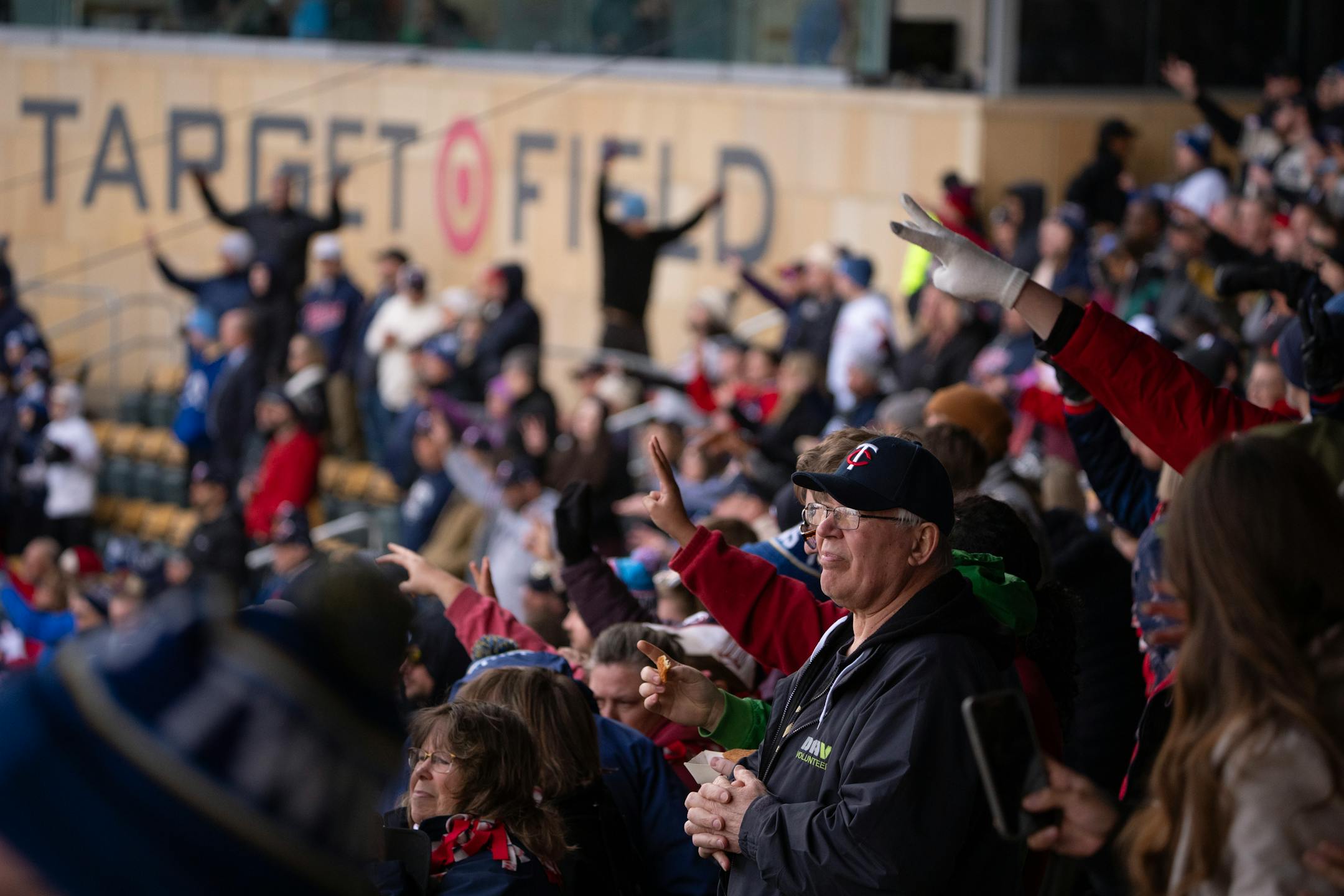
Social media commenters responding to the Pohlad family keeping the team largely teetered between angry and outraged. People roaming around Target Field on Wednesday were seemingly a little more temperamental, while the team in New York operated with business as usual.

ADVERTISEMENT

Winning solves problems

Stopped while jogging outside of Target Field on Wednesday, 48-year-old Jesse Bergman said he doesn’t care who owns the team.

“I just want the Twins to win, that’s really it. Regardless of who owns it, bring us a winning team,” Bergman said at the stadium gates. As he spoke, wind flapped flags commemorating the Twins 1987 and 1991 World Series championship wins. “Minnesota needs it.”

Mahad Ahmed, 23, of Shoreview, said he feels the Pohlad family has “let their fans down” by not selling.

A devoted supporter of the team since he was 14, Ahmed said he’s grown frustrated watching the franchise “go downhill” in recent years. When he attends games, he usually buys the cheapest seats, knowing he can move into one of the many empty spots closer to the field.

Attendance at Target Field is down 7.21% from the same point last year — on pace to sell 1.8 million tickets, which would be the lowest in Target Field history, excluding COVID-affected seasons — and the Twins just traded 10 major league players at the trade deadline, which is nearly 40% of their roster.

Alexis Herman, 22, from Plymouth, said she was surprised to see that the Pohlad family was holding on to the team, but she had a more optimistic outlook on the situation than Ahmed.

“I hope that whatever they do, it works out best for the team,” she said. “We are just in the rebuilding era.”

Money matters

The Twins are worth about $1.65 billion, according to an April analysis from CNBC, which put them at No. 22 among MLB’s 30 teams.

The team, however, ranked much higher in another category: debt.

CNBC, the business news TV network, estimated the Twins’ debt-to-value ratio at 24%, which translates to about $396 million.

The Miami Marlins, Washington Nationals and Texas Rangers outperformed the Twins on total debt load. The Los Angeles Dodgers and Chicago Cubs, valued at $5.8 billion and $4.45 billion respectively, each carried 10% debt-to-value ratios that totaled higher than the Twins’ debt in dollars and cents, the analysis showed.

Joe Pohlad said the team’s debt did not hinder the monthslong selling process “as far as I’m aware.”

Patriarch Carl Pohlad, Joe’s grandfather, purchased the Twins in 1984 for $44 million, or around $137 million in today’s dollars when adjusted for inflation.

Bringing in minority investors allows the Pohlad family — Carl Pohlad’s three sons and seven grandchildren — to “tap into the hidden profits” of the ballclub’s massive appreciation since it was bought 41 years ago, said Victor Matheson, a professor and sports economist at the College of Holy Cross in Massachusetts.

Smaller, family-owned teams such as the Twins can be “asset rich and cash poor,” Matheson said. The stock sale “allows the Pohlads to really capitalize on this asset. It allows them to cash out part of the value of the asset without relinquishing control.”

Minority owners often have some say in a sports team’s direction, even if they lack full control, Matheson said.

“We don’t have any sense if the new owners are [thinking] ‘damn the torpedoes full speed ahead, let’s spend what we need to win the central division next year,’” he said. “We don’t know if we have sports fans or accountants with these minority shareholders.”

More of the same?

Twins President Derek Falvey, who has led baseball operations since Oct. 2016, and field manager Rocco Baldelli, who is in his seventh season, might not have survived a regime change.

After the massive trade deadline fire sale, the Twins almost certainly will miss the playoffs for the fourth time in the last five seasons. The Twins have won one postseason series since 2002, and haven’t played in the World Series in 34 years.

New ownership typically means changes to baseball operations and the on-field staff.

“One of the main reasons why I came to this organization in the first place was because of the Pohlads, the types of owners that they are and how they treat people,” said Baldelli, who was initially surprised when he learned the Pohlads were keeping the team.

The Twins shed $26 million from their 2025 payroll through their trade deadline moves, and unloaded $70 million in commitments from Carlos Correa’s contract.

Their payroll now sits around $130 million, which is where it was last year, and they have only two players with long-term contracts on their books: All-Star centerfielder Byron Buxton and starting pitcher Pablo López.

Pohlad declined to reveal plans for the 2026 payroll, saying those internal discussions will take place in October.

“We’ll have a new process by then with our new limited partners involved,” he added.

The Twins will enter the offseason with a lower baseline payroll and trade speculation is certain to hover over starters López and Joe Ryan.

The Twins carried a team-record $164 million payroll during 2023, when they ended a 21-year drought without winning a playoff series, but they haven’t ranked in the top half of the league in payroll since 2011.

Contributors to this story included Bill Lukitsch, Kyeland Jackson, Mike Hughlett, Emmy Martin, Bobby Nightengale, Phil Miller, La Velle E. Neal III and Matt McKinney.

about the writer

about the writer

Bobby Nightengale

Minnesota Twins reporter

Bobby Nightengale joined the Minnesota Star Tribune in May, 2023, after covering the Reds for the Cincinnati Enquirer for five years. He's a graduate of Bradley University.

See Moreicon

More from Twins

See More
card image
Mike Janes

Winokur, a 6-foot-6 shortstop and center fielder, hit .226 with 17 homers, 68 RBI and 26 stolen bases in high Class A this year.

card image
card image