
Parents protest Medica’s new benefit limit for children with severe disabilities

Reduction in private insurance coverage of at-home nursing care could create tough choices for families with disabled children who need around-the-clock monitoring.

The Minnesota Star Tribune
December 17, 2025 at 8:46PM
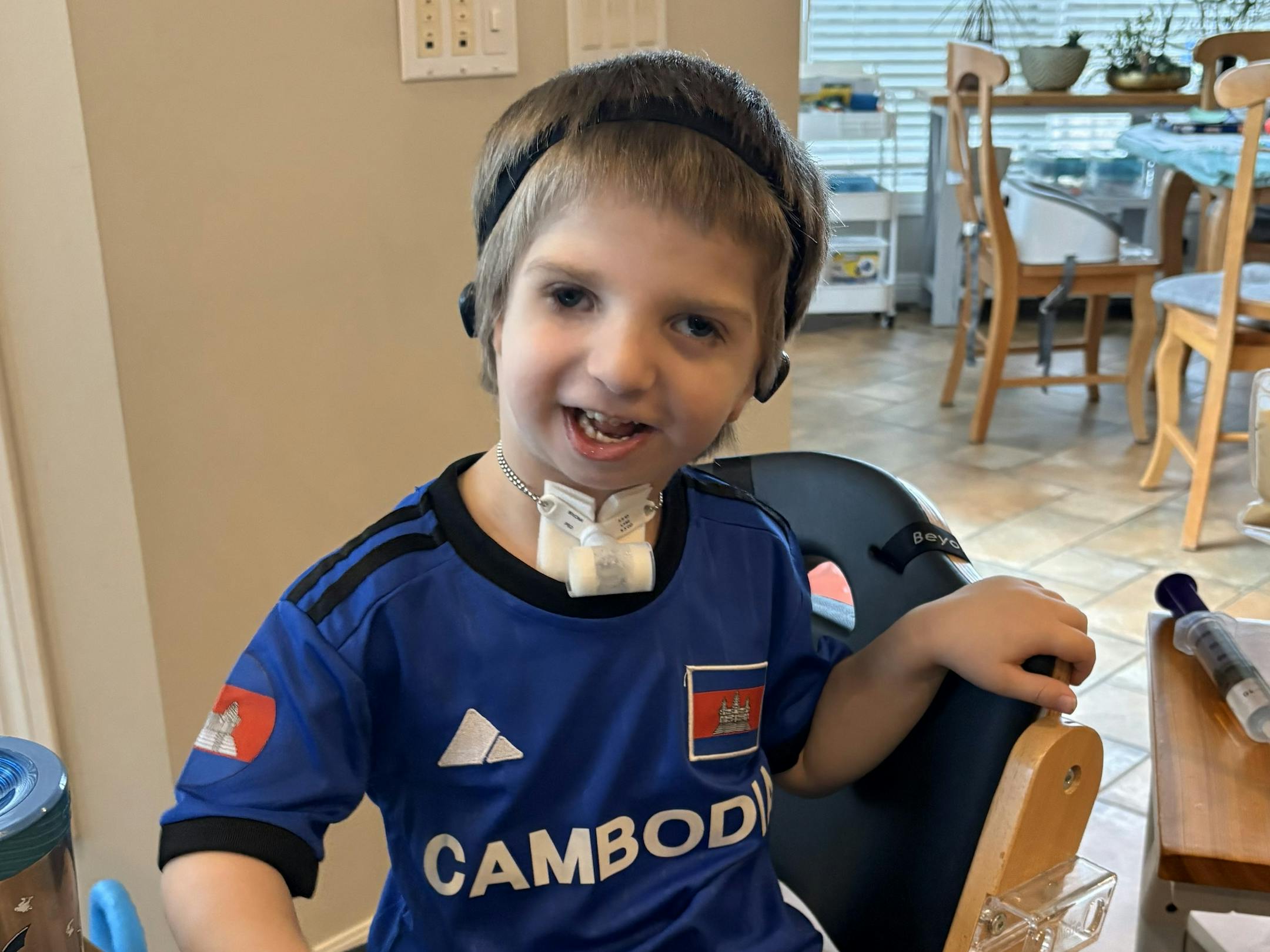
Chase Walter, 4, of Medina has severe disabilities but attends preschool with the help of an at-home nurse who monitors the tube that allows him to breath and the tube that provides his nutrition.

Medica’s new coverage limit on at-home nursing services could create new hardships for families with severely disabled children who need around-the-clock monitoring.

Brandon and Emily Walter joined with home health and disability advocates on Wednesday to protest Medica’s policy change, which will take effect in January.

Even if the state Medical Assistance program picks up coverage when their private Medica policy reaches its new limit, the Medina couple said it will cost them money and force them into tough choices about the therapies and support services they can afford for their four-year-old son, Chase.

Chase has severe disabilities and qualifies for 12 hours per day of at-home nursing, in part to monitor the tracheotomy tube in his throat and a gastric tube in his stomach that provides nutrition, his mother said.

“If his trach tube comes out, he can’t breathe,” she said.

Medica in a written statement said it received assurances from state regulators that its benefit limit is legal and that Medical Assistance will pick up coverage of at-home nursing when that limit is reached.

The switch affects about 20 families with Medica plans, the insurer said.

“We notified impacted members in May and recommended they work with their county waiver case manager to help avoid any disruption in care once plan benefit limits have been reached,” the statement said.

Pediatric Home Services (PHS), the agency that provides Chase’s nursing care, organized Wednesday’s event at the State Capitol to increase public pressure on Medica. The agency questioned Medica’s interpretation of state law, which was enacted in 2010 and states that at-home nursing “shall be covered” by private insurers for patients who also qualify for public Medical Assistance due to their disabilities.

“This isn’t about special treatment,” said Adam Nielsen, PHS’ chief executive. “It’s about access to medically necessary care. It’s about honoring long-standing policy commitments to Minnesota’s most vulnerable children.”

State Rep. Erin Koegel, DFL-Fridley, joined in opposing Medica’s policy limit, arguing that it will essentially shift costs of life-sustaining medical care for children from the insurance company to taxpayers.

Advocates urged Medica to at least delay the switch to give the Legislature time to address or fix any confusion over state law.

The dispute pits providers and families against a health plan that they acknowledge has been more generous than others. Medica’s plan had a written limit of about 10 days of 24-hour at-home nursing, a spokesperson said, but it had been routinely going beyond that and providing 12- to 24-hour nursing coverage for the entire year for these children.

The Walters said they opted to renew the Medica plan, at a monthly premium of around $240 and a deductible of $12,000, and then appeal to maintain its existing coverage limits because other plans had other problems.

“If others find out Medica is doing this, and is allowed to get away with it, they will try to follow suit,” Brandon Walter said.

Brandon and Emily Walter of Medina spoke Wednesday at the State Capitol during a press conference protesting a change by Medica limiting daily nursing care for people with severe disabilities, including their four-year-old son, Chase.

Advocates estimated there are about 2,000 medically fragile children receiving at-home nursing services.

The Walters said it will not be a simple transition from Medica to Medical Assistance program funding when they reach the coverage limit. First, they said they will have to exhaust a special pool of funding set aside under a state waiver to provide for Chase’s other medical needs and support services.

The family had used some of that funding to pay retention and performance bonuses to keep the same nurses coming back and caring for their son. The constant turnover didn’t matter as much when Chase was an infant, but the parents said it matters now that he is more aware and goes by bus to preschool with his nurse.

“A new person coming in, it would take weeks or months to gain a level of trust that is needed,” his father said.

Chase is deaf and struggles to speak beyond his tracheotomy and feeding tubes but doesn’t have cognitive disabilities. His father said he is getting good at math and is fascinated by space.

“His room is all space,” his father said. “Our living room is pretty much all space.”

The parents worry about how disrupted benefits could disrupt his progress. Emily Walter said the Medica plan helped the family gain support services to get Chase home from the hospital after his birth in weeks rather than months. If families need to keep such disabled children in hospitals for weeks or months more, that will end up being more expensive for everyone.

“This is just creating another barrier for kids to be able to go home from the hospital,” she said, “and stay at home.”

about the writer

about the writer

Jeremy Olson

Reporter

Jeremy Olson is a Pulitzer Prize-winning reporter covering health care for the Star Tribune. Trained in investigative and computer-assisted reporting, Olson has covered politics, social services, and family issues.

See Moreicon

More from Business

See More
Workers constructing a new Menards location in Apple Valley say they still haven't gotten paid for their work.
Hannah Jones — Blackrock Masonry/The Minnesota Star Tribune

Shoppers will now have a year to submit those rebate forms.

card image
card image