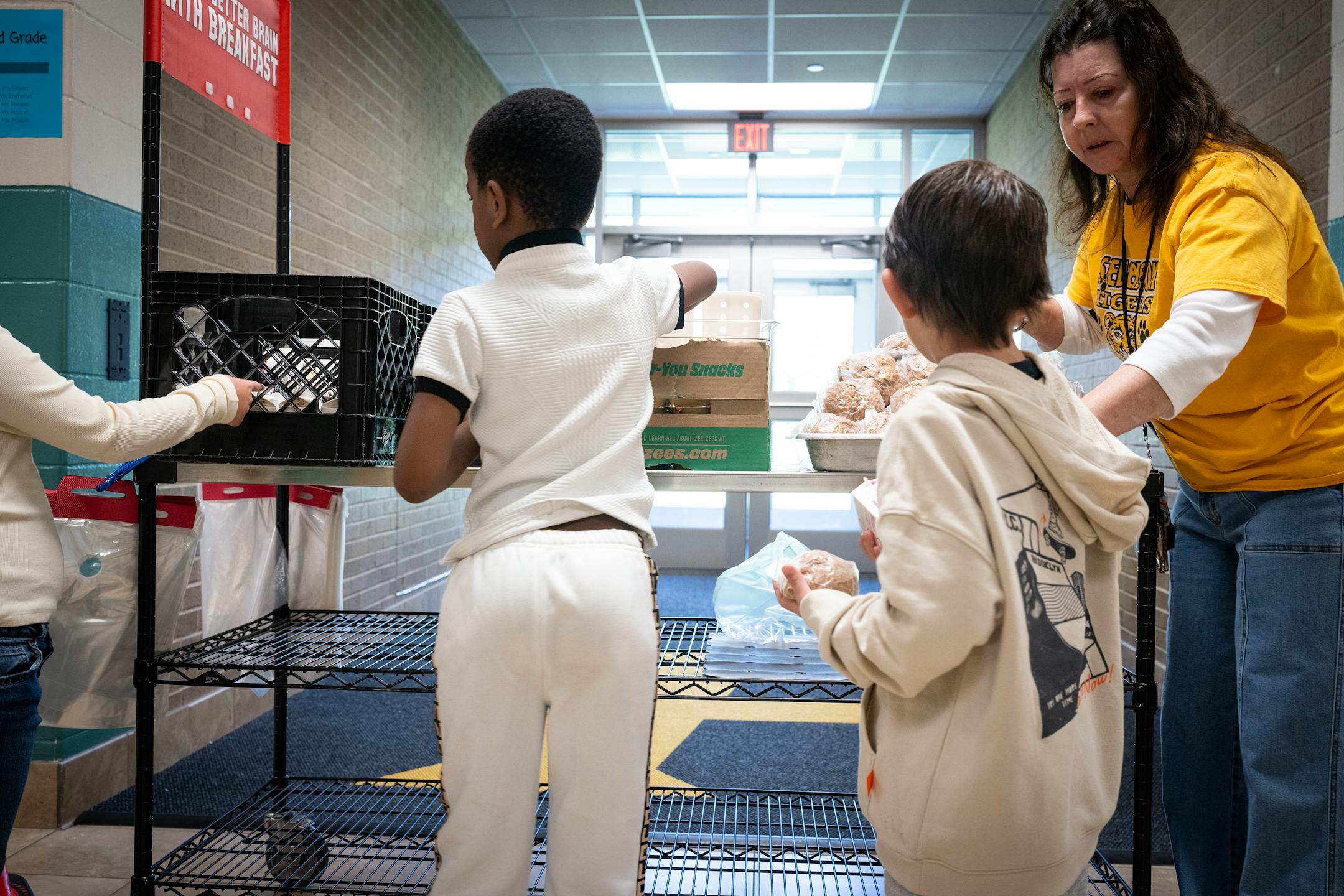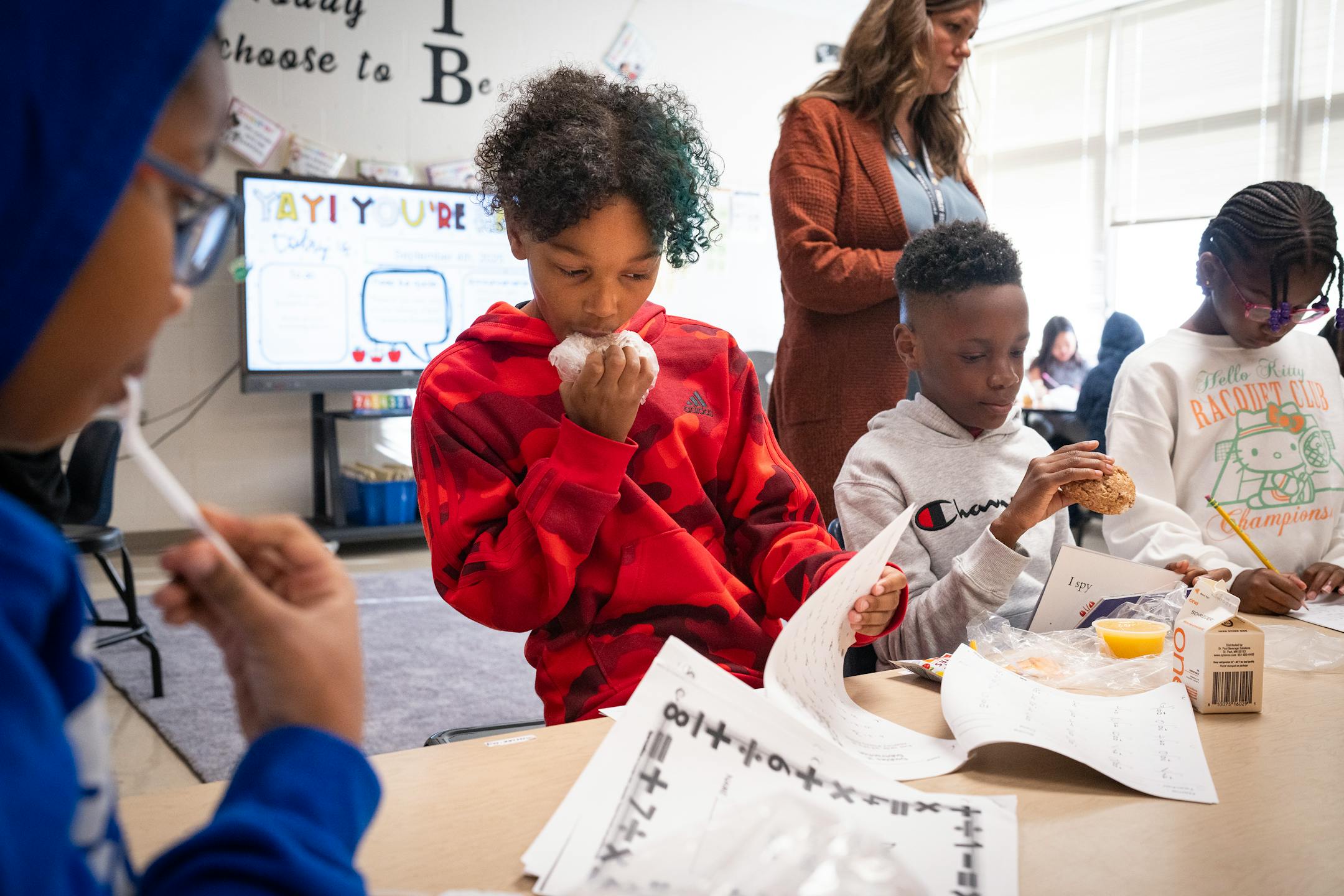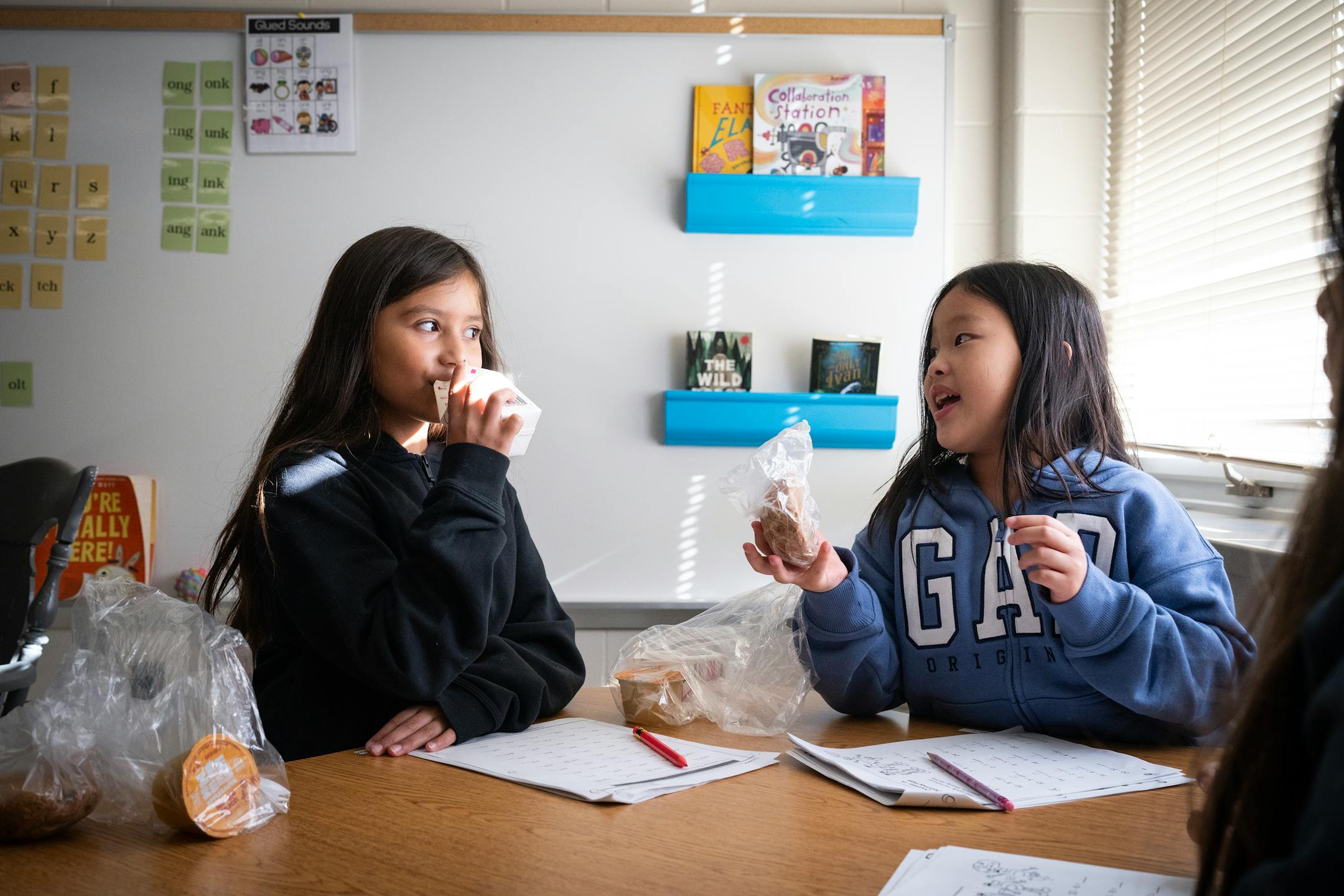
The questions started coming as soon as the line formed at the breakfast cart in the hallway of R.L. Stevenson Elementary School in Fridley.
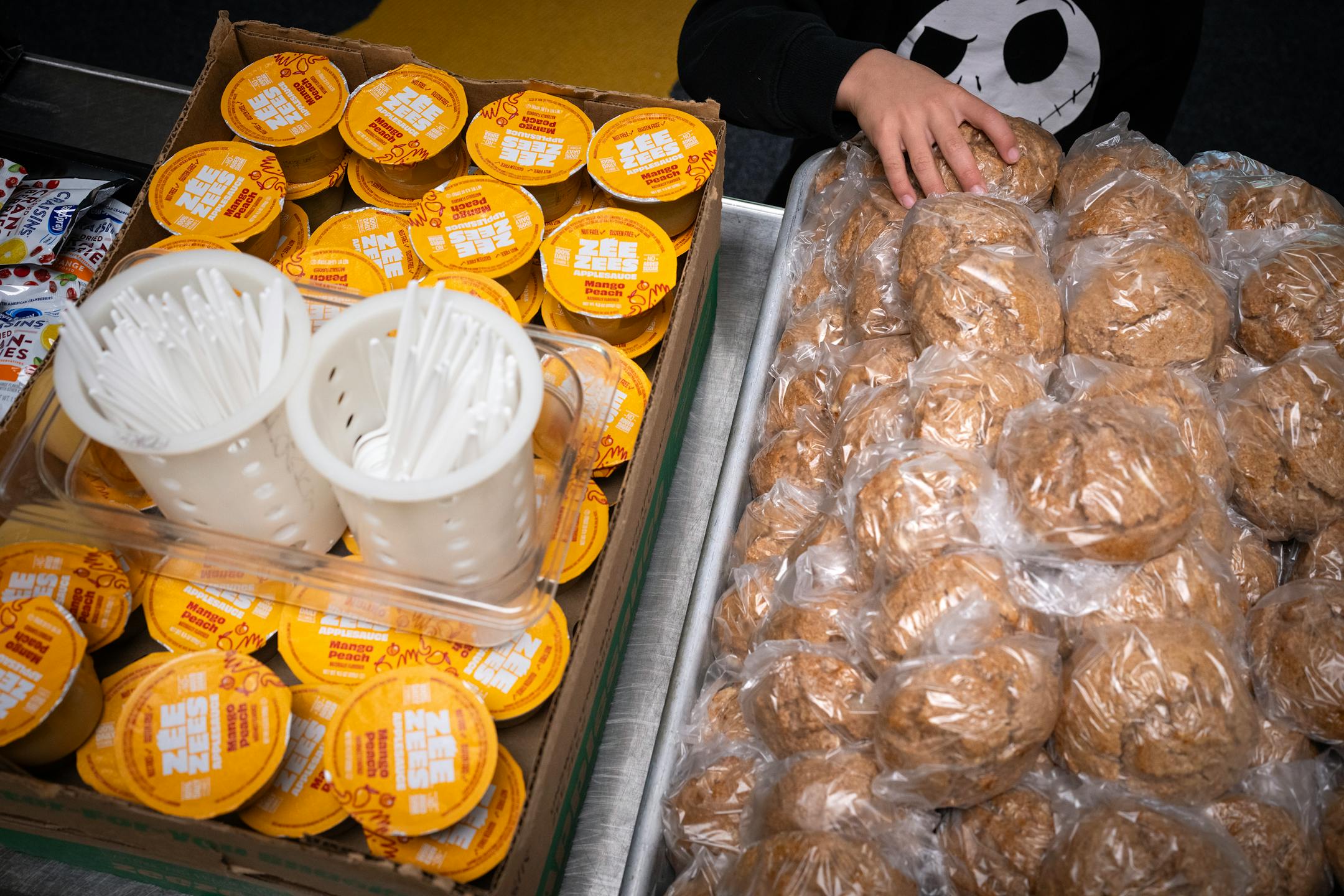
“What are those?” students asked on repeat about the pile of whole-grain apple muffins — a new offering to help meet updated federal requirements limiting added sugar in school meals.
The new sugar restrictions, aimed at certain breakfast items like yogurt, cereal and flavored milk, went into effect in July, prompting many Minnesota schools to revise menus for breakfast, which is free for all students. The new rules are part of the initial phase of regulations that will, beginning in the 2027-2028 school year, limit sodium in school meals and limit added sugars to less than 10% of all weekly calories in school meals.
Those new standards were announced in spring 2024, before President Donald Trump took office and appointed Robert F. Kennedy as secretary of Health and Human Services. Kennedy has called for the removal of ultra-processed foods and artificial dyes from school meals as part of his plans to “Make America Healthy Again.”
Research shows that school meals are the most nutritious food source for American schoolchildren and that students who eat school lunch are more likely to consume milk, fruits and vegetables at lunch than students who eat a meal from home.
“School meals have changed dramatically over the last 20 years,” said Renee Arbogast, the nutritional services director for Fridley Public Schools. “We’re making a lot of food from scratch because we are so focused on making sure that our students have access to healthy, nutritious meals to help them be supported in the classroom.”
Selling students on scratch-made items, like the apple muffins, can sometimes take a little convincing, especially if they’re accustomed to a brand-name sugary cereal for breakfast, Arbogast said.
Fridley schools are moving away from packaged cereals, such as the reduced-sugar Cinnamon Toast Crunch or Frosted Mini Wheats, opting instead to provide more protein-based items like egg bites and breakfast burritos. A casual “just give it a try and let me know what you think” from a favorite cafeteria staff member or teacher can go a long way in getting students to try items they haven’t had before, Arbogast said.